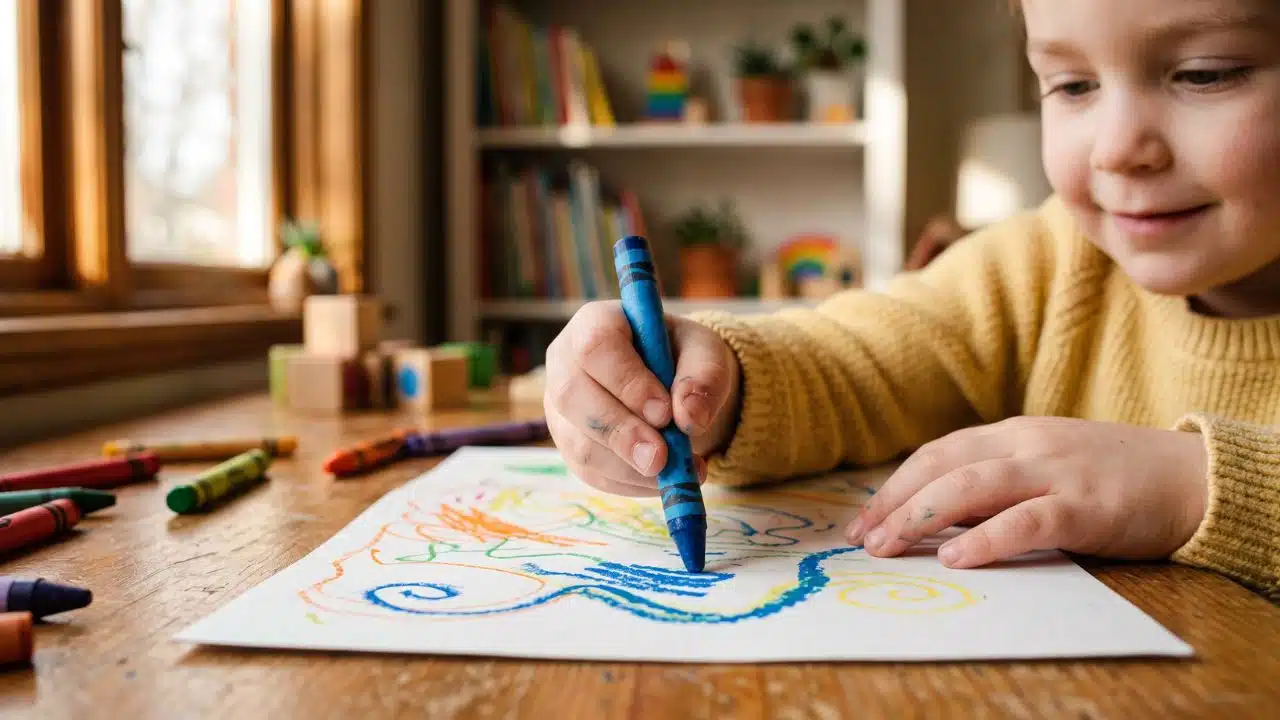
If there is one thing that quietly stresses out parents of young children, it’s watching them hold a crayon. We see our toddlers aggressively scribbling with a marker gripped like a dagger, and a little voice immediately whispers: Are they going to hold it like that in kindergarten? Should I be fixing this? or how pencil grip affects handwriting?
If you’ve been hovering over your child’s shoulder trying to adjust their fingers, you can take a collective deep breath. The way a child holds a pencil absolutely affects how they write and trace, but probably not in the way you think.
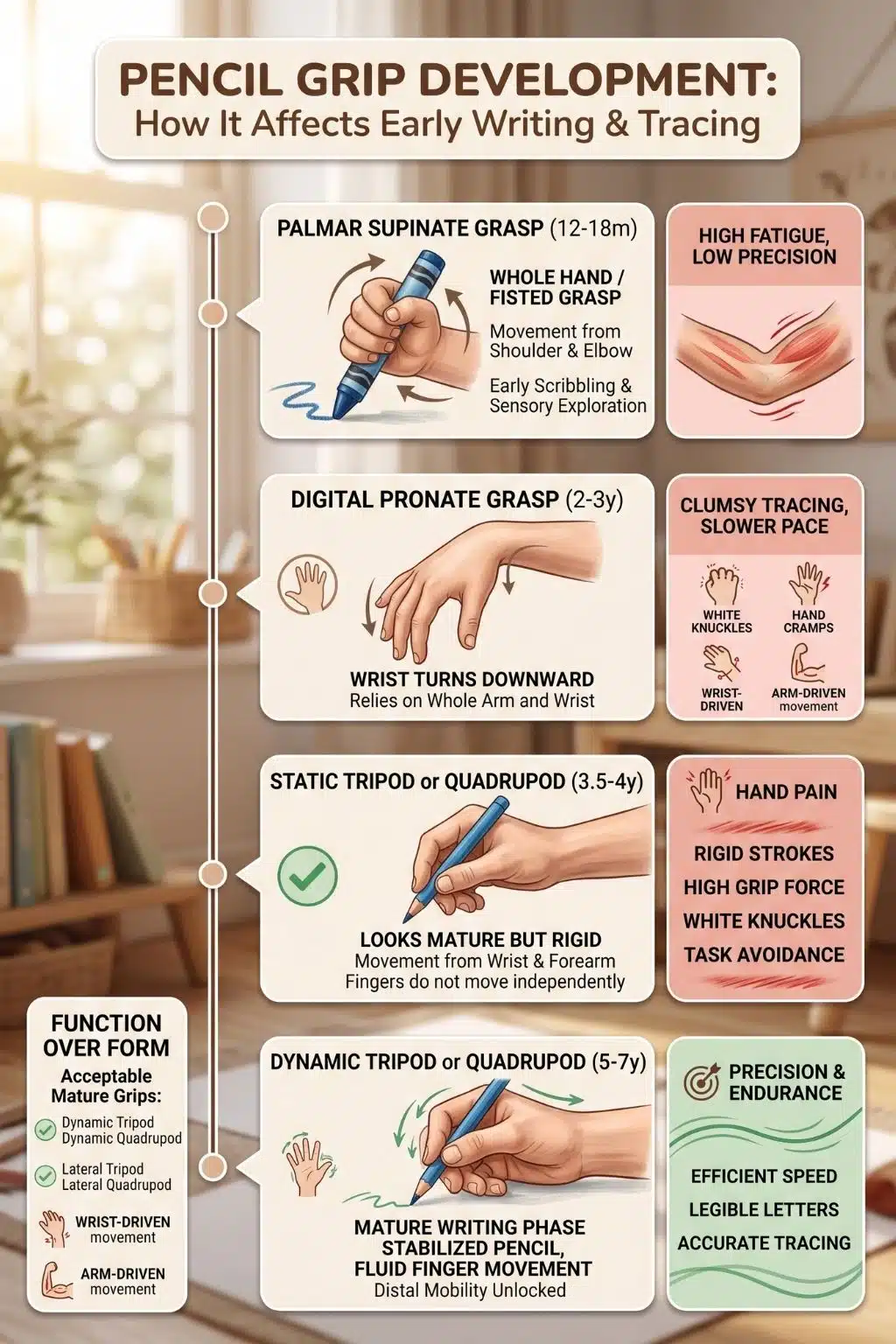
Modern occupational therapy has shifted drastically away from demanding a picture-perfect hand posture. Today, it’s all about function. Here is what actually matters when it comes to early writing, and why we all need to stop stressing over the “perfect” grip.
The Myth of the “Perfect” Posture
Most of us grew up being taught the standard “Dynamic Tripod” grasp, pinching the pencil between the thumb and index finger while resting it on the middle finger. For decades, this was considered the undisputed gold standard for handwriting.
But developmental research tells a different story. When you observe how older children and adults successfully write, there are actually several mature, highly functional ways to hold a pen. Whether a child uses three fingers or four, or wraps their thumb slightly differently, it rarely impacts their writing speed or legibility.
What actually matters is independent finger movement. If a child can wiggle their fingers to form letters without needing to move their entire wrist or arm, their grip is doing exactly what it needs to do.
The Real Enemies of Tracing: Tension and Fatigue
If the exact posture of the fingers isn’t the problem, how does a bad grip negatively affect early writing? It comes down to tension and fatigue.
When a child is first learning to trace shapes or letters, they need to make tiny, precise micro-movements (known as distal mobility). If they haven’t developed a mature grip yet, they tend to lock their fingers in place and try to draw by moving their wrist or their entire elbow.
Tracing with your whole arm is exhausting. To compensate, these kids often grip the pencil incredibly tightly, you might even see their knuckles turn white. This lack of “grip force variability” means they are pressing down way too hard.
This is where the real problem lies. An overly tight, rigid grip leads to hand cramps and tired muscles. When tracing physically hurts or drains a child’s energy, they don’t just get messy handwriting, they start to hate writing altogether. Task avoidance is usually the first major red flag that a grip isn’t functioning well.
It’s a Journey, Not a Race
One of the most fascinating aspects of childhood development is that writing doesn’t start in the hands; it starts in the shoulders and the core.
Children move through predictable stages. They start with the “Palmar Supinate” grasp around age one, the classic dagger grip using their whole fist. By age two or three, they flip their hand over so their fingers point down. Around preschool age, they start using the right fingers, but their hands are still rigid. It isn’t until they are around five to seven years old that the muscles are developed enough for fluid, dynamic finger movements.
You cannot rush this process. A child must build strong shoulder and core muscles (proximal stability) before they can have fine-tuned finger control. Forcing a three-year-old into a mature pencil grip before their hand muscles are ready is like asking a baby to run before they can crawl. It just creates unnecessary frustration.
Check out our app for Kid’s Alphabet Magic Trace and Phonics learning.
The “Broken Crayon” Hack [A Simple Pro Tip]
If you take away just one practical tip from this article, let it be this: stop throwing away your broken crayons.
When a toddler or preschooler is struggling to move past the “fist grip” phase, our instinct is often to buy thicker, chunkier writing tools. While those are great for early scribbling, they don’t actually teach finger control. Instead, try taking a standard crayon and snapping it into tiny, one-inch pieces.
It sounds counterintuitive, but a one-inch crayon piece is physically impossible to hold with a whole fist. When a child reaches for it, they are naturally forced to pinch it using their thumb, index, and middle fingers. It is a brilliant, entirely stress-free way to encourage a mature tripod grasp without ever having to verbally correct or nag them.
3 Play-Based Activities to Build Hand Strength
Remember how we talked about building shoulder and core strength before worrying about the fingers? If you want to help your child develop the stamina needed for tracing and writing, the best thing you can do is put the pencils away and focus on targeted play.
Here are three occupational therapy-approved activities that build the exact muscles needed for a functional grip:
Vertical Drawing
Tape a large piece of paper to the wall or use an easel. Drawing on a vertical surface forces your child to extend their wrist backward (the optimal position for writing) while stabilizing their shoulder.
The Tweezer Game
Grab a pair of kid-friendly plastic tweezers (or even kitchen tongs) and have your child transfer small items, like cotton balls, beads, or cereal, from one bowl to another. This squeezing motion perfectly mimics the dynamic tripod grip and builds serious pinch strength.
Playdough Resistance
Don’t just let them use cookie cutters. Encourage them to roll the dough into tiny balls using just their fingertips, or hide small coins inside a tough ball of clay and make them pinch and pull the clay apart to rescue the “treasure.”
When to Ask for Help: The “Red Flag” Checklist
While quirky grips are usually nothing to stress over, there are a few physical warning signs that indicate a child’s grip is actively hindering their progress. If your school-aged child (six years or older) is doing any of the following, it might be worth a quick consultation with a pediatric occupational therapist:
- Frequent complaints of pain: They mention their hand, wrist, or arm aching after just a few minutes of drawing.
- The “Shake Out”: You notice them repeatedly dropping the pencil to shake out or massage their hand during homework.
- Extreme pressure: They press down so hard that the paper regularly rips, or their knuckles turn completely white when tracing.
- Task avoidance: They have extreme emotional meltdowns, cry, or flat-out refuse to participate in any activity that involves holding a pen or crayon.
The Bottom Line
When it comes to early writing and tracing, observation is your best tool. Watch your child’s face and their stamina, not just their fingers. If they are drawing happily, their letters are becoming legible, and they aren’t complaining of tired hands, their grip is likely just fine, even if it looks a little quirky.
Frequently Asked Questions About How Pencil Grip Affects Handwriting
1. Should I buy those rubber pencil grips for my preschooler?
Usually, no. Unless specifically recommended by an occupational therapist, forcing a young child’s fingers into a corrective mold can cause more frustration than good. Instead of buying grip correctors, focus on building their hand strength naturally through play, like squeezing playdough, using tweezers to pick up small objects, or building with small blocks.
2. Are chunky crayons better for toddlers learning to write?
Yes, chunky crayons are great for little hands that are still in the “fist grip” phase. But here is a brilliant occupational therapy trick: breaking regular crayons into tiny, one-inch pieces is even better. A tiny crayon piece physically cannot be held with a whole fist, which naturally encourages the child to pinch it with their thumb and index finger.
3. When should I actually worry about my child’s pencil grip?
You should seek advice from a pediatrician or occupational therapist if your school-aged child (around 6 or older) complains of hand pain when writing, shakes out their hand frequently, presses so hard they tear the paper, or strongly avoids coloring and drawing activities.
4. Why does my 4-year-old write by moving their whole arm instead of their fingers?
This is completely developmentally appropriate. At four years old, most children use a “static” grip. Their fingers are holding the pencil in the correct position, but the muscles aren’t quite ready to do the fine motor wiggling yet, so the wrist and arm do the driving. The smaller finger movements will come naturally as they grow.
5. Can a bad grip cause bad handwriting later in life?
Only if the grip restricts fluid movement. There are plenty of adults with messy handwriting who hold their pens perfectly, and plenty of professionals with terrible handwriting who hold their pens strangely. Legibility is heavily tied to how well the fingers can move the pen. As long as the grip allows for that dynamic movement without pain, handwriting can absolutely be neat.