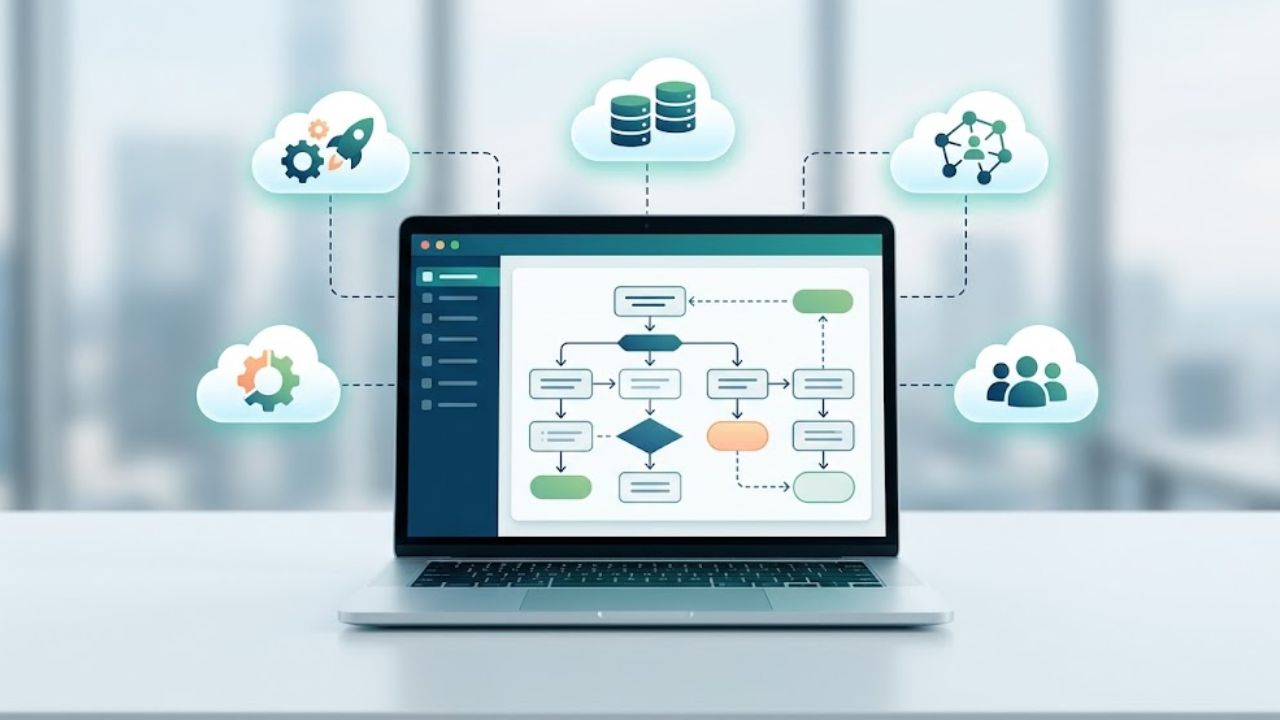
The best email tools for SaaS lifecycle marketing respond to customer behavior instead of sending the same sequence to everyone. A useful platform can welcome a new signup, react when setup stalls, encourage feature adoption, support an upgrade, and re-engage an inactive account.
That requires dependable event data, segmentation, exit rules, conversion reporting, deliverability controls, and integrations with the product, CRM, billing system, or data warehouse. This ranking uses verified capabilities and practical SaaS fit. Because plans change, confirm requirements before purchasing.
1. Customer.io — Best Overall for Behavioral Lifecycle Automation
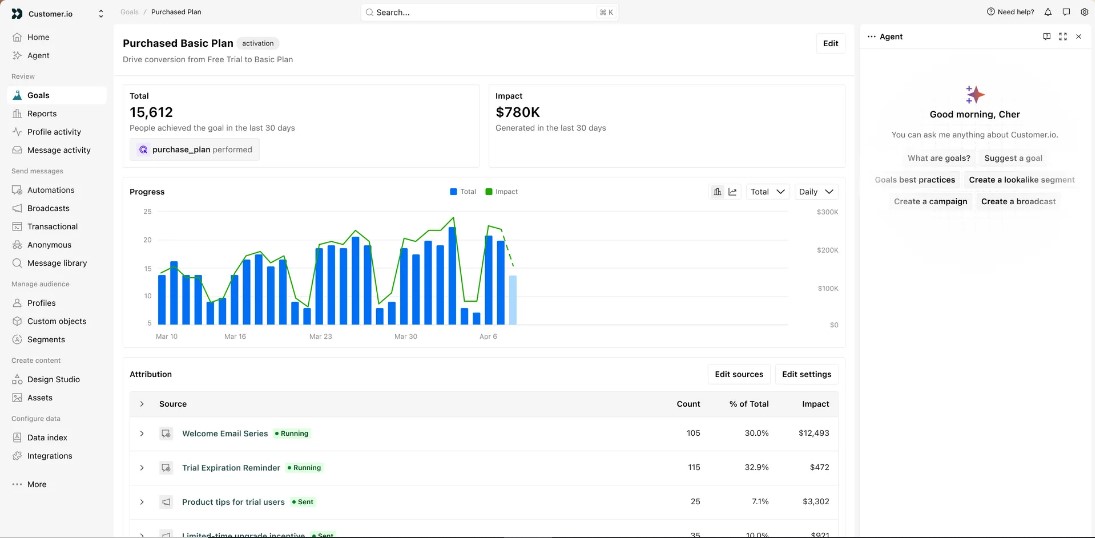
Customer.io is a strong all-round choice for messaging that follows product behavior. Journeys can begin from events, segments, forms, dates, customer relationships, or webhooks. Branching logic adjusts what happens next.
The platform supports email, in-app messages, push notifications, SMS, WhatsApp, Slack, webhooks, and transactional messages. It also offers A/B testing, conversion goals, subscription preferences, and account data.
It works best with clean event tracking and someone who can manage the data setup. Small teams may find it more powerful, and expensive, than necessary.
2. Userlist — Best for B2B SaaS Companies
Userlist recognizes that a B2B customer may be a company or workspace containing several users. Its data model covers users, companies, and their relationships.
That enables account-level workflows triggered by an approaching renewal, usage threshold, or decline in activity. Messages can target the administrator or another relevant role.
Userlist combines lifecycle email, broadcasts, transactional messages, in-app notifications, and visual workflows. Its channel range is narrower than that of enterprise platforms, while advanced testing and conversion features may require a higher plan.
3. Loops — Best for Early-Stage SaaS Teams
Loops brings marketing, product, and transactional email into a streamlined platform for founders and small growth teams.
Teams can create welcome sequences, onboarding reminders, trial-conversion flows, upgrade campaigns, win-back emails, password resets, and other operational messages. It also supports product events, dynamic segments, conversion goals, experiments, and SaaS integrations.
Its focus keeps the product approachable, but Loops remains primarily email-oriented. Companies that need advanced mobile engagement, account-level modeling, or complex omnichannel journeys may outgrow it.
4. Encharge — Best for No-Code SaaS Automation
Encharge gives non-technical teams a visual way to build behavior-based flows using email engagement, page activity, product actions, customer attributes, CRM data, and billing information.
It is particularly useful for lead nurturing, trial conversion, onboarding, sales handoffs, and reactivation. SaaS-focused integrations make it easier to connect marketing messages with billing and customer activity.
Plan selection matters. API events, transactional email, event-based segmentation, and some major integrations are limited to higher tiers. A business that needs deep product-event automation should verify the required plan instead of choosing on entry price alone.
5. Vero — Best for Warehouse-Connected Product Messaging
Vero gives teams more control over customer data. It can use product events and attributes delivered through an API, along with data held in supported cloud warehouses.
Its visual journeys can branch according to customer activity and coordinate email, SMS, and mobile push notifications. Dynamic content, localization, testing, and conversion reporting support more relevant communication across markets and lifecycle stages.
Vero is a sensible fit for product-led companies that want their data infrastructure to remain the source of truth. Smaller plans include profile, event, message, and push limits that high-volume products should calculate carefully.
6. HubSpot Marketing Hub — Best for CRM-Led B2B SaaS
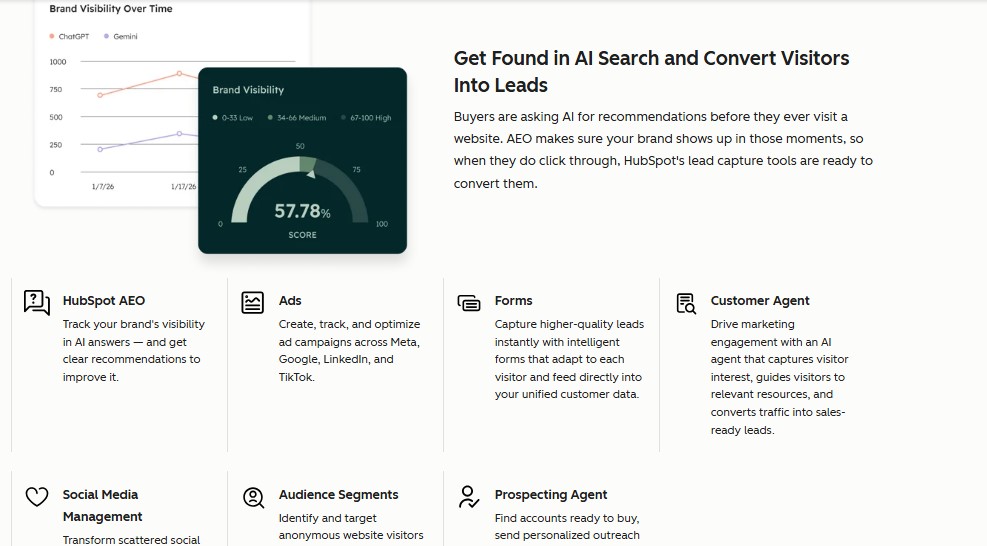
HubSpot is most valuable when marketing, sales, and customer data already live in its CRM. Workflows can use contact properties, segments, forms, website behavior, lifecycle stages, and other CRM signals.
This data helps coordinate lead nurture, sales handoffs, onboarding, renewals, and expansion. HubSpot also provides branching, personalization, scoring, reporting, and internal notifications.
The free email product should not be confused with the full automation platform. Automated marketing emails and sophisticated workflows generally require Marketing Hub Professional or Enterprise. The price and required onboarding can put those plans beyond the reach of smaller startups.
7. Intercom — Best for Email and In-App Onboarding
Intercom is useful when communication must continue inside the product. Its Series builder connects emails with in-app posts, banners, product tours, behavioral rules, and automated actions.
A company could show an upgrade prompt inside its application, follow it with an email, offer a product tour, and stop the sequence when the customer upgrades. That creates a more connected experience than an email-only campaign.
Intercom makes the most sense for companies already using it for support or customer engagement. Advanced outbound campaigns may require an add-on, while email and other channel usage can produce separate charges.
8. Ortto — Best for Unified Data, Automation, and Analytics
Ortto combines a customer data platform with automation and reporting. It brings together profiles, custom activities, marketing engagement, billing information, support activity, and lead scores.
Teams can use this data to coordinate email, SMS, push notifications, and in-app messages. Transactional email, forms, surveys, dashboards, and custom reports further reduce the need to assemble several separate tools.
This broad scope is valuable to teams seeking a connected platform, but it creates more setup work than an email-focused product. Businesses should request current pricing and confirm which functions are included in the proposed package.
9. Braze — Best for Mobile-First Enterprise SaaS
Braze serves companies managing large audiences. Its Canvas builder coordinates email, mobile push, SMS, and in-app messages in response to real-time activity.
Dynamic personalization, experimentation, frequency controls, and journey reporting make it suitable for consumer subscriptions, fintech services, media platforms, and mobile-first software. Teams can adapt communication as behavior changes instead of relying on fixed sequences.
Braze uses enterprise-oriented pricing and requires mature data operations. Its cost and implementation demands will be excessive for many small or straightforward B2B SaaS businesses.
10. Iterable — Best for Enterprise Adaptive Journeys
Iterable builds cross-channel journeys from live customer signals. It connects email, SMS, push, and in-app communication with visual segmentation, personalization, and experimentation.
Workflows can change when a user adopts a feature, becomes inactive, changes preferences, or reaches a new lifecycle stage. This flexibility supports complex onboarding, retention, and reactivation programs at scale.
Iterable is better suited to organizations with dedicated lifecycle and data teams. Its enterprise sales process and implementation requirements make simpler tools more practical for most early-stage companies.
Build Around Customer Moments, Not Email Volume
Customer.io offers the strongest overall balance of behavioral automation and flexibility. Userlist is particularly compelling for B2B account journeys, while Loops keeps lifecycle email manageable for smaller teams. Braze and Iterable address far more complex enterprise requirements.
The right platform is the one that can recognize meaningful customer moments and respond without creating noise. Map those moments first. Then choose the tool whose data model, workflows, integrations, and cost match the lifecycle program you can realistically operate.
Frequently Asked Questions on Email Tools for SaaS Lifecycle Marketing
1. What is SaaS lifecycle email marketing?
It uses customer data and product behavior to send relevant messages during signup, onboarding, activation, conversion, adoption, renewal, expansion, inactivity, and reactivation.
2. Which email tool is best for B2B SaaS?
Userlist is especially suitable for account-based B2B journeys. Customer.io offers a broader choice of channels and more flexible event-driven automation.
3. What is the best option for a small SaaS startup?
Loops is approachable for teams that want marketing, product, and transactional email together. Encharge is a stronger candidate when visual behavioral automation is the priority.
4. Can one platform send marketing and transactional emails?
Yes, several tools on this list support both. Critical messages such as password resets and security alerts should still be managed separately from promotional campaigns to protect reliability and sender reputation.
5. Which metrics should a SaaS lifecycle team track?
Track activation rate, time to value, trial-to-paid conversion, onboarding completion, feature adoption, upgrades, renewals, retention, and reactivation. Opens and clicks provide context, but they do not prove business impact.