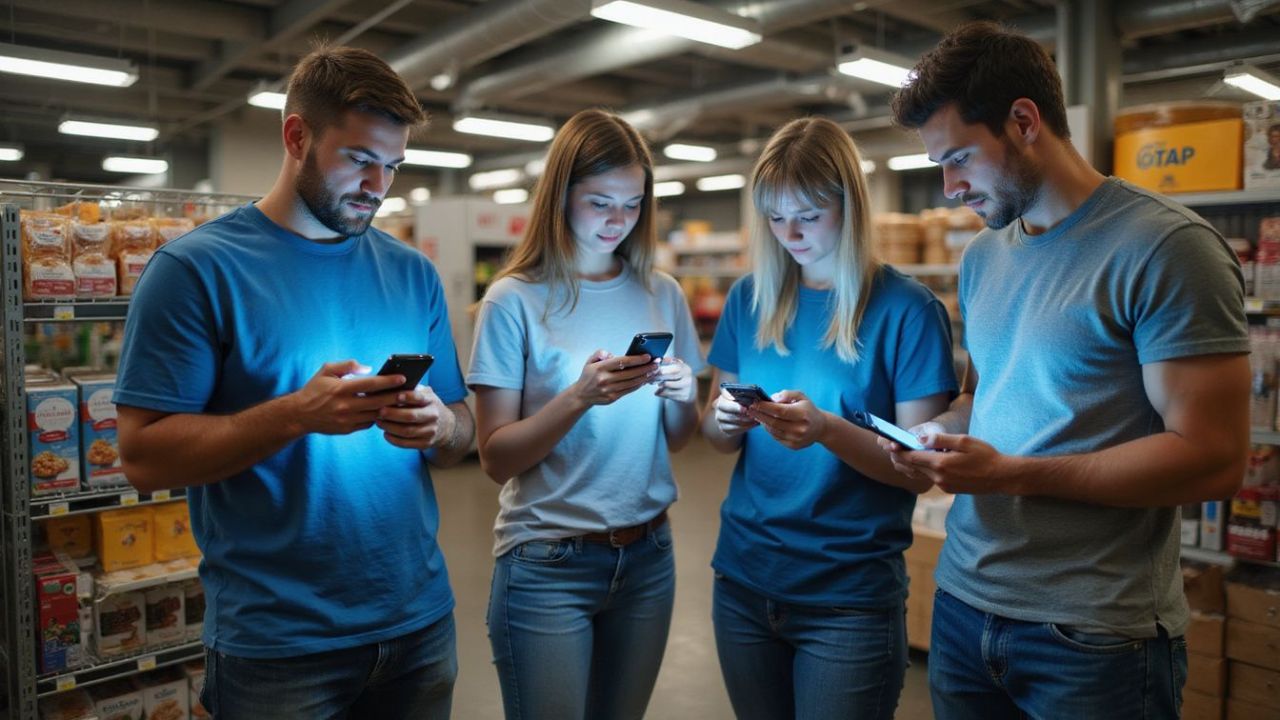
Ever buy something from a store, walk out, and never think about that place again? That happens to businesses every single day. Customers show up once, spend some money, and vanish. They do not come back. They do not tell their friends. They just disappear. Old-school loyalty cards will not fix that. You punch a card, earn a point, and feel nothing special.
Here’s what actually works: gamified loyalty programs. Brands like Starbucks, Nike, and Sephora turned plain purchases into fun little challenges, and shoppers could not get enough.
The results back it up. Gamified loyalty programs can boost customer engagement by up to 47 percent, and the gamification market is on track to hit $30.7 billion by 2026.
I’m going to walk you through why game mechanics work so well, show you real brands nailing it, and hand you the numbers that prove it pays off. Grab a coffee, and let’s get into it.
Why Gamified Loyalty Programs Work
Your brain loves this stuff. It craves achievement, competition, and progress. Gamified loyalty programs tap right into that wiring, turning routine shopping into a series of small, satisfying challenges.
The Psychology Behind the Points
Customers earn points, unlock badges, and climb leaderboards. They feel a rush when they hit a milestone, and that rush is not an accident.
According to benchmarking research by Snipp Interactive, gamification can lift customer engagement by 47 percent and push brand loyalty up by 22 percent. Those numbers explain why so many companies are racing to build game mechanics into their loyalty programs.
Self-determination theory explains the magic behind it. People crave autonomy, competence, and connection, and gamification delivers all three at once. Costa Coffee rewards members for frequent visits, while KFC Rewards Arcade lets customers play games to win prizes.
These brands understand something simple: intrinsic motivation beats extrinsic motivation every time. Customers do not just chase points. They chase a feeling.
A retail mobile app tested this idea directly. The team added a spin-the-wheel mini game to the post-purchase screen and tracked it for two weeks. Out of 1,200 active users who saw the feature, 48 percent gave the wheel a spin after checkout, and 22 percent of those redeemed a prize within 7 days. Average session length jumped 35 percent, and 7-day retention for participants climbed from 12 percent to 28 percent.
That small spin-the-wheel add-on shows something important. A tiny gamified touch, placed at the right moment, can shift customer behavior fast.
Real Results From Real Brands
Emotional loyalty is what separates brands customers tolerate from brands customers champion. Gamified programs build that bond through surprise rewards, social sharing, and community building.
Gen Z shoppers respond especially well to this. About 61 percent of Gen Z gamers see games as a form of self-expression, which makes gamification a smart way to reach younger customers. Tracking progress matters too, since a mobile app that shows customers exactly how close they are to their next reward keeps them engaged.
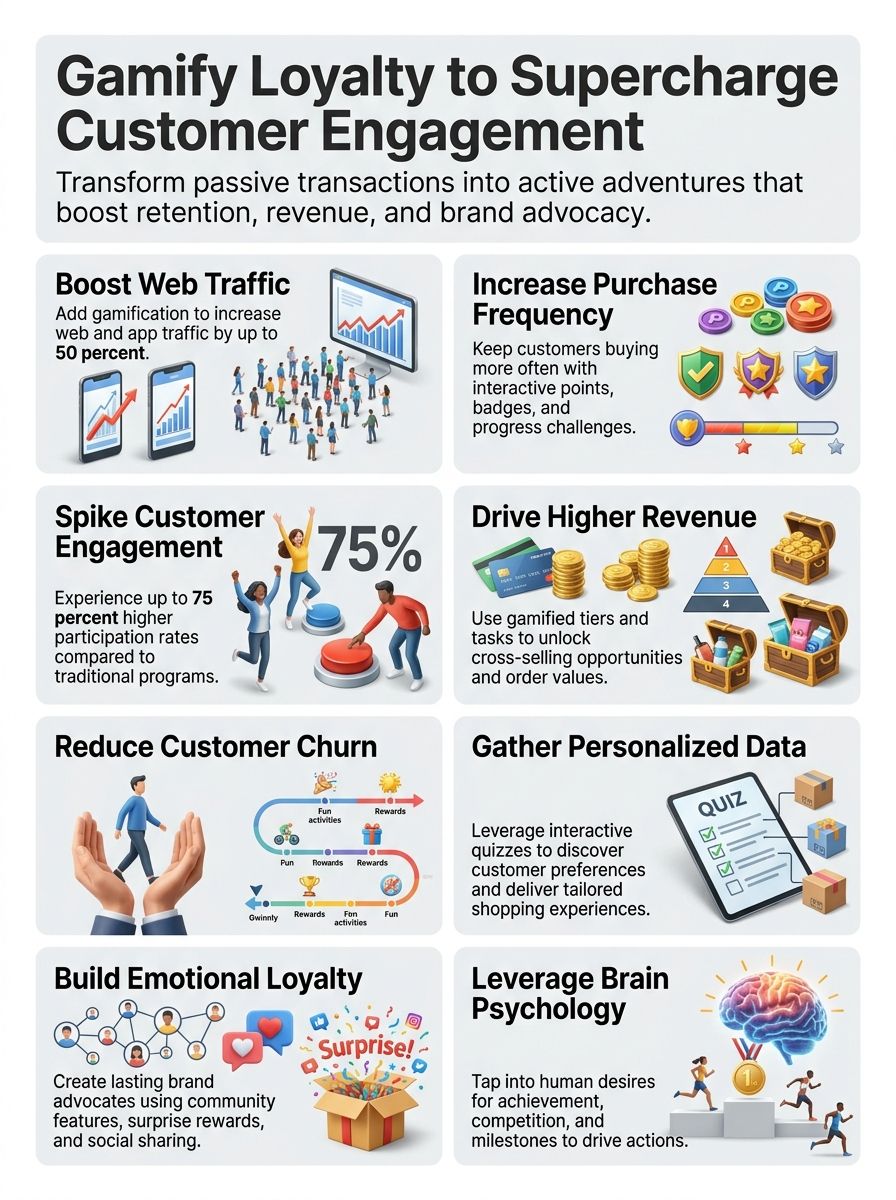
Amazon and the Mastercard Partner Advantage Program prove that point systems work across very different industries. A 2025 study by Mastercard and its gamification partner CataBoom found that brands weaving casual games into their platforms saw a 50 percent increase in average session times and a 22 percent drop in customer churn.
Customers also participate at rates up to 75 percent higher in gamified programs than in traditional loyalty schemes. That is the real payoff: gamification turns passive shoppers into active fans who stick around and spread the word.
Examples of Successful Gamified Loyalty Programs
Brands across the country prove that gamified loyalty programs drive real results. Here is how eight of them turned game mechanics into serious customer engagement.
Retail and Food Brands Leading the Way
- Starbucks Rewards uses points for purchases that customers redeem for free items, then adds “Star Dash” challenges to push frequent visits. Based on 2025 data shared by LoyaltyLion, Starbucks Rewards members now drive about 41 percent of all U.S. Starbucks sales, and the program held $1.85 billion in stored prepaid value by March 2025.
- Nike’s NikePlus program includes challenges and rewards that spark active participation. Nike Run Club lets users earn trophies and badges based on running achievements, turning workouts into friendly competitions.
- Sephora’s Beauty Insider Program hands out points through gamified experiences for every member, regardless of purchase status. A tiered rewards system unlocks better perks as spending increases, rewarding the most loyal shoppers.
- Sainsbury’s Nectar card system lets shoppers earn points and receive timely push notifications tied to games and extra rewards. Those notifications keep driving repeat shopping trips.
Fitness, Gaming, and Global Wins
- Strava, the fitness app, sends weekly recap emails that celebrate a user’s achievements, like total moving time and distance covered. Those emails give people a reason to stay consistent week after week.
- Roblox lets young users build games easily, creating a community of content creators who stick around. As highlighted in a 2025 Pulsar sentiment report, U.S. cosmetics brand e.l.f. Beauty partnered with Roblox in April 2025 to launch “Fortune Island: Earn. Learn. Flex,” a financial literacy game built to reach Gen Z players.
- Duolingo improved Day 1 retention from 13 percent at launch to 55 percent through smart gamification woven into onboarding. The team shaped nearly every element with ongoing A/B testing.
- Companies serving Asia-Pacific markets have used “spin the wheel” promotions to boost engagement. These simple mechanics drive participation across very different markets and shopping habits.
Want to see how this looks on a smaller scale? Here’s a simple example of how badges work behind the scenes.
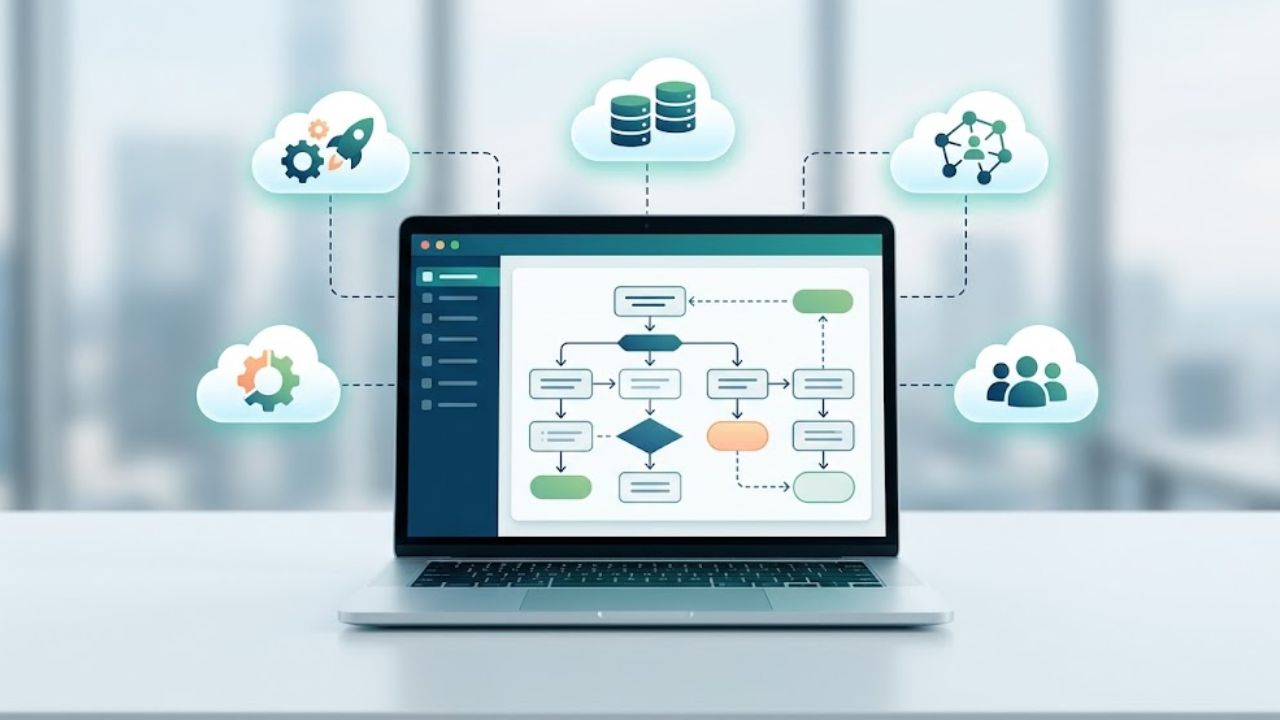
One retailer built a checkout-based badge system that awards a “Quick Shopper” badge after three contactless purchases in 14 days. The build only took five steps:
- An event trigger fires the moment a contactless payment succeeds.
- A server-side counter updates the customer’s purchase count.
- A real-time badge shows up on the customer’s screen right away.
- An optional prompt invites the customer to share the badge on social media.
- Back-end reward provisioning closes out the cycle.
The whole setup took about two sprint weeks of engineering time and barely any extra storage. The team built it event-first on purpose, so badges feel instant and never slow down checkout. That kind of low-friction design keeps the purchase smooth while giving customers one more reason to come back soon.
The Business Impact of Gamified Loyalty Programs
Gamified loyalty programs do not just feel fun. They drive results that show up straight in your bottom line.
| Business Impact Area | Key Results |
|---|---|
| Traffic Growth | Web and app traffic jumps by up to 50% when you add gamification to your loyalty mix. Customers keep coming back because the experience feels fresh and rewarding. That traffic translates directly into more sales opportunities. |
| Purchase Frequency | Participants buy more often than non-participants. Your average customer becomes a repeat customer. A 90-day pilot with 8,400 loyalty members using weekly leaderboards tied to spend milestones showed an 18% lift in purchase frequency versus a matched control group, with participation rates averaging 61% across weeks. Players kept coming back to climb the leaderboard, which translated directly into more frequent baskets and slightly higher spend per visit. |
| Customer Engagement Rates | Participation rates spike up to 75% higher with gamified elements. Customers actively engage with your brand instead of passively scrolling past. According to 2026 performance data from AmplifAI, U.S. brands running gamified campaigns see 100% to 150% higher engagement than traditional marketing, and that content gets shared 12 times more often. Higher engagement means stronger connections that stick around. |
| Revenue Generation | Gamification motivates customers to complete tasks that open upselling and cross-selling doors. Challenges push people toward new products, and loyalty tiers reward bigger spenders with exclusive perks. The same 90-day leaderboard pilot showed a 9% increase in average order value and a 14% reduction in churn compared to the control group, proving that competitive mechanics drive both spending and retention. |
| Customer Retention | Churn rates drop significantly because gamified journeys are genuinely fun. Customers stick around longer when they are working toward something tangible. An enjoyable experience beats no experience at all. |
| Data Collection and Personalization | Interactive quizzes and challenges reveal what customers actually want, and that first-party data powers personalized shopping experiences down the line. Adaptive onboarding flows guide each customer down their own path, so you learn who your people are and what makes them tick. |
| Lifetime Value Metrics | Track customer retention, engagement rates, and lifetime value to measure real impact. These engagement metrics show which gamified elements actually work. Your measurement strategy shapes your optimization strategy. |
| Loyalty Tier Performance | Gamification analytics reveal that loyalty tiers based on user engagement drive consistent results. Customers climb tiers faster when rewards feel achievable. Your tiered structure keeps high-value customers engaged and coming back for more. |
Final Words
Starbucks Rewards and Nike Run Club prove that gamified loyalty programs work. They turn shopping into something fun, not just another transaction. When customers earn points, get badges, and climb leaderboards, they come back more often and spend more money.
The numbers speak for themselves. Engagement jumps by up to 47 percent, brand loyalty climbs 22 percent, and brand awareness grows too. Your customers are ready to play. Start building your gamified loyalty program today.
FAQs on How Gamified Loyalty Programs Increase Customer Engagement
1. What are gamified loyalty programs?
They’re loyalty programs that use game-like features such as points, badges, and challenges to make customer interactions more engaging. Nike’s NikeFuel program is a great example, turning fitness tracking into a rewarding experience that keeps users coming back.
2. Why do gamified loyalty programs work so well?
They tap into our natural love for competition and rewards. Research from Fluent, Inc. shows that gamification can boost customer engagement by up to 47%, which means people stick around longer and build stronger connections with your brand.
3. How does personalization fit into loyalty programs?
Personalization makes each reward feel like it was picked just for you. Platforms like Optimove use first-party data to tailor offers and challenges, so customers get rewards that actually match their interests and shopping habits.
4. What role does data security play in these programs?
Strong cybersecurity is essential because these programs handle sensitive customer data and digital assets. When customers trust that their information is protected, they feel comfortable engaging more deeply with your program and sharing the data that makes personalization possible.
5. Are gamified loyalty programs only for e-commerce brands?
Not at all. You’ll find them everywhere, from Vivid Seats in ticketing to financial services exploring open finance opportunities. Even Amazon.com and the Mastercard Economics Institute have studied these engagement strategies as key marketing trends across industries.