
We built 15 micro SaaS tools instead of one large platform to take an initial step into SaaS, offer simple solutions, and support our SEO work. These are free publisher utilities. Their purpose is modest: help someone complete a small task without needing a broad software suite.
The title needs one qualification. Editorialge has also built ImagineLab Art, and RankPilot AI is under development. Our choice was to keep these 15 utilities separate, rather than combine all their unrelated tasks into another large platform.
This is the build log: the full list, the steps we follow, the defaults we chose, the limits we ran into, and the checks we run before anything goes public. It documents our stated goals, one publishing example, and a reported product fix. It is not an independent performance audit.
Why We Built 15 Micro SaaS Tools Instead of One Large Platform: The Product Scope
Our starting point was a set of small problems. A freelancer needs help estimating a rate. A creator needs to check script length. An editor needs to compare two articles.
Those tasks do not necessarily belong in the same working session. Combining them would create a larger menu, but it would not automatically create a more useful product.
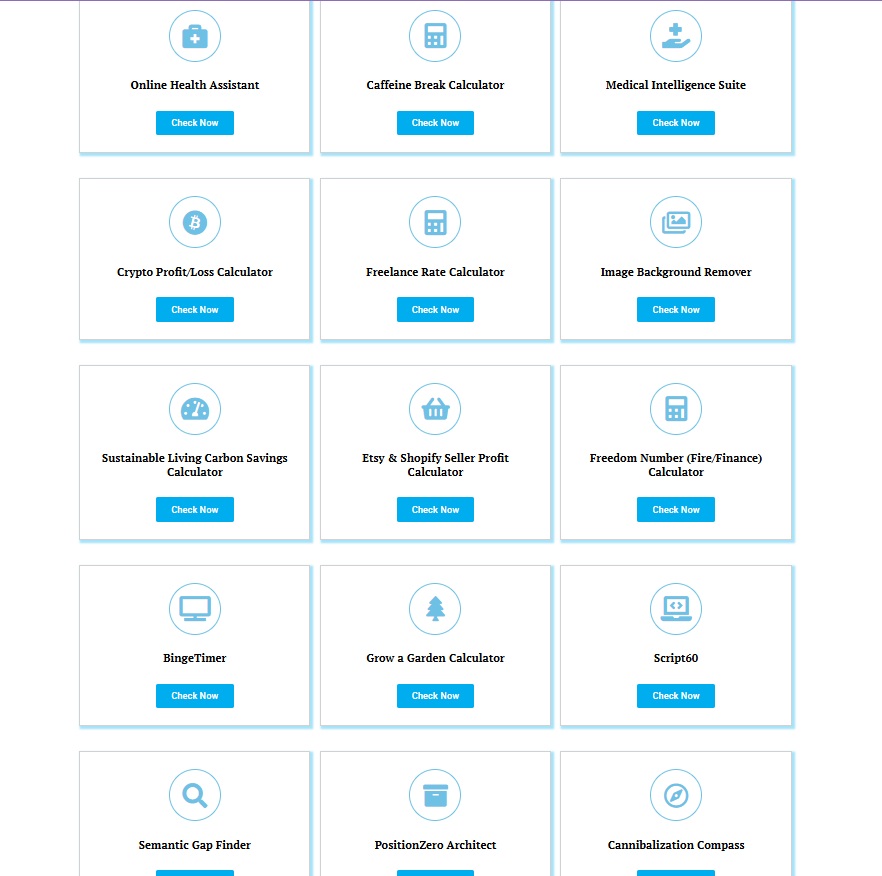
Our micro-SaaS directory currently lists the following tools. The groups below organize the portfolio for this case study; they do not imply technical integration.
| Area | Listed tools |
|---|---|
| Health and daily habits | Online Health Assistant, Caffeine Break Calculator, Medical Intelligence Suite |
| Money and work | Crypto Profit/Loss Calculator, Freelance Rate Calculator, Etsy & Shopify Seller Profit Calculator, Freedom Number (Fire/Finance) Calculator |
| Images and lifestyle | Image Background Remover, Sustainable Living Carbon Savings Calculator, BingeTimer, Grow a Garden Calculator |
| Content and SEO | Script60, Semantic Gap Finder, PositionZero Architect, Cannibalization Compass |
“Micro-SaaS” is the label used in our directory. More precisely, this portfolio consists of free web utilities. It should not be read as a claim that we operate 15 separate subscription businesses.
That distinction matters for founders comparing business models. A useful free calculator can support a publishing business without proving that people will pay for a subscription.
Our guide to SaaS ideas for niche communities explores the related question of choosing a specific audience. Here, the immediate focus was narrower: give a visitor a practical way to complete one task.
Why We Built 15 Micro SaaS Tools Instead of One Large Platform: Publishing and SEO
SEO was part of our reason for building the tools. A dedicated utility can give a reader something to do with the information in an article.
For example, explaining freelance pricing is useful. Providing a calculator lets readers explore their own assumptions. The Freelance Rate Calculator exposes inputs for target pay, taxes, monthly expenses, billable hours, and time off. Its value depends on the inputs and calculation rules, not simply on having a page that targets a keyword.
This also connects with the role of micro-SaaS in the gig economy: a narrow tool can support one part of a freelancer’s work without managing the entire business.
However, SEO intent is not evidence of SEO success. This case study does not report measured gains in rankings, traffic, backlinks, or revenue from the portfolio. It would be premature to attribute any such gains to the tools without dated data and a clear comparison.
The same limit applies to answer engine optimization and generative engine optimization. Google’s guidance for AI search features says established SEO practices remain relevant, with no additional technical requirements for those features.
For our product pages, the practical priorities are clear explanations, accessible content, useful outputs, and honest limits. Publishing more tools does not by itself establish authority or secure AI citations.
Why We Built 15 Micro SaaS Tools Instead of One Large Platform: A Real Editorial Example
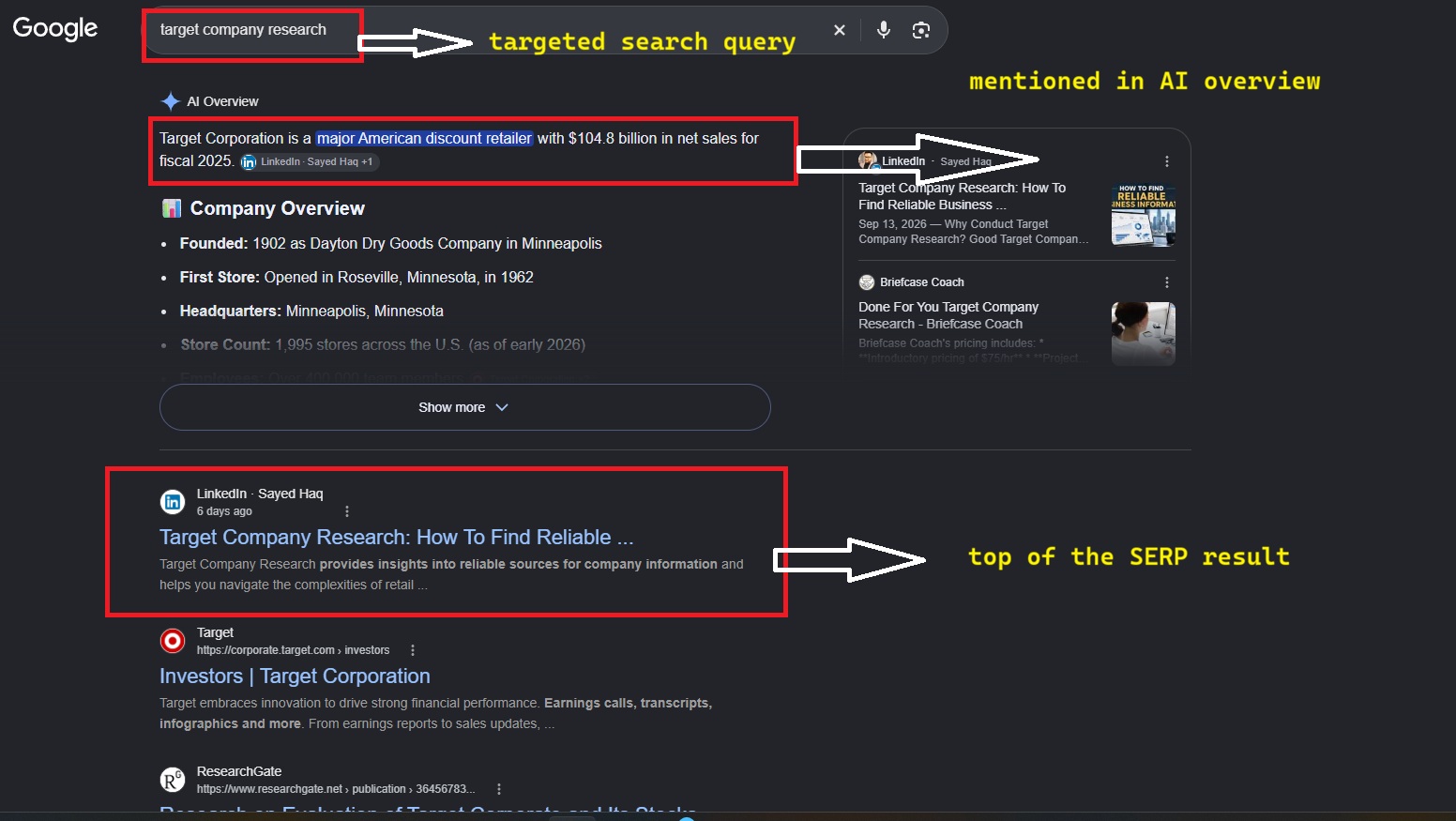
My article on target company research was developed with checks using Semantic Gap Finder and Cannibalization Compass. That is a concrete instance of internal use. It does not establish which suggestions changed the draft or whether those changes improved search performance.
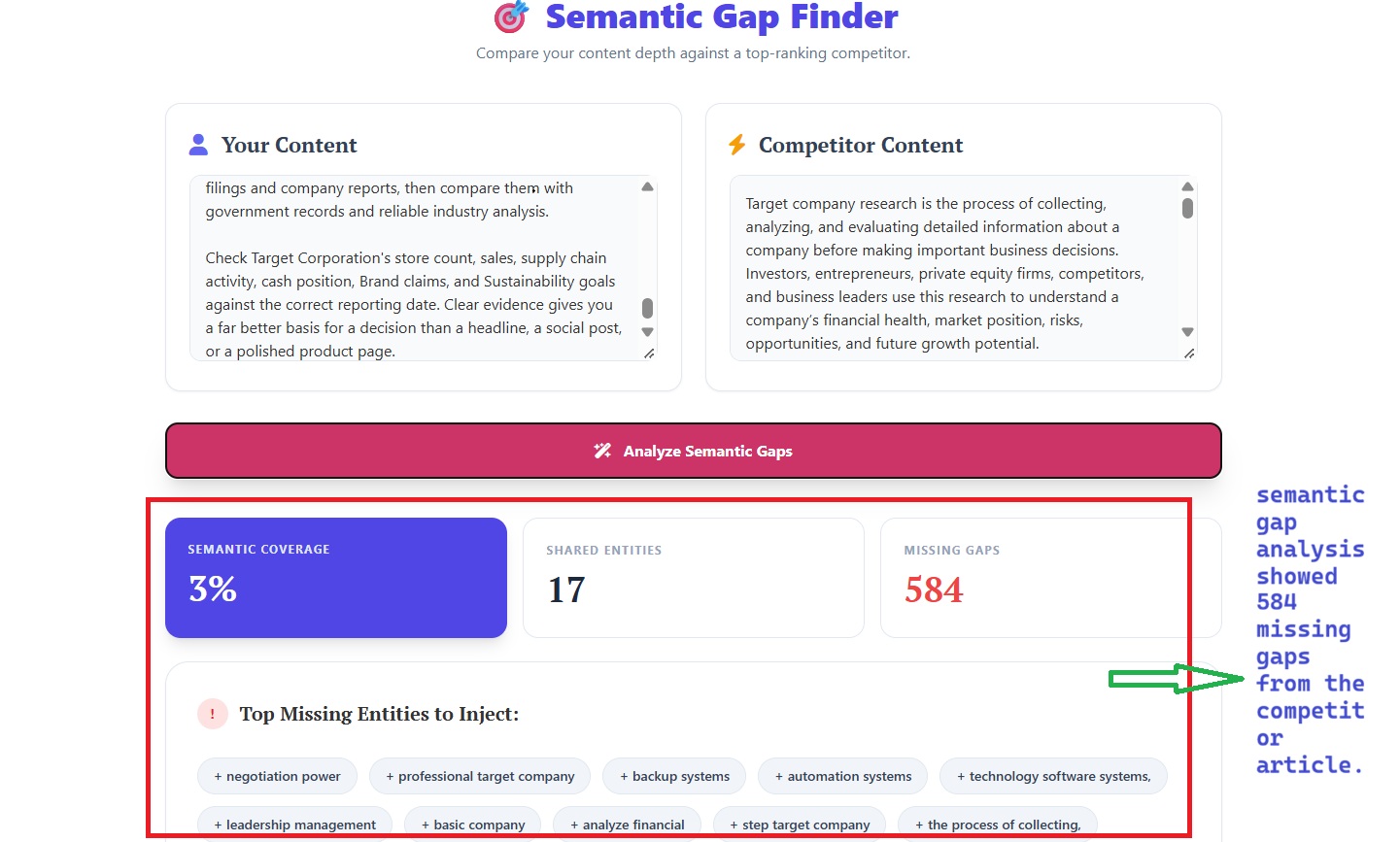
The two tools address different editorial questions. Semantic Gap Finder presents fields for the draft and comparison content, with outputs for coverage and missing terms or entities. Cannibalization Compass compares an existing article with a new draft and presents similarity and shared terminology.
A gap suggestion requires judgment. A topic may appear in a comparison article because that article answers a different question. Adding it automatically can make a draft less focused. Upon successfully applying whatever the Semantic Gap Finder suggested to me, the published article got the highest rank possible with an AI overview on Google.
Likewise, shared vocabulary does not prove that two pages harm each other in search. Two articles may use the same technical terms while serving different reader needs. To make this kind of editorial check repeatable, we recommend the following record. This is a verification procedure, not a reconstructed log of the voice-assistant article:
- Save the draft, comparison text, source URLs, and test date.
- Run Semantic Gap Finder and capture the inputs and output.
- Review each suggestion against the article’s purpose and reliable sources.
- Compare the draft with a relevant existing article in Cannibalization Compass.
- Record accepted and rejected suggestions, with the editor’s reasons.
- Save the revised draft and rerun the same comparisons.
That record would show what the software suggested and what a person decided. The published article alone cannot show either.
Why We Built 15 Micro SaaS Tools Instead of One Large Platform: Errors and Maintenance
Semantic Gap Finder sometimes returned inaccurate results. Our team reports that it has fixed the issue.
That is the extent of the evidence available for this account. We are not presenting a documented root cause, a before-and-after test set, or an independently measured accuracy rate.
The incident still matters. A small utility can produce an output that looks clear and convincing while being wrong. A polished score is not a substitute for checking the underlying comparison.
A useful regression test would preserve the input that produced the bad result. After a fix, the team should rerun that input and related cases, including articles with similar words but different purposes. The expected result should be defined before evaluating the output.
Maintenance also includes the explanation around a tool. During this review, Script60’s page still described 60 seconds as YouTube’s Shorts limit and said a 61-second video becomes long-form. YouTube’s current documentation allows qualifying square or vertical Shorts up to three minutes.
A 60-second script target remains useful. The surrounding claim needs correction. This finding concerns the page’s documentation; it does not establish whether the timer calculates correctly.
Different products also carry different responsibilities. Our health tools publish educational-use disclaimers. Their presence in a directory is not proof of clinical validation. Keeping their interfaces simple does not remove the need for qualified review.
Fifteen small tools still mean 15 sets of assumptions, instructions, and user expectations to maintain.
Why We Built 15 Micro SaaS Tools Instead of One Large Platform: What Comes Next
Separate utilities make sense when people need separate answers. A shared platform becomes more compelling when the same users repeatedly need connected tasks, saved work, and continuity between steps.
Our broader product work reflects that distinction. ImagineLab Art already exists as a larger creative platform. RankPilot AI remains under development. The free utilities serve a different purpose within that product direction.
For founders considering a similar approach, the question is whether separate tools match the work users actually do. Fifteen is not a target worth copying on its own.
Before expanding a portfolio, measure completed tasks, repeat use where relevant, report errors, and measure maintenance effort. For paid products, willingness to pay needs its own evidence. Our guide to building and selling micro-SaaS tools covers that broader commercial path.
We built 15 micro SaaS tools instead of one large platform as an entry into SaaS and a way to offer simple utilities with an SEO purpose. Our internal publishing example shows that some tools also support our own work. The reported accuracy problem shows why that use still needs human review.
The next measure of progress is how reliably each tool completes its intended task—and whether we can show the evidence.
Final Thoughts
We built 15 micro-SaaS tools instead of one large platform because our readers arrive one question at a time, and a platform answers questions in batches. If your traffic is broad and your users are one-time, the page is a better product unit than the product.
If your users return weekly and pay, invert this entirely. Build the platform. The test is not size or ambition. It is whether the same person comes back.
Start with one tool attached to your best-performing article. Ship it rough, revise it inside a week, and only then decide whether tool two is a sibling or a feature.