Parents ask me whether to teach uppercase or lowercase first for children this young, and they want a clean answer. The research does not give one. I build letter-tracing apps for a living, so I have read these studies closely and watched what happens when the order does not suit a child.
The short version: the order matters far less than most of us assumed, and a study published in January 2026 is the reason I say that. Here is what the evidence shows and how to choose for your own two-year-old or four-year-old.
The Short Answer on Uppercase or Lowercase First for Children
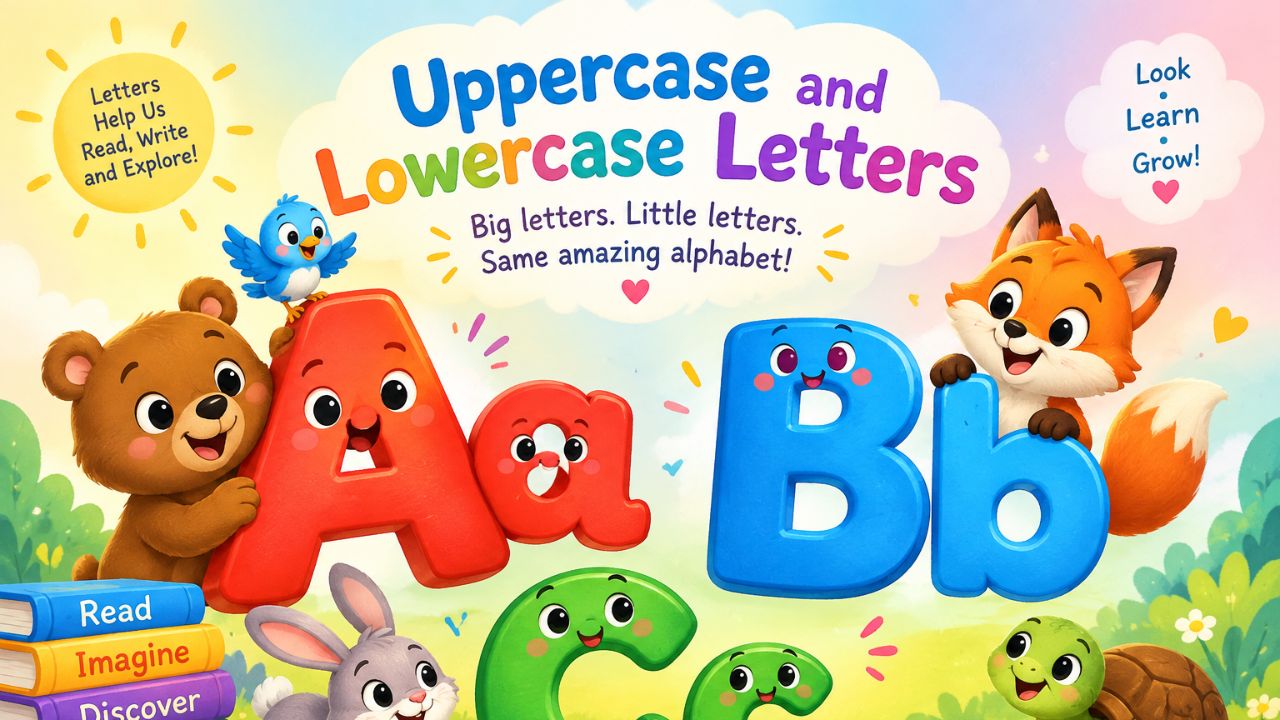
Start with the letters in your child’s name, and show both forms of each letter together. Most American children do learn capitals first, but that appears to be a result of what adults put in front of them, not a rule about how children learn. Withholding lowercase until capitals are mastered is the one choice the research does not support.
What the Research Says About Teaching Uppercase or Lowercase First
Children Really Do Know More Capitals Early
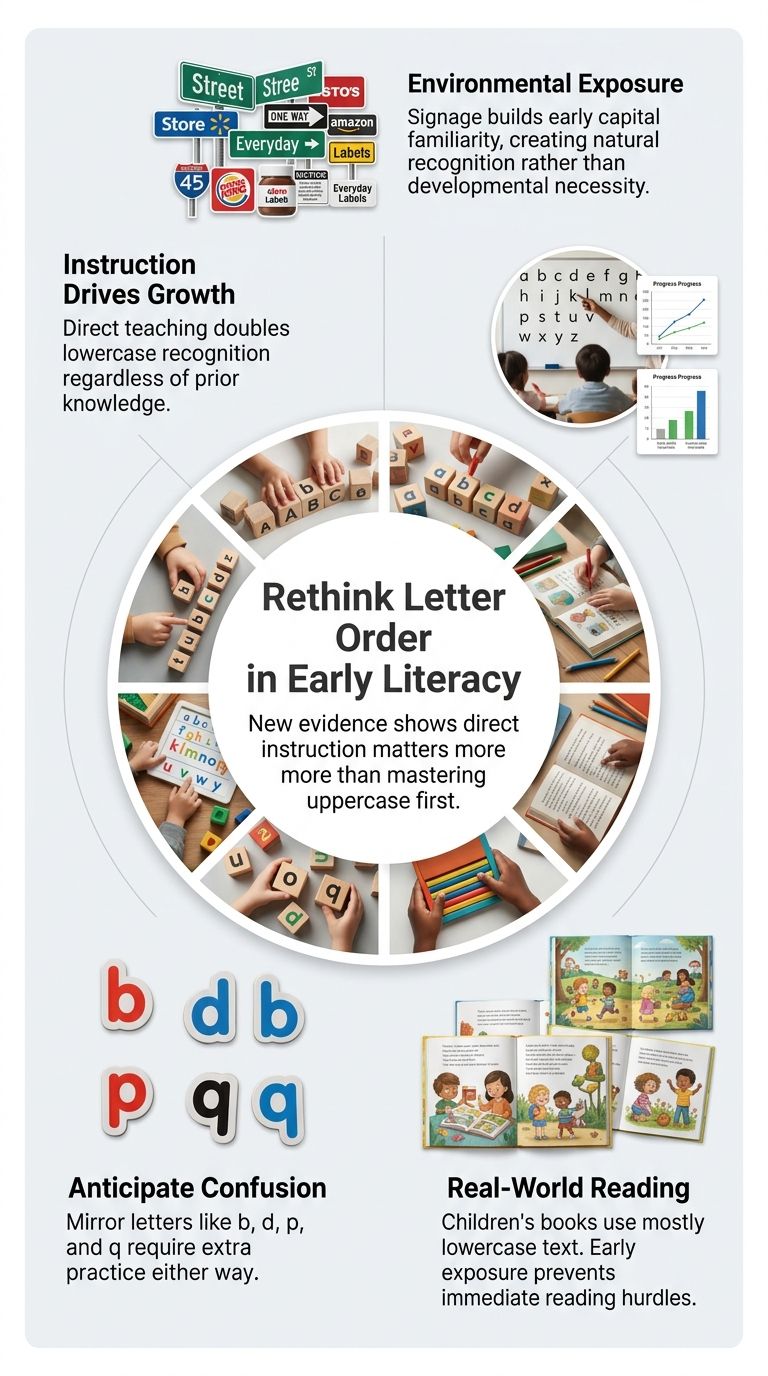
This part is well established. Research from Worden and Boettcher found that young children usually recognize more uppercase letters than lowercase ones, prefer writing in uppercase, and write capitals better in the early years. The explanation may be simple exposure. Environmental print like stop signs and brand logos is full of capitals, and adults tend to emphasize uppercase letters when they teach. Children also identify letters more readily when those letters appear in their first name, especially the very first letter.
So the uppercase advantage is real. The question is whether it is a stepping stone or just a habit.
The 2026 Study That Changed How I Answer This
For years, the advice rested on a correlation. One well-known 2010 study of 461 preschoolers found children were sixteen times more likely to know a lowercase letter name if they knew its capital. On that basis, researchers recommended teaching capitals first or teaching both cases at the same time.
Then someone tested it properly. A January 2026 experiment in Annals of Dyslexia taught lowercase letters one-on-one to 36 children aged three and a half to five, with some letters left untaught as controls. Children were 2.05 times more likely to know a lowercase letter when it had been taught and 3.55 times more likely to know it if they already knew the capital—but knowing the capital made no difference to whether they learned the new letter.
The authors concluded that teaching uppercase letters is not necessary for lowercase learning and that lowercase instruction should be introduced early rather than treated as a second stage after capitals.
That is the finding I now design around. Capitals are not a gate. Teaching is what moves the needle.
Lowercase Is What Books Are Actually Made Of
There is a practical argument too. Children’s picture books present letters mostly in lowercase inside running text. A child who knows only capitals meets a wall on page one. One caution: b and d are mirror images of each other, as are p and q, and l looks much like the number 1—these are the letters that will take the longest, whichever case you start with.
When Starting With Uppercase Suits a Child Better
If your child is two or three, capitals are usually the gentler entry point. Programs like Handwriting Without Tears begin with uppercase because many capitals are made of straight horizontal and vertical lines, which children can draw before they manage slants and curves. Alphabet puzzles, fridge magnets, and blocks are mostly capitals as well, so the practice happens without you arranging it.
Start with the first letter of their name. It is the letter they care about most. If you are unsure whether your child is ready at all, these signs a child is ready to learn letters are worth checking first.
When Starting With Lowercase Suits a Child Better
If your child already recognizes most capitals or is within a year of starting school, move to lowercase now. One experienced educator puts it plainly: in preschool, use your judgment, but by kindergarten, start with lowercase, because that is what reading requires. Lowercase letters also flow better for a child who is already drawing curves, since capitals need more lifting and repositioning of the pencil.
How I Decide in Two Questions
I ask parents two things. Can your child draw a circle and a straight line on request? If not, stay with recognition and sounds for now, not writing. Second, does your child already name ten or more capitals? If yes, stop drilling capitals and bring in lowercase, even if a few capitals are still missing.
Pairing the two forms as you go is the part that pays off. When you show A, show a. Small, regular moments work better than sessions, which is why I like the idea of practicing letters at the dinner table. If you want a realistic timeline, see how long it takes a child to learn the alphabet.
What Matters More Than Uppercase or Lowercase First
The case order is a smaller decision than explicit, regular teaching. Widely used benchmarks suggest that by age five, children should be able to name about 18 uppercase and 15 lowercase letters for the best chance of later reading success, though researchers stress no exact threshold has been proven. Many children fall short of that; in one Head Start sample, children named around 11 uppercase letters on average by spring.
Keep it playful at this age. Alphabet learning games do more for a three-year-old than a worksheet. When we built Alphabet Magic: Trace & Phonics (Android), this research is exactly why we made a specific design call. If you are comparing apps, these signs an alphabet app is too advanced for a child are worth reading before you download anything.
FAQs on Uppercase or Lowercase First for Children
1. Should a 2-year-old learn uppercase or lowercase first?
At two, aim for exposure, not instruction. Capitals are easier to tell apart and easier to trace, so they are a reasonable place to start, beginning with the first letter of their name.
2. Is it harmful to teach only capitals first?
Not harmful, but it delays reading. The 2026 evidence shows children learn lowercase letters when they are taught them directly, so there is no reason to hold lowercase back until every capital is known.
3. Which lowercase letters are hardest for children?
The mirror pairs. Expect b, d, p, and q to take the longest, and do not treat slow progress on those four as a sign of a problem.
Final Thoughts
There is no single right answer to uppercase or lowercase first for children, and anyone who gives you one is guessing. Watch your own child. Start with their name, teach both forms of every letter you introduce, and spend the energy on doing it often rather than on getting the order perfect.