Ever sat in a product review and wondered what actually counts as edtech evidence? I hear that question a lot, because downloads, seat counts, and renewal buzz can look impressive while telling you almost nothing about learning.
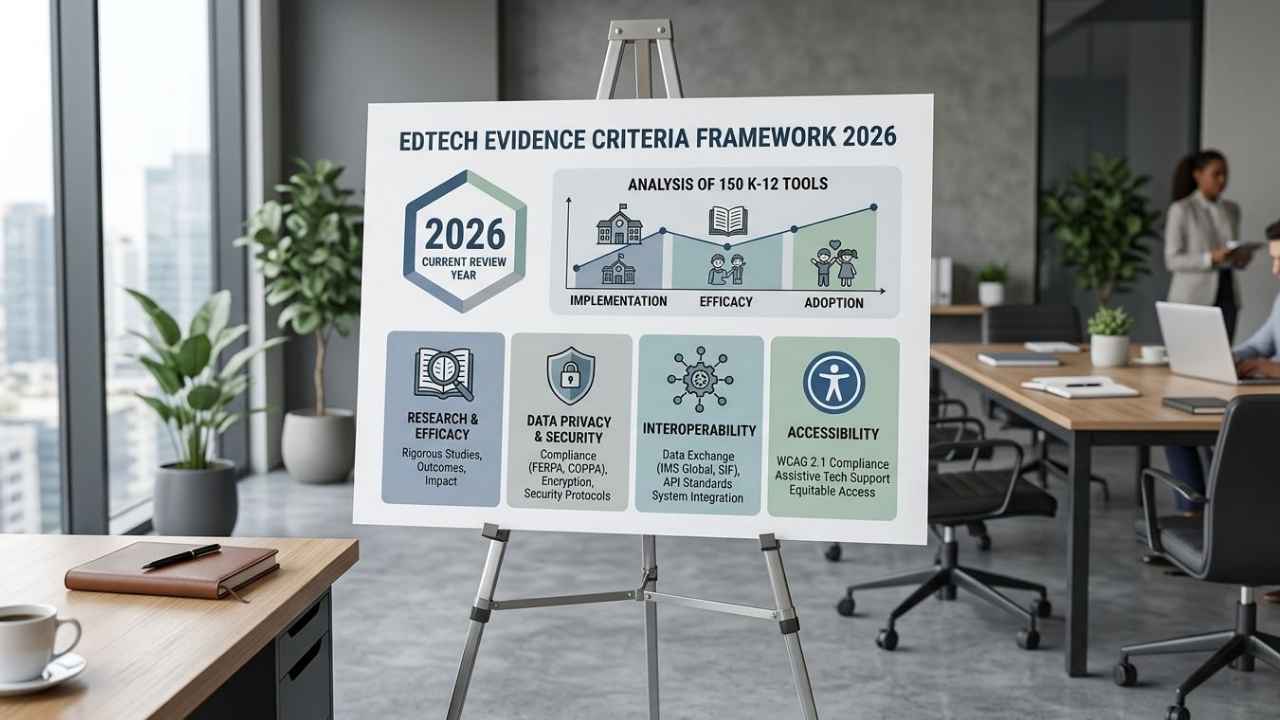
That gap is getting harder to ignore. In the 2026 Instructure and InnovateEDU review of 150 widely used K-12 tools, the whole point was to check research, privacy, interoperability, and accessibility side by side, which tells me district buying teams are asking for a fuller proof package now, not a prettier sales deck.
I am going to walk through what good evidence looks like, how ESSA fits in, where teams get fooled, and how to build an evidence base that actually helps a buyer say yes.
What is EdTech Evidence?
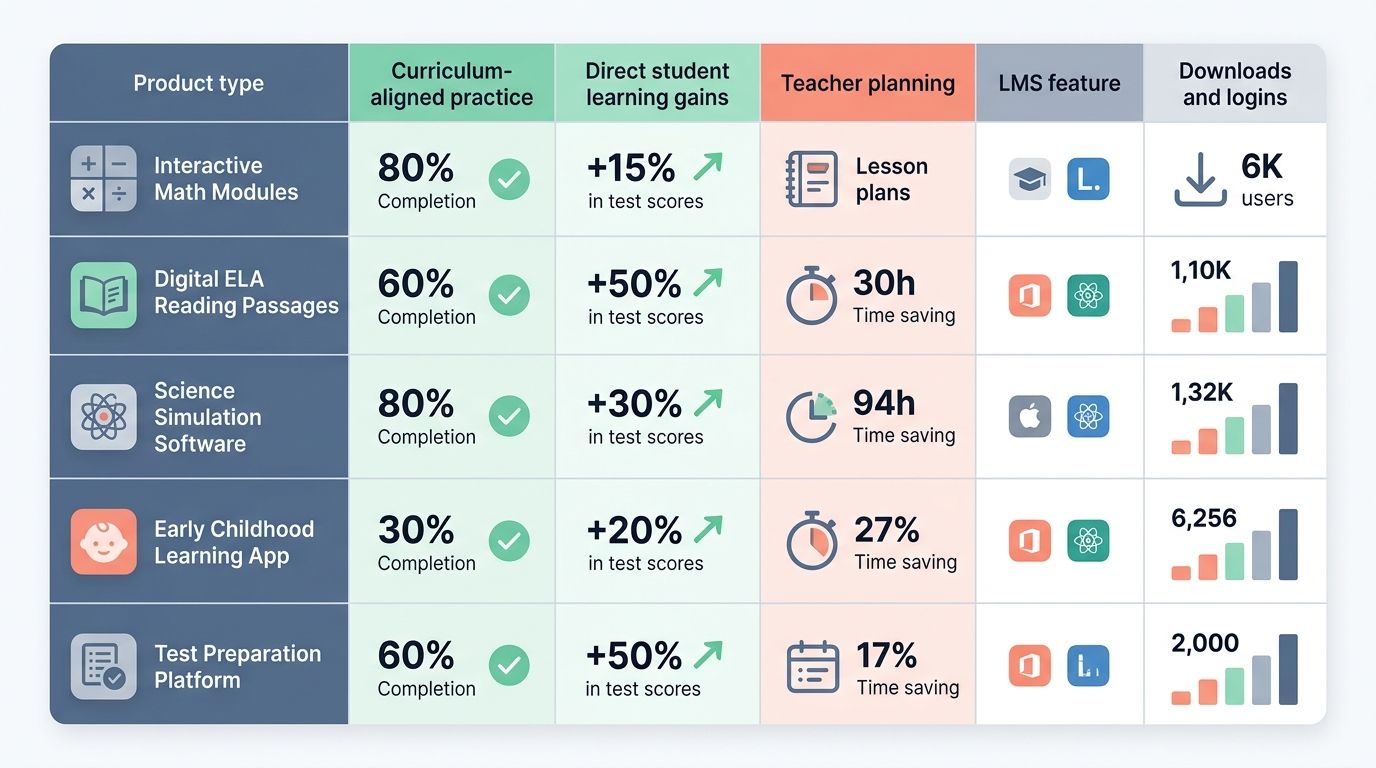
I treat edtech evidence as a scale, not a stamp. The better question is not “Do we have evidence?” but “Do we have the right evidence for this product, this learner group, and this outcome?”
That matters because a curriculum-aligned math tool and a teacher workflow product should not be judged the same way. Structured products with defined learning goals can often use direct student measures, while teacher-support tools may be better judged by changes in planning time, assessment quality, collaboration, or classroom routines.
| Product type | Best evidence target | Measures I trust most | Weak proxy |
|---|---|---|---|
| Curriculum-aligned practice or intervention tool | Direct student learning gains | Curriculum-aligned pre/post tests, benchmark growth, subgroup results | Downloads and logins |
| Teacher planning, grading, or feedback tool | Better instruction or lower workload | Time saved, feedback turnaround, rubric consistency, classroom observation | App time |
| LMS feature or infrastructure layer | Better implementation and delivery | Completion patterns tied to outcomes, integration reliability, teacher adoption by use case | Licenses sold |
I also separate adoption data from impact data every time. User counts, revenue, and renewals can show market traction, but they do not become evidence of impact until they are tied to a measured change in student outcomes, teaching practice, or access for learners.
A theory of change helps here. It is just a plain-language map of how a feature is supposed to lead to a better result, such as spaced retrieval improving math fact fluency or automated feedback shortening the time between draft and revision.
Why Does EdTech Evidence Matter?

Good evidence matters because school systems are no longer buying on excitement alone. The Every Student Succeeds Act, or ESSA, gives districts a shared language for judging whether an educational technology claim is backed by rigorous research or just early promise.
The operational pressure is real. SETDA’s 2025 procurement guide reported that the average number of edtech tools a district accessed jumped from 841 in the 2018-2019 school year to 2,739 in 2023-2024. When a district is sorting through that much sprawl, evidence becomes a filtering tool, not a nice extra.
I think evidence matters even more in the AI cycle than many teams admit. Stanford’s 2026 review of AI in K-12 scanned more than 800 papers and found only 20 high-quality causal studies, which is a strong reminder that fast product growth and a large research conversation are not the same thing.
- It speeds procurement: Buyers can compare your product against familiar benchmarks such as ESSA tiers, WWC standards, and district RFP questions.
- It improves renewal conversations: A product with documented student outcomes, implementation notes, and subgroup results gives district leaders something concrete to defend.
- It protects against false positives: Engagement spikes can come from novelty, mandated use, or teacher effort, not product quality.
- It clarifies what proof you still need: A strong rationale, a pilot, and an external study each answer different research questions.
Named signals can help, too. Digital Promise certifications, CAST’s UDL Product Certification, 1EdTech trust and interoperability checks, iKeepSafe privacy programs, and Project Unicorn indicators can all strengthen a vendor story, but I never treat them as substitutes for learning evidence. They tell me whether a tool looks safer, more usable, or better aligned, not whether it raised student outcomes on its own.
The ESSA Tiers of Evidence
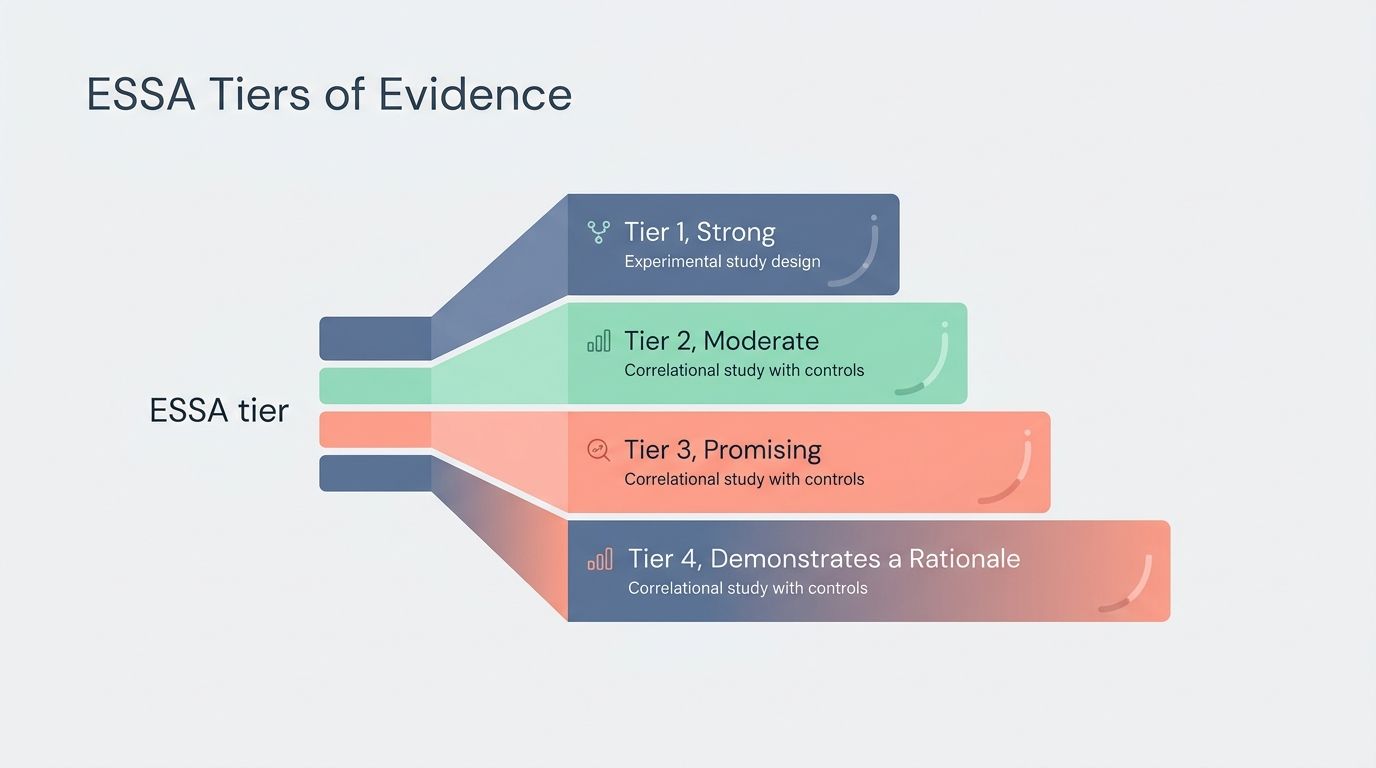
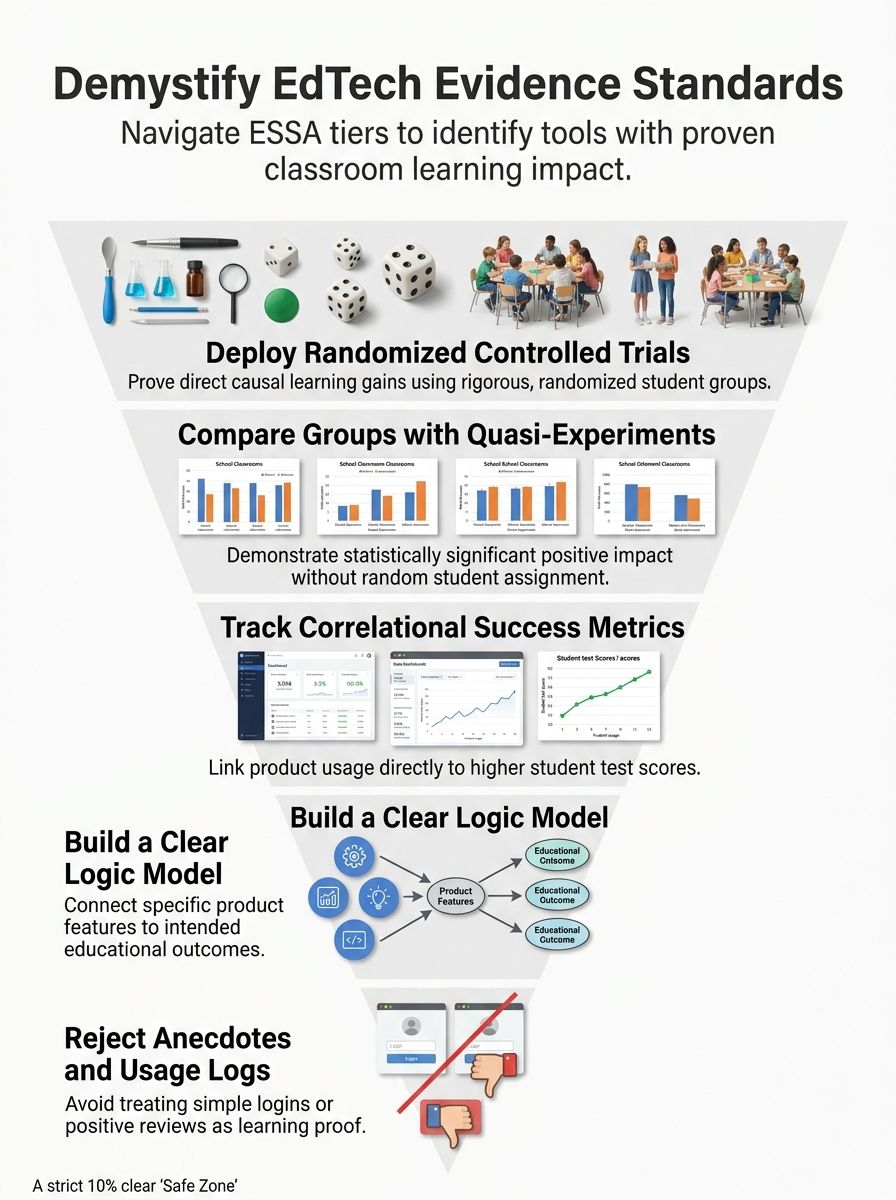
I use the ESSA tiers as a decision-making shortcut, because they help me sort early promise from real causal evidence without pretending every product needs a full randomized controlled trial on day one. Vendors such as ExploreLearning now publicly map products to ESSA tiers, and that simple move makes buyer review much faster.
| ESSA tier | What it usually means | What I want to see |
|---|---|---|
| Tier 1, Strong | Experimental evidence of a positive, statistically significant impact | Random assignment, valid outcomes, relevant context, no conflicting negative findings |
| Tier 2, Moderate | Quasi-experimental evidence of a positive, statistically significant impact | Credible comparison group, baseline equivalence, transparent analysis, relevant context |
| Tier 3, Promising | Correlational evidence with statistical controls for selection bias | Clear variables, real outcome measures, reproducible method, honest limitations |
| Tier 4, Demonstrates a Rationale | A logic model grounded in research, with evaluation underway | Theory of change, measurable milestones, implementation plan, next study already scoped |
Department of Education guidance adds one detail teams often miss: Tier 1 should overlap both your setting and your student population, while Tier 2 needs one or the other. That sounds technical, but it changes buying decisions fast, because a polished study in the wrong context is weaker than many sellers think.
- Buyer question 1: What exact outcome was measured?
- Buyer question 2: Who was compared to whom, and was the comparison fair?
- Buyer question 3: Can I find the study through trusted review channels such as the What Works Clearinghouse or Evidence for ESSA?
Tier 1: Strong Evidence: Tier 1 is the closest thing edtech has to a clinical trial. Students, classrooms, or schools are assigned to treatment and comparison groups, and the study tests whether the product caused a statistically significant improvement in student outcomes. If a vendor can show random assignment, valid outcome measures, and implementation details across more than one site, I take the learning claim very seriously.
Tier 2: Moderate Evidence: Tier 2 usually relies on a well-built quasi-experimental design instead of random assignment. That means the study creates a comparison group that looks like the treatment group at baseline, then tests whether the product is associated with better results. This is often where serious edtech providers first become procurement-ready, because the design can still answer the question buyers care about most: did comparable students do better with the tool?
Tier 3: Promising Evidence: This is where many sensible pilots live. The study still needs transparent methods and statistical controls for selection bias, and it can be enough to justify a careful expansion if the outcome measure is real, the sample is relevant, and the vendor is honest about the limits. This is also the territory where outcome-oriented signals, such as Digital Promise’s Evidence-Based Edtech certification, can help buyers see that a product has moved beyond pure rationale.
Tier 4: Demonstrates a Rationale: Tier 4 means you have a clear logic model grounded in research, plus a real plan to test whether the product works as intended. This is often the right starting point for new edtech tools, and it is exactly why research-based design signals matter. If I see a tight theory of change, relevant prior research, and an evaluation plan already underway, I see a company building an evidence portfolio on purpose.
Characteristics of High-Quality EdTech Research
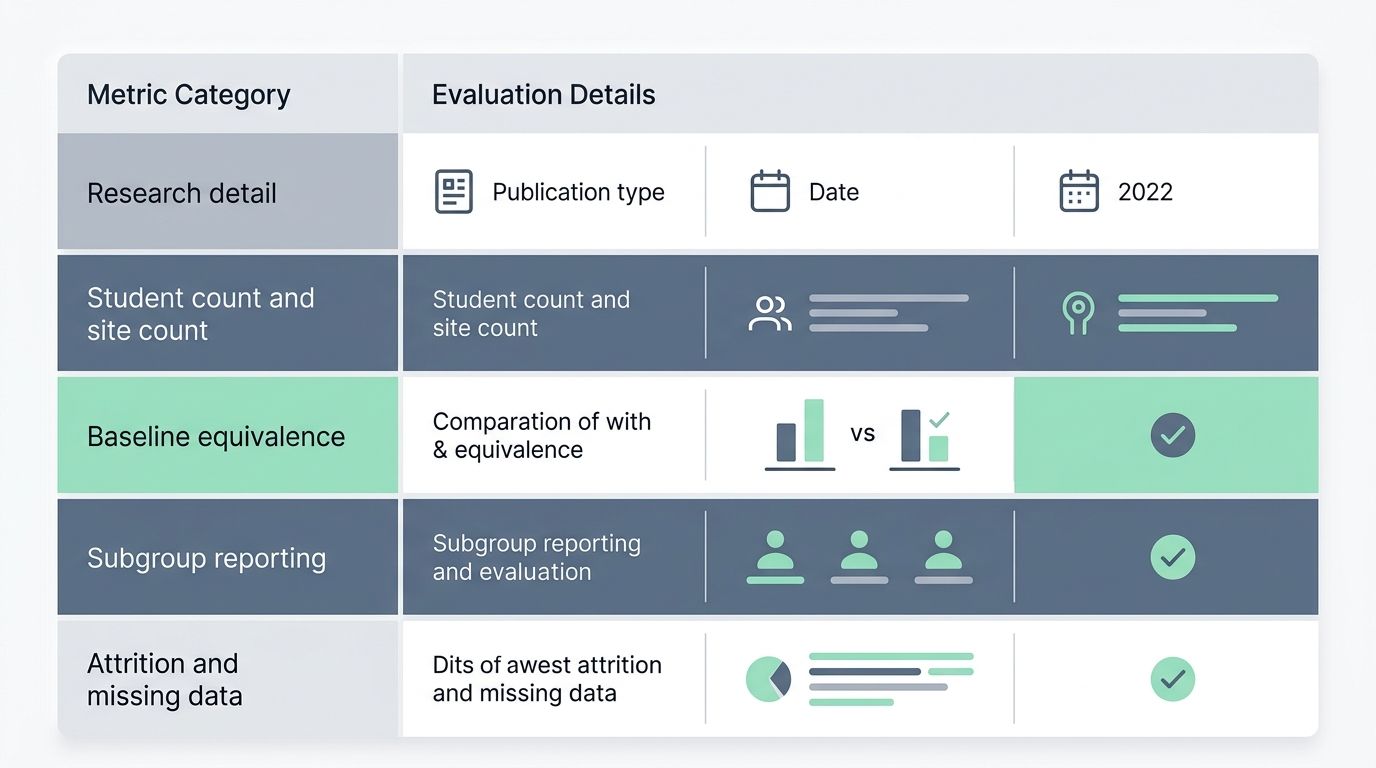
When I read research, I look for a few quality signals before I care about the headline result. I want quantitative research and qualitative research to work together, with each doing a clear job.
Independent Evaluation and Peer Review
Independent review matters because it cuts the easiest source of bias, the company grading its own homework. I give more weight to studies run by universities, research nonprofits, district research offices, or external evaluators that explain the design, data collection, and limitations in plain English.
Third-party signals can help buyers move faster. Useful examples in U.S. procurement include Digital Promise, the What Works Clearinghouse, Evidence for ESSA at Johns Hopkins, and Instructure’s ESSA Evidence Badges. They do not replace a good study, but they do tell me a claim has faced outside scrutiny.
- Best signal: an external study with transparent methods and outcome definitions.
- Helpful support: peer review, a recognized certification, or a public technical report.
- Weak support: a marketing whitepaper with no sample details, no comparison group, and no limitations section.
Large, Diverse Sample Sizes
Sample size matters because buyers need to know whether a result travels. A tool that works in one school with one champion teacher may still fail in a typical district rollout.
I want to see the number of students, schools, grades, and subgroups, plus attrition. If a product claims equity impact, the study should show subgroup reporting. If it claims national scalability, the study should span more than one classroom and ideally more than one district.
| Research detail | Why I care |
|---|---|
| Student count and site count | Helps me judge whether the result is stable or just local noise. |
| Baseline equivalence or random assignment | Tells me whether the comparison is fair. |
| Subgroup reporting | Shows whether the tool works across the learners the product says it serves. |
| Attrition and missing data | Protects me from results that improve only because the hardest cases disappeared from the sample. |
Implementation Fidelity in Real-Classroom Settings

This is the most overlooked part of understanding edtech evidence. A study can be perfectly designed and still mislead you if nobody explains how often the tool was used, what teacher training was provided, and whether classrooms followed the intended model.
- Usage expectations: minutes per week, total weeks, and where the tool sat in the lesson flow.
- Operational setup: roster sync, LMS integration, device requirements, and troubleshooting burden.
- Teacher support: onboarding time, coaching, and whether staff actually used the product as intended.
- Accessibility and usability: VPAT documentation, WCAG alignment, and barriers for specific learner groups.
One middle-school math pilot made this concrete for me. Over 6 weeks, 8 teachers used an adaptive tool with 320 students during regular lessons. Only 74% of lessons met the intended usage protocol, which turned out to matter more than headline usage totals.
Classes that stayed on protocol posted a 0.18 standard deviation gain on short-form, curriculum-aligned pre/post tests, compared with 0.03 in low-fidelity classes. The teacher support was modest, 45 minutes of initial training and one 20-minute follow-up coaching session.
Fidelity beat raw usage in that pilot. The better question was not “How many students logged in?” It was “Who used the tool the way the model required, and what changed for those learners?”
District teams now check accessibility, privacy, usability, and interoperability alongside learning outcomes for a reason. A product that cannot be implemented cleanly in real classrooms rarely scales cleanly either.
Common Misconceptions: What Doesn’t Count as Good Evidence
I see the same evidence mistakes over and over, especially in early sales decks and internal product reviews. Here is what I do not count as good evidence in edtech.
- Anecdotes presented as proof: A teacher quote can show fit or satisfaction. It cannot prove that the product changed student outcomes.
- Usage metrics without outcome data: High logins, long session time, and completion streaks can reflect compliance, novelty, or even confusion. I want to see those metrics linked to a performance indicator that matters.
- Internal whitepapers with missing methods: If I cannot find the sample, comparison logic, outcome measure, and limits, I treat the document as marketing, not research.
- Correlation dressed up as causation: If heavier users outperform lighter users, I need to know whether they also started stronger, had stronger teachers, or got more support.
- Proprietary assessments used as the only success measure: A product looks stronger when it is graded only by its own test. External or curriculum-aligned measures are more convincing.
- Accessibility, privacy, or interoperability seals used as efficacy claims: Those checks matter for procurement. They do not prove learning gains by themselves.
- Flashy AI or design features treated as impact: A chatbot, dashboard, or adaptive engine is a feature set. Evidence begins only when you can show what changed for students or teachers because of it.
If a vendor hands me one of these weaker proof points, I do not throw it out. I just reclassify it. It might support design quality, safety, or adoption, while the real learning claim still needs stronger evidence.
Moving Forward: Building Evidence-Driven EdTech Solutions

Moving forward, I build evidence-driven edtech solutions in layers. I do not wait for a perfect randomized controlled trial before learning anything, but I also do not confuse early feedback with proof.
- Start with a sharp theory of change: Name the feature, the user behavior it should change, the learning outcome you expect to move, and the research questions you need to answer first.
- Instrument the product early: Set up LMS or product analytics so you can track dosage, completion, subgroup patterns, and teacher actions in a way a researcher can actually use.
- Run a disciplined pilot: Define success before launch, use curriculum-aligned pre/post measures, and document implementation fidelity, training, and support tickets.
- Commission external evaluation at the right moment: Many teams are ready for a quasi-experimental study before they are ready for a randomized controlled trial, and that is fine if the design answers a real buyer question.
- Package the evidence for procurement: Create one short evidence brief with ESSA tier, sample, context, outcome measure, effect, limitations, privacy posture, accessibility documentation, and integrations.
| Stage | Main deliverable | Why buyers care |
|---|---|---|
| Foundational | Theory of change, research rationale, design assumptions | Shows why the product should work |
| Pilot | Outcome dashboard, fidelity log, teacher feedback | Shows the tool works in practice |
| Validation | External study, ESSA mapping, technical report | Shows procurement readiness |
| Scale | Multisite replication, subgroup results, cost-effectiveness analysis | Shows durability and return on investment |
The last piece is choosing the right outside door. The What Works Clearinghouse helps buyers locate reviewed studies, Evidence for ESSA helps schools scan programs by topic, Digital Promise certifications signal design or Tier 3 readiness, and the Learning Cabinet is useful if you want your evidence story assessed in a broader framework.
A practical evidence plan also needs a budget, not just a research wish list. For one product line, I mapped a 12-month evidence portfolio at $145,000: $18,000 for formative pilots, $22,000 for LMS analytics instrumentation and dashboards, $55,000 for an independent quasi-experimental study, $30,000 for a small randomized classroom A/B pilot, $12,000 for materials and teacher stipends, and $8,000 for data cleaning and reporting.
That mix works because it balances fast iteration with independent validation. If you are building an edtech solution for U.S. districts, this is the kind of evidence base that makes later procurement conversations easier, because you can answer research, implementation, and compliance questions from one place.
Final Thoughts
I want edtech evidence to be clear enough that a district leader can tell the difference between adoption, design quality, and real impact. Good evidence can include a randomized controlled trial, a quasi-experimental study, a strong pilot, or a theory of change, as long as the method fits the claim and the product stage.
When teams separate learning outcomes from usage noise, the result is better procurement, stronger edtech products, and more trustworthy gains for students.
FAQs About What Counts as Good Evidence for an EdTech Product
1. What counts as good evidence for an EdTech product?
Good evidence shows an EdTech product improves learning outcomes for real learners, uses clear data, and reports on validity and reliability.
2. What research designs matter most?
Randomized controlled trials and strong quasi-experiments give the best proof of impact. Pilot studies and classroom tests help show fit and usability.
3. How do institutions judge if an EdTech product fits their needs?
They check data on learning gains, real classroom use, ease of implementation, cost, and feedback from educators and learners.
4. What should vendors include in an evidence package?
Include study designs, effect sizes or learning gains, and raw data when possible. Add implementation guides and real user feedback, think of evidence like a recipe, show the steps and the taste test.