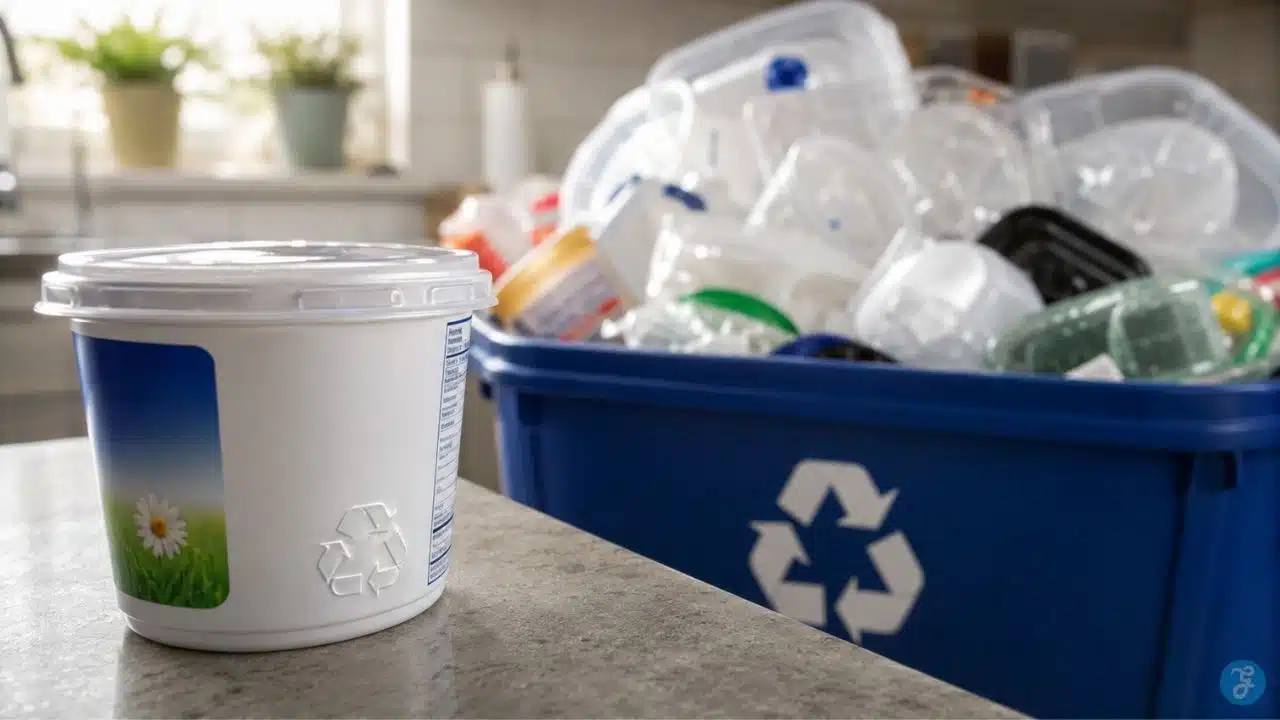
The most successful trick in plastic packaging is not hidden in tiny legal language. It is printed right in front of us. Three little arrows. One small number. A quiet signal that says, “Relax, this has a responsible ending.” So we do what we have been trained to do. We rinse the yogurt cup. We flip over the shampoo bottle. We check the bottom of the takeout container. We see the symbol and feel that small, familiar relief: at least this one can go in the recycling bin.
Then reality ruins the comfort. Because the recyclable symbol meaningless problem is not just about a confusing icon. It is about a whole packaging culture that turned a technical sorting mark into a public promise. It let companies sell disposable plastic with a tiny moral escape hatch printed on the bottom. It gave consumers just enough information to feel responsible, but not enough to know what would actually happen after the bin.
That is the part that bothers me most. People are still being blamed for getting recycling wrong, while the labels themselves have spent decades making the wrong answer look reasonable.
Why the Recyclable Symbol Meaningless Problem Starts With Trust
The recycling symbol worked because it was simple. That simplicity made it powerful. It also made it dangerous. Most people do not have time to study local recycling rules every time they finish a container of hummus or open a package of strawberries. They do not know which plastic films need store drop-off, which black trays optical sorters might miss, which clamshells are accepted locally, or which “technically recyclable” items have no real buyer after collection.
They look for the arrows. That is not laziness. That is how symbols work. A symbol is supposed to reduce confusion. It is supposed to help people make a quick decision.
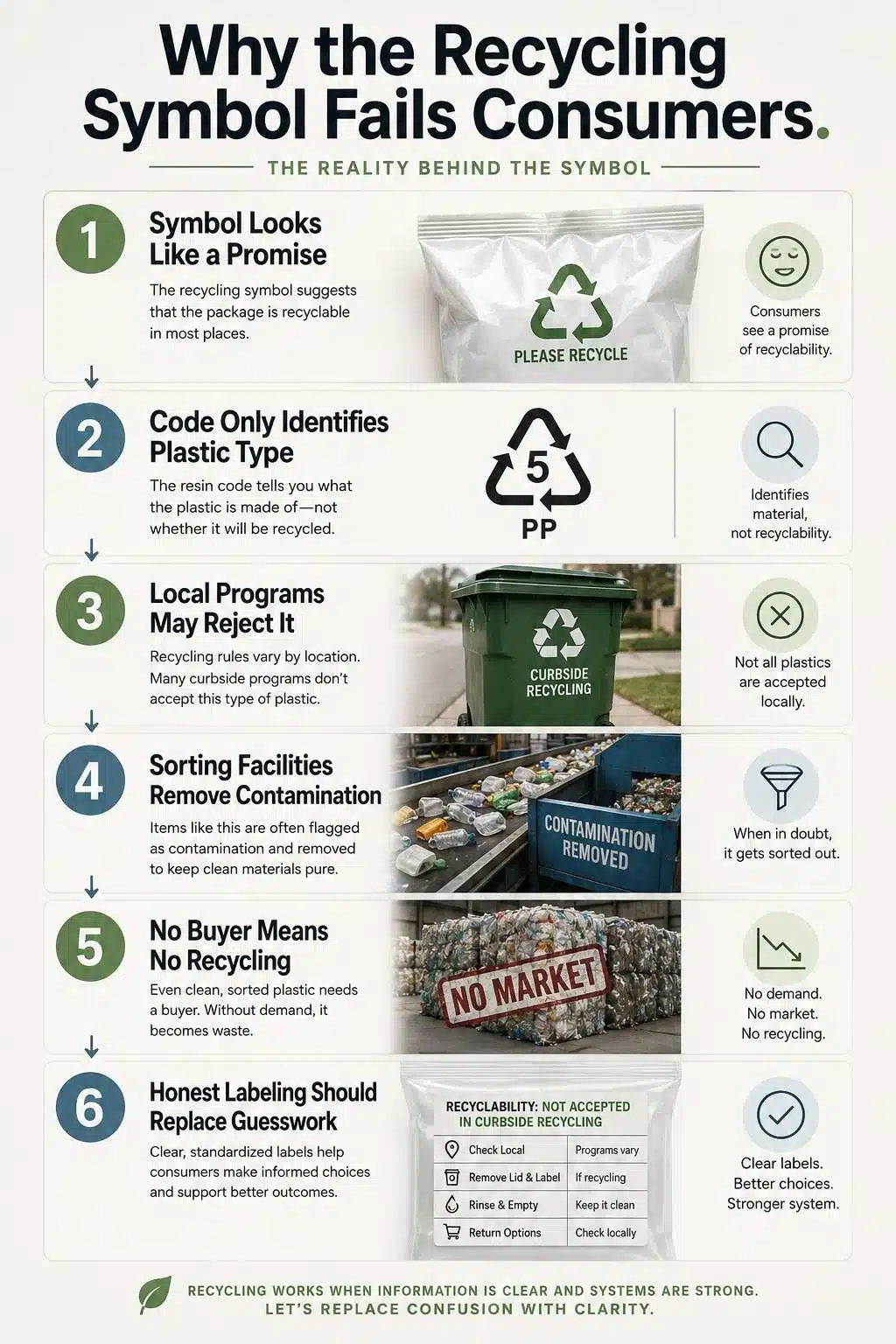
The problem is that the chasing arrows do not really tell consumers what they think they tell consumers. They look like a promise of circularity, but often they only point to a material category, a theoretical possibility, or a local maybe.
And brands benefit from that maybe. The arrows make a disposable package feel less disposable. They suggest that the story does not end in a landfill, an incinerator, a waste export stream, or a bale of mixed plastic nobody wants to buy. They create the emotional impression of a loop, even when the actual material journey is closer to a dead end.
That gap between what the symbol suggests and what the system delivers is where trust starts to break.
The Plastic Recycling Code Was Never a Consumer Promise
Here is the detail that should be common knowledge but somehow still is not: the plastic recycling code is not proof that an item will be recycled.
The number inside the triangle is a Resin Identification Code. It tells you what type of plastic resin the item is made from. PET. HDPE. PVC. LDPE. Polypropylene. Polystyrene. Other. That information can help with sorting and manufacturing, but it does not automatically mean your city accepts the item, your local facility can process it, or anyone wants to buy the material after it has been collected. That difference sounds technical, but it is the whole problem.
A plastic container can carry a resin code and still be rejected by curbside recycling. It can be technically recyclable in a narrow engineering sense and practically unrecyclable in the system ordinary people use. It can be accepted in one community and treated as contamination in another. It can be collected with good intentions and still end up trashed because the economics do not work. This is why the old explanation of “people just need more education” feels insulting.
The public did not invent the confusion. The packaging did. The resin number may have been technical, but the arrows were emotional. Put a number inside three chasing arrows and most people will read it as a recycling instruction. Of course they will. That is the visual language they were taught.
At some point, when a symbol keeps misleading people in the same predictable way, it is no longer just misunderstood. It is badly designed for the public.
How the Chasing Arrows Became Packaging’s Cleanest Little Lie
The phrase chasing arrows lies sounds harsh until you look at what the symbol has been allowed to do. It reassures people. That reassurance has commercial value.
A plastic pouch, tub, tray, bottle, cap, clamshell, wrapper, or container feels less wasteful when a recycling-looking mark appears somewhere on it. It softens the guilt of buying something disposable. It gives the customer a simple ending to a messy story: buy it, use it, rinse it, toss it in the blue bin, move on. That is a very convenient story for companies that sell mountains of packaging.
The problem is that the real system is full of conditions the symbol does not show. Some plastic is too contaminated. Some is too lightweight. Some is too dark. Some is layered with other materials. Some has labels, adhesives, dyes, caps, coatings, or additives that make recovery harder. Some can be sorted but has weak market value. Some gets downcycled into lower-value products and never becomes packaging again.
But the symbol stays tidy. It keeps implying a closed loop even when the loop is broken, partial, local, expensive, or imaginary.
That is why I am comfortable calling it a lie in the practical consumer sense. Not always a legal lie. Not always a deliberate fraud by every brand that uses it. But a lie in effect, because ordinary people read the arrows as a promise that the item has a real recycling path.
Too often, it does not. The symbol says, “This loops.” The waste system says, “Sometimes. Maybe. Not here. Not this format. Not at scale. Not profitably. Not after contamination. Not with this label. Not with this market.” That is not a promise. That is a shrug wearing a green halo.
The Recycling Symbol Misleading Problem Is Already in the Rules
This is not just environmental frustration. Regulators have already recognized that recyclable claims can mislead people.
The FTC Green Guides say marketers should not misrepresent whether a product or package is recyclable. They also say unqualified recyclable claims need real access to recycling programs for a substantial majority of consumers or communities where the item is sold. In the Green Guides, that substantial majority benchmark is 60 percent.
That matters because recyclability cannot be treated as a fantasy property. It is not enough for a package to be recyclable somewhere, under ideal conditions, in a facility most consumers cannot access. A meaningful claim has to connect to the world where people actually live.
This is where packaging marketing gets slippery.
“Recyclable where facilities exist” sounds responsible until you realize how much work that phrase dumps onto the consumer. Where are the facilities? Does my city accept this item? Is the lid included? What about the sleeve? What about the pump? What about the color? Will it be sorted? Will it be sold? Will it actually become something new?
The label gives the emotional reward first and the homework later. That is not transparency. It is a legal fog machine with a leaf icon.
A useful label should reduce confusion at the bin. Too many recyclable-looking labels do the opposite. They take a complicated local infrastructure problem and make it look like a simple household choice.
Then, when people choose wrong, the consumer gets blamed.
The Real Recycling System Is Nowhere Near as Circular as the Symbol
The recycling symbol shows a loop. The data shows a leak. Globally, OECD reported that only 9 percent of plastic waste was ultimately recycled in 2019 after accounting for recycling losses. In the United States, EPA’s 2018 municipal waste data showed 35.7 million tons of plastic waste generated and only 3 million tons recycled, an 8.7 percent recycling rate.
That number should make every casual use of the chasing arrows feel more serious. A material stream with a recycling rate below 10 percent should not be covered in a symbol that makes circularity look normal.
Yes, some plastic categories perform better. PET bottles and jars do better than many plastics. Natural HDPE bottles do better too. Some rigid containers have a more realistic recycling pathway depending on the local system. This nuance matters, because the answer is not “nothing is ever recyclable.”
The answer is worse than that. Some things are recyclable enough to keep the symbol credible, while many other packages borrow that credibility without deserving it.
That is how the confusion survives. The success of certain bottles helps protect the reputation of a much messier plastic universe. Consumers see the same general recycling language across very different items and assume the system is more capable than it really is.
A clear bottle and a multilayer snack pouch do not belong in the same moral category. But the packaging world has spent years letting the same general visual language blur the difference.
Plastics 3 Through 7 Are Where the Symbol Really Starts to Fall Apart
The most honest recycling label would probably sound awkward. Something like: “This item is made of plastic type 5, which may be accepted in some curbside programs depending on local sorting equipment, contamination rules, market demand, and packaging design.”
Not exactly a beautiful label. So we get arrows instead.
The problem is especially ugly with many plastics numbered 3 through 7. PVC, LDPE films, polypropylene containers, polystyrene foam, mixed “other” plastics, flexible pouches, multilayer packaging, black plastic trays, convenience-food packaging, and assorted lids and pumps all carry their own recovery problems. Some can be recycled in specific systems. Some have niche programs. Some are accepted in certain places. Some are technically possible but practically neglected.
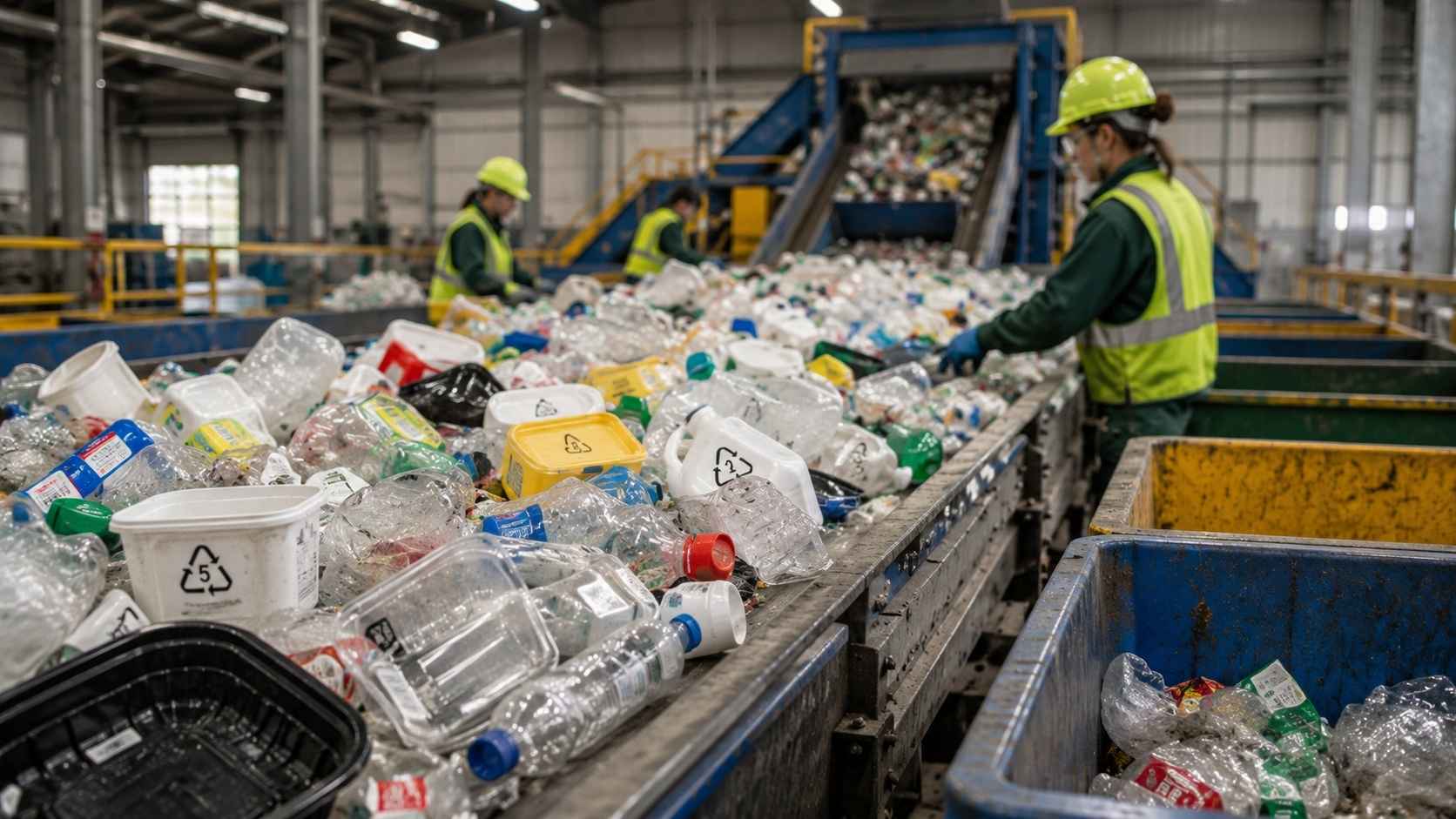
That nuance gets flattened by the symbol. The consumer does not see infrastructure limits. They see a familiar recycling mark and assume the object belongs in the bin. If the facility later pulls it out as contamination, the consumer never knows. If the item is sorted into a low-value mixed-plastic bale, the consumer never knows. If the bale has no buyer, the consumer never knows.
That ignorance is not accidental. It is built into the convenience of the label. A symbol that cannot explain the difference between widely recycled, locally accepted, technically recyclable, store-drop-off only, and basically wishful thinking should not be doing so much public-facing work.
Wishcycling Is a Labeling Failure Before It Is a Consumer Failure
People love to scold consumers for wishcycling. The word has become a polite way of saying, “You people keep throwing the wrong things in the bin.” And yes, contamination is real. Plastic bags jam equipment. Food residue causes problems. Foam, films, small items, and odd packaging can create headaches for recycling facilities. Bad sorting costs money.
But let’s stop pretending consumers made this mess alone. People wishcycle because packaging taught them to wishcycle.
For decades, brands printed recycling-looking marks on items that local systems often could not recycle. Municipal messaging told people to recycle more. Sustainability campaigns made recycling feel like a personal duty. Product packaging added green cues, arrows, leaves, earth tones, and vague claims that made the responsible choice look obvious.
Then consumers got blamed when the obvious choice was wrong.
That is a neat little transfer of responsibility. The brand designs the confusing package. The consumer guesses. The recycling facility deals with the consequences. The municipality pays. The taxpayer pays. The brand gets to keep selling the next version of the same disposable thing.
This is why the blue bin has become less like a recovery system and more like a public guilt container. People drop things into it hoping the system will forgive the purchase. That is not circularity. That is emotional waste management.
California Is Forcing the Symbol to Prove Itself
California’s SB 343 matters because it treats the chasing arrows as what consumers already think it is: a recyclability claim.
CalRecycle says the law restricts the use of the chasing-arrows symbol and other recyclability indicators unless products and packaging meet certain criteria. The restrictions apply to products and packaging manufactured after October 4, 2026.
That date is important because it signals that the old honor system has failed.
For years, companies could enjoy the recycling halo without proving that the package had a meaningful recycling pathway. California is trying to tie the symbol to actual collection, sorting, design compatibility, and real-world recycling conditions. That is not anti-recycling. It is anti-bullshit.
A recycling symbol should not be a decoration. It should not be a sustainability mood. It should not be slapped onto packaging because consumers expect to see it there. If the item is widely accepted, sorted, processed, and sold into a real market, label it clearly. If it is not, stop borrowing credibility from materials that actually have a better recycling pathway.
The symbol should earn its place. That should not be controversial.
The Industry’s Patchwork Complaint Is Real, but It Is Not Enough
The packaging industry does have a fair complaint about messy rules.
Some states still require certain plastic packages to carry resin identification codes. California is moving toward stricter truth-in-recycling standards. Other states may create their own versions. Companies sell products across state lines. Packaging updates cost money. Compliance teams have to deal with a legal patchwork that is annoying, expensive, and probably overdue for national reform.
That part is real. But regulatory inconvenience does not excuse consumer confusion.
If old state laws force misleading designs, update the laws. If companies need consistency, push for clear national standards. If the FTC Green Guides need modernization, finish the job. But do not keep defending a symbol that consumers predictably interpret as “recyclable” when that claim may be weak, local, conditional, or false in practice.
The industry cannot spend decades benefiting from the trust built into the recycling symbol and then act wounded when someone asks the symbol to prove itself. If the arrows help sell the product, then the arrows should carry accountability too.
What the Symbol Should Mean Now
The fix is not mysterious. A recyclable label should mean the item has a real recycling pathway in the world consumers actually use. Not in theory. Not in a pilot program. Not in a facility three states away. Not under perfect conditions that disappear the moment a sauce stain or shrink sleeve enters the story.
A credible recyclable claim should mean the item is accepted by a meaningful majority of programs, sorted by real facilities, compatible with recycling equipment, supported by an actual end market, and designed in a way that does not sabotage the material stream.
That sounds strict because it should be strict. A symbol that influences consumer behavior should not be casual.
Brands should also be clearer about parts. If the bottle is recyclable but the pump is not, say that. If the tray is accepted but the film is trash, say that. If the item requires store drop-off, do not make it look curbside-ready. If recyclability depends heavily on local access, put that reality where people can see it, not in a tiny caveat designed for legal survival.
Consumers can handle honest labels. What they cannot handle is a symbol that tells them to feel responsible while refusing to tell them the practical truth.
Recycling Still Matters, but It Cannot Carry This Much Guilt
I do not want this argument twisted into “recycling is pointless.” That would be lazy.
Recycling matters when the material, system, economics, and design align. Metals, paper, cardboard, certain bottles, and some other materials can have real recovery value. Better collection, better sorting, recycled-content requirements, extended producer responsibility, smarter design, and clearer labels can all improve the system.
But recycling cannot be used as the moral cover for endless disposable packaging. That is the part the symbol has helped hide.
The public has been told that the answer is better bin behavior. Rinse better. Sort better. Learn the local rules. Stop contaminating. Check the number. Check the website. Download the app. Read the label. Be a better consumer. Fine. Consumers have responsibilities.
But where is the matching pressure on producers to stop designing packaging that needs a flowchart to discard correctly? Where is the honesty about formats that should not exist at the scale they do?
Where is the accountability for companies that use the aesthetics of recyclability while selling packaging that the system cannot realistically recover? The blue bin was never supposed to absorb all the guilt created at the design table.
A Symbol That Means Everything Eventually Means Nothing
The recyclable symbol has lost meaning because it has been allowed to mean too many things.
It can mean resin type. It can mean recyclable somewhere. It can mean technically possible. It can mean accepted in some programs. It can mean check locally. It can mean part of the item is recyclable. It can mean the company wants you to feel better. It can mean almost nothing useful at the exact moment a consumer needs guidance.
That is how trust dies. Not all at once, but through a thousand small disappointments at the bin. The recyclable symbol meaningless crisis is not really about whether people recognize the arrows. They do. That is the problem. They recognize the symbol and still cannot trust it.
A trusted symbol used rarely would be more valuable than a weak symbol printed everywhere. If fewer packages qualify, good. If some brands lose the easy green halo, good. If consumers start seeing more honest labels that say “not recyclable,” “store drop-off only,” “check local program,” or “package components differ,” good.
Truth may be less comforting than arrows. It is also more useful.
The Blue Bin Was Never Supposed to Be a Confessional Booth
The blue bin was supposed to be part of a material recovery system. For too many plastic packages, it has become something else: a place where consumers deposit guilt and hope the system knows what to do with it.
That is the real damage caused by the recycling symbol’s collapse. It turned structural failure into personal responsibility. It told households to make the right choice at the bin while companies kept making the profitable choice at the packaging-design stage.
We need better recycling, but we also need less waste, more reuse, stronger refill systems, producer responsibility, packaging designed for recovery, and labels that tell people what actually happens after disposal.
The recyclable symbol is meaningless when it tells people how to feel instead of telling them what will happen. And right now, too often, that is exactly what it does. Three arrows should not be allowed to turn a disposable package into a moral alibi. If the system cannot complete the loop, stop printing the loop.