Energy efficient lighting sounds simple until you stand in front of a wall of bulbs. Warm white, daylight, dimmable, non-dimmable, smart, frosted, clear, A19, E26, GU10, lumens, watts, Kelvin, CRI, enclosed fixture rated. Suddenly, replacing one bulb starts to feel like decoding a small appliance manual.
But the idea behind energy efficient lighting is not complicated. You want the right amount of light, in the right place, with less wasted electricity, less heat, fewer replacements, and better comfort at home.
That usually means choosing good LED bulbs, using light more thoughtfully, and avoiding the old habit of buying bulbs by wattage alone. A 60-watt incandescent bulb used to tell people roughly how bright a bulb would feel. With modern low energy bulbs, watts mostly tell you how much electricity the bulb uses, not how bright it looks.
This guide explains energy efficient lighting in practical home terms. You will learn how LED lighting works, how to compare bulbs, what to look for on the label, where smart lighting helps, and how to build an eco lighting home setup without making your rooms feel cold, harsh, or over-designed.
What Is Energy Efficient Lighting?
Energy efficient lighting means using lighting products and habits that provide the brightness you need while using less electricity. In most homes today, that usually means LED lighting.
LEDs use electricity more efficiently than old incandescent and halogen bulbs. They also last much longer, produce less wasted heat, and come in many brightness levels, color temperatures, shapes, and smart-control options. But energy efficient lighting is not only about swapping one bulb for another.
It also includes:
- Choosing the right brightness for each room
- Using task lighting instead of lighting the whole room unnecessarily
- Selecting warm or cool color temperature based on the space
- Using dimmers, timers, motion sensors, or smart schedules
- Avoiding over-lighting
- Taking advantage of daylight
- Choosing long-lasting bulbs
- Recycling older bulbs properly, especially CFLs
- Matching bulbs to fixtures safely
The best lighting setup is efficient, comfortable, and practical. A bulb can save energy and still make a room feel unpleasant if the color is wrong, the brightness is too harsh, or the fixture spreads light badly.
Why Energy Efficient Lighting Matters
- Lighting is one of the easiest home upgrades because it does not require major renovation. You do not need to tear open walls, replace windows, or install new insulation. In many cases, you can start by replacing the bulbs you use most often. That small change can help in several ways.
- Efficient bulbs use less electricity. If a room uses four old 60-watt incandescent bulbs, that is 240 watts when all lights are on. Replacing those with four LED bulbs that use around 8 to 10 watts each can cut the lighting load dramatically while giving similar brightness.
- Efficient lighting produces less heat. Incandescent bulbs waste a lot of energy as heat, which can make rooms warmer and add extra cooling demand in hot weather.
- LED bulbs last longer. That means fewer replacements, less hassle, and less waste over time.
- Better lighting improves comfort. Good lighting helps you cook, read, work, relax, get ready in the morning, and move safely around the house at night.
So yes, energy efficient lighting saves electricity. But done properly, it also makes your home easier to live in.
Lumens vs Watts: The First Thing to Understand
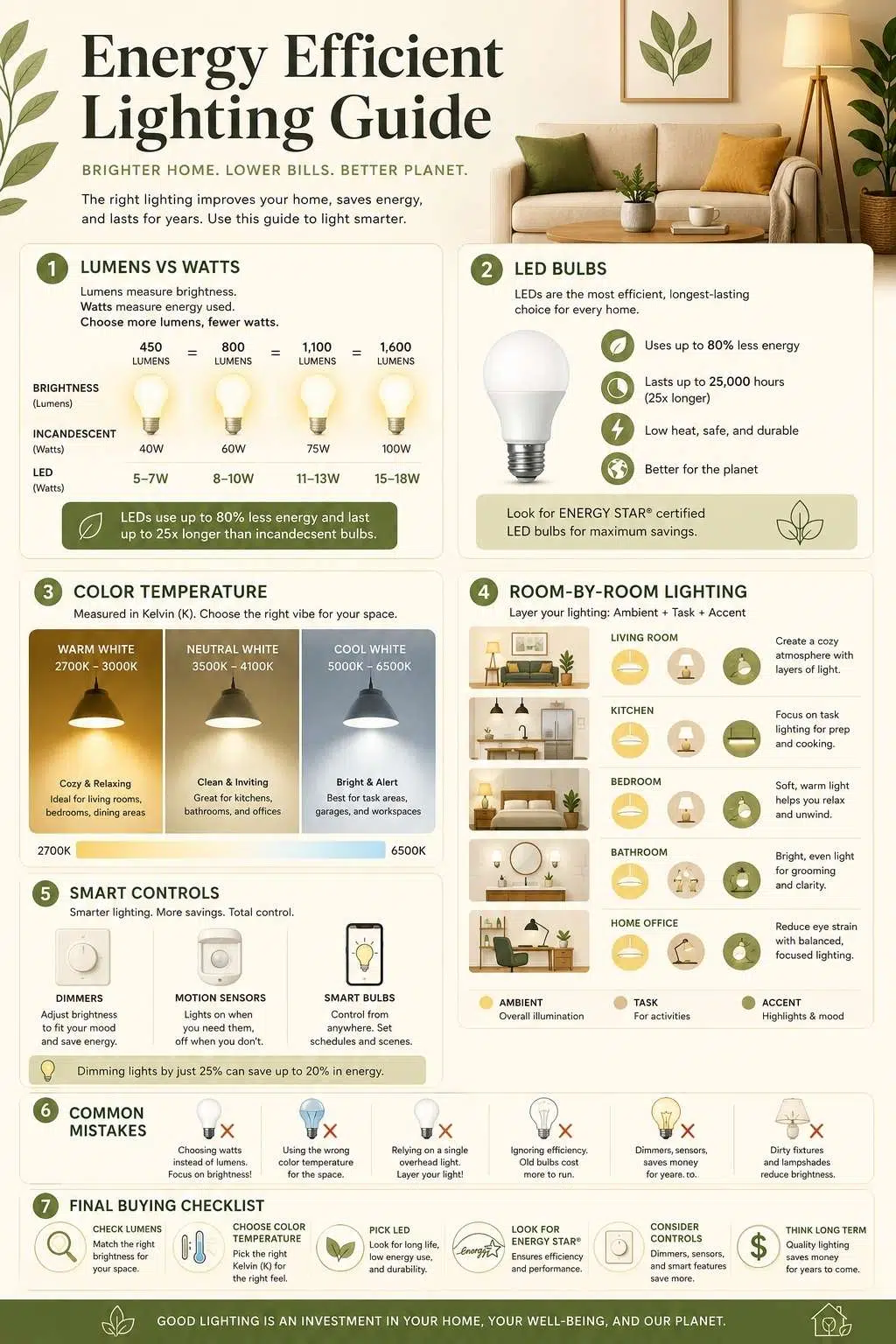
The biggest lighting mistake is still buying bulbs by watts. Watts measure energy use. Lumens measure brightness. With old incandescent bulbs, people learned brightness through wattage because most bulbs worked the same way. A 40-watt bulb was dimmer than a 60-watt bulb, and a 100-watt bulb was brighter.
LEDs changed that. A modern LED can give you the same useful brightness with far fewer watts. That means watts are no longer the best way to choose brightness. Use lumens instead.
| Old Incandescent Habit | Better Modern Way to Think |
| “I need a 60-watt bulb.” | “I need about 800 lumens.” |
| “This bulb uses fewer watts, so it must be dimmer.” | “Check lumens first, then watts.” |
| “Higher watts means better light.” | “Higher lumens means more brightness.” |
| “All bulbs with the same wattage look similar.” | “LED quality, color temperature, CRI, and beam angle matter too.” |
A simple way to choose:
- Lower lumens for soft lamps and mood lighting
- Medium lumens for bedrooms and living rooms
- Higher lumens for kitchens, bathrooms, offices, garages, and task areas
The wattage still matters, but mostly because it tells you energy use. A good low-watt LED with enough lumens is usually the better choice.
LED Lighting Guide: Why LEDs Became the Main Choice
LED stands for light-emitting diode. Unlike incandescent bulbs, which create light by heating a filament until it glows, LEDs create light through a semiconductor process. That is one reason LEDs waste much less energy as heat.
For home lighting, LEDs are now the default choice for most situations because they are efficient, widely available, long-lasting, and flexible.
A good LED lighting guide starts with this point:
Do not choose LED only because it saves energy. Choose the right LED for the room.
LEDs now come in many forms:
- Standard bulbs
- Candle bulbs
- Globe bulbs
- Floodlights
- Recessed downlights
- Strip lights
- Cabinet lights
- Outdoor security lights
- Smart bulbs
- Decorative filament-style bulbs
- Integrated LED fixtures
That variety is useful, but it also means one LED bulb is not automatically right for every fixture.
A warm, low-lumen LED may be great for a bedroom lamp but too dim for a kitchen. A bright daylight bulb may work well over a workbench but feel harsh in a living room. A non-dimmable LED may flicker on a dimmer switch. An LED not rated for enclosed fixtures may overheat in a sealed fixture.
LEDs are excellent, but they still need to be chosen carefully.
Types of Low Energy Bulbs
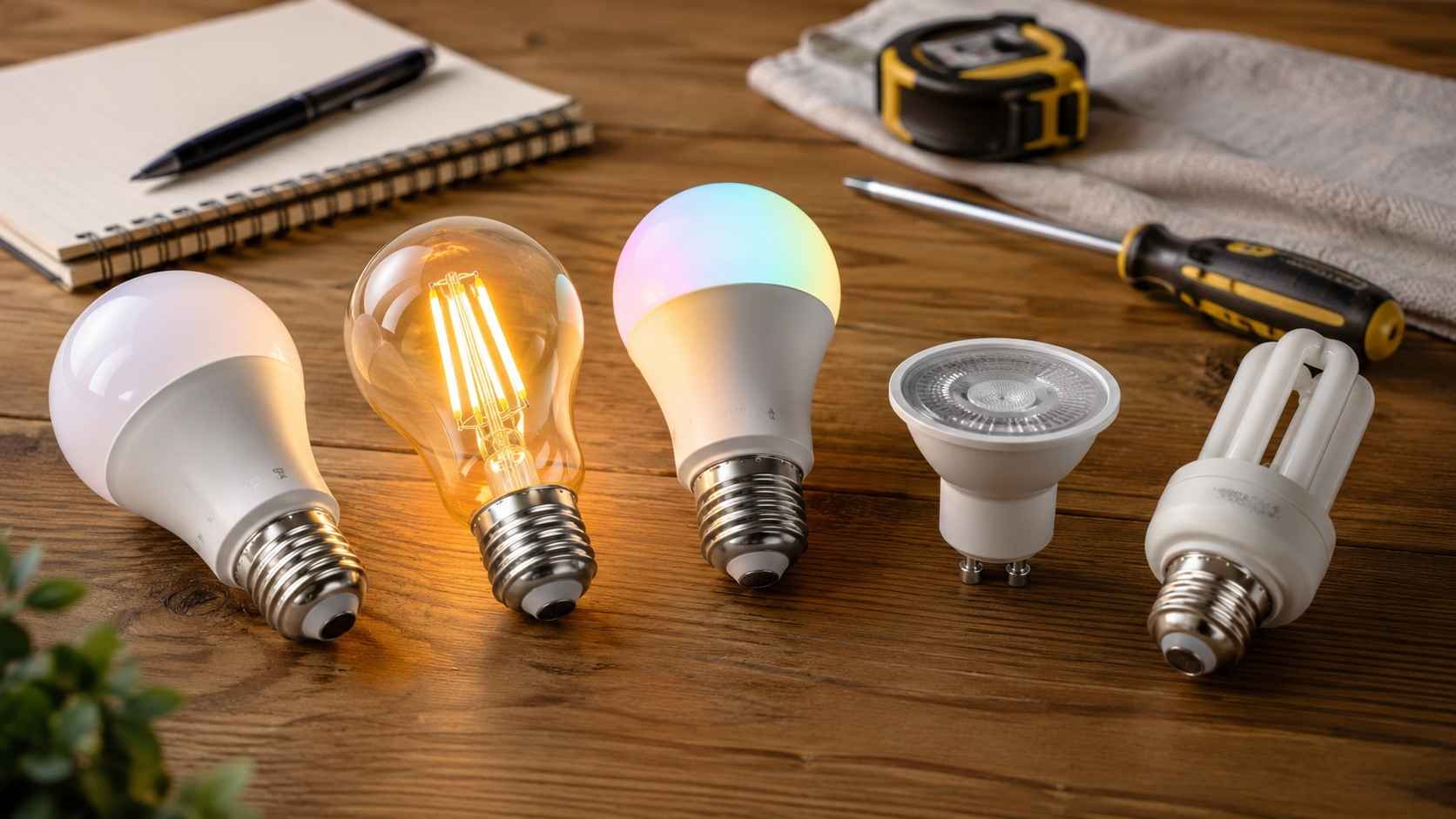
Low energy bulbs usually refer to bulbs that use less electricity than older incandescent or halogen bulbs. The main options are LEDs and CFLs, though LEDs are now the better choice for most homes.
LED Bulbs
LED bulbs are the best all-around choice for energy efficient lighting today. They are efficient, long-lasting, available in many shapes, and suitable for most rooms. They also turn on instantly, work well in many smart lighting systems, and come in a wide range of color temperatures.
Use LEDs for:
- Ceiling lights
- Lamps
- Recessed lights
- Bathroom lights
- Kitchen lighting
- Outdoor fixtures
- Task lighting
- Decorative lighting
- Smart lighting
The main thing is to buy the right LED for the fixture and room. Check whether it is dimmable, whether it works in enclosed fixtures, whether it is rated for damp or wet locations, and whether the brightness and color temperature match the space.
CFL Bulbs
CFL stands for compact fluorescent lamp. CFLs were once a popular low energy bulb option before LEDs became more common and affordable. They use less energy than incandescent bulbs, but they have drawbacks.
CFLs may take time to warm up, can be less pleasant in color quality, may not work well with frequent switching, and contain a small amount of mercury. That means they need more careful disposal and should be recycled through proper local options.
If you already have working CFLs, you do not need to panic-replace every bulb immediately. But for new purchases, LEDs are usually the better option.
Halogen Bulbs
Halogen bulbs are a type of incandescent lighting. They are somewhat more efficient than old traditional incandescent bulbs, but they still use much more energy than LEDs and produce more heat. They may still appear in some specialty fixtures, but they are not the best choice for an eco lighting home setup.
Smart LED Bulbs
Smart bulbs are usually LED bulbs with wireless controls. They can be controlled by apps, schedules, voice assistants, motion sensors, or home automation systems.
Smart LEDs can help save energy when they:
- Turn off automatically
- Dim during low-use hours
- Follow schedules
- Use motion detection
- Reduce unnecessary outdoor lighting
- Support task-based lighting scenes
But a smart bulb is not automatically more efficient than a regular LED if you leave it on all the time or use it mostly for decorative color effects. Smart controls are useful when they support better habits.
Integrated LED Fixtures
Some fixtures have built-in LEDs instead of replaceable bulbs. These can be efficient and clean-looking, especially for recessed lights, under-cabinet lighting, bathroom mirrors, and modern ceiling fixtures. The downside is replacement. If the LED module fails, you may need to replace part or all of the fixture rather than just a bulb.
Before buying integrated LED fixtures, check:
- Expected lifespan
- Warranty
- Color temperature
- Dimming compatibility
- Replacement parts
- Brightness
- Whether the light source can be serviced
They can be a good choice, but they should not be bought only because they look sleek.
How to Choose Energy Efficient Lighting for Your Home
Choosing the right bulb is about more than picking the lowest wattage. A very efficient bulb that feels too harsh, too dim, too blue, or incompatible with your fixture is not a good choice. Use these factors before buying.
1. Choose Brightness by Lumens
Start with lumens. For soft mood lighting, you may need fewer lumens. For task-heavy spaces, you need more.
Examples:
| Area | Lighting Need |
| Bedroom lamp | Soft to medium brightness |
| Living room | Layered, comfortable brightness |
| Kitchen counter | Brighter task lighting |
| Bathroom mirror | Clear, flattering light |
| Home office | Bright but not glaring |
| Hallway | Safe, moderate brightness |
| Garage or utility area | High practical brightness |
The goal is not to make every room bright. The goal is to place brightness where it helps.
2. Check Watts for Energy Use
After lumens, check watts. A bulb that gives the brightness you need with fewer watts is more efficient. For example, if two bulbs both provide similar brightness but one uses 9 watts and another uses 13 watts, the 9-watt bulb uses less electricity. But do not judge only by watts. A very low-watt bulb may simply be too dim. Good lighting balances brightness and energy use.
3. Pick the Right Color Temperature
Color temperature describes how warm or cool the light looks. It is measured in Kelvin. Lower Kelvin means warmer, yellowish light. Higher Kelvin means cooler, bluish light.
Common ranges:
| Color Temperature | Feel | Good For |
| 2200K-2700K | Very warm, cozy | Bedrooms, lounges, evening lamps |
| 2700K-3000K | Warm white | Living rooms, dining rooms, bedrooms |
| 3500K-4000K | Neutral white | Kitchens, bathrooms, offices |
| 5000K-6500K | Daylight/cool | Garages, workshops, task-heavy areas |
A common mistake is installing cool daylight bulbs everywhere because they seem “brighter.” They may look bright, but they can make bedrooms and living rooms feel clinical. For most homes, warm white or neutral white is more comfortable.
4. Look at CRI for Color Quality
CRI stands for Color Rendering Index. It describes how accurately a light source shows colors compared with natural or reference light. A higher CRI generally means colors look more natural.
CRI matters in places where color accuracy matters:
- Kitchens
- Bathrooms
- Dressing areas
- Makeup mirrors
- Art spaces
- Reading corners
- Product photography areas
- Home offices
For general home use, many decent LEDs are acceptable. For areas where skin tones, food, clothing, or artwork matter, look for higher color quality. Cheap LEDs can save energy but make colors look dull or strange. That is not worth it in spaces you use every day.
5. Check Dimming Compatibility
Not all LED bulbs work with dimmer switches. If you install a non-dimmable LED on a dimmer, you may get flickering, buzzing, poor dimming range, or early failure.
If you want dimming, check:
- The bulb says dimmable
- The dimmer works with LEDs
- The bulb and dimmer are compatible
- The fixture supports the bulb type
Older dimmers were often designed for incandescent bulbs. They may not work well with modern LEDs. Good dimming makes lighting more efficient and more comfortable because you can use only as much light as you need.
6. Match the Bulb Shape and Base
Bulbs come in different shapes and bases.
Common examples include:
- A-shape bulbs for standard lamps
- Globe bulbs for vanity lights
- Candle bulbs for chandeliers
- BR or PAR bulbs for recessed or directional lighting
- Tube lights for garages or utility areas
- GU10 or MR-style bulbs for spotlights
The base must fit the fixture. The bulb shape must also make sense for how the fixture spreads light. A bulb can technically fit but still look wrong or cast poor light.
7. Check Fixture Rating
LEDs do not like excessive heat. If a bulb is going into a sealed or enclosed fixture, check whether it is rated for enclosed use. If it is going outdoors, check damp or wet location ratings.
This matters for:
- Porch lights
- Bathroom lights
- Outdoor sconces
- Sealed ceiling fixtures
- Recessed cans
- Garage fixtures
- Landscape lighting
The wrong bulb may fail early or perform poorly.
8. Choose Certified or Reliable Products
Very cheap bulbs can look like a bargain, but poor LEDs may flicker, buzz, shift color, fail early, or produce uncomfortable light.
Look for reliable brands, clear packaging, warranty information, and energy labels. ENERGY STAR-certified bulbs can be a good choice where available because they are tested for efficiency and performance.
A bulb that lasts longer and works properly is usually more sustainable than a cheap bulb you replace quickly.
Room-by-Room Eco Lighting Home Guide
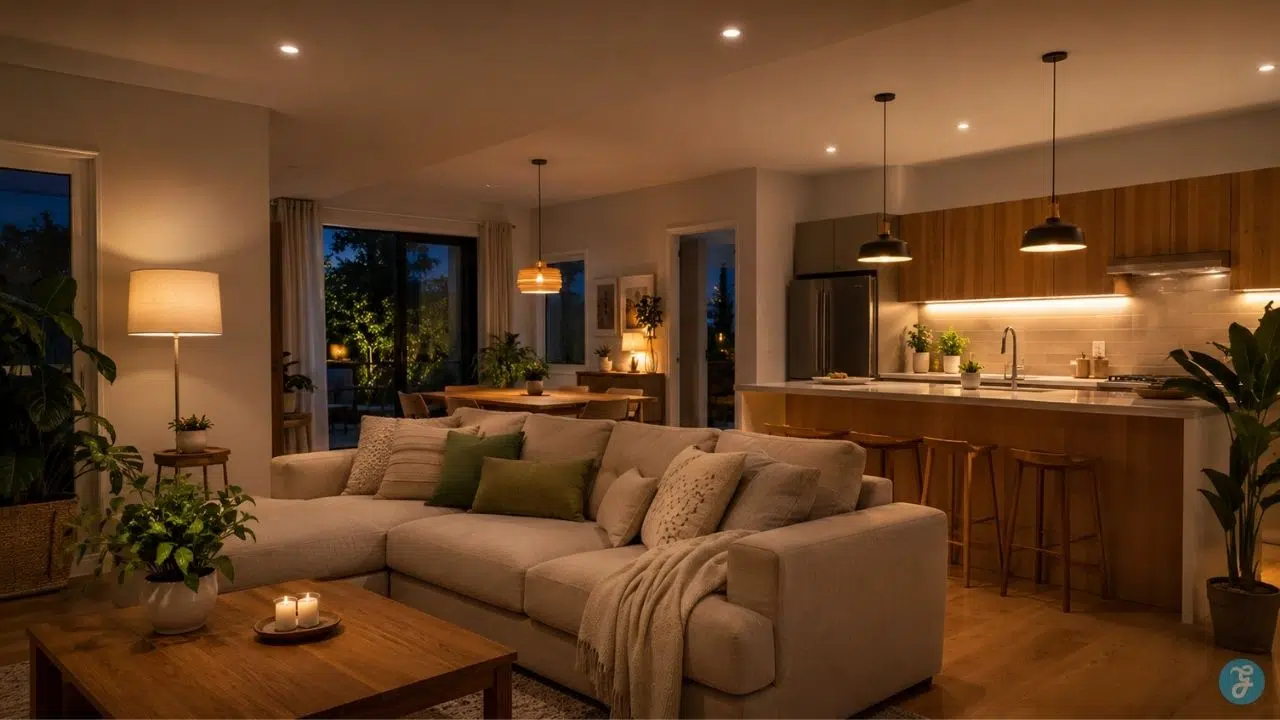
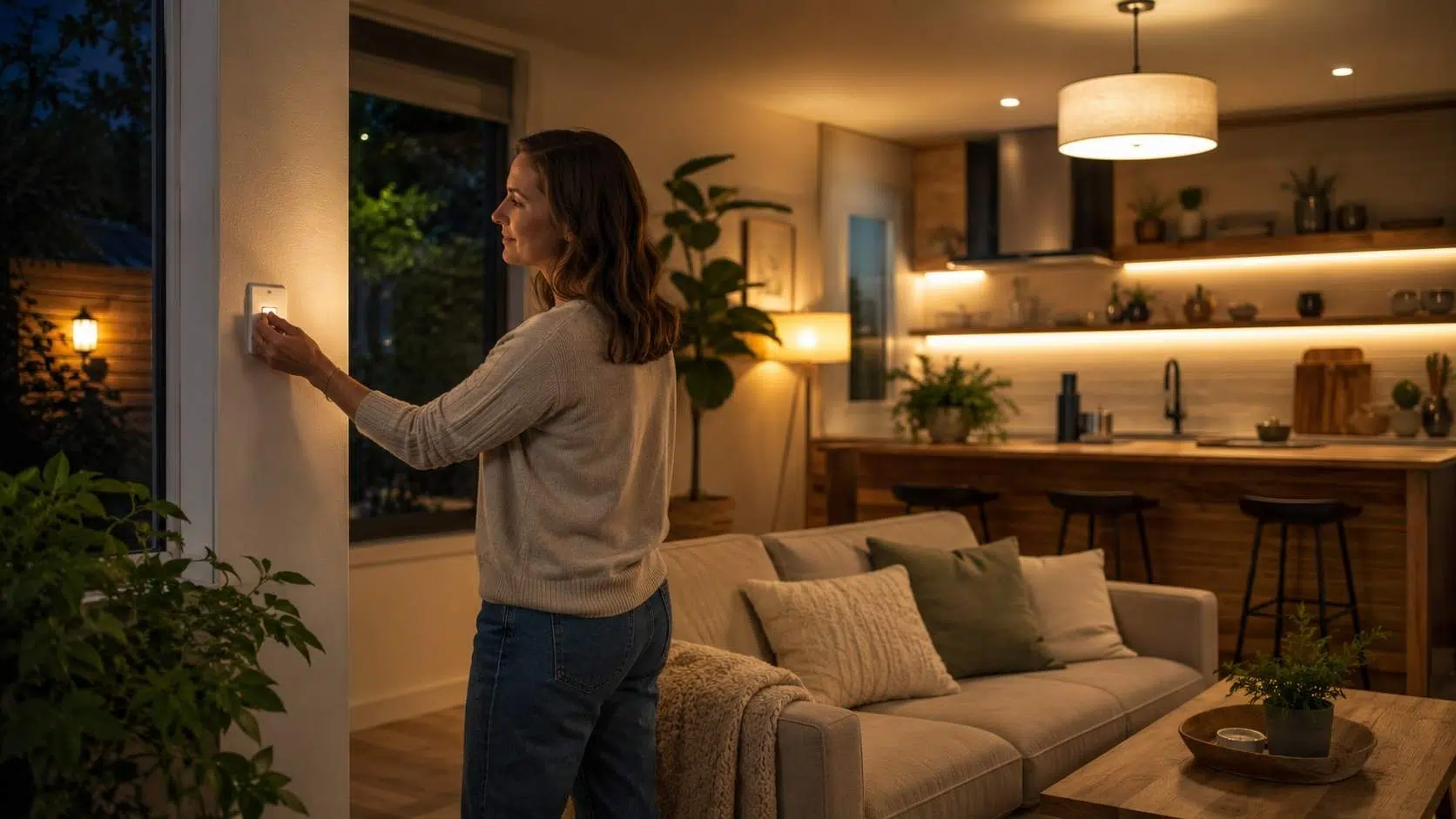
An eco lighting home should not feel dark or uncomfortable. The goal is to use light intelligently. Different rooms need different lighting.
Living Room
Living rooms usually work best with layered lighting.
Use a mix of:
- Warm LED lamps
- Ceiling lights on dimmers
- Wall lights
- Floor lamps
- Accent lights
- Low-glare bulbs
Avoid relying on one harsh overhead light. For comfort, use warm white lighting around 2700K to 3000K. If you read in the living room, add a brighter task lamp near the chair rather than increasing brightness across the entire room. This saves energy and makes the space feel better.
Kitchen
Kitchens need brighter, clearer light.
Use energy efficient lighting for:
- Ceiling lights
- Under-cabinet task lights
- Pendant lights over islands
- Pantry lighting
- Sink lighting
Neutral white LEDs around 3000K to 4000K often work well. You want enough brightness to chop, clean, cook, and read labels without eye strain.
Under-cabinet LED strips or bars are especially useful because they put light directly on the counter instead of wasting brightness across the whole room.
Bedroom
Bedrooms need softer lighting.
Use warm LEDs for:
- Bedside lamps
- Ceiling fixtures
- Wardrobe lighting
- Reading lights
- Soft evening lighting
Avoid overly cool daylight bulbs in bedrooms unless there is a specific task area. Warm light supports a calmer mood and makes the room feel more restful. Dimmers or smart schedules can help reduce brightness at night.
Bathroom
Bathrooms need clear light, especially near mirrors. Use LEDs with good color quality around the vanity area. A harsh overhead light can cast shadows on the face, so side lighting or well-placed mirror lighting often works better. For bathrooms, check damp-location ratings where needed.
A bathroom may benefit from two lighting modes:
- Brighter light for grooming
- Softer light for nighttime use
This improves comfort and avoids wasting energy when full brightness is not needed.
Home Office
A home office needs light that supports focus without glare.
Use:
- A good LED desk lamp
- Soft ambient lighting
- Avoid harsh screen reflections
- Neutral white lighting if it helps concentration
- Task lighting instead of over-lighting the whole room
The best office lighting reduces eye strain. It should light the work area without shining directly into your eyes or onto the screen.
Hallways and Stairs
Hallways and stairs need safe, reliable lighting.
Use efficient LEDs with:
- Motion sensors
- Timers
- Lower brightness at night
- Warm or neutral light
- Good switch placement
Motion-sensor LED night lights can be useful in hallways, especially for families with children or older adults.
Outdoor Lighting
Outdoor lighting should improve safety without wasting energy or creating unnecessary light pollution.
Use LEDs for:
- Porch lights
- Pathway lights
- Security lights
- Garage lights
- Garden lighting
- Entryway lighting
Choose outdoor-rated bulbs or fixtures. Use motion sensors, timers, or dusk-to-dawn controls so lights do not stay on all night when they are not needed.
For security lighting, brighter is not always better. A well-aimed light is more useful than a glaring floodlight that annoys neighbors and wastes energy.
Energy Efficient Lighting Beyond Bulbs
Bulbs matter, but lighting habits matter too. A home filled with efficient LEDs can still waste electricity if every light stays on unnecessarily.
Use Task Lighting
Task lighting means lighting the area where you actually need light.
Examples:
- Desk lamp for work
- Reading lamp beside a chair
- Under-cabinet kitchen lights
- Vanity lights near the mirror
- Workbench light in the garage
Task lighting is efficient because it avoids brightening the whole room just to perform one activity.
Use Dimmers
Dimmers help you use less light when full brightness is unnecessary.
They are useful in:
- Living rooms
- Dining rooms
- Bedrooms
- Kitchens
- Bathrooms
- Media rooms
Dimming also improves mood and comfort. Just make sure the LED bulb and dimmer are compatible.
Use Motion Sensors
Motion sensors are helpful in spaces where people often forget lights.
Good places include:
- Hallways
- Closets
- Laundry rooms
- Garages
- Utility rooms
- Outdoor areas
- Bathrooms, depending on preference
Sensors are not needed everywhere, but they work well in short-use spaces.
Use Timers and Smart Schedules
Smart schedules can reduce waste from lights left on overnight or during the day.
Use them for:
- Outdoor lights
- Porch lights
- Decorative lights
- Security lights
- Children’s rooms
- Hallway lighting
A simple timer can be just as useful as a smart system if you only need basic control.
Use Daylight Better
Natural light is free. You can reduce daytime lighting use by:
- Opening curtains during the day
- Using light-colored walls
- Keeping windows clean
- Placing desks near natural light
- Using reflective surfaces carefully
- Avoiding heavy window coverings in daytime work areas
Daylight should not create glare or overheating, but when managed well, it reduces lighting demand and makes rooms feel better.
Avoid Over-Lighting
More light is not always better. Over-lighting wastes energy and can make rooms uncomfortable.
Signs a room is over-lit:
- You avoid turning on the main light
- The room feels harsh
- Surfaces glare
- Screens reflect too much light
- Warm spaces feel cold
- You need sunglasses in your kitchen, which is never a good design goal
Good lighting is balanced, not aggressive.
How Much Can LED Lighting Save?
Savings depend on how many bulbs you replace, how often you use them, and your electricity rate. Here is a simple example. Suppose you replace one 60-watt incandescent bulb with a 9-watt LED bulb. The energy difference is 51 watts.
If that bulb is used for 3 hours per day:
- 51 watts saved × 3 hours = 153 watt-hours per day
- That equals 0.153 kWh per day
- Over one year, that is about 56 kWh saved for one bulb
Now multiply that by several frequently used bulbs. The biggest savings usually come from replacing bulbs in rooms where lights are used often:
- Living room
- Kitchen
- Bedroom
- Outdoor porch
- Hallways
- Home office
- Bathroom vanity lights
You do not have to replace every bulb in one day. Start with the bulbs that are on the longest. That is where energy efficient lighting pays back fastest.
LED Lighting Guide: What to Check Before Buying
Use this quick checklist before buying LED bulbs.
| Checkpoint | What to Look For |
| Brightness | Lumens, not old wattage habits |
| Energy use | Lower watts for the same brightness |
| Color temperature | Warm, neutral, or daylight based on room |
| CRI/color quality | Higher quality where color matters |
| Dimmability | Dimmable bulb and LED-compatible dimmer |
| Bulb shape | Fits the fixture and spreads light properly |
| Base type | Matches the socket |
| Fixture rating | Enclosed, damp, wet, or outdoor as needed |
| Lifespan | Longer-rated bulbs reduce replacement |
| Certification | ENERGY STAR or reliable performance label where available |
| Warranty | Especially useful for more expensive bulbs |
| Smart features | Only if scheduling, dimming, or automation will help |
This checklist prevents most buying mistakes.
Energy Efficient Lighting for Renters
Renters can still improve lighting without renovating.
Easy upgrades include:
- Replace frequently used bulbs with LEDs
- Use plug-in lamps for better task lighting
- Add LED strip lights under shelves or cabinets
- Use smart plugs or timers
- Choose warm bulbs for comfort
- Keep original bulbs if you need to restore them before moving
- Use motion night lights in hallways
- Choose portable desk and floor lamps
Renters should avoid hardwired fixture changes unless the landlord allows it. But bulb swaps and plug-in lighting can still make a big difference.
Energy Efficient Lighting for Homeowners
Homeowners have more flexibility.
Useful upgrades include:
- Replacing old recessed lights with LED retrofit kits
- Adding dimmer switches compatible with LEDs
- Installing under-cabinet kitchen lighting
- Adding motion sensors in utility spaces
- Upgrading outdoor lighting to LED with timers
- Replacing old fluorescent tubes with efficient LED options where appropriate
- Planning layered lighting during renovation
If you are remodeling, lighting should be planned early. It is much easier to place fixtures, switches, and wiring before walls and ceilings are finished.
What About Smart Lighting?
Smart lighting can support energy savings, but it depends on how you use it. Smart bulbs and smart switches can help when they:
- Turn off lights automatically
- Dim lights based on time of day
- Use schedules
- Connect with motion sensors
- Reduce outdoor lighting waste
- Create lower-energy evening scenes
They are less useful if they encourage you to add more decorative lights that stay on longer. A smart lighting setup should solve a real problem.
Good examples:
- Porch lights turn on at sunset and off at midnight
- Hallway lights dim after 10 p.m.
- Office lights turn off when no one is in the room
- Outdoor lights activate only with motion
- Bedroom lamps gradually dim in the evening
That is practical. That saves energy. That also makes the home easier to use.
Are Energy Efficient Bulbs Worth It?
For most homes, yes. LED bulbs usually cost more than old incandescent bulbs used to, but they use much less electricity and last much longer. In frequently used fixtures, the savings and convenience are usually worth it. The better question is not whether LEDs are worth it. The better question is which LEDs are worth buying.
A good LED should:
- Provide enough lumens
- Use low wattage
- Have comfortable color temperature
- Work in the fixture
- Dim properly if needed
- Offer decent color quality
- Last a reasonable amount of time
- Come from a reliable manufacturer
The cheapest bulb is not always the best value. A reliable bulb that gives better light and lasts longer is usually the smarter choice.
Lighting That Saves Energy Without Making Home Feel Cheap
Energy efficient lighting should not make your home feel cold, dim, or uncomfortable. The best lighting does three things at once. It saves energy. It supports the way you use each room. It makes the space feel good.
LEDs are now the easiest starting point. They use far less electricity than old incandescent bulbs, last longer, and come in enough styles to fit almost every room. But the real win comes from choosing them properly.
Use lumens for brightness. Use watts for energy use. Choose color temperature by room. Check dimming and fixture compatibility. Add task lighting where it helps. Use smart controls only where they solve a real problem.
That is how energy efficient lighting becomes more than a bulb swap. It becomes a better way to light your home.
Frequently Asked Questions About Energy Efficient Lighting
1. What is energy efficient lighting?
Energy efficient lighting means using bulbs, fixtures, and lighting habits that provide the brightness you need while using less electricity. In most homes, this usually means switching to LED bulbs, using task lighting, and adding controls such as dimmers, timers, or motion sensors where useful.
2. Are LED bulbs the best low energy bulbs?
Yes, LED bulbs are usually the best low energy bulbs for most home uses. They use much less electricity than incandescent or halogen bulbs, last longer, turn on instantly, and come in many shapes, brightness levels, and color temperatures.
3. How do I choose the right LED bulb?
Choose the right LED bulb by checking lumens for brightness, watts for energy use, color temperature for light appearance, CRI for color quality, bulb shape, base type, dimming compatibility, and whether the bulb is rated for enclosed, damp, wet, or outdoor fixtures.
4. What color temperature is best for home lighting?
Warm white light around 2700K to 3000K works well for bedrooms, living rooms, and dining areas. Neutral white around 3500K to 4000K often works well for kitchens, bathrooms, and home offices. Daylight bulbs around 5000K or higher are better for garages, workshops, and task-heavy areas.
5. Do smart bulbs save energy?
Smart bulbs can save energy if they help lights turn off automatically, dim when full brightness is not needed, or follow schedules. They do not automatically save energy if they stay on longer or are used only for decorative effects.
6. How can I make my home lighting more eco-friendly?
To create an eco lighting home setup, replace frequently used bulbs with LEDs, use task lighting, avoid over-lighting, choose the right brightness and color temperature, install dimmers or motion sensors where useful, use daylight when possible, and recycle CFLs or fluorescent bulbs properly.