

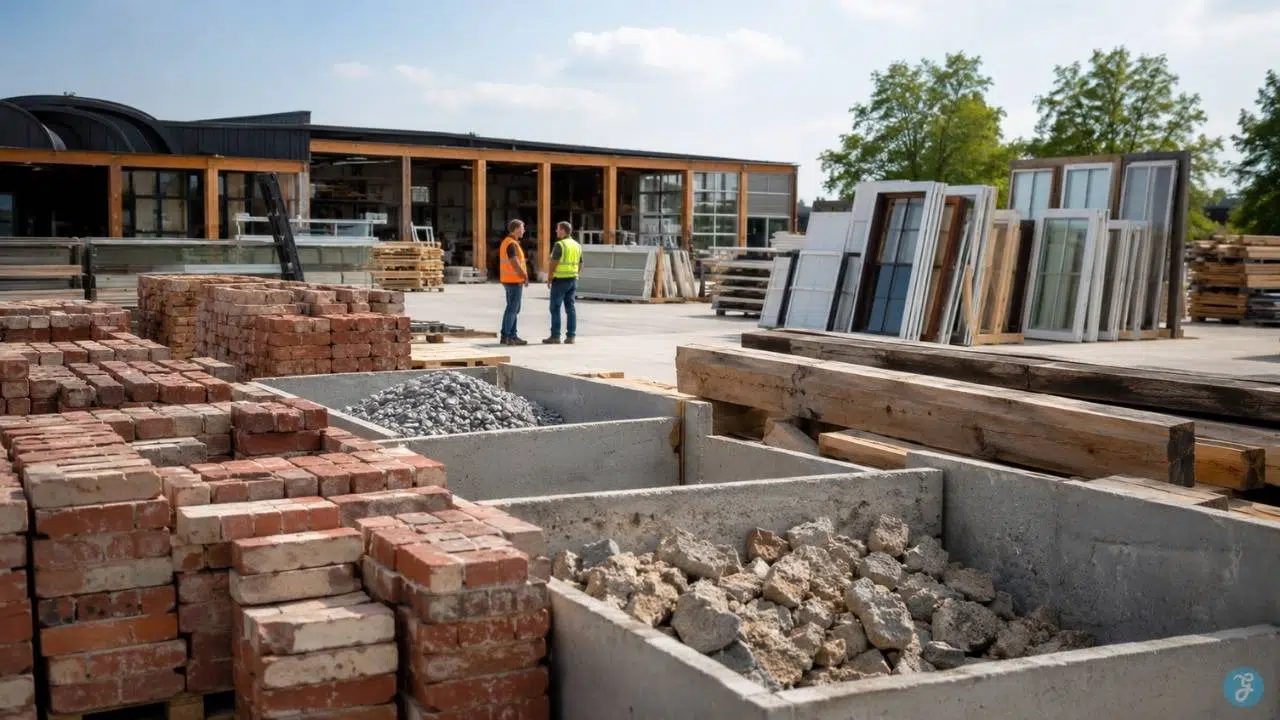
Construction waste is not just a skip full of broken concrete and old window frames. It is a materials bank that the building sector has been trained to ignore. That is the strange part. A demolished building can contain usable timber, concrete, PVC, glass, ceiling panels, bricks, gypsum, insulation, stone, metals, and fittings. Yet in a traditional construction model, many of those materials are treated as a logistics problem instead of a future supply chain.
The Netherlands has been one of the more serious European markets for circular construction. But the interesting work is not only happening in government targets or sustainability reports. It is happening in the awkward middle of the market, where startups and specialist SMEs are trying to make reused and recycled building materials practical enough for architects, contractors, developers, and municipalities.
This list focuses on Dutch circular building materials startups that are not simply talking about circularity. They are working with construction debris, demolition waste, urban-mined materials, or recovered building products and turning them into something that can go back into buildings.
Some manufacture new materials from waste. Some harvest and process reusable materials. Some supply circular finishing products. One tackles one of the hardest waste streams in the built environment: asbestos cement.
They are not all the same type of company, and that matters. Circular construction is not one clean category. It is a chain of demolition, sorting, testing, certification, design, production, logistics, and market trust.
How I Selected These Dutch Circular Building Materials Startups
This article uses the word “startup” in the practical business sense: Dutch startups, scaleups, specialist SMEs, and young circular ventures that are building new models around construction material reuse. A few have grown, partnered with larger groups, or become part of broader company structures. They are still included because their original model or current business unit directly fits the topic.
The selection was based on these filters:
- The company had to be real, active, and publicly verifiable.
- It had to be based in the Netherlands or have clear Dutch operations.
- It needed a direct link to construction debris, demolition materials, urban mining, or recovered building products.
- It had to produce, process, supply, or enable circular building materials rather than only publish research or policy advice.
- The business model had to be practical for the built environment.
- Claims had to be specific enough to discuss without inventing extra facts.
Companies were not included just because they sound sustainable. A recycled-material company that mainly works with fashion waste, packaging waste, or furniture waste was not enough unless there was a clear building-material connection.
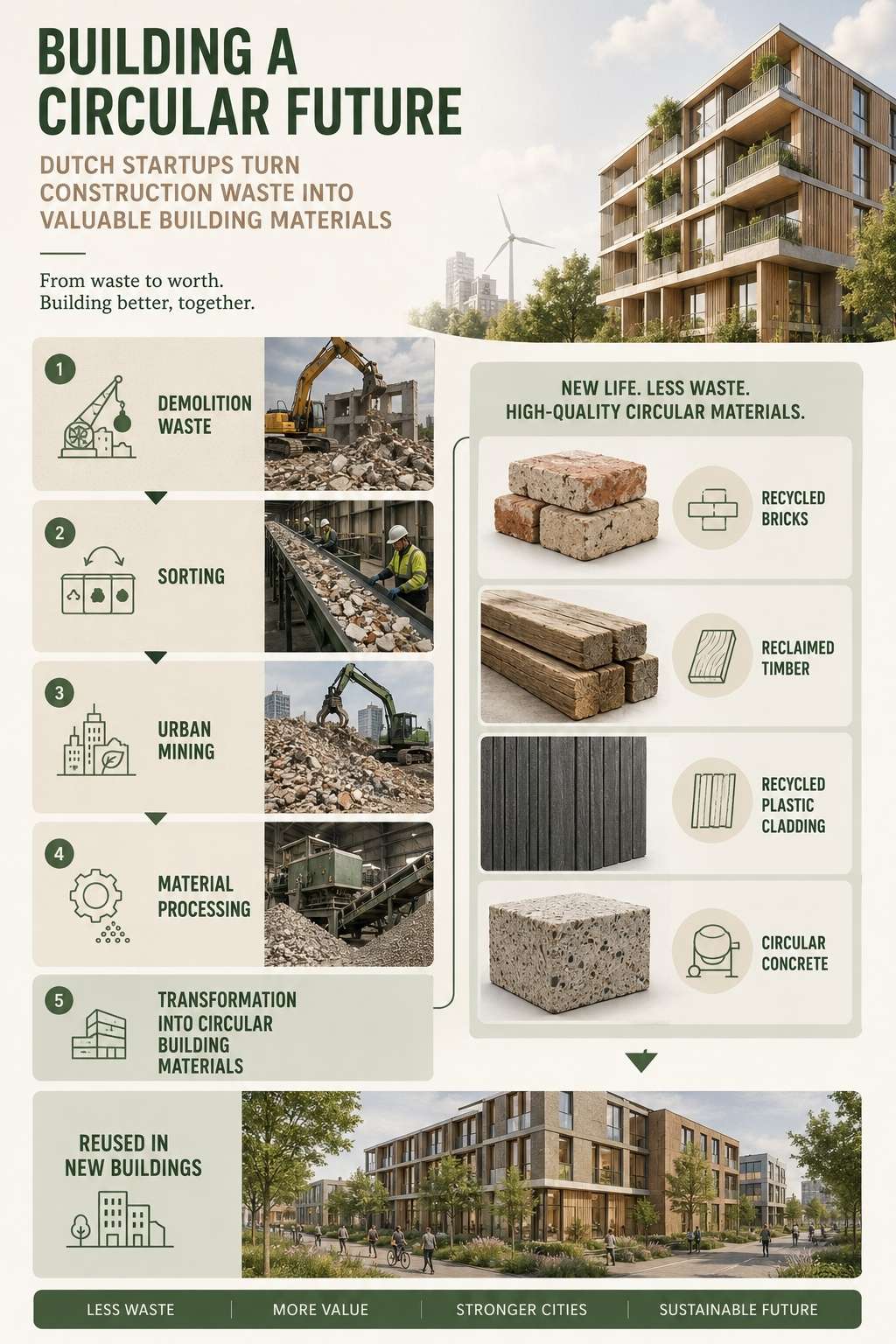
Quick Overview of 7 Dutch Circular Building Materials Startups
| Company | Main Circular Material Focus | Strongest Use Case | Business Type |
| FRONT Materials | Waste-based bricks, slips, panels, and tiles | Architectural façades, interiors, and bespoke waste-based materials | Circular building-material manufacturer |
| Pretty Plastic | Recycled PVC cladding from old building products | Façade and roof cladding | Recycled plastic building-product startup |
| Everox / C2CA Technology | Upcycled concrete materials | Circular concrete and cement-substitute pathways | Concrete recycling technology scale-up |
| New Horizon | Urban-mined construction materials | Demolition harvesting and circular material supply | Urban mining and circular-construction specialist |
| Circq | Circular finishing products from existing buildings | Ceilings, walls, wood, gypsum, insulation, and interior finishing | Circular building-product supplier |
| Weever Circulair | Harvested and processed leftover building materials | Reuse shop, webshop, and construction material recovery | Social circular-construction startup |
| Asbeter | Asbestos-cement waste transformed into mineral raw materials | Hazardous construction waste and cement/concrete feedstock | Deep-tech circular materials scaleup |
1. FRONT Materials
FRONT Materials, formerly known as StoneCycling, is one of the clearest Dutch examples of turning construction and demolition waste into desirable building products.
Its best-known product is the WasteBasedBrick, a brick made from waste materials and designed for architectural use. That is important because circular building materials often get stuck in the “worthy but ugly” category. FRONT has spent years pushing against that problem. Its products are not positioned as emergency substitutes. They are made for architects and developers who still care about texture, colour, design, and long-term performance.
That design angle is not a side issue. It is part of why the company belongs on this list.
Business Snapshot
| Field | Details |
| Main material focus | Waste-based bricks, brick slips, panels, and tiles |
| Origin | Dutch company originally known as StoneCycling |
| Best suited for | Architects, developers, interior designers, and circular construction projects |
| Waste connection | Uses construction, demolition, industrial, and donor-building waste streams |
| Strongest product fit | Waste-based bricks and bespoke circular surface materials |
What the Company Actually Does
FRONT develops building products that treat waste as a raw material. Its WasteBasedBrick line is made from at least 60% waste and is used in façades, interiors, and architectural projects. The company has also expanded beyond bricks into other materials, including panels and waste-based surface products.
One of the stronger parts of FRONT’s model is its bespoke development work. The company has explored using waste from specific “donor buildings” to create new bricks or tiles. That approach is not easy. Waste streams vary, colours change, and technical quality has to be tested. But it is exactly the kind of thinking circular construction needs.
Instead of demolishing a building and sending the debris away, the idea is to ask: can part of this old building become part of the next one?
Why It Belongs on This List
FRONT belongs here because it is not just recycling waste into anonymous bulk material. It is turning debris into visible architectural products.
That is a higher-value use case than simply crushing rubble for road base. It also helps change the market perception of circular materials. If the recycled product looks interesting, performs properly, and can be specified by designers, it has a better chance of being used in real projects.
Business Reality Check
FRONT’s model is not a simple commodity-material play. These products are often project-led and specification-led. Architects and developers need to think ahead, request samples, understand lead times, and verify technical requirements.
The other reality is that waste-based materials can have natural variation. That can be beautiful, but it also requires the buyer to accept that circular materials may not behave like perfectly uniform virgin products.
Best Fit
FRONT Materials is best for architecture-led projects that want circular materials to be visible, intentional, and design-worthy rather than hidden in the background.
2. Pretty Plastic
Pretty Plastic takes one of the building sector’s awkward waste streams and turns it into façade and roof cladding.
Its tiles are made from 100% recycled PVC, including post-consumer PVC from old building products such as window frames, gutters, downspouts, and other construction materials. This is a strong fit for the topic because the company is not just using generic recycled plastic. Its waste source is directly tied to the built environment.
PVC is widely used in construction because it is durable. That durability is useful during a product’s life, but it becomes a problem at the end-of-life if the material is not recovered and used again. Pretty Plastic’s model gives that material a second life as a building product.
Business Snapshot
| Field | Details |
| Main material focus | Recycled PVC cladding tiles |
| Location | Amsterdam, Netherlands |
| Best suited for | Façades, roof cladding, interior walls, and architectural projects |
| Waste connection | Old window frames, gutters, downspouts, and other PVC building waste |
| Strongest product fit | Decorative and durable cladding panels |
What the Company Actually Does
Pretty Plastic produces cladding tiles from recycled PVC waste. The tiles are used for façades and roofs, and they are designed to be visually distinctive rather than hidden behind a sustainability label.
The company’s product story is simple: take discarded PVC building materials, process them, and turn them into cladding tiles that can be used again in architecture.
This matters because circular construction cannot depend only on structural concrete and timber reuse. The outer skin of a building also matters. Façade materials are highly visible, material-intensive, and often replaced or renovated over time.
Why It Belongs on This List
Pretty Plastic belongs here because it turns building-site and post-consumer construction plastic into a finished building product.
That is different from general plastic recycling. The material is not being downgraded into a vague plastic object. It is being made into a product that architects can specify: cladding.
For circular construction, this is the kind of product that helps close the gap between waste recovery and actual market demand.
Business Reality Check
Recycled PVC is still PVC. Some sustainability-minded clients may prefer bio-based or mineral-based materials depending on the project. Others may value the circular reuse of an existing durable plastic waste stream.
The key is not to oversell it as a universal solution. Pretty Plastic is strongest where a project needs durable cladding and wants to use recycled building-sector PVC instead of virgin façade materials.
Best Fit
Pretty Plastic is best for architects and developers looking for expressive recycled cladding made from recovered PVC building products.
3. Everox / C2CA Technology
Concrete is the elephant in the room for circular construction.
It is everywhere, heavy, carbon-intensive, and difficult to replace at scale. Old concrete is often crushed and used in lower-grade applications, especially road foundations. That is better than landfill, but it is not the same as turning concrete back into high-value concrete ingredients.
Everox, formerly C2CA Technology, is working on that harder problem.
The Rotterdam-based company focuses on upcycling waste concrete into sustainable building materials that can replace virgin aggregates, sand, and cement-related inputs in new concrete production.
Business Snapshot
| Field | Details |
| Main material focus | Waste concrete |
| Location | Rotterdam, Netherlands |
| Best suited for | Concrete producers, construction companies, and circular construction partnerships |
| Waste connection | End-of-life concrete and concrete demolition waste |
| Strongest product fit | Circular concrete raw materials and cement-substitute pathways |
What the Company Actually Does
Everox works on concrete-to-concrete circularity. The goal is to recover value from waste concrete rather than leaving it in low-grade applications.
The company builds on C2CA technology, which has roots in Dutch research and aims to separate concrete into useful fractions. In practical terms, this means treating old concrete as a source of new material: aggregates, sand, and cement-related fractions.
That is a difficult market. Concrete has strict performance requirements. Contractors and engineers cannot simply use a new circular material because it sounds good. It has to work technically, economically, and legally.
Why It Belongs on This List
Everox belongs here because concrete recycling is one of the biggest opportunities in circular building materials.
If circular construction only focuses on decorative panels and reclaimed timber, it will remain a niche. Concrete has to be part of the transition. Everox is relevant because it targets one of the core material flows in the built environment.
The company is not selling a lifestyle product. It is working on infrastructure-level material substitution.
Business Reality Check
This is not a plug-and-play solution for every builder today. Concrete upcycling needs plants, partnerships, quality control, market acceptance, and procurement confidence.
Buyers should also understand the difference between recycled aggregate, cement substitutes, and fully circular concrete claims. These are not interchangeable. The technical documentation matters.
Best Fit
Everox is best for concrete producers, construction companies, public-sector pilots, and developers looking for higher-value routes for waste concrete.
4. New Horizon
New Horizon’s message is direct: we do not demolish, we harvest.
That phrase captures one of the most important mental shifts in circular construction. A building at the end of its first life is not just a demolition job. It is a donor building.
New Horizon works around urban mining, material harvesting, building scans, circular demolition, and the supply of reused construction materials. It is now part of JAJO, so it is not a small independent startup in the classic sense anymore. But it remains one of the most relevant Dutch circular-construction ventures for this topic.
Business Snapshot
| Field | Details |
| Main material focus | Harvested building materials from demolition and renovation |
| Location | Netherlands |
| Best suited for | Developers, property owners, contractors, municipalities, and renovation projects |
| Waste connection | Donor buildings, demolition sites, and reusable building materials |
| Strongest product fit | Urban-mined construction materials and circular material supply chains |
What the Company Actually Does
New Horizon helps identify, harvest, and reintroduce construction materials from existing buildings into new projects. Its work includes building scans, material value assessments, harvesting advice, and connections between supply and demand.
This is not the same as making one product from one waste stream. New Horizon is closer to a circular construction systems company. It asks what is hidden in a building before demolition and how those materials can be used again.
That matters because many reusable materials are lost before anyone has time to plan their next use. If materials are identified too late, removed carelessly, stored poorly, or uncertified, they may never make it back into a project.
Why It Belongs on This List
New Horizon belongs here because repurposing construction debris is not only about manufacturing. It starts with harvesting.
A circular brick, beam, panel, door, or concrete product only exists if the material is recovered properly in the first place. New Horizon’s model helps make reuse measurable, planned, and commercially realistic.
The company also shows why circular construction requires coordination. Demolition contractors, developers, architects, product makers, and buyers all need to be aligned before materials are lost.
Business Reality Check
New Horizon is not a simple product supplier like a brick or cladding manufacturer. It is better understood as an urban-mining and circular-construction specialist.
That means the value depends on project timing, material quality, storage, logistics, certification, and market demand. Not every building can become a perfect material bank. Some materials will be reusable. Some will be recyclable. Some will remain difficult.
Best Fit
New Horizon is best for large building owners, public-sector projects, developers, and contractors that want demolition or renovation projects to produce usable circular material streams.
5. Circq
Circq focuses on something circular construction badly needs: making reused finishing products easier to buy.
The company supplies circular building products, especially for interior finishing and fit-out. It takes materials from existing buildings, stores them, checks them, processes them when needed, and returns them to the market as circular products.
This sounds less glamorous than inventing a new material. But it solves a very real problem. Reused building materials often fail commercially, not because they are useless, but because they are inconsistent, difficult to source, poorly documented, or hard to buy in project quantities.
Circq tries to make circular finishing products more normal.
Business Snapshot
| Field | Details |
| Main material focus | Circular interior and finishing products |
| Location | Netherlands |
| Best suited for | Contractors, fit-out projects, building owners, and circular renovation |
| Waste connection | Materials taken from existing buildings |
| Strongest product fit | Ceiling panels, wall panels, gypsum, insulation, wood, and interior finishing materials |
What the Company Actually Does
Circq takes in building materials from existing buildings, stores and inspects them, and, where needed, processes them before selling them again as circular products.
Its product categories include circular ceiling panels, wooden wall and ceiling panels, system walls, gypsum, insulation, circular wood, and acoustic panels. This is a practical part of the circular-construction market because finishing products are often replaced during renovations and tenant changes.
A building does not need to be demolished for useful materials to become available. Office refurbishments, interior strip-outs, and renovation projects can also release large amounts of reusable material.
Why It Belongs on This List
Circq belongs here because it moves circular building products closer to normal procurement.
Architects and contractors do not just need a nice sustainability story. They need products that can be specified, priced, delivered, and installed. Circq’s value is in turning recovered materials into a more reliable supply offer.
That is one of the missing links in circular construction. Reuse has to become boring enough to buy.
Business Reality Check
The quality of circular finishing products depends on source material, inspection, processing, and available stock. Buyers should not assume every circular product is available in unlimited quantities or identical to new material.
The better approach is to involve suppliers like Circq early in the project, especially during design and procurement. Circular fit-out works best when the design can adapt to available material flows.
Best Fit
Circq is best for office renovations, interior fit-outs, contractors, and building owners who want circular finishing products without managing the entire recovery process themselves.
6. Weever Circulair
Weever Circulair is a good reminder that circular construction is also a social business opportunity.
The Kampen-based startup harvests usable and leftover materials from demolition and construction, processes them when needed, and sells them again through a building-materials reuse model. It also works with “resource rescuers,” including people who are at a distance from the labour market.
That combination makes Weever Circulair different from a standard materials marketplace. It is not only trying to keep materials out of waste streams. It is also creating work around the physical labour of recovery, sorting, preparation, and resale.
Business Snapshot
| Field | Details |
| Main material focus | Reusable construction and demolition materials |
| Location | Kampen / Zwolle area, Netherlands |
| Best suited for | Small contractors, renovators, local builders, circular consumers, and SMEs |
| Waste connection | Leftover building materials and usable demolition materials |
| Strongest product fit | Recovered materials sold through the reuse shop, webshop, and marketplace channels |
What the Company Actually Does
Weever Circulair collects usable materials from construction and demolition sites. Where necessary, those materials are processed before being offered again for sale. The model includes a physical building-materials reuse shop and online resale routes.
This kind of business is important because not every circular material flow is large enough for an industrial manufacturer. Many materials come in mixed, local, irregular batches. A door here, timber there, leftover tiles somewhere else, usable fixtures from a renovation project.
A smaller circular reuse model can capture value that would otherwise be too fragmented.
Why It Belongs on This List
Weever Circulair belongs here because it works in the messy, local, practical layer of circular construction.
The building sector often talks about circularity at a high level, but someone still has to walk onto the site, identify what can be saved, remove it safely, sort it, clean it, store it, price it, and get it into someone else’s hands.
That work is not glamorous, but without it, circular construction remains a slide deck.
Business Reality Check
Weever Circulair is not producing a new engineered material from waste. Its value is in recovery, processing, redistribution, and social impact.
That means the available stock will depend on local demolition and construction flows. Buyers may need flexibility. This model works best for projects that can adapt to available materials rather than requiring perfectly standardized new products.
Best Fit
Weever Circulair is best for local builders, small contractors, renovators, makers, and circular projects that can use recovered materials from construction and demolition sites.
7. Asbeter
Asbeter works on one of the most difficult material problems in the built environment: asbestos cement.
Most circular construction stories focus on attractive materials like bricks, timber, glass, or cladding. Asbestos is different. It is hazardous, regulated, expensive to handle, and historically treated as something to isolate and bury rather than reuse.
Asbeter is trying to change that by processing asbestos cement so the asbestos fibres are destroyed and the mineral content can return as a circular raw material.
This is not the easy side of circular building materials. But it may be one of the most important.
Business Snapshot
| Field | Details |
| Main material focus | Asbestos cement |
| Founded | 2018 in the Netherlands |
| Best suited for | Hazardous-waste processors, public authorities, cement/concrete value chains, and circular-material investors |
| Waste connection | Asbestos cement roofing sheets, pipes, and insulation materials |
| Strongest product fit | Reactive calcium silicates and mineral raw materials for cement/concrete-related uses |
What the Company Actually Does
Asbeter developed the AC Minerals process to treat asbestos cement. The company describes the process as a way to destroy asbestos fibres and recover raw materials, including reactive calcium silicates.
The idea is that asbestos-cement waste should not simply occupy landfill space forever. If the hazardous fibres can be safely destroyed and the mineral fraction recovered, the material can become part of a circular raw-material stream.
This is much more complex than crushing bricks or reselling timber. It sits at the intersection of hazardous waste, deep tech, health protection, cement chemistry, regulation, and circular construction.
Why It Belongs on This List
Asbeter belongs here because circular construction cannot ignore hazardous legacy materials.
The built environment contains enormous amounts of old material. Some of it is easy to reuse. Some of it is difficult. Some of it is dangerous. A serious circular economy has to deal with the hard streams, too.
Asbeter’s work is relevant because it targets a waste stream that is usually excluded from cheerful circular-material conversations.
Business Reality Check
This is not a product a regular architect can specify tomorrow, like a cladding tile or reclaimed panel. Asbeter is a scale-up working toward industrial processing and licensing.
The buyer universe is also different. The relevant stakeholders are hazardous-waste companies, governments, environmental agencies, cement and concrete players, and investors in circular infrastructure.
Still, it belongs in this article because it expands the meaning of circular building materials beyond the easy cases.
Best Fit
Asbeter is best for industrial-scale circular waste treatment, public-sector asbestos strategies, and cement/concrete value chains looking for safer ways to recover mineral value from hazardous construction waste.
What These Dutch Startups Tell Us About Circular Building Materials
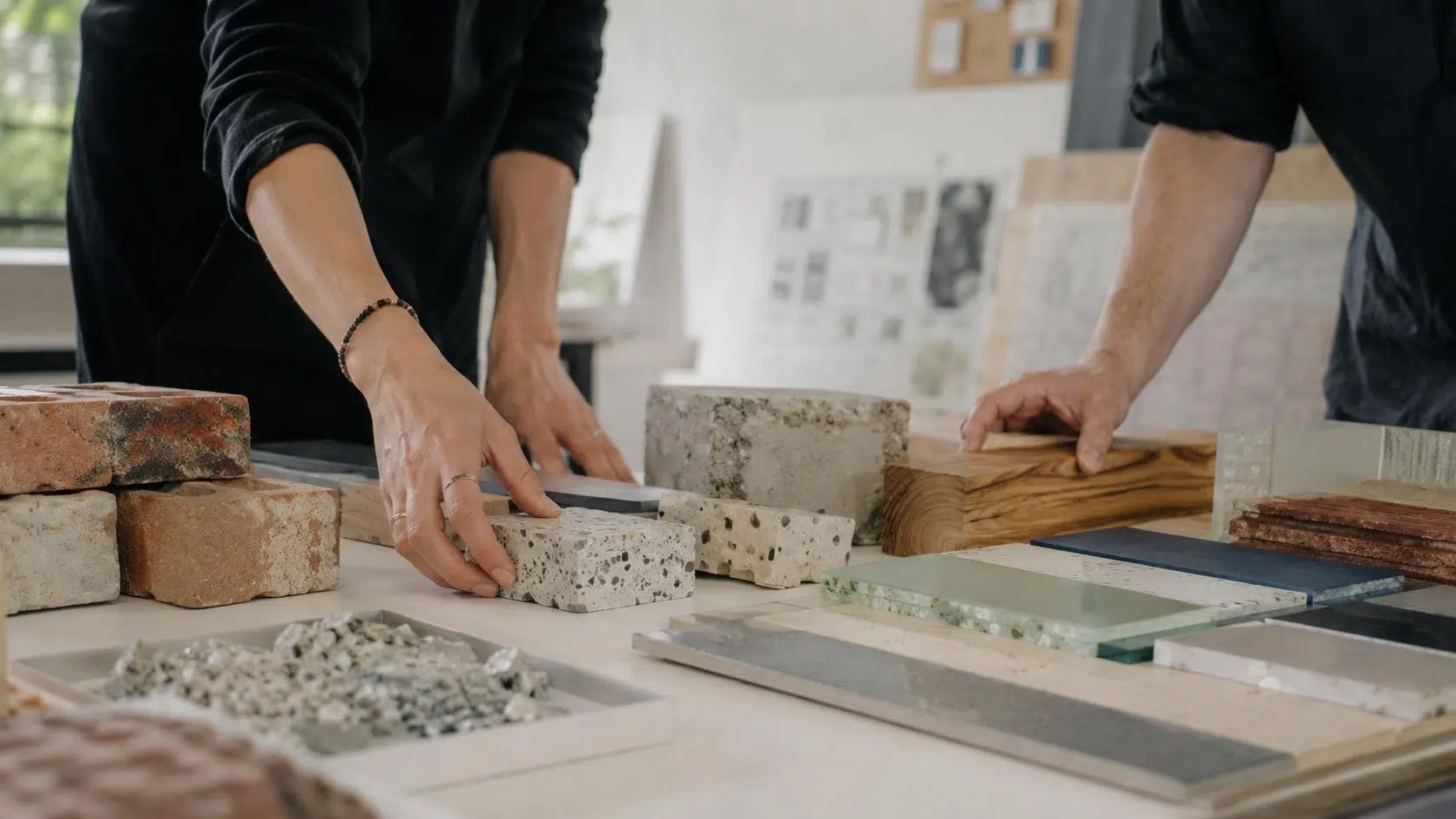
The most useful lesson from these companies is that construction debris is not one material stream.
It includes mineral waste, concrete, PVC, asbestos cement, timber, ceiling panels, façade products, gypsum, fixtures, and mixed leftovers from renovation and demolition. Each stream needs a different business model.
FRONT and Pretty Plastic turn specific waste streams into finished architectural products. Everox focuses on concrete, which is heavy, technical, and essential. New Horizon works upstream by harvesting value from buildings before demolition destroys them. Circq and Weever Circulair make recovered materials easier to buy and reuse. Asbeter tackles a hazardous legacy material that most circular stories avoid.
That variety is a strength. The circular building materials market will not be built by one miracle material. It will be built by many companies, solving very specific material problems.
What Buyers Should Check Before Using Circular Building Materials
Circular materials can be excellent, but buyers need to do more than admire the sustainability claim.
Before choosing a circular building product, ask:
- What exact waste stream is used?
- Is the product made from construction debris, industrial waste, post-consumer material, or recovered building components?
- Is the product tested for the intended use?
- Are fire, safety, structural, VOC, durability, and installation requirements documented?
- Is the material suitable for exterior, interior, structural, or decorative use?
- Is there enough supply for the project?
- Can the supplier provide certification, technical sheets, or environmental documentation?
- Does the product support reuse, recycling, or another end-of-life route after this project?
- What variation should the architect or contractor expect?
- Does using this product genuinely reduce virgin material demand, or is it mainly a branding feature?
The last question is uncomfortable, but it is necessary.
Circular construction should not become another marketing category where everything with a recycled percentage gets praised equally. Some products are high-value reuse. Some are downcycling. Some are transitional. Some are mainly symbolic. Good buyers need to know the difference.
Business Opportunity in Dutch Circular Construction
The Netherlands has a strong reason to care about this market. It is dense, infrastructure-heavy, and short on space. It also has major renovation, housing, and climate targets. That creates pressure to build differently.
For startups, the opportunity is not just “make sustainable materials.” That is too vague.
The real opportunities are more specific:
- turning demolition waste into higher-value building products;
- making reclaimed materials easier to specify and buy;
- improving quality control for reused materials;
- developing digital tools that match supply and demand;
- proving circular products can meet safety and performance rules;
- helping public projects use circular materials without taking reckless risks;
- building local supply chains around donor buildings and material hubs.
The hard part is that construction is conservative for good reasons. Buildings must be safe, durable, insurable, and compliant. A circular material cannot survive on a nice story. It has to work on-site.
That is why the most promising companies in this list are not just recycling waste. They are building systems around trust: documentation, repeatability, partnerships, logistics, and proof.
Wrapping Up
Dutch circular construction is moving beyond slogans, but it is still uneven.
FRONT Materials and Pretty Plastic show how waste can become visible, attractive building products. Everox shows why concrete recycling has to move beyond road base if circular construction is going to matter at scale. New Horizon proves that buildings need to be treated as material banks before demolition begins. Circq and Weever Circulair make the reuse of existing materials more accessible in day-to-day projects. Asbeter reminds the market that circularity also has to deal with hazardous legacy materials, not just the easy and beautiful ones.
The best takeaway is simple: construction debris is not waste until the market gives up on it. These Dutch startups and scaleups are building the systems, products, and business models that help the market give up a little less.
Frequently Asked Questions About Dutch Circular Building Materials Startups
1. What are circular building materials?
Circular building materials are materials designed or recovered so they can remain useful across more than one life cycle. They may be reused directly, refurbished, recycled into new products, or designed for future disassembly and recovery.
2. Are recycled building materials the same as circular building materials?
Not always. Recycled materials are made from recovered waste. Circular materials go further by considering reuse, durability, traceability, future recovery, and the ability to stay in the material loop for as long as possible.
3. Why is construction debris important for circular construction?
Construction and demolition waste contains valuable materials such as concrete, bricks, timber, metals, glass, plastics, insulation, and fixtures. Recovering those materials can reduce waste, lower demand for virgin materials, and support lower-carbon construction.
4. What is urban mining in construction?
Urban mining means recovering valuable materials from existing buildings, infrastructure, and cities instead of extracting new raw materials. In construction, it often involves carefully harvesting materials before demolition or renovation.
5. Are circular building materials always cheaper?
No. Some circular materials can be cost-competitive, especially when they avoid waste and disposal costs. Others may be more expensive because of testing, processing, limited supply, or project-specific handling. Price depends on material type, scale, logistics, and certification.
6. What should contractors verify before using circular materials?
Contractors should check technical performance, fire safety, structural suitability, installation requirements, environmental documentation, warranty conditions, supply volume, and compliance with local building rules.
























