

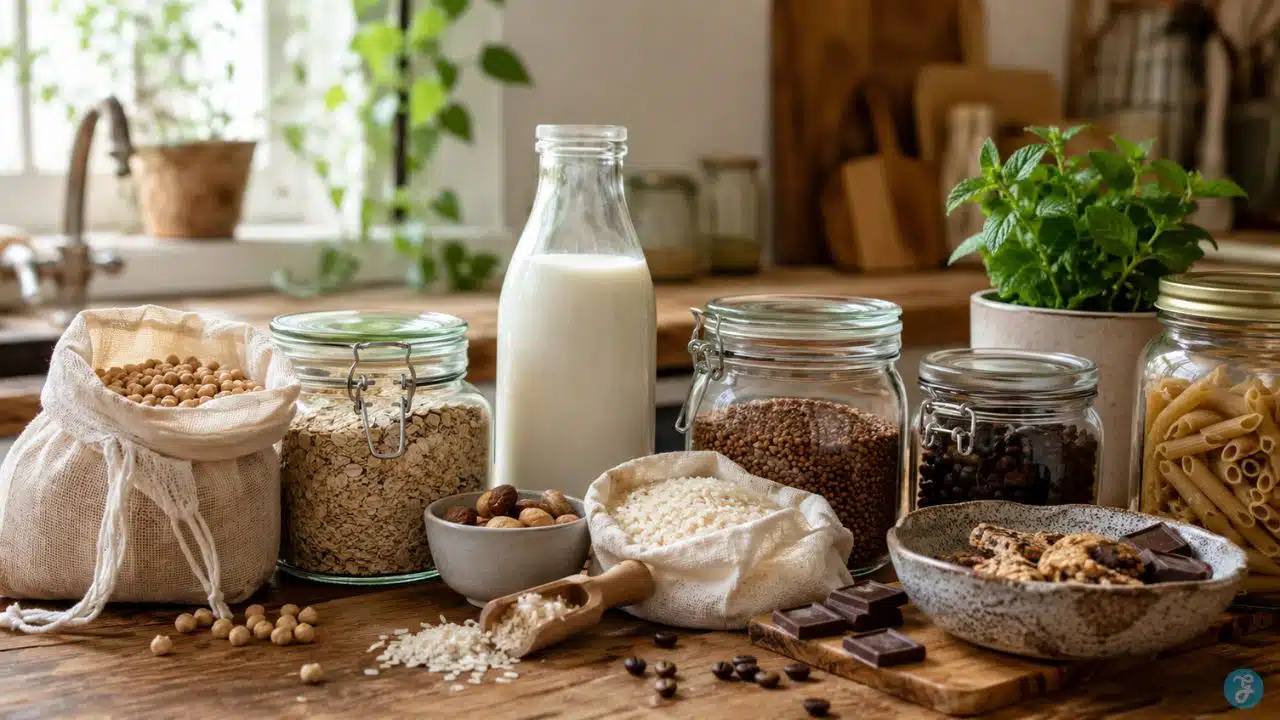
Finding sustainable food brands should be easier than it is. Food is personal. It is what we put in our bodies, give to our families, pack in lunchboxes, buy during stressful weeks, and reach for when we want comfort. So when a brand says organic, ethical, regenerative, fair, plant-based, or climate-friendly, it feels like a shortcut to a better choice.
But food marketing can be slippery. A chocolate bar may talk about fairness but hide weak cocoa sourcing. A snack may say plant-based, but come wrapped in layers of plastic. A cereal may say natural without explaining farming practices. A drink may use a leaf icon but say very little about farmers, packaging, water, emissions, or waste.
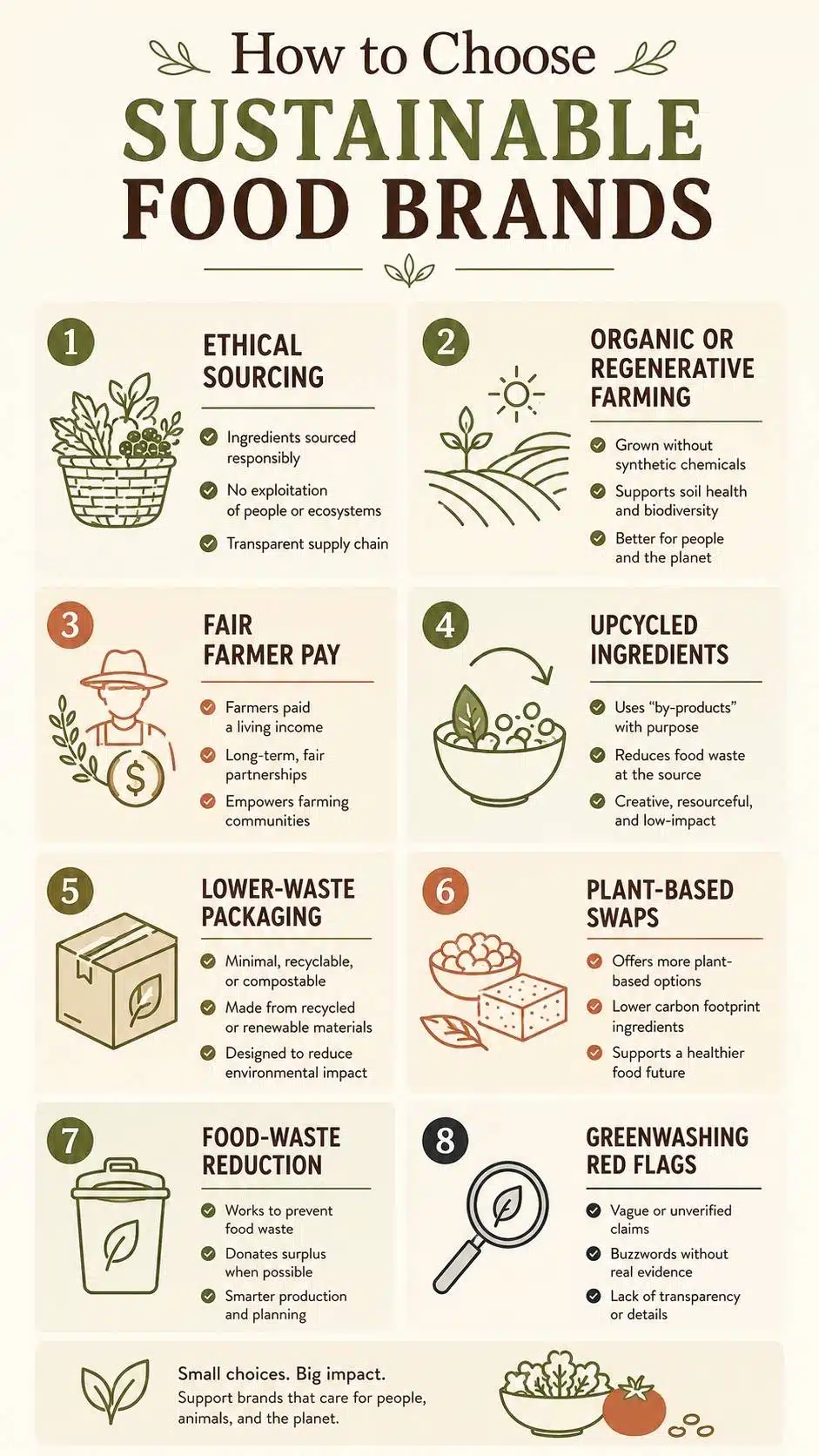
That is why sustainable food shopping needs a better filter. A good food brand should not only look healthy or eco-friendly. It should show proof. That proof might be organic certification, Fair Trade sourcing, traceable cocoa, regenerative agriculture, upcycled ingredients, food-waste reduction, better packaging, B Corp certification, or a business model that supports farmers more fairly.
No food brand is perfect. Every product still has an impact because food needs land, water, labor, processing, packaging, shipping, refrigeration, and disposal. But some ethical food brands are clearly trying harder than others.
This list focuses on 13 eco-friendly food companies worth knowing because they are doing more than selling green packaging. Some are strong pantry brands. Some focus on chocolate and coffee ethics. Some tackle food waste. Some make plant-based swaps more practical. Some support regenerative or lower-impact farming.
The goal is not to make you buy more specialty food. The goal is to help you buy better when you already need chocolate, cereal, rice, snacks, plant-based milk, baking mixes, coffee, tea, or quick food-waste solutions.
How I Chose These Sustainable Food Brands
This list is not based on taste alone, and it is not based on marketing language. Each brand needed a clear reason to be included. That reason could be traceable sourcing, Fair Trade partnerships, organic farming, regenerative agriculture, upcycled ingredients, food-waste reduction, plant-based alternatives, farmer-centered trade, B Corp certification, or transparent public sustainability information.
I also looked at everyday usefulness. A sustainable food brand should fit real life. If a product is too niche, too hard to buy, or only useful once, it may not help many readers.
The review focused on:
- Ingredient sourcing
- Farmer or supplier relationships
- Organic, Fair Trade, B Corp, regenerative, or upcycled signals
- Packaging and waste concerns
- Product usefulness in a real kitchen
- Access and affordability
- Transparency around trade-offs
- Whether the brand helps people shift their repetitive food habits
That last point matters. A sustainable snack you buy once is less meaningful than a pantry staple, coffee, cereal, rice, chocolate, or plant-based swap that becomes part of your normal buying pattern.
1. Alter Eco
Alter Eco is one of the strongest sustainable food brands for chocolate lovers who care about cocoa sourcing.
Chocolate is not a simple category. Cocoa supply chains are often linked to farmer poverty, deforestation risk, unfair pricing, and weak traceability. That is why the best chocolate brands should do more than sell rich flavor. They should explain where the cocoa comes from and how farmers are treated.
Alter Eco focuses on organic chocolate, Fair Trade sourcing, regenerative agriculture, and better packaging choices. The brand is also B Corp certified, which gives shoppers another accountability signal.
Its products include chocolate bars, truffles, granola, and other pantry items, but chocolate is the core reason to know the brand. The taste is premium, but the sourcing story is the real value.
Alter Eco is especially useful for shoppers who already buy chocolate often and want to move away from mainstream candy brands with weaker sourcing transparency.
Chocolate reason: Alter Eco is a good choice when you want organic, Fair Trade chocolate with a stronger environmental and sourcing story.
Buyer note: Premium chocolate costs more. The smarter habit is buying better chocolate less often, not buying more because it feels ethical.
2. Tony’s Chocolonely
Tony’s Chocolonely has made cocoa ethics easier for regular shoppers to notice.
The brand exists to challenge exploitation in the chocolate industry. Its sourcing model focuses on traceable cocoa, higher prices, long-term farmer relationships, support for farmers, and collaboration through Tony’s Open Chain.
That makes Tony’s different from many chocolate brands that mention ethical sourcing but give shoppers little detail. Tony’s has turned the supply-chain problem into part of the product conversation.
The brand’s bars are also easy to find in many markets, which matters. Ethical food brands have more impact when they are not locked inside niche stores.
Tony’s is not a perfect solution to cocoa’s problems. No chocolate brand is. Cocoa poverty, child labor risks, and deforestation are industry-wide issues. But Tony’s deserves attention because it tries to push the wider chocolate sector, not only to sell its own bars.
Cocoa accountability: Tony’s is strongest for shoppers who want chocolate with a public mission around traceability and farmer income.
Buyer note: Look at the mission, but still treat chocolate as a treat. Ethical sourcing does not make overconsumption healthier or more sustainable.
3. Equal Exchange
Equal Exchange is a strong ethical food brand because its model is rooted in co-operation.
The brand sells coffee, tea, chocolate, cocoa, bananas, olive oil, nuts, and other pantry products. Its main difference is the way it works with small farmer co-operatives and operates as a worker-owned co-op.
That structure matters. Many food supply chains leave farmers with little power. Equal Exchange was built to create a different trade model, with direct relationships and support for democratically organized farmer groups.
It is especially useful for repeat pantry purchases. Coffee, tea, chocolate, and cocoa are products people buy again and again. Choosing better sourcing in those categories can matter more than buying one specialty sustainable product once.
Equal Exchange is not a glossy lifestyle brand. Its strength is values, not trendiness. It works best for shoppers who care about farmer relationships and co-op models.
Pantry ethics: Equal Exchange is a strong option for coffee, tea, cocoa, and chocolate where fairer sourcing matters.
Buyer note: If you already buy coffee or tea every week, this is one of the most practical places to shift spending.
4. Nature’s Path
Nature’s Path is a useful, sustainable food brand for families because it focuses on everyday organic breakfast foods.
The brand is known for cereal, granola, oatmeal, waffles, toaster pastries, and snacks. These are not rare specialty items. They are normal pantry and breakfast products that many households buy repeatedly.
That is the value. Sustainable food should not only exist in expensive superfoods or niche powders. It should show up in breakfast bowls, lunchboxes, and grocery carts.
Nature’s Path has long positioned itself around organic agriculture, non-GMO ingredients, and family-friendly food. It is especially useful for parents who want organic cereal or oatmeal options without making breakfast complicated.
The caution is that organic cereal is still packaged food. Some products may contain sugar, processed ingredients, or packaging waste. Organic is a useful signal, but it does not automatically make every product the best nutritional choice.
Breakfast role: Nature’s Path is best for organic cereal, granola, oatmeal, and breakfast staples that replace conventional options.
Buyer note: Choose simpler products first, especially oats, lower-sugar cereals, and pantry staples your family will actually finish.
5. Lundberg Family Farms
Lundberg Family Farms is one of the strongest names in sustainable rice and grain products.
Rice is a major global staple, but rice farming can involve water use, methane emissions, soil management challenges, and biodiversity concerns. That makes farming practices especially important.
Lundberg has a long-standing focus on organic rice, soil health, habitat, and more recently regenerative organic rice. The brand sells rice, rice cakes, risotto, quinoa blends, rice chips, and other grain-based foods.
Its strength is pantry usefulness. Rice is not a luxury purchase. It is a repeat staple. If a household buys rice regularly, choosing a brand with stronger organic and regenerative work can be a meaningful shift.
The caution is that not every Lundberg product carries the same claim. Shoppers should check the specific label. Organic, Regenerative Organic Certified, and conventional products are not all the same.
Rice staple value: Lundberg is a strong option for households that want better-sourced rice and grain pantry staples.
Buyer note: Read the exact product label. Do not assume every product in a brand’s range has the same certification.
6. Lotus Foods
Lotus Foods is another important rice brand, but its focus is slightly different.
The brand is known for organic and heirloom rice, rice noodles, and products connected to more sustainable rice-growing methods. It is also B Corp certified.
Lotus Foods has promoted rice farming methods that can help small-scale farmers grow rice with fewer resources, often connected to its “More Crop Per Drop” message. This gives the brand a clearer mission than simply selling premium rice.
It is also useful because it introduces shoppers to rice varieties beyond standard white or brown rice. Black rice, red rice, jasmine rice, basmati rice, and rice ramen can all make pantry cooking more interesting.
This brand is best for people who cook rice often and want variety with a better sourcing story.
Rice diversity: Lotus Foods is worth knowing for organic, heirloom, and more sustainably grown rice products.
Buyer note: Use it as a pantry staple, not a novelty. The sustainability value is stronger when better rice replaces your regular rice purchase.
7. Patagonia Provisions
Patagonia Provisions is one of the more mission-driven eco food companies because it uses food to talk about farming systems.
The brand is connected to Patagonia’s broader environmental identity, but it focuses specifically on food: crackers, pasta, grains, soups, seafood, snacks, and pantry products. Its strongest story is regenerative organic agriculture and the idea that farming should rebuild soil health rather than only reduce harm.
Patagonia Provisions has helped introduce more consumers to crops like Kernza, a perennial grain often discussed in regenerative agriculture conversations. It also sells products that connect food with land stewardship, fisheries, and farming practices.
This is not the cheapest pantry brand. It is also more niche than cereal or rice. But it is useful for readers who want to understand how food brands can support better farming models.
Regenerative food angle: Patagonia Provisions is best for pantry shoppers interested in regenerative organic agriculture and mission-led food systems.
Buyer note: Try one product before treating it as a full pantry replacement. Mission is important, but taste and use still matter.
8. Oatly
Oatly helped make oat milk mainstream, which is why it belongs in a sustainable food discussion.
Plant-based milk can be a practical lower-impact swap for people who regularly use dairy milk in coffee, cereal, smoothies, or cooking. Oatly’s strength is that it made oat milk easy to find in cafes and grocery stores.
The brand also publishes sustainability updates and product footprint information, which gives shoppers more to evaluate than a simple “plant-based” label.
That said, Oatly should not be treated as a perfect climate product. It still requires farming, processing, packaging, shipping, and refrigeration in many cases. It has also faced criticism over business decisions and the broader plant-based industry’s sustainability claims.
The balanced view is this: oat milk can be a useful swap when it replaces dairy milk you already use, especially in daily routines like coffee or breakfast.
Dairy-swap role: Oatly is strongest as an accessible oat milk option for coffee, cereal, and plant-based cooking.
Buyer note: Use it as a practical replacement, not a magic climate solution. Packaging and food miles still matter.
9. Miyoko’s Creamery
Miyoko’s Creamery is a useful brand for people who want plant-based dairy alternatives that feel closer to real cooking.
The brand makes vegan butter, cheese, spreads, and other plant-based dairy-style products. It is also a Certified B Corporation and discusses its environmental impact work publicly.
This matters because many people want to reduce dairy but do not want to give up buttered toast, cheese boards, grilled cheese, pasta, or baking. Food habits are emotional and cultural. A good plant-based swap needs to work in real meals.
Miyoko’s is strongest when it helps someone replace a dairy product they already use often. Its butter and cheeses are especially relevant for people trying to shift toward more plant-based eating without making food feel joyless.
The caution is that plant-based processed foods are still processed foods. They can be expensive, and not every product fits every diet or taste. Nut-based products may also be unsuitable for people with allergies.
Plant-based kitchen use: Miyoko’s works best for vegan butter, cheese, and dairy-style swaps that support normal cooking habits.
Buyer note: Buy it for meals you already make. Do not buy premium plant-based products just because they sound sustainable.
10. Barnana
Barnana is a strong example of upcycled food becoming snackable.
The brand is known for snacks made from bananas and plantains, including chewy banana bites and plantain chips. Its sustainability story centers on using bananas that might otherwise be wasted because they are imperfect, overripe, or not fit for conventional retail standards.
That kind of upcycling matters because food waste is not only a household problem. Waste can happen at farms, during processing, in distribution, at stores, and in homes.
Barnana makes the idea easy to understand. A banana that might not sell fresh can become a snack instead.
The brand also works with organic ingredients and has been associated with B Corp certification. Its products are especially useful for people who want a more sustainable snack option that still feels familiar.
The caution is that snacks are still snacks. Some products can be sweet, salty, or calorie-dense. Sustainability does not replace nutrition awareness.
Snack upcycling: Barnana is best for people who want a lower-waste snack made from upcycled bananas or plantains.
Buyer note: Choose it when it replaces another packaged snack, not as an extra impulse buy.
11. Renewal Mill
Renewal Mill is one of the clearest upcycled food brands because its whole model is built around food byproducts.
The brand takes ingredients left from food manufacturing and turns them into baking mixes, flours, and pantry products. One of its best-known examples is okara flour, made from the soybean pulp left after soy milk production.
That is a smart idea because many food byproducts still contain nutrition and value. Without a use, they may become waste or low-value animal feed. Upcycling gives those ingredients a second life in human food.
Renewal Mill is especially relevant for bakers, plant-based eaters, and pantry shoppers who want to support circular food systems. Its mixes make upcycled ingredients easier to try without needing to understand food manufacturing.
The limitation is availability. Upcycled pantry products are still a newer category and may not be as easy to find as mainstream baking mixes.
Circular baking: Renewal Mill is worth knowing if you want baking mixes and ingredients that help reduce food-manufacturing waste.
Buyer note: Start with a mix you will actually bake soon. Pantry sustainability disappears if the box expires unused.
12. Yerba Madre
Yerba Madre, formerly known as Guayakí Yerba Mate, is a sustainable beverage brand worth knowing because it connects drinks with regenerative sourcing.
The company officially changed its name from Guayakí to Yerba Madre in 2025. Its products include ready-to-drink yerba mate cans, sparkling yerba mate, bottled drinks, loose leaf, and mate bags.
Its sustainability story centers on organic, shade-grown yerba mate, partnerships with family farmers and Indigenous communities in South America, fair trade premiums, and its Market Driven Regeneration model.
This makes it more interesting than a standard energy drink brand. Yerba mate is naturally caffeinated, so for some people it can replace conventional canned energy drinks or bottled teas.
The caution is sugar and caffeine. Some ready-to-drink products may contain sugar, and yerba mate contains caffeine. Sustainable sourcing does not mean every drink is the right fit for every person.
Beverage role: Yerba Madre is strongest for shoppers who want a caffeinated drink with a regenerative agriculture and community-sourcing story.
Buyer note: Check sugar and caffeine levels before making it a daily habit.
13. Too Good To Go
Too Good To Go is not a packaged food brand, but it belongs on this list because it tackles one of the food system’s biggest problems: edible food waste.
The app connects users with restaurants, bakeries, cafes, hotels, grocery stores, and other food businesses that have surplus food. Customers buy discounted surprise bags and pick them up before the food is wasted.
This is one of the most practical sustainable food tools because it changes a waste moment into a meal. It can save money for consumers, help businesses recover some value, and keep edible food out of the bin.
The app is especially useful in cities where many food businesses participate. It works well for bakery items, groceries, prepared meals, produce, and quick local pickups.
The caution is unpredictability. Surprise bags vary. Food may be close to its best-before date. You need to inspect items, store them properly, and eat them quickly. It is also not available everywhere.
Food-waste solution: Too Good To Go is best for people who are flexible, live near participating stores, and want to reduce edible food waste.
Buyer note: Use it when you can eat the food soon. Rescuing food does not help if it spoils at home.
Quick Comparison of the 13 Brands
| Brand | Main Category | Strongest Sustainability Signal | Best Fit |
| Alter Eco | Chocolate | Organic, Fair Trade, B Corp, regenerative focus | Ethical chocolate buyers |
| Tony’s Chocolonely | Chocolate | Traceable cocoa and Open Chain sourcing model | Cocoa supply-chain awareness |
| Equal Exchange | Coffee, tea, chocolate, pantry foods | Worker-owned co-op and farmer co-op trade | Fair trade pantry staples |
| Nature’s Path | Cereal and breakfast foods | Long-running organic food focus | Organic family breakfast staples |
| Lundberg Family Farms | Rice and grains | Organic and regenerative organic rice work | Pantry rice and grain buyers |
| Lotus Foods | Rice and noodles | B Corp and sustainable rice farming model | More diverse rice options |
| Patagonia Provisions | Pantry and regenerative foods | Regenerative organic agriculture focus | Mission-led pantry foods |
| Oatly | Oat milk and dairy alternatives | Plant-based dairy alternative with impact reporting | Coffee, breakfast, dairy swaps |
| Miyoko’s Creamery | Plant-based dairy | B Corp and plant-based cheese and butter | Vegan cheese and butter users |
| Barnana | Snacks | Upcycled bananas and organic snack focus | Lower-waste snack swaps |
| Renewal Mill | Baking mixes and ingredients | Upcycled food byproducts | Baking and pantry upcycling |
| Yerba Madre | Yerba mate beverages | Regenerative, organic, fair trade sourcing model | Sustainable beverage buyers |
| Too Good To Go | Food-waste app | Surplus food rescue and B Corp status | Reducing edible food waste |
Sustainable Food Labels Worth Understanding
Sustainable food labels can help, but they are not all equal. Some labels are third-party certifications. Others are brand-created terms. Some focus on farming. Some focus on workers. Some focus on animal welfare, packaging, organic inputs, or climate claims.
Useful labels and signals may include:
- USDA Organic or certified organic standards
- Fair Trade Certified or Fairtrade
- B Corp certification
- Regenerative Organic Certified
- Non-GMO Project Verified
- Upcycled Certified
- Certified vegan
- FSC-certified packaging
- Carbon or climate impact reporting
But labels still need context. Organic does not automatically mean low-carbon. Plant-based does not automatically mean low-waste. Recyclable packaging only helps if your local system accepts it. Regenerative agriculture is promising, but claims should be specific.
A strong brand explains what the label means and how it applies to the actual product.
How to Buy Sustainable Food Without Overbuying
Food sustainability can easily become another shopping trap. You discover ethical food brands, and suddenly your cart is full of premium chocolate, oat milk, regenerative crackers, upcycled snacks, organic cereal, plant-based cheese, fair trade coffee, and specialty rice.
That can become expensive fast. The smarter approach is to replace repeat purchases first.
Look at your real grocery habits:
- What do you buy every week?
- What do you throw away most often?
- What snacks do you keep repurchasing?
- What pantry staples do you always use?
- What dairy products could you realistically reduce?
- What coffee, tea, or chocolate do you already buy?
- Where could you buy less packaged food?
- Where could you rescue surplus food locally?
Start there. Also, remember that the most sustainable food is often the food you actually eat before it spoils. A simple meal made from pantry staples and leftovers may be more sustainable than a basket of premium eco products that expire.
Buy better, but also plan better.
Greenwashing Red Flags in Food Brands
Food greenwashing often sounds warm and harmless. Be careful with words like natural, clean, earth-friendly, farm fresh, conscious, sustainable, ethical, climate-smart, regenerative, and planet-positive when the brand does not explain the claim.
A better food brand should answer basic questions:
Where do ingredients come from?
- Are farmers or suppliers named?
- Are certifications clear?
- Is the packaging explained?
- Does the brand publish impact information?
- Does it discuss trade-offs?
- Are claims specific to the product or just the brand image?
- Is the product useful enough to replace something you already buy?
Also watch for brands that use one eco product to cover a mostly conventional portfolio. A single organic or plant-based item does not make an entire company sustainable. Good food brands do not ask you to trust a leaf icon. They give you details.
Final Thoughts: Better Food Choices Start With Repeat Habits
The strongest lesson from these sustainable food brands is that better eating is not only about one perfect product. It is about repeating habits.
The chocolate you buy every month. The coffee you drink every morning. The cereal your family eats before school. The rice you cook twice a week. The milk you pour into coffee. The snacks you pack. The leftovers you save. The food you rescue instead of letting it go to waste.
Alter Eco, Tony’s Chocolonely, Equal Exchange, Nature’s Path, Lundberg Family Farms, Lotus Foods, Patagonia Provisions, Oatly, Miyoko’s Creamery, Barnana, Renewal Mill, Yerba Madre, and Too Good To Go all show different ways food companies can move in a better direction.
Still, no brand can make overbuying sustainable. Use what you have. Waste less. Choose proof over pretty packaging. Support better sourcing when you can. Keep food out of the bin. Buy products that fit your real life, not just your values.
Frequently Asked Questions About Sustainable Food Brands
1. What are sustainable food brands?
Sustainable food brands are companies that try to reduce harm in how food is grown, sourced, packaged, sold, or used. They may focus on organic farming, Fair Trade, regenerative agriculture, upcycled ingredients, plant-based products, farmer partnerships, food-waste reduction, or transparent impact reporting.
2. What are the best sustainable food brands to start with?
Good starter brands include Alter Eco for ethical chocolate, Equal Exchange for coffee and tea, Nature’s Path for organic breakfast foods, Lundberg Family Farms for rice, Oatly for oat milk, Barnana for upcycled snacks, and Too Good To Go for reducing food waste.
3. Are sustainable food brands always more expensive?
Many are more expensive upfront because better sourcing, certifications, farmer payments, organic ingredients, or smaller-scale production can cost more. The best way to manage cost is to replace repeat purchases slowly instead of buying many premium products at once.
4. What sustainable food labels should shoppers look for?
Useful labels may include USDA Organic, Fair Trade Certified, Fairtrade, B Corp, Regenerative Organic Certified, Upcycled Certified, Non-GMO Project Verified, certified vegan, and FSC packaging. The right label depends on the product category.
5. Is plant-based food always sustainable?
Not always. Plant-based foods can reduce impact when they replace higher-impact animal products, but they still need farming, processing, packaging, and transport. Look at ingredients, packaging, nutrition, and whether the product actually fits your diet.
6. How can I avoid greenwashing in food?
Look for specific proof. Stronger brands explain sourcing, certifications, farmer relationships, packaging, impact reports, and trade-offs. Be careful with vague words like natural, clean, sustainable, regenerative, or climate-friendly when there is no detail behind them.
























