Industrial waste usually disappears behind factory doors, recycling plants, and boring sustainability reports. But Dutch Upcycled Home Goods Startups are doing something far more interesting with it: turning leftovers into furniture, lighting, surfaces, and interiors people actually want to show off.
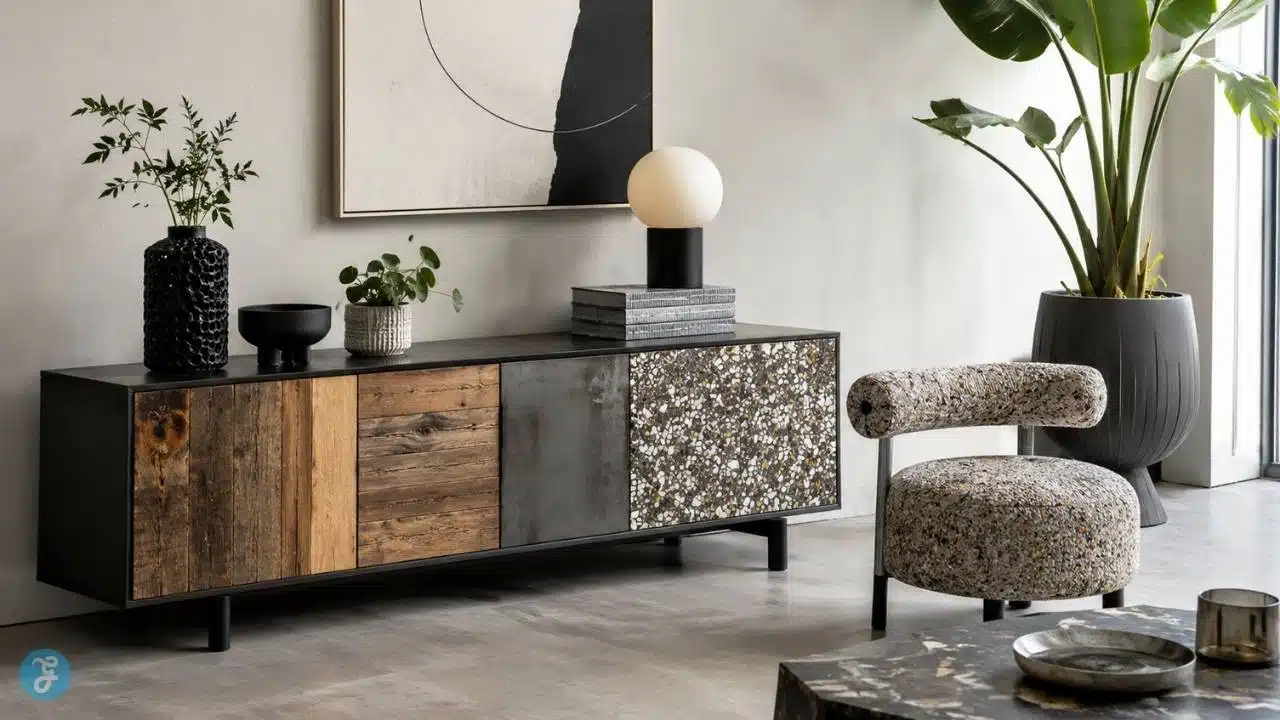
The Netherlands has become a serious testing ground for circular design, partly because the country has a national goal to become fully circular by 2050, where products and raw materials are reused, and hardly anything is discarded as waste. That policy environment matters, but the real story is more visual: Dutch founders, designers, and material innovators are proving that waste does not have to look like waste. It can look like a marble-like surface, a sculptural lamp, a recycled textile chair, or a custom 3D-printed wall system.
This list focuses on companies that are not just talking about sustainability. They are making products, materials, and interiors from real waste streams.
How We Selected Our Best Dutch Upcycled Home Goods Startups
To keep this list accurate, I did not include every company that uses the word “circular” on its website. The circular design world is full of nice slogans, and yes, some of them are as empty as a “sustainable” tote bag shipped halfway across the planet.
The companies selected here had to meet clear criteria:
- They must be based in the Netherlands or strongly Dutch-operated.
- They must use industrial, production, textile, plastic, construction, or residual waste streams.
- They must create home goods, furniture, lighting, surfaces, interiors, or interior materials.
- They must have a premium or design-led positioning.
- Their founder, website, product category, or material claims must be publicly verifiable.
- They must show real commercial or design activity, not just a concept render sitting beautifully in a forgotten pitch deck.
One important note: not every company here is a classic Silicon Valley-style startup. Some are design labels, circular material companies, or emerging studios. That is actually more accurate for this sector because premium upcycled home goods often grow through workshops, design studios, architects, interior projects, and B2B partnerships rather than app-style fundraising stories.
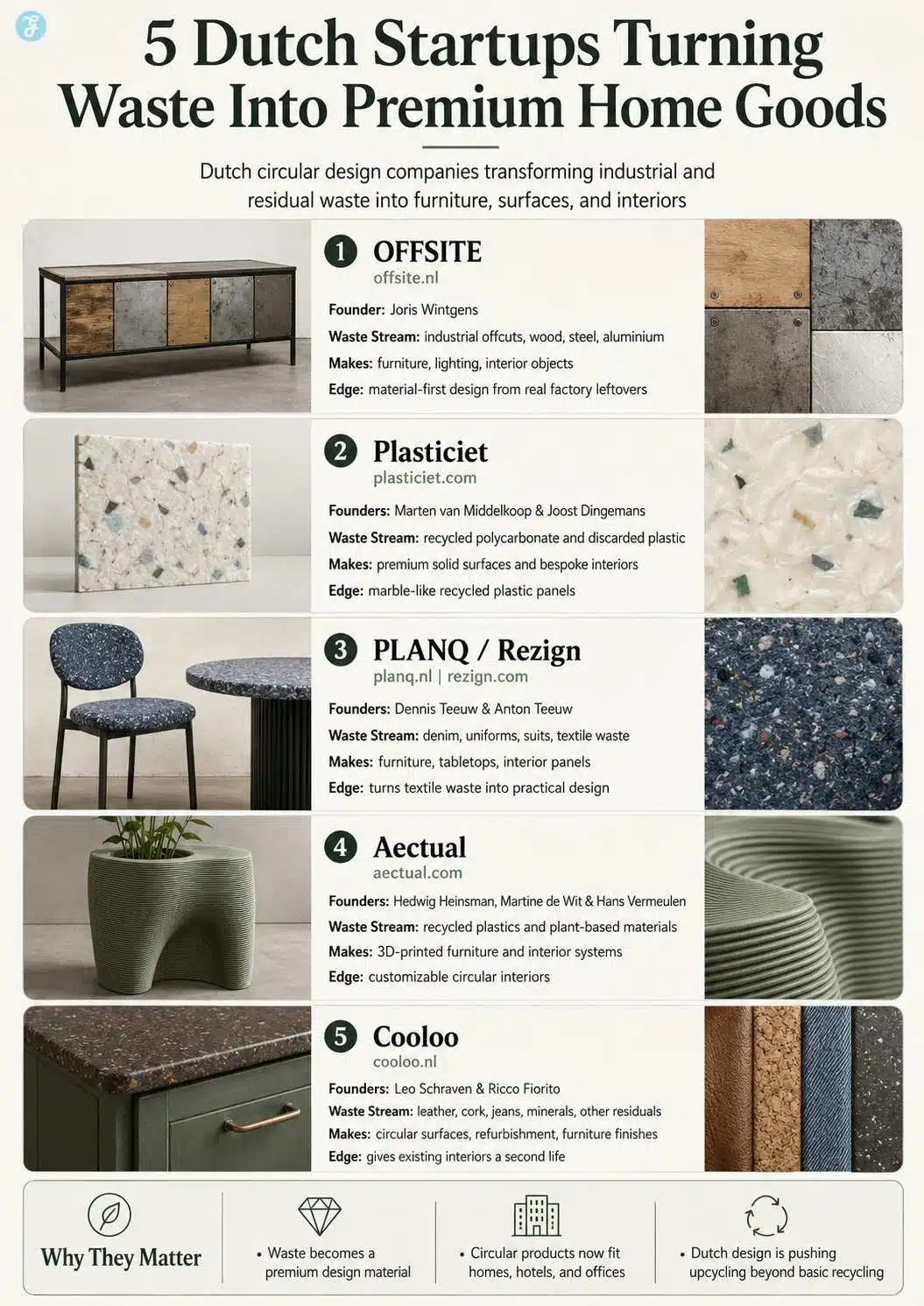
5 Dutch Upcycled Home Goods Startups Turning Waste Into Premium Design
These companies are not just adding recycled materials to look fashionable. Each one is building a real circular design model around waste streams that usually come from factories, plastic systems, textile waste, furniture production, or commercial refurbishment.
1. OFFSITE
| Field | Details |
| Founder | Joris Wintgens |
| Website | offsite.nl |
| Country | Netherlands |
| Category | Circular furniture, lighting, and interior objects |
| Main Waste Stream | Industrial waste, reclaimed materials, wood, steel, aluminium, stainless steel, and factory offcuts |
| Core Products | Furniture, lighting, vases, benches, chairs, and interior objects |
| Target Market | Interior designers, architects, design collectors, hospitality spaces, offices, and circular design buyers |
Company Overview
OFFSITE is the design label of Dutch designer Joris Wintgens. The company focuses on turning industrial waste into furniture, lighting, and interior objects. Its work uses materials from industries such as wood, steel, and aluminium, making it one of the clearest examples of industrial waste being turned into premium design products.
Core Feature
OFFSITE’s strongest feature is its material-first design process. Instead of designing a product first and sourcing new material later, the company starts with available industrial leftovers. The waste stream directly shapes the design, size, texture, and final character of each object.
Market Edge
- OFFSITE has one of the strongest “industrial waste to premium home goods” stories in this list.
- Its products feel intentional and design-led, not like rough recycling experiments.
- The brand fits well for interiors that want visible sustainability without losing a refined design identity.
- Its work is especially relevant for architects and interior designers who want objects with a real material story.
Growth Opportunity
- OFFSITE could benefit from clearer product availability and specification details for commercial buyers.
- A more visible catalogue for interior designers, hotels, and premium residential buyers would make the brand easier to specify.
- The company has strong design value, but it can go further by showing how its industrial-waste model scales beyond limited collections.
2. Plasticiet
| Field | Details |
| Founders | Marten van Middelkoop and Joost Dingemans |
| Website | plasticiet.com |
| Base | Delft, Netherlands |
| Category | Recycled plastic solid surfaces and interior materials |
| Main Waste Stream | Recycled polycarbonate and discarded plastic |
| Core Products | Solid-surface panels, wall panels, furniture surfaces, stools, cabinets, chairs, and bespoke interiors |
| Target Market | Architects, interior designers, retail brands, hospitality spaces, furniture makers, and premium design buyers |
Company Overview
Plasticiet is a Dutch solid-surface manufacturer and material innovation studio based in Delft. It was founded in 2018 by product designers Marten van Middelkoop and Joost Dingemans. The company creates handcrafted solid-surface materials from 100% recycled polycarbonate for architects and interior designers.
Core Feature
Plasticiet’s main feature is its ability to turn plastic waste into marble-like premium surface materials. Its products challenge the cheap, disposable image of plastic by making recycled material suitable for furniture, retail interiors, wall panels, and architectural surfaces.
Market Edge
- Plasticiet makes recycled plastic look premium, which is the hardest part of selling circular materials to design-conscious buyers.
- Its material works well in luxury interiors, retail fit-outs, hospitality projects, and custom furniture.
- The company has strong design credibility and was highlighted in coverage of the Dutch Design Awards 2025 for transforming discarded plastics into marble-like recycled materials.
- It bridges sustainability and aesthetics better than many recycled plastic brands.
Growth Opportunity
- Plasticiet could make its products more approachable for smaller residential projects.
- A clearer consumer-facing collection could help homeowners use its surfaces in kitchens, side tables, shelves, or small interior upgrades.
- More visible pricing guidance or project-size examples would make it easier for non-professional buyers to understand where the material fits.
3. PLANQ / Rezign
| Field | Details |
| Founders | Dennis Teeuw and Anton Teeuw |
| Website | planq.nl / rezign.com |
| Country | Netherlands |
| Category | Circular furniture and textile-waste interior materials |
| Main Waste Stream | Denim, uniforms, suits, textile waste, recycled textiles, flax, hemp, jute, and bio-based resources |
| Core Products | Chairs, tables, tabletops, cabinets, shelving, panels, and interior materials |
| Target Market | Offices, hospitality spaces, schools, retail interiors, circular procurement teams, and interior designers |
Company Overview
PLANQ is a Dutch sustainable furniture brand founded by twin brothers Dennis and Anton Teeuw. Its material platform, Rezign, focuses on transforming textile waste into furniture and interior materials. The company’s story began with the Unusual Chair, made entirely from recycled textiles.
Core Feature
PLANQ’s core feature is its ability to convert textile waste into practical furniture and interior materials. Through Rezign, it works with waste streams such as denim, uniforms, suits, and bio-based fibres to create furniture panels, tabletops, seating, and interior products.
Market Edge
- PLANQ works with textile waste, one of the most visible and difficult waste problems in consumer and commercial supply chains.
- Its products are practical for offices, hospitality, education, and retail spaces, not just display-only design pieces.
- The brand has a clear circular furniture story: waste textiles become usable furniture and interior surfaces.
- It offers a stronger business case than basic recycled decor because it connects material innovation with everyday furniture needs.
Growth Opportunity
- PLANQ could make material performance data more visible for buyers by comparing durability, maintenance, and end-of-life options.
- Since many customers may be B2B buyers, clearer specification sheets and circularity data would strengthen procurement confidence.
- The brand could also highlight more residential use cases to attract homeowners interested in premium textile-waste furniture.
4. Aectual
| Field | Details |
| Founders | Hedwig Heinsman, Martine de Wit, and Hans Vermeulen |
| Website | aectual.com |
| Base | Amsterdam, Netherlands |
| Category | Circular 3D-printed interiors and furniture |
| Main Waste Stream | Recycled waste streams, recycled plastics, plant-based materials, and PolyAl from recycled cartons |
| Core Products | Furniture, stools, planters, room dividers, wall panels, ceilings, flooring, and architectural interiors |
| Target Market | Architects, hotels, offices, real estate developers, retail spaces, public interiors, and design-led commercial projects |
Company Overview
Aectual is an Amsterdam-based circular interior company using large-scale 3D printing for furniture, wall panels, floors, ceilings, planters, and architectural interior systems. The company positions itself around circular interiors made with recycled materials and 3D-printed precision.
Core Feature
Aectual’s strongest feature is large-scale circular 3D printing. Its system allows interiors to be customized for specific projects while using recycled or plant-based materials. The company also supports a circular model where products can be returned, shredded, and reprinted into new products.
Market Edge
- Aectual brings the strongest technology angle to this list.
- It is not limited to one type of home product; it can create furniture, panels, dividers, flooring, and large interior systems.
- Its 3D-printing model gives architects and designers more flexibility than standard recycled furniture production.
- The take-back and reprint model strengthens its circular design credibility.
Growth Opportunity
- Aectual could build more entry-level residential products for homeowners who want circular design without commissioning a full interior project.
- Its current strength is clearly B2B and architectural, so a smaller home-focused collection could broaden its market.
- The brand can also benefit from clearer consumer education around how 3D-printed recycled interiors perform over time.
5. Cooloo
| Field | Details |
| Founders | Leo Schraven and Ricco Fiorito |
| Website | cooloo.nl |
| Country | Netherlands |
| Category | Circular furniture, coatings, refurbishment, surfaces, and interior materials |
| Main Waste Stream | Leather, cork, jeans, olive pits, limestone, bricks, copper, iron, aluminium, stone, and other residual materials |
| Core Products | Circular furniture, upholstery, walls, floors, acoustic surfaces, refurbishment materials, and interior finishes |
| Target Market | Furniture brands, offices, hotels, schools, public spaces, interior designers, refurbishment teams, and construction projects |
Company Overview
Cooloo is a Dutch circular materials company connected to Leo Schraven and Ricco Fiorito in its founding story. It transforms local waste into furniture, interiors, and construction materials using its Endless Life® technology. The company works with residual materials such as leather, cork, jeans, minerals, metals, and bio-based binders.
Core Feature
Cooloo’s core feature is its Endless Life coating and refurbishment technology. Instead of only making new circular products, it can apply waste-based materials to existing furniture, walls, floors, acoustic products, and other surfaces. This gives old furniture and interiors a second life without fully replacing them.
Market Edge
- Cooloo has the strongest refurbishment angle in this list.
- Its technology is useful for hotels, offices, schools, public buildings, and interior projects that already have furniture stock.
- The company works across furniture, walls, floors, acoustics, facades, and construction materials, making it more scalable than a single-product design brand.
- Its waste-based surfaces are visible and tactile, which helps circular materials feel like a design choice rather than a compromise.
Growth Opportunity
- Cooloo could make its premium home goods positioning clearer for individual homeowners.
- Its current communication is strongest for B2B interiors, construction, refurbishment, and commercial projects.
- A more direct residential collection or showroom-style product line could help homeowners understand how Cooloo fits into premium home decor.
- The brand can also improve by simplifying technical explanations for readers who are new to circular coatings and waste-based finishes.
Our Top 3 Picks And Why
Not every reader will need the same company. A designer choosing a surface material has a different need from a hotel owner trying to refurbish furniture or a homeowner looking for an eye-catching circular object.
Best Direct Industrial Waste Story: OFFSITE
OFFSITE is the cleanest fit for the original topic because it works directly with industrial offcuts and turns them into furniture, lighting, and interior objects. It has the strongest “factory waste to premium design” story.
Best Premium Material Brand: Plasticiet
Plasticiet has the best luxury material appeal. Its recycled plastic surfaces look highly designed, not compromised. This makes it ideal for interiors where sustainability must still feel premium.
Best Scalable Interior System: Aectual
Aectual wins on technology and customization. Its 3D-printed circular interiors show how waste-based materials can move beyond small products into architectural-scale design.
What Makes These Dutch Circular Design Startups Different?
The best Dutch circular design startups are not simply recycling waste and calling it innovation. They are changing the design process itself.
Traditional manufacturing usually starts with a product idea, then orders fresh material to make it. These companies often do the reverse. They start with available waste streams, study the material limits, and design around those limits. That is a much harder process, but it creates products with a more honest relationship to materials.
The business model is also different. Many of these companies are not only targeting individual homeowners. Their bigger opportunities are in offices, hotels, restaurants, retail stores, schools, public buildings, and premium residential interiors. That makes sense because circular products often need professional buyers who care about durability, traceability, design value, and long-term procurement.
Another difference is that these companies are not competing only on ethics. They compete on aesthetics, function, material performance, and customization. That is important because nobody wants to buy an ugly chair just because it has a heroic recycling story. Sustainability may open the door, but design quality keeps the product in the room.
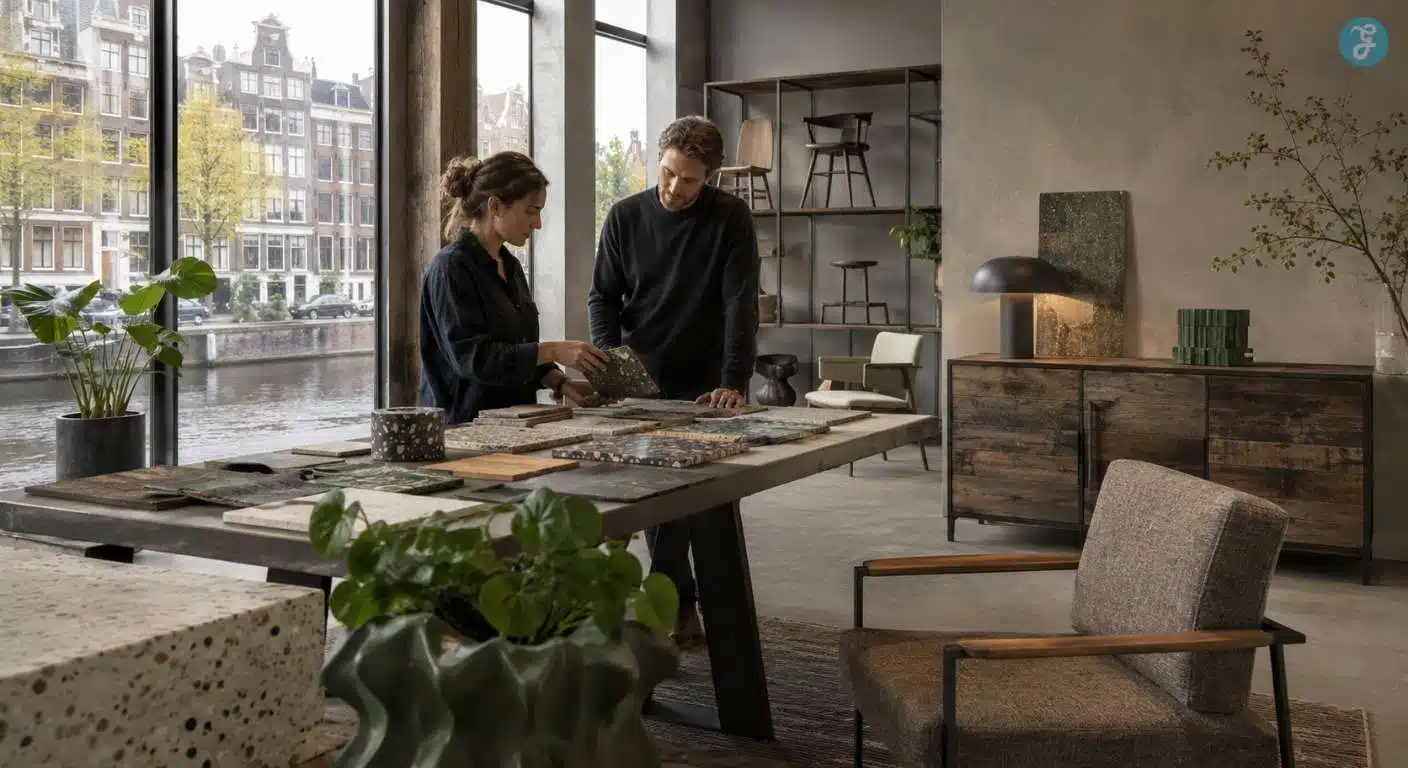
Why The Netherlands Is Becoming A Hub For Premium Upcycled Interiors
The Netherlands has a practical advantage in this niche. Dutch design culture has long valued experimentation, material honesty, and functional problem-solving. Combine that with a national circular economy push, and you get a strong environment for companies that turn waste into useful products.
Government policy also supports the bigger direction. The Netherlands wants a fully circular economy by 2050, and official policy highlights reuse, repurposing, reduced raw material dependence, and new circular business models. That gives circular startups and design companies a clearer market signal.
There is also a strong B2B opportunity. Offices, hotels, retail brands, and real estate developers increasingly need materials that support sustainability goals without making spaces look like recycled cardboard boxes. Dutch companies such as OFFSITE, Plasticiet, PLANQ, Aectual, and Cooloo are well-positioned because they combine circular material use with design credibility.
An Overview Of Dutch Upcycled Home Goods Startups And What They Do Best
The companies below cover different parts of the circular interiors market. Some make finished furniture and objects. Others make surfaces, materials, or systems that designers and architects can use in premium spaces.
| Company | Founder / Founders | Website | Main Waste Stream | Core Feature | Best Business Use Case |
| OFFSITE | Joris Wintgens | offsite.nl | Industrial waste, wood, steel, aluminium, stainless steel | Designs furniture and objects directly from industrial offcuts | Premium furniture, lighting, and design objects |
| Plasticiet | Marten van Middelkoop and Joost Dingemans | plasticiet.com | Recycled polycarbonate and discarded plastic | Turns plastic waste into marble-like solid surfaces | Luxury surfaces, retail interiors, bespoke furniture |
| PLANQ / Rezign | Dennis Teeuw and Anton Teeuw | planq.nl / rezign.com | Textile waste, denim, uniforms, suits, bio-based fibres | Converts textile waste into furniture and interior materials | Office furniture, hospitality interiors, circular procurement |
| Aectual | Hedwig Heinsman, Martine de Wit, Hans Vermeulen | aectual.com | Recycled plastics, plant-based materials, and recycled waste streams | Uses large-scale 3D printing for circular interiors | Custom walls, floors, panels, furniture, and architectural interiors |
| Cooloo | Leo Schraven and Ricco Fiorito | cooloo.nl | Leather, cork, jeans, minerals, metals, residual waste | Applies waste-based circular coatings to furniture and interiors | Refurbishment, circular surfaces, walls, floors, acoustic interiors |
Waste Is Becoming A Premium Design Material
The most interesting Dutch Upcycled Home Goods Startups are not asking buyers to choose between beauty and sustainability. They are proving that waste can become a premium design material when the process is thoughtful, local, and technically serious.
OFFSITE shows how industrial offcuts can become sculptural furniture and lighting. Plasticiet makes recycled plastic feel like a luxury surface. PLANQ turns textile waste into functional furniture. Aectual brings 3D printing and circular take-back systems into interiors. Cooloo makes residual waste useful for furniture, walls, floors, and refurbishment.
The bigger lesson is clear: waste is no longer just a disposal problem. In the right hands, it is a business opportunity, a design challenge, and a premium material category. And honestly, that is a far better ending for industrial leftovers than becoming another depressing line in a waste-management report.
Frequently Asked Questions About Dutch Upcycled Home Goods Startups
1. What Are Dutch Upcycled Home Goods Startups?
Dutch upcycled home goods startups are companies, design studios, or material innovators in the Netherlands that turn waste materials into furniture, surfaces, lighting, decor, or interiors. They often use industrial offcuts, recycled plastic, textile waste, or residual materials to create higher-value products.
2. Which Dutch Startup Makes Furniture From Industrial Waste?
OFFSITE is one of the clearest examples. It creates furniture, lighting, vases, and interior objects from industrial waste streams such as wood, steel, aluminium, stainless steel, and factory offcuts.
3. Which Dutch Companies Turn Plastic Waste Into Interior Products?
Plasticiet and Aectual are two strong examples. Plasticiet turns recycled polycarbonate into premium solid-surface materials, while Aectual uses recycled waste streams and plant-based materials for 3D-printed circular interiors.
4. Are Upcycled Home Goods Durable Enough For Daily Use?
They can be, but it depends on the company, material, and product category. Buyers should check specifications, maintenance guidance, product testing, and whether the item is suitable for residential, commercial, hospitality, or public-space use.
5. Are These Startups Selling To Consumers Or Businesses?
Many of them serve businesses, architects, interior designers, hospitality brands, offices, and real estate projects. Some also offer products or materials suitable for private homes, but the strongest market for premium circular interiors is often B2B.
6. Why Is The Netherlands Strong In Circular Design?
The Netherlands has a strong design culture and a national circular economy goal for 2050. That combination encourages companies to experiment with reuse, waste reduction, material innovation, and new circular business models.
7. How Can Buyers Check If Upcycled Furniture Claims Are Real?
Buyers should ask what waste stream is used, where the material comes from, how it is processed, whether the product can be repaired or recycled again, and whether the company provides transparent technical information. Real circular design usually has details; vague green marketing usually has adjectives.