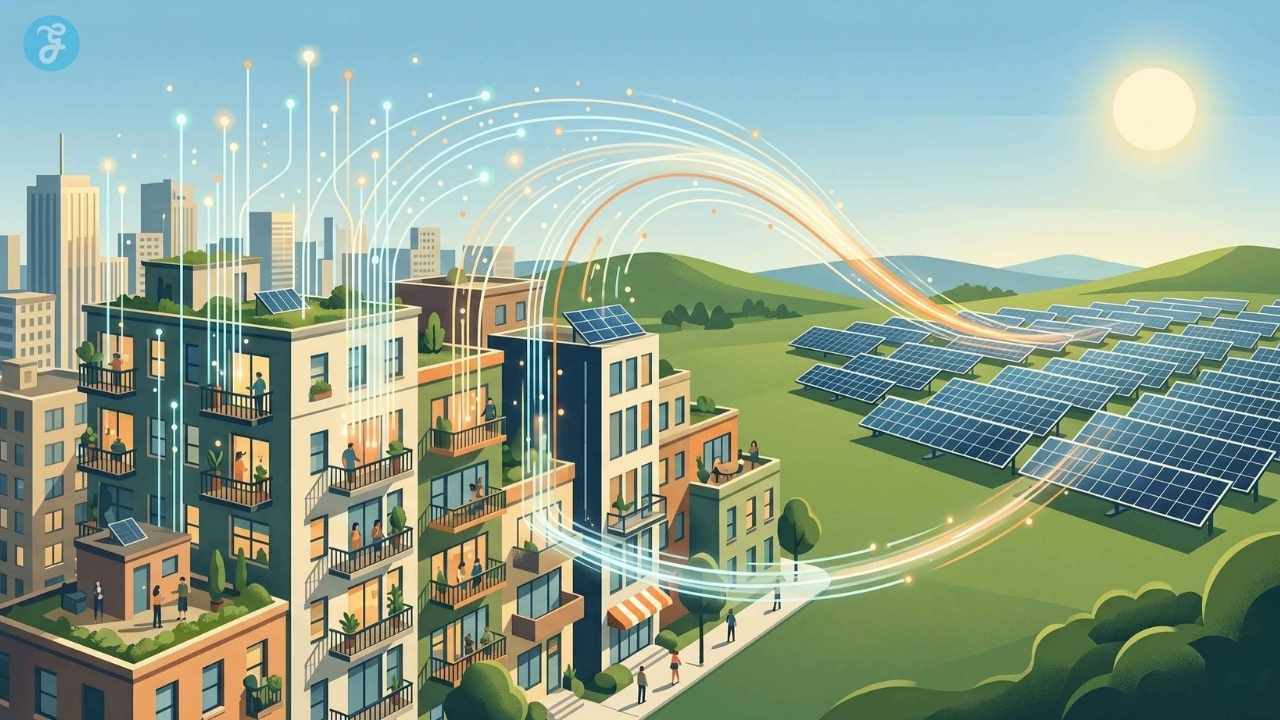
Community solar for renters has fundamentally transformed the macroeconomic landscape of the 2026 renewable sector, offering a highly scalable solution to an infrastructure crisis that has long plagued the global energy transition. For decades, the ability to generate and consume clean energy was strictly gatekept by property ownership. Multi-family dwelling residents, urban populations, and transient workforces were left entirely reliant on ageing, fossil-fuel-dependent municipal grids.
As global geopolitical tensions continue to drive volatility in wholesale natural gas and coal markets, the cost of standard utility provision has skyrocketed. Consequently, the transition to decentralized renewable energy is no longer merely an environmental mandate; it is a critical economic imperative for national stability. However, the structural barrier of rooftop ownership has historically excluded nearly a third of the United States population from participating in this transition.
This exclusion created a stark energy divide. Recognising this massive market inefficiency, a dynamic ecosystem of innovators has emerged. Through advanced digital aggregation platforms, sophisticated financial modelling, and modular hardware deployment, modern energy providers are permanently dismantling these historical barriers. They are allowing transient populations to capture the economic and resilient benefits of the clean energy economy without requiring prohibitive upfront capital or permanent property liens.
To provide actionable intelligence on this rapidly evolving sector, it is vital to analyze the technological and financial mechanisms powering this shift. The following analysis highlights the specific startups leading this charge, evaluating their strategic positioning and operational models within the competitive US market.
The Geopolitics and Mechanics of Virtual Energy Ownership
The global energy landscape in 2026 is defined by acute volatility. Ongoing international supply chain disruptions and shifting geopolitical alliances have severely destabilised traditional fossil fuel markets, passing the financial burden directly to the domestic ratepayer.
For the modern American renter, this translates to unpredictable and often crippling utility inflation. Decentralising the power grid through community solar is no longer merely an environmental strategy; it operates as a critical defensive measure for both national energy independence and personal economic security.
However, bridging the physical gap between a massive solar farm and a third-floor apartment requires a highly sophisticated technological framework. The industry relies on a legislative mechanism known as Virtual Net Metering (VNM), paired intimately with advanced SaaS (Software as a Service) billing infrastructure.
Instead of installing hardware on a leased property, developers construct large-scale arrays off-site. As these farms pump clean electricity into the municipal grid, agile digital platforms track the exact megawatt-hour contributions. They then seamlessly allocate the corresponding financial credits directly to the renter’s existing utility bill.
This invisible, cloud-based architecture has successfully transformed renewable energy from a permanent real estate asset into a highly flexible, subscription-based service, setting the perfect stage for the organisations leading this revolution.
Pioneering US Startups Redefining Energy Access
Navigating the decentralized energy landscape requires a granular understanding of how different platforms solve specific infrastructural and financial bottlenecks. The organisations detailed below are engineering the digital and physical bridges between massive solar farms and the individual rental market.
1. Arcadia
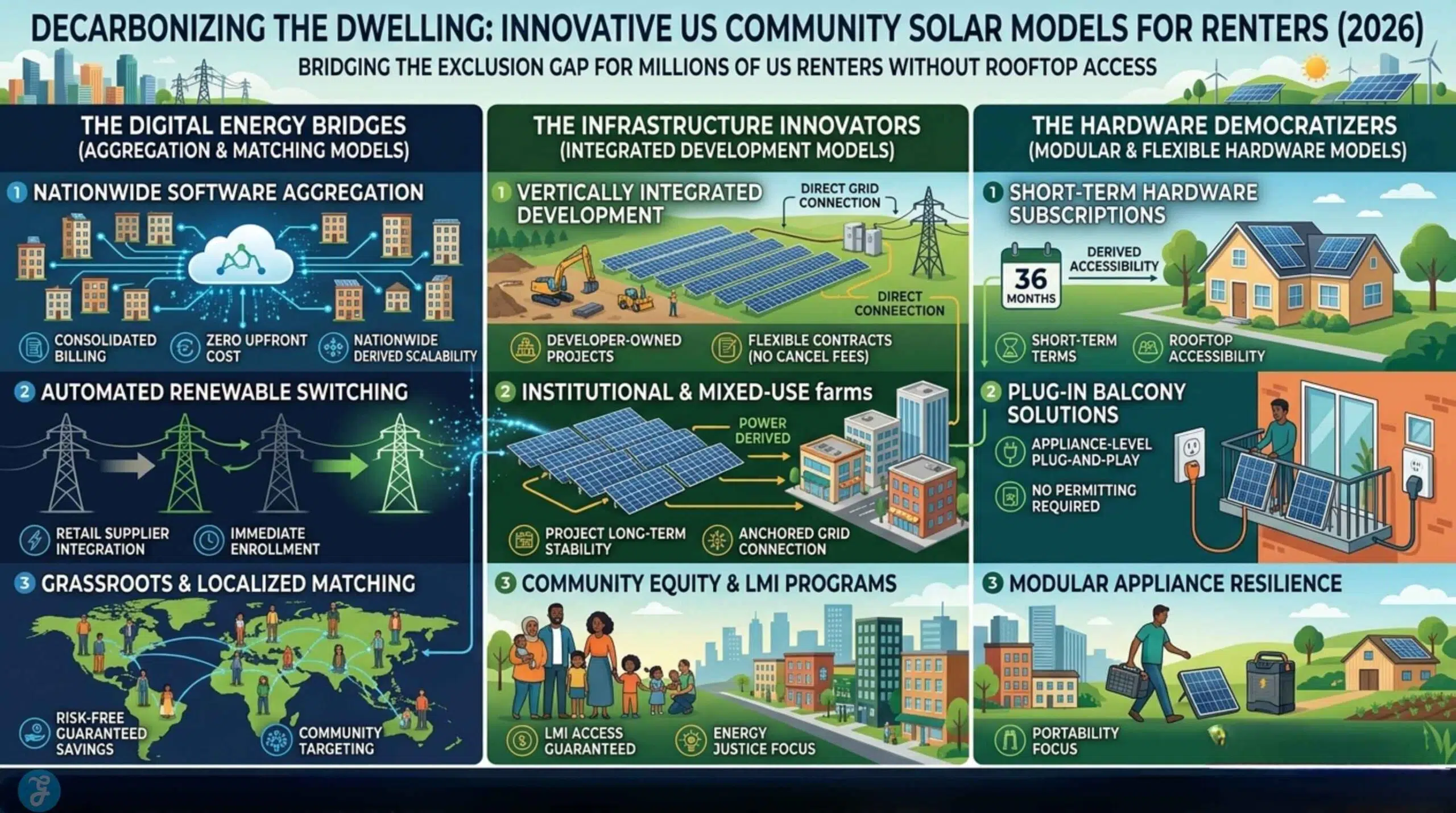
Arcadia has scaled at an unprecedented rate by functioning as a macro-level aggregator, simplifying the notoriously fragmented US utility landscape. Instead of building physical solar arrays, they have built a colossal software infrastructure that interfaces directly with legacy utility billing systems, effectively masking the complexity of the grid from the end user.
Target Demographic: Nationwide renters and urban professionals seeking seamless utility bill integration without changing their primary provider
Strategic Value: They operate a zero-upfront-cost model paired with a highly sophisticated consolidated billing system, rendering the adoption of clean energy frictionless for the average consumer.
Operational Constraint: While their digital footprint is massive, the actual percentage of energy sourced strictly from solar versus regional wind can fluctuate significantly depending on the user’s specific geographical grid location.
Moving away from pure software aggregation, other organisations are securing their market position by actively constructing and managing the physical infrastructure to maintain tighter control over subscriber terms.
2. Nexamp
By maintaining absolute control over the entire project lifecycle, Nexamp removes the traditional financial friction points that typically lock out lower-income and transient demographics. They operate as a vertically integrated developer, managing everything from land acquisition and panel installation to final customer allocation.
Target Demographic: Renters seeking highly flexible contracts with absolute zero cancellation fees or long-term lock-ins
Strategic Value: By owning the physical infrastructure, they can actively target transient populations by completely removing credit checks and long-term contractual obligations, democratising access to the grid.
Operational Constraint: Because their model relies on building their own multi-megawatt infrastructure, their geographical availability is strictly limited to states with highly favourable, deregulated legislative frameworks.
Addressing the need for hyper-local impact and socioeconomic equity, the next platform focuses explicitly on community-driven initiatives rather than purely commercial aggregation.
3. Neighborhood Sun
Operating with a rigorous mandate for social impact, this platform ensures that the financial dividends of renewable energy generation reach the communities disproportionately affected by rising utility costs. Neighbourhood Sun champions energy equity by structurally prioritising low-to-moderate-income neighbourhoods in its allocation algorithms.
Target Demographic: Low-to-moderate-income residents and municipalities prioritising community-centric energy equity
Strategic Value: Operating as a certified B-Corp, they specifically develop and manage programmes that guarantee significant structural bill discounts (often up to 20%) while actively lobbying for regional energy justice.
Operational Constraint: Their operations and political capital are heavily concentrated in specific mid-Atlantic states like Maryland, requiring significant future capital to match the scale of national digital aggregators.
Strategic corporate mergers and acquisitions in 2026 are also providing grassroots innovators with the institutional capital required to scale their operations nationally.
4. Solstice
Backed by recent heavy institutional investment, Solstice is rapidly expanding its operational footprint into historically complex and monopolised utility markets. They have effectively commercialised the grassroots community organising model, turning local advocacy into a highly efficient customer acquisition channel.
Target Demographic: Underserved demographics and regional communities seeking grassroots engagement in their power supply
Strategic Value: Following their strategic acquisition by Perch Energy, they have secured the financial backing necessary to push into highly complex new regulatory markets like New Mexico and Illinois, multiplying their impact.
Operational Constraint: The transition into the massive Perch Energy corporate umbrella may gradually alter their historically independent, hyper-local operational structure in favour of standardised corporate growth.
Moving beyond the traditional off-site shared farm model, some forward-thinking innovators are rethinking the contractual nature of on-site distributed solar itself.
5. Terra Energy
By drastically reducing the standard twenty-year leasing timeframe, Terra Energy is making rooftop infrastructure financially viable for short-term residents and single-family rental properties. They have effectively transformed residential solar from a permanent real estate fixture into a flexible, mid-term utility service.
Target Demographic: Renters occupying single-family homes or those engaged in short-term, transient leasing arrangements
Strategic Value: Backed by a massive $105 million funding injection in early 2026, they disrupt the industry standard by offering a highly flexible 36-month subscription for physical rooftop solar and battery storage systems.
Operational Constraint: This specific model fundamentally requires physical access to a structurally sound, unshaded roof, meaning it remains completely unviable for high-rise apartment dwellers.
For consumers prioritising immediate, frictionless implementation without hardware installations or shared-farm allocation wait times, retail matching remains a highly effective commercial strategy.
6. CleanChoice Energy
CleanChoice acts as a direct, automated conduit to the wholesale renewable energy market. They bypass the need to subscribe to a specific local solar farm by directly purchasing renewable energy certificates and wholesale clean power on behalf of their subscriber base.
Target Demographic: Environmentally conscious renters demanding fast, automated enrollment in regional renewable energy grids
Strategic Value: They completely remove the friction of project waitlists by automatically sourcing clean electricity, acting as a retail supplier that specifically caters to consumers wanting an immediate transition away from fossil fuels.
Operational Constraint: Operating as a retail energy provider means their underlying rates can occasionally be subject to wholesale market pricing volatility, unlike fixed-rate community solar credits.
Developing the massive, multi-megawatt arrays required to support tens of thousands of renters necessitates deep infrastructural expertise and vast capital, a space dominated by legacy project developers.
SunShare ensures the long-term financial stability of the grid by carefully balancing its subscriber base between massive commercial anchor tenants and individual residential renters. This hybrid allocation model shields the projects from the high churn rates typically associated with the transient rental market.
Target Demographic: Municipalities and regions requiring institutional and residential mixed-use shared solar farms
Strategic Value: As a foundational pioneer in the space, they possess an unparalleled track record of successfully navigating local zoning laws to build massive, reliable projects that support a highly diverse mix of energy consumers.
Operational Constraint: The bureaucratic realities of large-scale land development mean their project pipelines have incredibly long lead times, often placing interested renters on extensive waitlists.
Hardware innovation is also creating entirely new categories of energy access for dense urban populations who completely lack access to traditional roof space.
8. Bright Saver
By importing and refining highly successful European hardware models, Bright Saver is providing a tangible, physical connection to solar generation for apartment dwellers. They bypass the digital aggregation model entirely, focusing instead on democratising physical hardware.
Target Demographic: High-rise apartment dwellers and urban renters seeking physical, plug-in balcony solar solutions
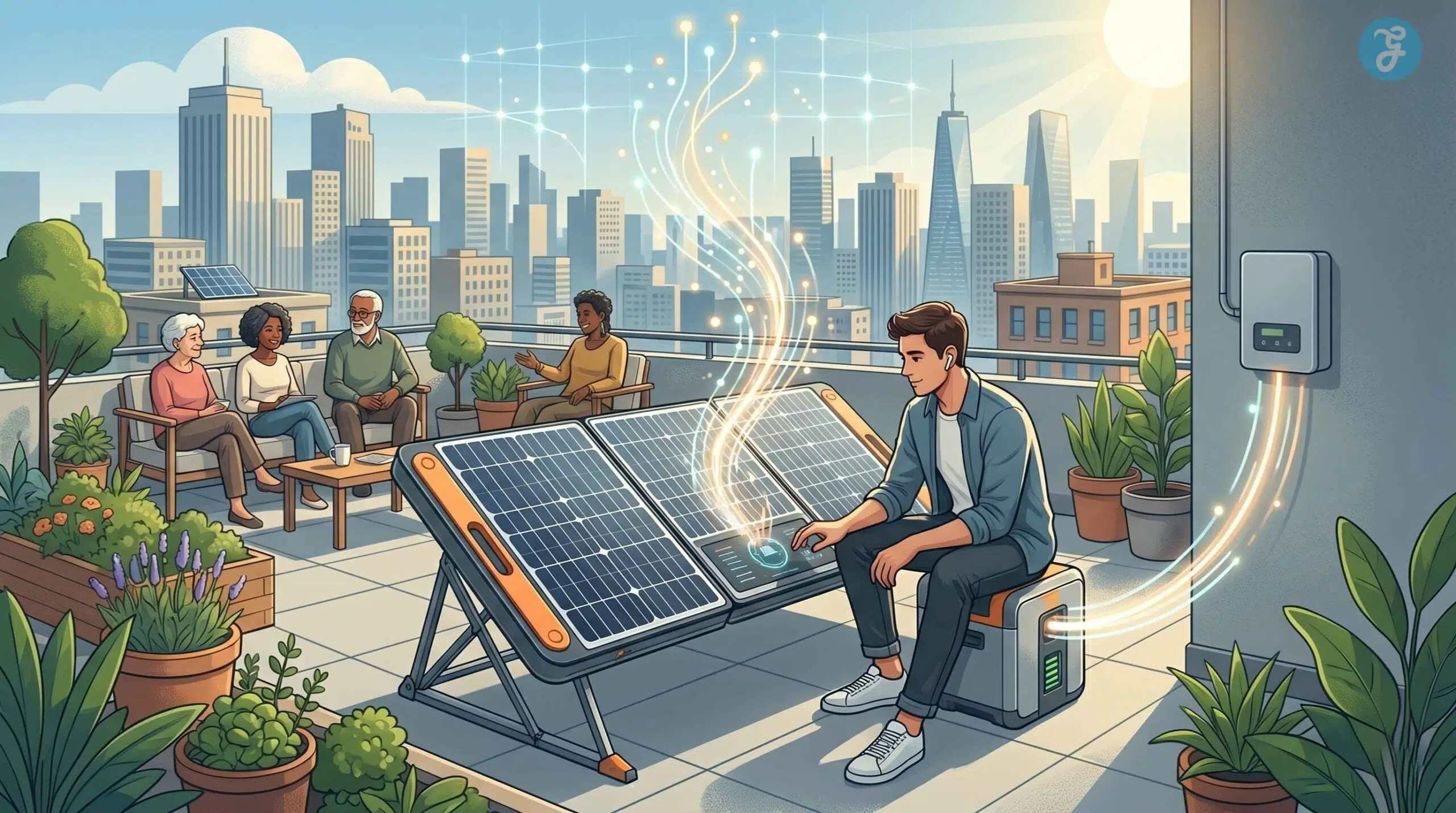
Strategic Value: They operate as a hybrid entity bringing the “balcony solar” revolution to the US, providing highly affordable, plug-and-play solar panels that plug directly into standard wall outlets without requiring landlord permits or hardwired installation.
Operational Constraint: The physical energy output of a balcony system is relatively modest, serving primarily to offset continuous base-load consumption rather than powering an entire energy-intensive household.
Agility, ease of use, and guaranteed financial returns are paramount for consumers currently navigating highly volatile and inflationary utility pricing.
9. Solar Simplified
This platform removes the perceived financial risk of clean energy adoption by structurally guaranteeing savings on every single generated credit. They have gamified and streamlined the matching process to ensure rapid customer acquisition in highly competitive municipal markets.
Target Demographic: Pragmatic renters looking for absolute, risk-free, guaranteed utility bill savings
Strategic Value: They operate an incredibly streamlined digital matching platform that pairs users with local solar farms, structurally guaranteeing that the solar credits applied to the bill will always cost less than standard utility power.
Operational Constraint: Their continued service relies entirely on the ongoing construction and availability of third-party solar farms within the subscriber’s specific regulated utility territory.
Finally, bridging the gap between digital subscriptions and physical backup power is essential for regions prone to extreme weather events and systemic municipal grid failures.
10. Raya Power
Raya Power ensures that renters are not left vulnerable during catastrophic municipal blackouts by providing portable, appliance-level grid independence. They treat solar and battery storage not as real estate upgrades, but as consumer electronics.
Target Demographic: Renters situated in disaster-prone coastal areas or structurally isolated off-grid regions
Strategic Value: They are revolutionising domestic energy resilience with modular, plug-and-play solar systems designed as portable appliances, allowing renters in places like Puerto Rico to take their clean backup power with them when their lease ends.
Operational Constraint: The upfront capital required to purchase physical modular hardware, even when heavily subsidised, presents a fundamentally different financial dynamic than a zero-down digital solar subscription.
Analyzing Core Operational Models
To provide actionable, comparative value for market analysts, policymakers, and potential subscribers, the following table breaks down the distinct business models utilised by these sector innovators. This clear categorisation is essential for understanding the vast difference between digital software aggregation, physical infrastructure development, and modular hardware deployment.
| Startup | Primary Operational Model | Primary Market Focus |
| Arcadia | Digital Aggregation Platform | Nationwide renters and homeowners |
| Nexamp | Vertically Integrated Developer | Residential subscribers, flexible terms |
| Neighborhood Sun | B-Corp Subscription Manager | LMI communities and energy equity |
| Solstice | Grassroots Community Solar | Underserved demographics, regional expansion |
| Terra Energy | Short-Term Hardware Subscription | Single-family renters, flexible leasing |
| CleanChoice Energy | Retail Renewable Supplier | Automated clean energy switching |
| SunShare | Shared Array Developer | Mixed residential and commercial |
| Bright Saver | Plug-In Balcony Solar | Apartment renters, policy advocacy |
| Solar Simplified | Risk-Free Matching Platform | Guaranteed utility bill savings |
| Raya Power | Modular Hardware as Appliance | Grid resilience, disaster recovery |
The Financial Architecture of Decentralized Power
Understanding the rapid proliferation of community solar requires looking beneath the surface of environmental sustainability and examining the rigorous SaaS (Software as a Service) business logic driving the sector. The true revolution of 2026 is not merely in photovoltaic panel efficiency, but in the sophisticated financial architecture and unit economics that make serving the highly transient rental market profitable.
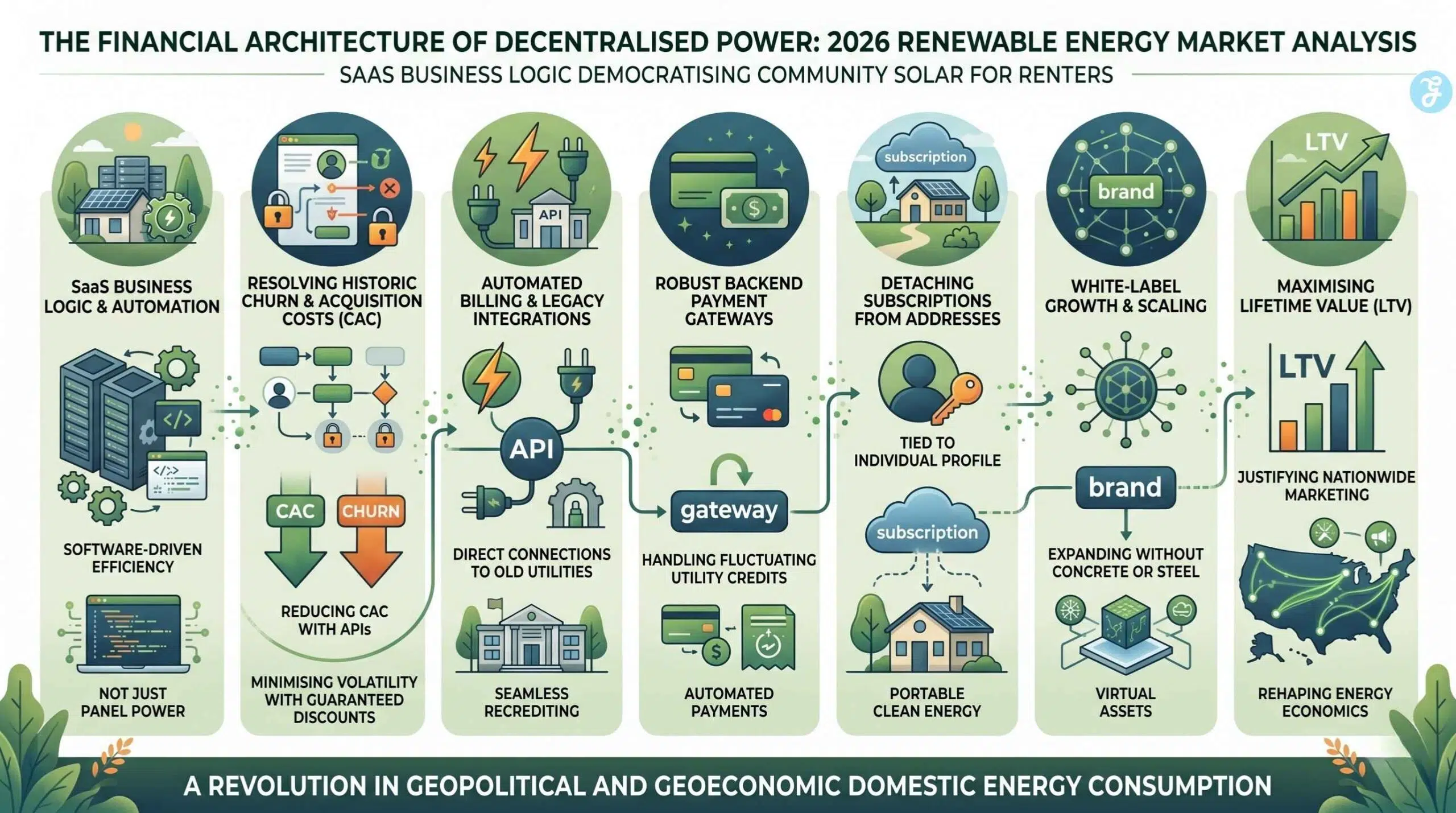
Historically, energy companies avoided renters due to astronomical customer acquisition costs (CAC) and unpredictable churn rates. When a user moves apartments, the logistical friction of transferring energy contracts often results in cancelled accounts.
Modern platforms have solved this by deploying highly advanced, automated billing systems and API-driven integrations with legacy utility providers. By utilising robust backend payment gateways, such as customised Stripe integrations tailored for complex, fluctuating utility credits, these startups can seamlessly detach the energy subscription from the physical address and attach it to the individual user profile.
This white-label growth strategy allows aggregators to scale massively without pouring capital into physical concrete and steel. Furthermore, by guaranteeing a fixed percentage discount on utility bills, these companies effectively reduce their churn rates to near-zero. The fundamental unit economics have shifted: the lifetime value (LTV) of a renting subscriber is now high enough to justify aggressive, nationwide marketing campaigns, fundamentally altering the geopolitical landscape of domestic energy consumption.
Beyond the Rooftop: The Ultimate Energy Prototype
The push to decarbonise the American energy grid relies entirely on ensuring equitable access across all housing and socioeconomic demographics. By moving decisively beyond the restrictive rooftop-ownership paradigm, these ten innovators are establishing a fundamentally more resilient, inclusive, and financially robust energy ecosystem.
The strategic integration of flexible financing, advanced digital aggregation platforms, and highly portable modular hardware ensures that the rental sector is no longer an afterthought in the climate transition. As international energy markets remain volatile, this decentralized, shared-resource model will serve as the definitive blueprint for urban energy independence.
The ultimate success of the US grid in the coming decade will not be measured solely by the total gigawatts of power generated, but by how democratically that power is distributed and accessed by the everyday consumer.
A Note on Methodology: This selection reflects extensive research and market analysis conducted by our editorial team. While these community solar platforms are numbered for structural clarity, this list does not represent a strict hierarchy or a definitive ranking. Each innovator featured here provides distinct, highly valuable solutions for decentralising the US renewable energy sector.
Frequently Asked Questions (FAQs) on Community Solar for Renters
How do community solar credits actually reduce a standard utility bill?
When a renter subscribes to a community solar farm, a designated portion of that farm’s generated electricity is fed directly into the local municipal grid. The local utility company measures this input and assigns a financial value to it, known as a net metering credit. This credit is then digitally routed to the renter’s personal utility bill, effectively subtracting the cost of the solar energy from the total amount owed to the utility company. The renter then pays the solar provider a discounted rate for those specific credits.
What happens to my solar subscription if I move to a new apartment?
Modern community solar platforms are designed with transient populations in mind. Because the subscription is tied to the user’s utility account rather than the physical property, moving is generally seamless. If the renter moves to a new address within the same utility territory, the subscription simply transfers to the new bill. If they move out of the territory entirely, modern platforms typically allow the user to cancel the subscription without punitive termination fees, provided they give standard notice.
Historically, early iterations of shared solar required long-term, rigid contracts. However, the industry standard in 2026 has shifted heavily towards ultimate flexibility. The vast majority of top-tier aggregators and developers (such as Nexamp and Arcadia) operate with strict zero-cancellation-fee policies. This is a deliberate SaaS-style customer retention strategy; by removing the financial risk of leaving, they dramatically lower the barrier to entry and ultimately reduce their overall subscriber churn rate.
Can plug-in balcony solar panels genuinely power an entire apartment?
No, plug-in balcony systems are not designed to take an apartment completely off the grid. Their primary function is to offset a household’s “base-load” consumption, the continuous, low-level electricity draw from appliances like refrigerators, Wi-Fi routers, and standby electronics. While they cannot run high-wattage appliances like air conditioning units or electric ovens independently, they effectively trim the most expensive, continuous kilowatt-hours from the monthly utility bill.
What is the fundamental difference between a digital aggregator and a solar farm developer?
A digital aggregator operates purely as a software and customer management platform; they do not build, own, or maintain physical solar panels. Instead, they act as a digital broker, finding renters and matching them to available capacity on various regional farms. A developer, conversely, is a vertically integrated construction and management firm. They purchase the land, physically engineer the solar array, connect it to the municipal grid, and then directly manage the subscribers who purchase the power from their specific facility.