History is rarely a quiet river; it is a turbulent ocean of human ambition, natural phenomena, and sudden geopolitical shifts. April 28 stands out as a particularly vivid cross-section of this historical turbulence. From the brutal realities of modern warfare and the devastating power of Mother Nature to the birth of literary titans and the dawn of commercial spaceflight, this date offers a profound reflection on the human condition.
Every day carries the weight of the past, but the events of this specific day have rippled across centuries, fundamentally altering borders, reshaping digital commerce, and redefining our understanding of human rights. To understand the present, we must deeply examine these pivotal moments.
Moving from a broad global perspective to the specific regional impacts that shaped the Indian subcontinent, we find stories of both immense cultural contribution and heartbreaking natural disaster.
The Bengali Sphere and the Indian Subcontinent: Cultural Milestones and Profound Tragedies
The history of the Indian subcontinent is a vast tapestry woven with the brilliance of fierce intellectuals, the strategic maneuvers of visionary leaders, and the overwhelming, unpredictable forces of nature.
Within the broader narrative of India and the extensive Bengali-speaking sphere—encompassing modern-day Bangladesh and West Bengal—the date of April 28 holds a deeply entrenched historical significance. It is a day that bears witness to both incredible human achievement and devastating loss. Below is an expanded and detailed look at the epoch-making events that have forever shaped the trajectory of this region.
The Devastation of the 1991 Cyclone and the Resilience of a Nation (1991)
Recognized as one of the deadliest and most destructive natural disasters in the recorded history of South Asia, the 1991 Bangladesh cyclone permanently altered coastal demographics and revolutionized global disaster management protocols.
April 28 stands as the harrowing eve of destruction. On this day, a deep atmospheric depression brewing in the Bay of Bengal rapidly intensified into ‘Super Cyclone Marian’ (widely remembered by locals as the catastrophic ’91 Cyclone or Cyclone Gorky). It began hurtling toward the densely populated coastline with terrifying wind speeds ranging from 160 to 225 kilometers per hour.
While the cyclone made its catastrophic landfall in the early hours of the following morning—savaging Chittagong, Sandwip, Kutubdia, and Moheshkhali—the afternoon of April 28 marked the beginning of a desperate, frantic struggle for survival as millions attempted to seek safe shelter against the looming tempest.
The Aftermath and Global Legacy:
-
The Human Toll: The storm generated a monstrous 20-foot (6-meter) storm surge that swallowed entire islands and coastal villages. It claimed the lives of an estimated 138,000 people and left nearly 10 million utterly destitute and homeless.
-
A Public Health Crisis: In the immediate wake of the receding waters, the coastlines were littered with the deceased. A severe lack of pure drinking water triggered a deadly epidemic of diarrhea and cholera, compounding the tragedy.
-
A Paradigm Shift: This immense catastrophe forced the global community to fundamentally rethink disaster preparedness. In its aftermath, the Government of Bangladesh, alongside the Bangladesh Red Crescent Society, massively overhauled the Cyclone Preparedness Programme (CPP). Thousands of elevated, concrete cyclone shelters were constructed along the coast, and a highly sophisticated, community-based early warning system was developed. Today, Bangladesh stands globally recognized as a pioneering role model for disaster risk reduction and climate resilience.
The Birth of Dr. Humayun Azad: A Fearless Beacon of Free Thought (1947)
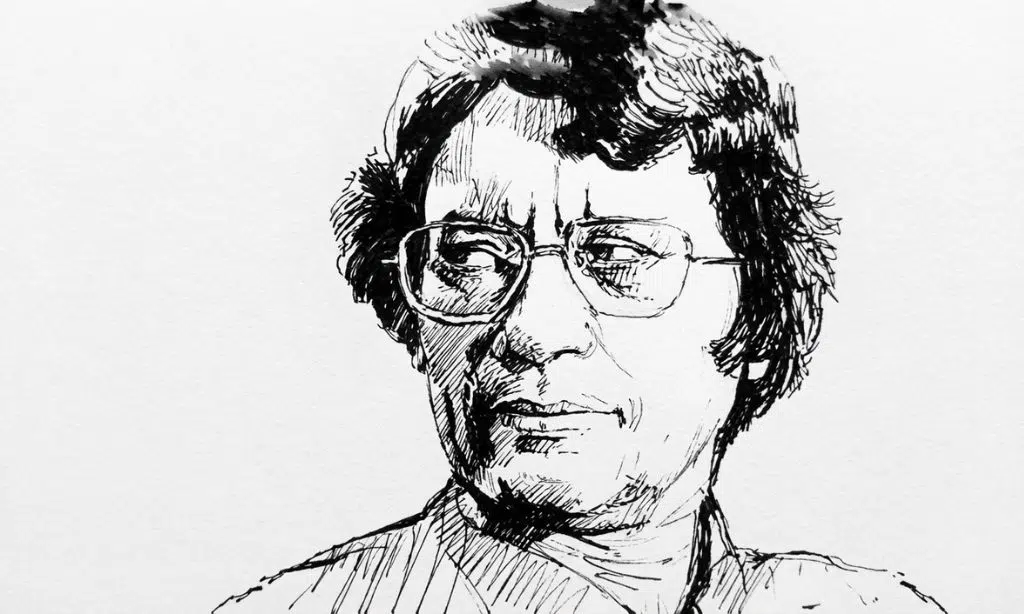
Born in the quiet village of Rarikhal in Munshiganj, Dr. Humayun Azad emerged as one of the most courageous, intellectually rigorous, and controversial voices in the Bangladeshi sphere of thought. Serving as a distinguished professor in the Bengali Department at the University of Dhaka, his genius could not be confined to a single discipline.
He was celebrated not only as a prolific novelist and poet but also as an authoritative linguist. His masterful works, such as ‘Lal Nil Dipabali’ (Red Blue Sparkles) and ‘Koto Nodi Sarobar’ (How Many Rivers and Lakes), seamlessly introduced younger generations to the rich, complex history and evolution of the Bengali language.
A Legacy of Defiance: However, Dr. Azad is most profoundly remembered for his uncompromising secularism and his fiercely anti-establishment literary endeavors. He wielded his pen like a scalpel, dissecting and fiercely criticizing religious fundamentalism, military dictatorships, and deeply ingrained patriarchal structures.
His groundbreaking and highly polarizing books, particularly ‘Pak Sar Jamin Sad Bad’ (a scathing critique of religious extremism) and ‘Nari’ (Woman, a groundbreaking feminist manifesto), drew immense hostility from conservative factions while simultaneously elevating him to the status of an idol among progressive thinkers.
Tragically, this refusal to self-censor made him a target. On his way home from the prestigious Ekushey Book Fair in February 2004, he was brutally ambushed and hacked with machetes by religious extremists.
Though he survived the initial physical trauma, the attack stood as a grim testament to the rising tide of censorship and violence against intellectuals. He passed away under mysterious circumstances in Munich, Germany, in August 2004. Today, his unwavering courage endures as an immortal symbol of free speech and intellectual liberty in the Bengali consciousness.
The Birth of Utkal Gourab Madhusudan Das: The Architect of Modern Odisha (1848)
Reverently remembered as ‘Madhu Babu’, Madhusudan Das was a trailblazer whose life was a series of monumental “firsts” for his people. He was the very first Odia to earn a Bachelor’s degree, a Master’s degree, and a degree in Law.
Operating as a legendary political leader, astute lawyer, and passionate social reformer, his contributions to the political and cultural unification of Odisha are a cornerstone of Indian history. During the British colonial era, the Odia-speaking populations were fragmented and marginalized, scattered across different administrative provinces.
The Fight for Identity and Industry:
-
Political Unification: To combat this fragmentation, he founded the ‘Utkal Sammilani’ (Utkal Union Conference). Through decades of relentless advocacy, negotiation, and peaceful struggle, he spearheaded the movement to unite all Odia-speaking tracts. His lifelong dedication culminated in 1936 with the formation of Odisha—making it the very first Indian state to be established strictly on linguistic grounds.
-
Economic Empowerment: Beyond politics, Madhusudan Das was a visionary pioneer of local industrialization. Understanding that political freedom meant little without economic self-sufficiency, he founded the ‘Orissa Art Wares’ and the ‘Utkal Tannery’. These enterprises were specifically designed to uplift local, marginalized artisans and seamlessly integrate indigenous craftsmanship into the competitive global market.
The Passing of Baji Rao I: The Undefeated Hero of the Maratha Empire (1740)
Peshwa Baji Rao I remains one of the most brilliant and devastatingly effective military strategists in the history of medieval India. Serving as the prime minister (Peshwa) to the Chhatrapati (Emperor), he holds the astonishing distinction of being an undefeated general, having personally commanded and secured victory in over 41 major battles.
His military genius lay in his absolute mastery of rapid, highly mobile cavalry warfare. At a time when the mighty Mughal Empire was beginning to fracture, Baji Rao seized the initiative.
Expanding the Empire:
-
His tactical brilliance was best showcased in the Battle of Palkhed, where his lightning-fast maneuvers and policy of relentless, surprise offensives completely paralyzed and shattered the dominance of the declining Mughal forces and the Nizam of Hyderabad.
-
Under his aggressive and charismatic leadership, the Maratha Empire burst forth from the confines of Maharashtra. His forces swept across the subcontinent, annexing the prosperous regions of Malwa and Gujarat, and establishing a formidable Maratha presence deep into the heart of North India.
-
He was the primary architect behind the profound political shift that saw the ultimate power of the empire transition from the hands of the Chhatrapatis to the Peshwas.
At the incredibly young age of 39, while at the absolute zenith of his power, this seemingly invincible warrior succumbed to a sudden, severe fever at Raverkhedi on the banks of the Narmada River, leaving behind an empire that would soon dominate the entire Indian subcontinent.
Global Observances and International Holidays
While history is often written by generals and politicians, the progress of modern civilization is built upon the sweat, sacrifice, and safety of the working class. The international observances held on this day reflect a global commitment to human rights and national sovereignty.
The most prominent global observance on April 28 is the World Day for Safety and Health at Work, spearheaded by the International Labour Organization (ILO). Since 2003, the ILO has used this day to promote the prevention of occupational accidents and diseases globally. It is an awareness-raising campaign intended to focus international attention on the magnitude of the problem and on how promoting and creating a safety and health culture can help reduce the number of work-related deaths and injuries.
In tandem with the ILO’s efforts, the international trade union movement observes this date as Workers’ Memorial Day (also recognized in Canada as the National Day of Mourning). This solemn observance remembers those who have lost their lives, suffered injuries, or contracted devastating diseases due to workplace hazards. The origins of this movement are deeply rooted in the historical struggles for labor rights, spurred by tragedies like the Triangle Shirtwaist Factory fire and the grueling, unprotected labor of the Industrial Revolution. By flying flags at half-mast and holding moments of silence, nations worldwide reaffirm the fundamental human right to a safe working environment.
On a national level, April 28 is a day of sovereign celebration for several countries. Barbados celebrates National Heroes Day, honoring the extraordinary men and women who fought for the island’s independence, civil rights, and cultural identity, including figures like Bussa, who led the largest slave revolt in Barbadian history. Meanwhile, Afghanistan observes Mujahideen Victory Day, commemorating the pivotal 1992 overthrow of the Soviet-backed socialist government by the Mujahideen forces, an event that profoundly altered the geopolitical landscape of the Middle East and Central Asia.
The following table outlines the major observances recognized globally on this date.
Significant Historical Events Around the World
The historical tapestry of April 28 is woven with stories of rebellion, technological revolution, and the harsh realities of geopolitics. From the Pacific Ocean to the vacuum of space, humanity has pushed boundaries on this date.
- In 1789, the South Pacific became the stage for one of the most famous naval rebellions in history: the mutiny on the Royal Navy vessel HMS Bounty. Captain William Bligh had been commissioned to transport breadfruit plants from Tahiti to the West Indies. After a five-month layover in Tahiti, discipline broke down. Master’s mate Fletcher Christian, angered by Bligh’s increasingly harsh punishments, led a bloodless coup. Christian and his followers forced Bligh and 18 loyalists into a 23-foot open launch with minimal provisions. In a miraculous feat of seamanship, Bligh navigated the tiny boat over 3,600 nautical miles to safety in Timor, while the mutineers eventually settled on the isolated Pitcairn Island, where their descendants still live today.
- In 1869, North American industrial history was made during the construction of the US Transcontinental Railroad. The Central Pacific Railroad company, employing a workforce composed largely of Chinese and Irish immigrants, achieved the impossible: they laid exactly ten miles and 56 feet of track in a single day. Driven by a bitter rivalry with the Union Pacific Railroad and a massive financial wager, these laborers worked at a blistering, back-breaking pace from sunrise to sunset. This grueling industrial achievement, often referred to as “Ten-Mile Day,” has never been matched in the history of manual railroad construction and stands as a testament to the sheer physical endurance of immigrant laborers.
- In 1945, the brutal chapter of European fascism began its final close. Benito Mussolini, the fascist dictator who had ruled Italy for over two decades and allied with Adolf Hitler, was captured by Italian partisans near Lake Como while attempting to flee to Switzerland. On April 28, Mussolini and his mistress, Clara Petacci, were summarily executed by firing squad. Their bodies were subsequently taken to Milan and hung upside down in the Piazzale Loreto—a gruesome and public end to a regime that had brought immense suffering to Europe.
- Fast-forwarding to the digital age, April 28, 2003, marked a tectonic shift in the entertainment industry. Apple Inc. launched the iTunes Music Store, fundamentally changing how humanity consumes media. At a time when the music industry was being ravaged by illegal file-sharing services like Napster, Steve Jobs convinced major record labels to allow single-track downloads for 99 cents. Skeptics believed consumers would never pay for digital files they could easily pirate; however, the platform sold one million songs in its first week, legitimizing digital media commerce and paving the way for the streaming ecosystem we rely on today.
- Exactly one year later, on April 28, 2004, a much darker geopolitical event unfolded when CBS’s investigative program 60 Minutes II broadcasted horrific photographs detailing the abuse and torture of prisoners by United States military personnel at the Abu Ghraib prison in Iraq. The graphic images of physical and sexual abuse sparked international outrage, severely damaging the moral standing of the United States, inflaming anti-American sentiment across the Middle East, and forcing a global reckoning regarding human rights violations during the War on Terror.
- In the realm of exploration, April 28, 2001, shattered the exclusive domain of government astronauts. Dennis Tito, a 60-year-old American multimillionaire and former NASA engineer, became the world’s first private space tourist. By paying an estimated $20 million to the cash-strapped Russian Federal Space Agency, Tito secured a seat on a Soyuz spacecraft bound for the International Space Station. Despite fierce opposition from NASA, who argued that his presence would be a dangerous distraction, Tito spent nearly eight days in space. His journey proved that orbital spaceflight could be commercialized, directly inspiring the modern private space industry led by companies like SpaceX.
To easily digest these monumental shifts in global history, refer to the following chronological breakdown.
At a Glance: Global Historical Milestones on April 28
| Year: | Location: | Event Details: |
| 1789 | South Pacific | The crew of the HMS Bounty mutinies against Captain William Bligh. |
| 1869 | United States | Chinese and Irish laborers lay a record-breaking 10 miles of railroad track in one day. |
| 1945 | Italy | Fascist dictator Benito Mussolini is executed by Italian partisans. |
| 1947 | Pacific Ocean | Thor Heyerdahl sets sail from Peru on the Kon-Tiki balsa raft. |
| 2001 | Space (ISS) | Dennis Tito becomes the first fee-paying space tourist in history. |
| 2003 | United States | Apple launches the iTunes Music Store, revolutionizing digital media. |
| 2004 | Iraq / USA | The Abu Ghraib torture and prisoner abuse scandal is exposed to the public. |
These sweeping events were often driven, or documented, by extraordinary individuals. The births that occurred on this day have gifted the world with incredible leaders, saviors, and storytellers.
Famous Birthdays on April 28
The individuals born on this day share a legacy of profound influence, whether through the stroke of a pen, the wielding of political power, or the quiet courage required to save lives in the face of absolute evil.
James Monroe (Born 1758): The fifth President of the United States and the last president from the Founding Father generation. Monroe’s presidency, known as the “Era of Good Feelings,” was marked by a unified national identity following the War of 1812. However, his most enduring legacy is the Monroe Doctrine, a foundational pillar of American foreign policy that warned European powers against further colonization or intervention in the Western Hemisphere, fundamentally shaping the geopolitical destiny of the Americas.
Oskar Schindler (Born 1908): Born in Svitavy (in modern-day Czechia), Schindler’s life is a testament to the complex nature of human morality. Initially a war profiteer and member of the Nazi Party, he acquired an enamelware factory in occupied Poland. Witnessing the horrors of the Holocaust, his motivations shifted from profit to salvation. By brilliantly manipulating the Nazi bureaucracy, offering bribes, and designating his Jewish workers as essential to the war effort, he spent his entire fortune to save over 1,200 Jews from the gas chambers. He was named Righteous Among the Nations by the Israeli government, and his immense courage was immortalized in Steven Spielberg’s film Schindler’s List.
Harper Lee (Born 1926): Nelle Harper Lee, born in Monroeville, Alabama, authored one of the most culturally significant American novels of the 20th century. Published in 1960, To Kill a Mockingbird won the Pulitzer Prize and became an instant classic. Through the innocent eyes of Scout Finch, Lee tackled the deeply entrenched racial injustice and loss of innocence in the American South. The character of Atticus Finch remains a global symbol of moral integrity in the legal profession. Lee lived a notoriously private life, shunning the spotlight despite the monumental, enduring impact of her sole masterpiece.
Saddam Hussein (Born 1937): While officially celebrated on April 28, the exact birthdate of the Iraqi dictator remains a subject of historical debate. Rising through the ranks of the Ba’ath Party, Hussein ruled Iraq with an iron fist from 1979 until his overthrow by a US-led coalition in 2003. His aggressive foreign policies, including the devastating Iran-Iraq War and the invasion of Kuwait (which sparked the Gulf War), resulted in the deaths of hundreds of thousands and destabilized the Middle East for generations.
Terry Pratchett (Born 1948): Sir Terry Pratchett was a brilliant English author, best known for his Discworld series—a comedic, deeply philosophical fantasy universe balancing on the backs of four elephants standing on a giant turtle. With over 85 million books sold worldwide, Pratchett’s sharp satirical wit skewered everything from organized religion to the mechanics of the post office. Later in life, following a diagnosis of early-onset Alzheimer’s disease, he became a fierce and public advocate for Alzheimer’s research and the right to assisted dying.
Penélope Cruz (Born 1974): Born in Madrid, Spain, Cruz is widely regarded as one of the most versatile and celebrated actresses of her generation. A frequent collaborator with legendary Spanish director Pedro Almodóvar, she seamlessly transitioned into Hollywood. In 2008, she made history by winning the Academy Award for Best Supporting Actress for her fiery role in Vicky Cristina Barcelona, becoming the first and only Spanish actress to win an Oscar, paving the way for international talent in American cinema.
The table below highlights these influential figures born on April 28.
Notable Deaths and Legacies
The deaths that occurred on April 28 serve as closing chapters to lives that shaped global conflict, artistic expression, and scientific advancement.
Gavrilo Princip (Died 1918): Few individuals have single-handedly changed the course of history as drastically as this young Bosnian Serb student. On June 28, 1914, Princip assassinated Archduke Franz Ferdinand of Austria in Sarajevo, the spark that ignited the catastrophic powder keg of World War I. Because he was under 20 at the time of the crime, he avoided the death penalty and was instead sentenced to 20 years in prison. He died of tuberculosis on April 28, 1918, in the agonizing conditions of the Theresienstadt prison, months before the war he started finally came to an end, resulting in the collapse of four empires.
Francis Bacon (Died 1992): An Irish-born British painter, Bacon is widely considered one of the most important figurative artists of the 20th century. His work is instantly recognizable for its raw, visceral, and often unsettling imagery, frequently featuring distorted faces, screaming popes, and figures trapped in geometric cages. Bacon’s art reflected the deep psychological traumas of the post-WWII era. He died of a heart attack in Madrid, leaving behind a chaotic studio that was later perfectly preserved and relocated to Dublin as a permanent exhibition of his chaotic genius.
Arthur Leonard Schawlow (Died 1999): An American physicist, Schawlow was a towering figure in the world of modern science. Along with Charles Townes, he is credited as the co-inventor of the laser (Light Amplification by Stimulated Emission of Radiation). Their groundbreaking work in microwave spectroscopy and optical masers revolutionized modern technology, enabling everything from barcode scanners and fiber-optic internet to precision eye surgery. Schawlow was awarded the Nobel Prize in Physics in 1981 for his monumental contributions to laser spectroscopy.
Intriguing Trivia and Lesser-Known Facts
History is rarely as straightforward as the textbooks suggest. Here are three fascinating, lesser-known pieces of trivia connected to April 28 that make for excellent dinner table conversation:
-
The Mutineers’ Hidden Utopia: Following the famous 1789 mutiny on the HMS Bounty, Fletcher Christian and his fellow mutineers knew they would hang if caught by the British Navy. They systematically searched for an island that had been charted incorrectly by British mapmakers so they could disappear forever. They found Pitcairn Island. They burned the Bounty in the bay to prevent discovery. Today, Pitcairn Island is a British Overseas Territory, and nearly all of its roughly 40 current residents are direct descendants of the original mutineers and their Tahitian companions.
-
The CIA’s Deadliest Traitor: On April 28, 1994, former CIA counterintelligence officer Aldrich Ames was sentenced to life in prison without the possibility of parole. What is less commonly known is the sheer, devastating scale of his betrayal. Ames compromised more highly classified CIA assets than any other officer in American history up to that point. His espionage for the Soviet Union directly resulted in the execution of at least ten high-level American sources embedded within the KGB and Soviet military, devastating US intelligence networks during the crucial final years of the Cold War.
-
The Digital Music Bet: When Apple executives were preparing to launch the iTunes Music Store on April 28, 2003, expectations were incredibly low. The executives privately hoped they might sell a million tracks over the first six months. Thanks to a seamless user interface and the promise of legal, virus-free downloads, they hit their six-month sales goal in exactly one week, definitively proving that people preferred convenience over piracy.
The Continuing Ripple of April 28
The history of April 28 is a profound reminder of the velocity of human progress and the suddenness of historical change. From the sweat of laborers building the Transcontinental Railroad to the launch of commercial spaceflight, this date showcases humanity’s relentless drive to explore, build, and conquer. Yet, the devastating natural disasters and the dark ends of totalitarian regimes remind us of our inherent vulnerabilities.
As we reflect on the births, deaths, and monumental events that share this date, we gain a deeper appreciation for the complex, interwoven narrative of global history—a narrative that continues to unfold with every passing day.