The 2025 Nobel Prize season has celebrated groundbreaking achievements in science, literature, and peacemaking, with laureates from the United States, Japan, Hungary, and Venezuela receiving the world’s most prestigious accolades.
The announcements, which took place from October 6 to October 10, honored discoveries in immunology, quantum physics, and materials science, recognized a master of apocalyptic literature, and awarded a courageous advocate for democracy. The final prize, in Economic Sciences, is awaited on Monday.
Key Facts: 2025 Nobel Prize Announcements
- Physiology or Medicine: Awarded to Mary E. Brunkow, Fred Ramsdell, and Shimon Sakaguchi for their discoveries concerning the immune system’s “peacekeepers,” known as regulatory T cells.
- Physics: John Clarke, Michel H. Devoret, and John M. Martinis were honored for their work on macroscopic quantum mechanical tunneling, a breakthrough that underpins the development of quantum computers.
- Chemistry: The prize went to Susumu Kitagawa, Richard Robson, and Omar M. Yaghi for the development of metal-organic frameworks (MOFs), porous materials with vast potential for carbon capture and water harvesting.
- Literature: Hungarian author László Krasznahorkai was recognized for his “compelling and visionary oeuvre,” often described as apocalyptic and deeply philosophical.
- Peace: Venezuelan opposition leader María Corina Machado was awarded the prize for her courageous and persistent fight for democracy in her home country.
- Prize in Economic Sciences: The announcement is scheduled for Monday, October 13, 2025, and remains the final piece of the 2025 Nobel puzzle.
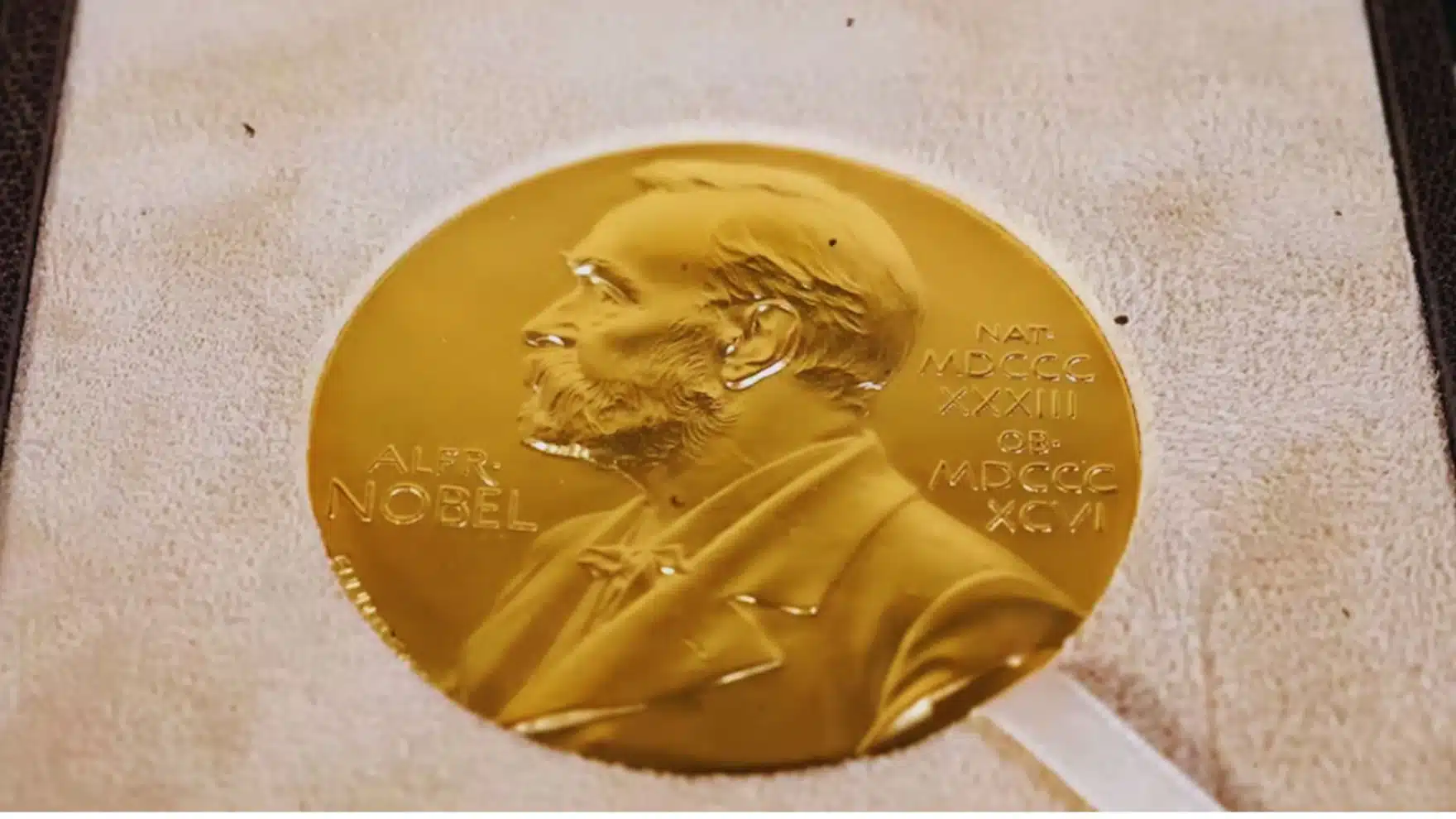
- Prize Money: Each Nobel Prize carries a cash award of 11 million Swedish kronor (approximately $1.17 million USD), which will be shared among the laureates in each category.
A Deeper Dive into the 2025 Nobel Prize Winners
Physiology or Medicine: Understanding the Body’s Guardians
BREAKING NEWS
The 2025 #NobelPrize in Physiology or Medicine has been awarded to Mary E. Brunkow, Fred Ramsdell and Shimon Sakaguchi “for their discoveries concerning peripheral immune tolerance.” pic.twitter.com/nhjxJSoZEr— The Nobel Prize (@NobelPrize) October 6, 2025
The Nobel week kicked off on Monday, October 6, with the prize in Physiology or Medicine awarded to Americans Mary E. Brunkow and Fred Ramsdell, and Japanese scientist Shimon Sakaguchi. Their collective work identified regulatory T cells, a crucial component of the immune system that prevents it from attacking the body’s own tissues.
The Nobel Assembly at Sweden’s Karolinska Institute stated that their discoveries “laid the foundation for understanding autoimmune diseases and opened new avenues for cancer and immunotherapy research” . Their research, which stitched together insights over decades, explained how the body maintains “peripheral immune tolerance,” a delicate balance that is essential for health. The failure of these regulatory T cells is implicated in autoimmune diseases like IPEX, a rare condition that Brunkow and Ramsdell’s work helped to explain at a genetic level.
Physics: Quantum Leaps on a Human Scale
BREAKING NEWS
The Royal Swedish Academy of Sciences has decided to award the 2025 #NobelPrize in Physics to John Clarke, Michel H. Devoret and John M. Martinis “for the discovery of macroscopic quantum mechanical tunnelling and energy quantisation in an electric circuit.” pic.twitter.com/XkDUKWbHpz— The Nobel Prize (@NobelPrize) October 7, 2025
On Tuesday, October 7, the Nobel Prize in Physics was awarded to a trio of scientists whose work has been fundamental to the burgeoning field of quantum computing. John Clarke, Michel H. Devoret, and John M. Martinis received the prize “for the discovery of macroscopic quantum mechanical tunnelling and energy quantisation in an electric circuit”.
In essence, their experiments demonstrated that quantum effects, once thought to be confined to the subatomic world, could be observed in man-made electrical circuits at extremely low temperatures. This groundbreaking discovery, made using a device called a Josephson junction, proved that macroscopic systems could behave like single atoms, obeying the bizarre rules of quantum mechanics. This has paved the way for the development of superconducting quantum computers, with companies like Google and IBM now racing to build on their foundational work.
Penelope Lewis, chief publishing officer of AIP Publishing, commented, “The discoveries of John Clarke, Michel Devoret, and John Martinis revealed quantum tunneling and energy quantization in superconducting systems, a breakthrough that laid the foundation for today’s quantum technologies”.
Chemistry: Building ‘Hermione’s Handbag’ for a Better World
BREAKING NEWS
The Royal Swedish Academy of Sciences has decided to award the 2025 #NobelPrize in Chemistry to Susumu Kitagawa, Richard Robson and Omar M. Yaghi “for the development of metal–organic frameworks.” pic.twitter.com/IRrV57ObD6— The Nobel Prize (@NobelPrize) October 8, 2025
The Nobel Prize in Chemistry, announced on Wednesday, October 8, was awarded to Susumu Kitagawa, Richard Robson, and Omar M. Yaghi for their development of metal-organic frameworks (MOFs). These remarkable materials are incredibly porous, with a structure that Heiner Linke, chair of the Nobel Committee for Chemistry, likened to “Hermione’s handbag in Harry Potter” for its ability to store vast quantities of gas in a tiny volume.
MOFs are created by linking metal ions with organic molecules, forming a stable, crystalline structure with vast internal surface areas. A couple of grams of one of Yaghi’s MOFs, for instance, has the surface area of a football pitch. This has revolutionary implications for some of the world’s most pressing problems. MOFs can be used to harvest water from desert air, capture carbon dioxide from power plants, and store hydrogen for clean energy.
The work began in the late 1980s with Robson’s initial, albeit unstable, structures. Kitagawa and Yaghi, working separately, later developed methods to create stable and highly functional MOFs. Lots of chemists have been wondering when metal-organic frameworks would get the Nobel prize, and it’s finally happened,” said Dr. Becky Greenaway, a chemist at Imperial.
Literature: An Apocalyptic Visionary from Hungary
BREAKING NEWS
The 2025 #NobelPrize in Literature is awarded to the Hungarian author László Krasznahorkai “for his compelling and visionary oeuvre that, in the midst of apocalyptic terror, reaffirms the power of art.” pic.twitter.com/vVaW1zkWPS— The Nobel Prize (@NobelPrize) October 9, 2025
The Swedish Academy awarded the Nobel Prize in Literature on Thursday, October 9, to Hungarian author László Krasznahorkai. He was cited for his “compelling and visionary oeuvre that, in the midst of apocalyptic terror, reaffirms the power of art”.
Krasznahorkai, 71, is known for his demanding and dystopian novels, which often feature long, winding sentences that create a hypnotic and immersive reading experience. His 1985 debut, “Sátántangó,” a bleak portrayal of a collapsed rural community, is a prime example of his style. His work is often compared to that of Franz Kafka and Samuel Beckett, and he is considered a master of the Central European literary tradition.
Upon receiving the news, Krasznahorkai stated, “I am deeply glad that I have received the Nobel prize – above all because this award proves that literature exists in itself, beyond various non-literary expectations, and that it is still being read”.
Peace: A Beacon of Democracy in Venezuela
BREAKING NEWS
The Norwegian Nobel Committee has decided to award the 2025 #NobelPeacePrize to Maria Corina Machado for her tireless work promoting democratic rights for the people of Venezuela and for her struggle to achieve a just and peaceful transition from dictatorship to… pic.twitter.com/Zgth8KNJk9— The Nobel Prize (@NobelPrize) October 10, 2025
In a widely watched announcement from Oslo on Friday, October 10, the Norwegian Nobel Committee awarded the Nobel Peace Prize to María Corina Machado, a leading figure in Venezuela’s opposition movement. She was honored “for her tireless work promoting democratic rights for the people of Venezuela and for her struggle to achieve a just and peaceful transition from dictatorship to democracy”.
Machado has been a central and unifying figure in the opposition to the government of Nicolás Maduro, facing threats, persecution, and a ban from holding political office. The committee praised her as “one of the most extraordinary examples of civilian courage in Latin America in recent times,” noting that she “has never wavered in resisting the militarisation of Venezuelan society.
In her first reaction, Machado said, “I’m humbled, I’m grateful and I’m honoured… I accept this as a recognition to our people, to the millions of Venezuelans that are anonymous and are risking everything they have for freedom, justice and peace and I’m absolutely convinced that we will achieve it”
What to Watch Next
All eyes are now on the Royal Swedish Academy of Sciences, which is set to announce the winner of the Sveriges Riksbank Prize in Economic Sciences in Memory of Alfred Nobel on Monday, October 13. This will conclude the 2025 Nobel Prize announcements.
The formal award ceremony for all laureates will take place on December 10, the anniversary of Alfred Nobel’s death, with the science and literature prizes awarded in Stockholm, and the peace prize in Oslo. The laureates will receive their Nobel medals, diplomas, and the prize money of 11 million Swedish kronor.
The 2025 Nobel Prizes have once again highlighted the power of human intellect, creativity, and courage. From unlocking the secrets of our own bodies to designing materials for a sustainable future, and from crafting profound literary works to standing up for democracy in the face of oppression, this year’s laureates represent the pinnacle of human achievement. Their work will undoubtedly inspire generations to come and will have a lasting impact on science, literature, and the pursuit of a more peaceful world.