Do you struggle with stubborn pounds that won’t budge, no matter how many diets you try? Many folks feel frustrated, like they’re stuck in a loop of quick fixes that fizzle out fast.
You might skip breakfast sometimes, or push through hunger pangs, all in hopes of better health or a slimmer waist. It’s a common battle against obesity and poor metabolic health, leaving you tired and unsure where to turn.
Intermittent fasting flips the script by focusing on when you eat, not just what hits your plate. One key fact stands out: studies from the National Institutes of Health show it can spark weight loss, cutting body weight by up to 13 percent in people with extra pounds.
This guide breaks it down simply, covering popular methods like the 16:8 plan and 5:2 approach, plus benefits such as improved insulin resistance and brain health through autophagy.
You’ll get tips on staying hydrated, managing hunger, and picking nutrient-dense foods during your eating window.
Ready to try this metabolic switch?
What Is Intermittent Fasting?
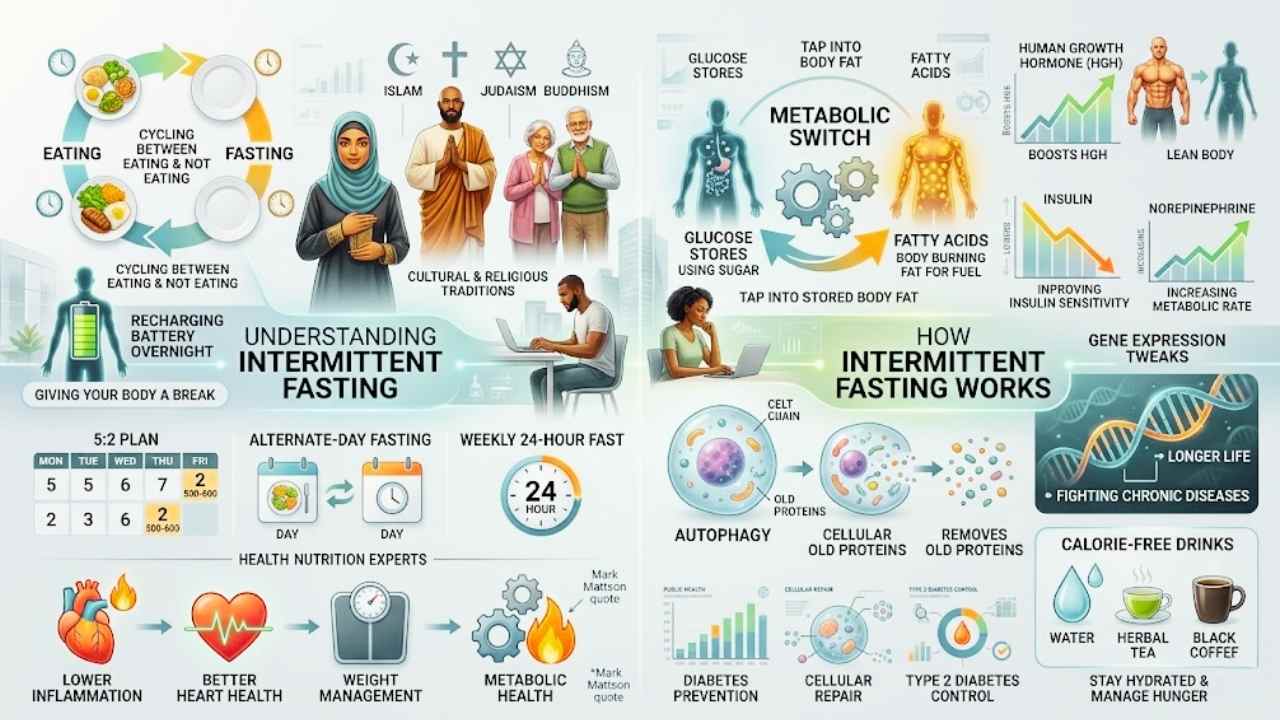
Intermittent fasting means cycling between eating and not eating. People skip food for set times. This eating plan involves periodic abstinence from food and drink in various forms.
Fasting periods vary per individual. Some fast for a set number of hours each day. They restrict eating to a certain window of time. Think of it like giving your body a break, much like recharging a battery overnight.
Cultures around the world embrace fasting too. It holds deep meaning in religions such as Islam, Christianity, Judaism, and Buddhism. Folks use it for health benefits or spiritual reasons.
Popular methods include the 5:2 plan. Eat normally for five days. Restrict calorie intake to 500-600 calories on two non-consecutive days. Alternate-day fasting lets you eat as usual on some days.
On fast days, cut calories to about 25% of your normal amount. A weekly 24-hour fast works for others. Eat freely for six days. Then, skip all food for a full 24 hours. These fasting schedules support weight management and metabolic health.
Nutrition experts often link them to lower inflammation and better heart health.
Intermittent fasting is not a diet; it’s a pattern of eating, says Mark Mattson from the National Institute on Aging.
How Does Intermittent Fasting Work?
Your body shifts gears during fasting, like flipping a metabolic switch. It burns through glucose stores first, then taps into fatty acids for fuel. This change boosts human growth hormone levels, which help with fat loss and muscle growth.
Insulin drops low, making stored body fat easier to access and improving insulin sensitivity. Cells kick off repair work through autophagy, cleaning out old proteins that cause trouble.
Gene expression tweaks happen too, linking to longer life and fighting chronic diseases. Picture it as your body’s way of hitting the reset button, a trick humans have used since ancient times to survive lean periods.
Many folks cut calorie intake naturally by shrinking their eating windows, leading to better metabolic health. Think about how norepinephrine rises, revving up your metabolic rate without extra effort.
Fasting sparks oxidative stress in a good way, pushing cells to adapt and protect the cardiovascular system. You can sip calorie-free drinks like water, herbal tea, or black coffee to stay hydrated and manage hunger.
Experts at Johns Hopkins note how this mimics calorie restriction, aiding diabetes prevention and type 2 diabetes control. Brad Pilon’s Eat Stop Eat method highlights these perks, drawing from studies in the Canadian Medical Association Journal.
Stephen Freedland from Duke University Medical Center explains metabolic switching in simple terms, showing how it promotes cellular repair. Mary Hyer, with her master of health informatics from the University of Michigan School of Public Health, ties this to public health benefits, like reducing risks for chronic diseases.
Leangains protocol fans swear by it for boosting human growth hormone, while alternate therapies explore its role in blood sugar balance.
Popular Intermittent Fasting Methods
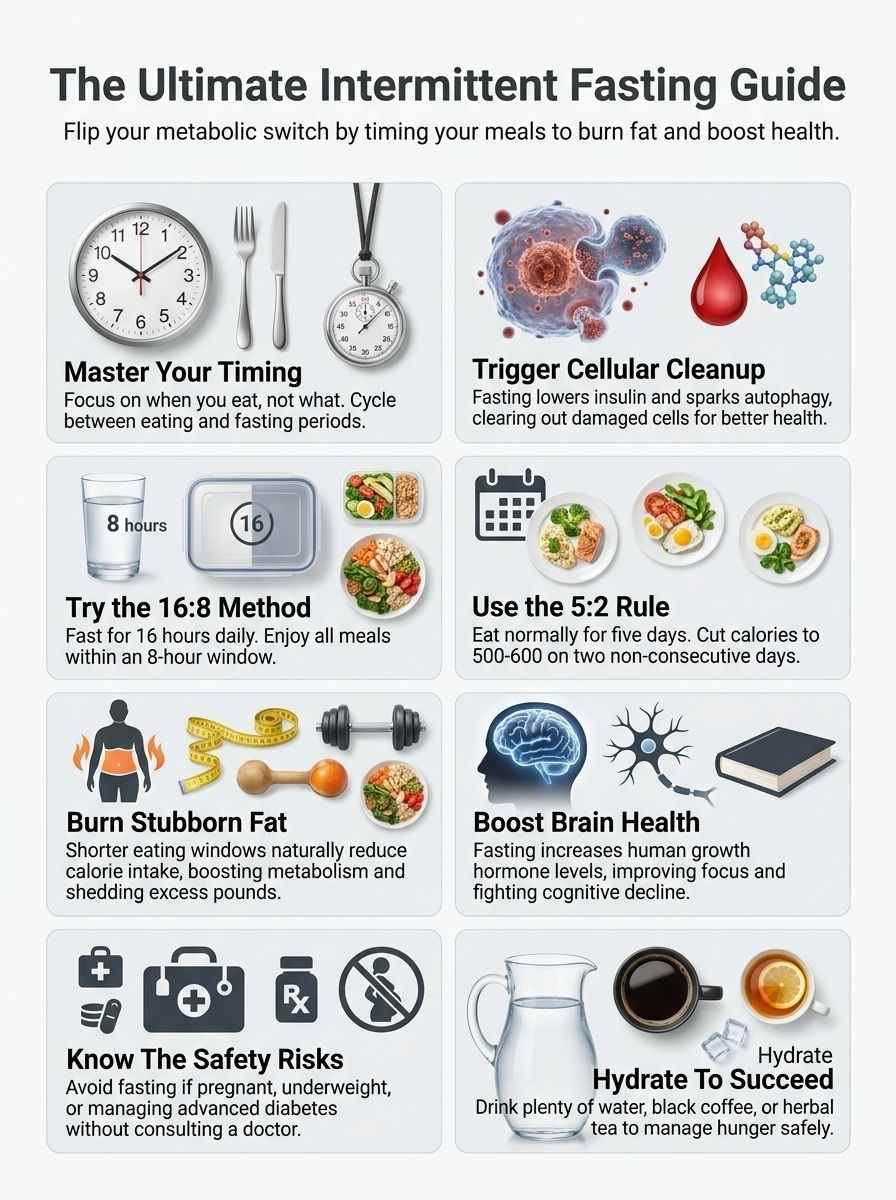
Ever wondered how folks skip meals and still thrive, like a bear hibernating through winter? Time-restricted eating, such as the 16:8 plan where you chow down in an eight-hour window, stands out as a fan favorite, while the 5:2 approach lets you cut calories on two days a week for that metabolic boost.
Eat-stop-eat takes it up a notch with full-day fasts once or twice weekly, drawing from caloric restriction ideas backed by spots like Healthline and PMC studies. Dive deeper into these tricks, and you’ll find your perfect fit—keep reading to unlock more!
16:8 Method (Time-Restricted Eating)
People love the 16:8 method for its simple setup. You eat within an 8-hour window and fast for 16 hours. This approach fits time-restricted eating, a type of caloric restriction that many beginners try.
Imagine skipping breakfast and starting your meals at noon, then wrapping up by 8 p.m. Healthline sources often highlight this as a common beginner schedule. Beginners may find longer fasting periods difficult, so start with fasting for about 12 hours each day, often during sleep.
Gradual increase in fasting length works best. Pair it with nutrient intake from a Mediterranean diet to boost hunger management. Consult dietary guidelines or a pro like Ermioni (Emmi) Carr in dietetics for personalized tips.
Experts at Mass General Brigham Heart and Vascular Institute note benefits for metabolic health. Avoid this if you have type 1 diabetes; seek health consultation first. Studies in PMC and CMAJ back its role in alternative therapies.
You can ease in, like extending your overnight fast bit by bit. Focus on nutrient-dense foods during eating times. Think of it as giving your body a break, much like recharging a battery.
Intermittent fasting, such as the 16:8 plan, offers a practical way to manage caloric intake without strict dieting, says a review from NLM sources.
5:2 Method
The 5:2 method keeps things simple for intermittent fasting. You eat like normal on five days each week. Then, cut calories to 500-600 on two days that don’t follow each other. This approach, folks say, feels like a balanced diet with a twist, not a strict lockdown on food.
Studies apply statistics to show it works by slashing intake to about 25% of your usual on those low days. Dr. Monique Tello shared insights in her 2018 Harvard Health Blog post, “Intermittent fasting: surprising update,” pointing out real benefits without the daily grind.
Imagine treating those fasting days like a light vacation for your gut, giving it room to reset. You pick non-consecutive days, say Tuesday and Friday, and focus on veggies, proteins, and small portions to hit that calorie mark.
Applied statistics from research back this up, revealing how the body adapts and burns fat more efficiently. Tello’s article from 2018 highlights surprises, like better energy levels over time, making it a smart pick for busy schedules.
Stay mindful, though, and listen to your body as you try it out.
Alternate Day Fasting (ADF)
Alternate day fasting, or ADF, switches things up by letting you eat normally one day and cut way back the next. You alternate between full eating days and fast days, where you limit calories to about 25% of your usual intake.
Think of it like a rhythm, a beat that keeps your body guessing and burning fat. People often feel a burst of energy on those lighter days, once they get past the initial hunger pangs.
This method fits busy lives, no strict meal plans needed, just that simple swap. On fast days, you might grab a small salad or soup to hit that quarter-calorie mark. Folks say it helps with weight control, like flipping a switch on your metabolism.
Give it a try if you’re curious, but listen to your body along the way.
Benefits of Intermittent Fasting
Ever wondered how skipping meals could supercharge your body, like flipping a switch for better health? Dive right in to see how this eating pattern boosts fat burn, sharpens your focus, and even kicks off that inner cleanup process called autophagy, making you feel like a well-oiled machine.
Supports Weight Loss
Intermittent fasting helps you shed pounds by cutting your daily calorie intake. You shorten your eating windows, and that often leads to fewer calories in total. For example, you skip breakfast and eat later, so you naturally consume less without counting every bite.
Studies show this works well for folks with extra weight. A 2020 systematic review found participants lost 0.8% to 13% of their starting body weight through this approach.
You might drop 3-8% of your body weight in just 3-24 weeks with intermittent fasting. This method boosts your metabolism too, making fat burn easier during fasts. Many people find it simpler than strict diets, since you focus on when to eat, not just what.
Stay consistent, and you could see real results, like fitting into those old jeans again.
Improves Metabolic Health
Fasting drops insulin levels. This change boosts insulin sensitivity. Your body accesses stored fat more easily. You gain better control over blood sugar. Experts suggest this prevents diabetes.
People feel more energy, like a well-oiled machine running smooth. Imagine your metabolism shifting gears, from sluggish to speedy.
Folks with PCOS often see gains. Fasting eases hyperandrogenism symptoms. It aids fertility too. Women report fewer hormone issues, almost like flipping a switch for balance. You might notice steady moods and clearer skin.
Talk about a win for your body’s inner workings.
Promotes Cellular Repair
Intermittent fasting kicks off your body’s natural cleanup crew. Cells start to fix themselves when you skip meals for a stretch. This process, called autophagy, acts like a broom sweeping away junk.
Old proteins and broken parts get cleared out. Your body recycles them for fresh energy. Imagine your cells as tiny factories, shutting down the snack line to focus on repairs. Studies show this happens during fasting periods.
It keeps everything running smooth.
Autophagy ramps up and targets dysfunctional proteins head-on. Your cells break them down and rebuild stronger. This renewal boosts general health, like giving your body a tune-up.
People often feel more alert after fasting this way. Think of it as hitting the reset button on cellular gunk. You clear the clutter, and vitality surges back. Simple habits, like the 16:8 method, trigger these fixes.
Your body thanks you with better function.
Enhances Brain Health
Fasting kicks your body’s repair mode into high gear, much like a mechanic tuning up an old car engine. Your system ramps up human growth hormone, or HGH, levels during these periods.
This boost helps with fat loss and muscle growth, sure, but it also sharpens your mind. Think of it as fuel for your brain cells, keeping them agile and strong. Studies show this hormone fights off age-related fog, helping you stay sharp as a tack.
People often report clearer thinking after starting, like flipping on a light switch in a dim room.
Changes happen deep in your genes too, sparking shifts tied to longer life and fewer diseases. Fasting flips these switches, promoting protection against brain woes like decline or disorders.
Your cells clean house through processes that sweep away junk, leaving your noggin in top shape. Imagine your brain as a garden; fasting weeds out the bad stuff, letting healthy blooms thrive.
Folks who fast notice better focus and mood, turning everyday tasks into a breeze.
Safety and Considerations for Intermittent Fasting
6. Safety and Considerations for Intermittent Fasting: Jumping into intermittent fasting feels like a fresh start, but hold on, you want to dodge pitfalls like fatigue or irritability from low blood sugar, especially if you have conditions such as diabetes or you’re pregnant—keep reading to get the full scoop on staying safe.
Potential Side Effects
Intermittent fasting can come with some bumps along the road, so let’s break down the main side effects you might face.
| Side Effect | What You Need to Know |
|---|---|
| Hunger | This tops the list as the main issue. Your body might growl at first, like an empty tank begging for fuel. Stick with it, and that rumble often fades as you adjust. |
| Weakness | You could feel a bit drained early on. Picture your energy dipping, but only for a short time while your system gets used to the change. |
| Decreased Cognitive Performance | Brain fog might hit temporarily. Tasks could seem tougher, yet this passes as adaptation kicks in. Keep going, and clarity returns. |
| Muscle Loss | This risk shows up in any weight loss plan. Eat plenty of protein, folks, and add strength exercises to your routine. That combo helps you hold onto those gains. |
Who Should Avoid Intermittent Fasting?
Intermittent fasting offers perks, but it suits some people better than others. Listen, your health comes first, so let’s chat about groups who might want to skip it altogether.
- People with advanced diabetes face risks from fasting. It can mess with blood sugar levels in big ways. Imagine your glucose dipping too low without warning, that spells trouble. Doctors warn against it for this group, as stable energy is key. Consult a pro if you have any diabetes at all.
- Pregnant women should pass on intermittent fasting. Their bodies need steady fuel for the baby. Think of it like a car needing gas on a long trip, no pit stops allowed. It might harm growth or cause fatigue. Nursing moms fall into this boat too, since milk production demands constant nutrients.
- Folks with a history of eating disorders risk setbacks with fasting. It could trigger old habits or unhealthy thoughts about food. Picture trying to walk a tightrope while dizzy, not smart. Recovery stays fragile, so experts say avoid it to protect mental health.
- Those with blood sugar regulation issues might struggle. Fasting can throw off your body’s rhythm, leading to crashes or spikes. You know that shaky feeling from low sugar? It hits harder here. Get medical advice before you try.
- People dealing with low blood pressure could feel worse. Fasting drops energy, which might make you lightheaded or faint. It’s like running on empty in a race, you won’t finish strong. Doctors recommend steering clear.
- Anyone on medications needs caution. Some pills work best with food, and fasting disrupts that. Envision meds not absorbing right, effectiveness tanks. Always chat with your doctor first.
- Underweight individuals should avoid it. They need more calories to build strength, not less. Fasting acts like pouring water on a fire you want to grow. It could lead to weakness or health dips.
Should Women Approach Intermittent Fasting Differently?
Evidence shows intermittent fasting might not help women as much as men. Some women report messed up menstrual cycles from it, like a clock thrown off track. These cycles often fix themselves when normal eating resumes.
A 2023 review points out risks for average-weight women. It says fasting can harm reproductive health if calories drop too low. Athletes face this issue more. Experts urge women to ease into fasting slowly, like dipping a toe in the water first.
They also say stop if periods skip or worries pop up. Talk to a doctor or dietitian before you start. This step keeps things safe.
Fasting could aid women with polycystic ovarian syndrome, or PCOS. It might ease high androgen levels and boost fertility. Picture it as a gentle nudge toward better hormone balance.
Still, listen to your body closely. Every woman differs, so what works for one might not suit another. Stay alert for any odd changes. Hydrate well and eat nutrient-packed meals in your eating windows.
This approach helps avoid pitfalls.
Tips for Getting Started with Intermittent Fasting
Jumping into intermittent fasting can feel like dipping your toes in cool water on a hot day, but hey, take it slow to avoid any splashes. Pick easy wins, like sipping black coffee during your fast, and watch how your body adapts with a smile.
Start with Shorter Fasting Windows
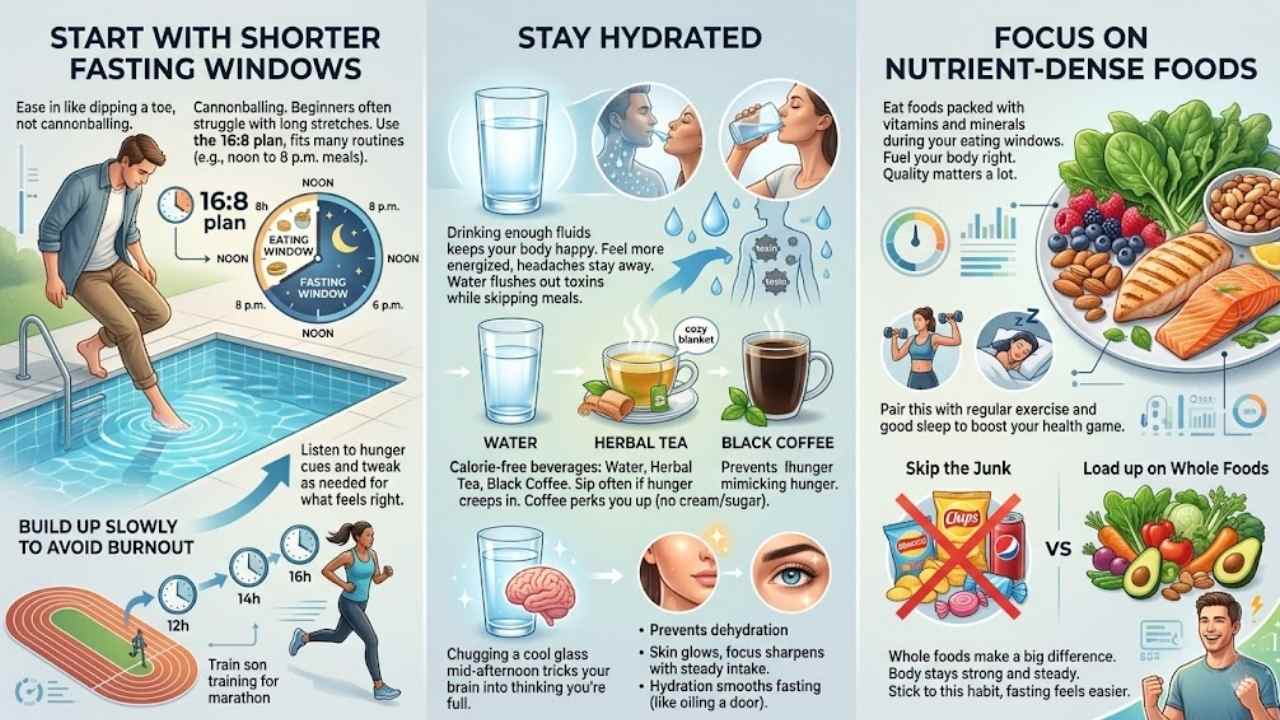
Ease into intermittent fasting like dipping your toe in a pool, not cannonballing right away. Beginners often struggle with long fasting stretches, so kick off with something manageable.
Try the 16:8 plan first, you eat during an 8-hour window and fast for 16 hours. This setup fits many daily routines, say from noon to 8 p.m. for meals.
Build up slowly to avoid burnout, that’s the smart move. Gradual bumps in fasting time help your body adjust without the shock. Picture it as training for a marathon, you don’t run 26 miles on day one.
Stay patient, listen to your hunger cues, and tweak as needed for what feels right.
Stay Hydrated
Drinking enough fluids keeps your body happy during fasting windows. You feel more energized, and headaches stay away. Water acts like a trusty sidekick, flushing out toxins while you skip meals.
Sip it often, especially if hunger creeps in. Herbal tea soothes your stomach, adding a cozy vibe without calories. Black coffee perks you up, but skip the cream or sugar to keep things pure.
Fasting periods permit calorie-free beverages such as water, herbal tea, and black coffee. These choices prevent dehydration, which can mimic hunger pangs. Your skin glows, and focus sharpens with steady intake.
Picture chugging a cool glass mid-afternoon; it tricks your brain into thinking you’re full. Listen to your thirst signals, they guide you well. Hydration turns fasting into a smoother ride, like oiling a creaky door.
Focus on Nutrient-Dense Foods
Eat foods packed with vitamins and minerals during your eating windows. Think leafy greens, berries, nuts, and lean proteins like chicken or fish. These choices fuel your body right, even when you fast.
Quality matters a lot here, folks. Pair this with regular exercise and good sleep to boost your health game. Imagine your meals as a powerhouse team, working hard to keep you energized.
Skip the junk that drags you down. Load up on whole foods instead. Veggies, fruits, and healthy fats make a big difference. Your body thanks you by staying strong and steady. Stick to this habit, and fasting feels easier, more rewarding.
Final Thoughts
Intermittent fasting flips your eating habits by focusing on timing, not just food choices, and popular plans like the 16:8 method or 5:2 approach make it simple to try. These strategies fit busy lives, letting you skip meals without complex rules, and they boost weight loss plus metabolic health with ease.
Picture dropping pounds while sparking autophagy for cell cleanup, it transforms your body and sharpens your mind over time. Check out studies from nutrition experts or apps that track your progress for more support.
Jump in today, your healthier self waits right around the corner.
Frequently Asked Questions (FAQs) on Intermittent Fasting
1. What is intermittent fasting, anyway?
Intermittent fasting means you cycle between eating periods and fasting times, like skipping breakfast to create a longer break from food. It’s not about what you eat, but when you eat, and many folks find it fits their lifestyle like a glove. Think of it as giving your body a rest from constant munching, which can kickstart processes like autophagy for cell repair.
2. How does intermittent fasting help with weight loss?
This eating pattern can lower insulin levels, helping your body burn fat more easily. You might eat fewer calories overall without feeling deprived.
3. What are some common methods to try intermittent fasting?
One popular way is the 16/8 method, where you fast for 16 hours and eat during an 8-hour window, say from noon to 8 PM. Another is the 5:2 approach, fasting or eating very little on two days a week while keeping normal meals on the others; it’s flexible, like choosing your own adventure in dieting.
4. Are there risks I should watch out for with intermittent fasting?
Some people feel tired or irritable at first, especially if they dive in too fast. Always chat with a doctor before starting, particularly if you have health issues like diabetes.