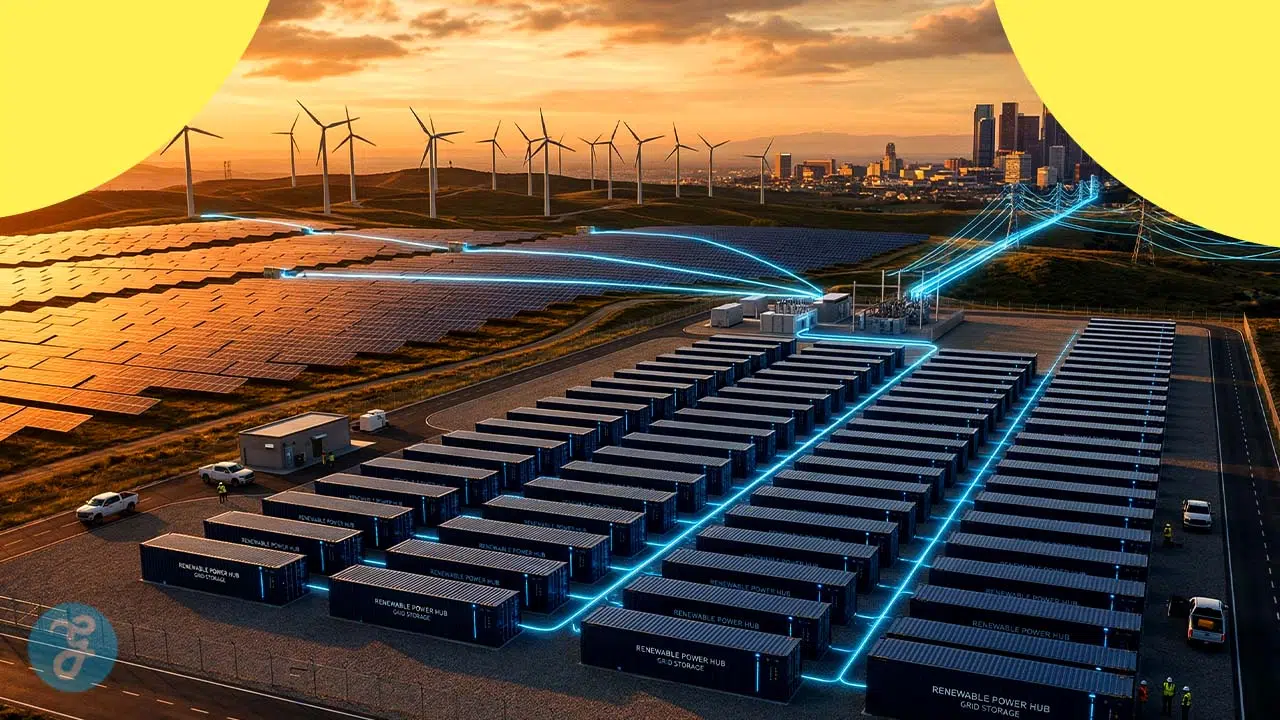
Imagine relying on the sun and wind for your power, only to face blackouts when clouds roll in or the breeze dies down. That’s the big headache with renewable energy, folks. It flows strong sometimes, but it can vanish in a flash, messing with grid stability and leaving us scrambling for backup from dirty fossil fuels.
Picture your home lights flickering because the electrical grid can’t keep up with these ups and downs, it’s like trying to fill a leaky bucket during a storm.
Did you know lithium-ion batteries make up 90% of the electricity storage capacity in the United States, powering up grid-scale battery storage like champs? This blog breaks it down simply, showing how these battery energy storage systems store excess renewable energy, cut waste through less energy curtailment, and boost the clean energy transition by taming those wild power swings.
We’ll explore tech like flow batteries and compressed air energy storage, plus benefits such as peak shaving and better frequency regulation. Stick around, the future’s bright.
What is Grid-Scale Battery Storage?
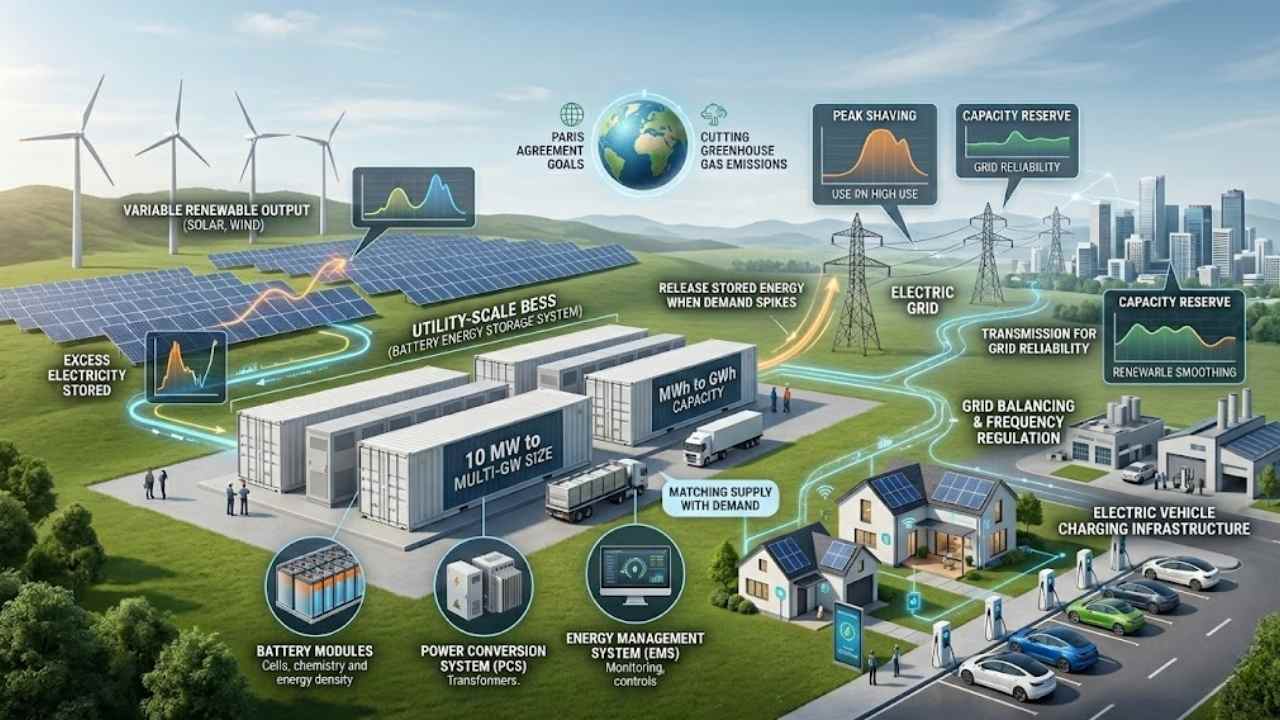
Grid-scale battery storage acts like a giant power bank for the electric grid. These large systems range from 10 MW to multi-GW in size, and connect directly to the grid. Utilities and grid operators use them to store excess electricity from renewable sources, such as solar and wind.
Think of it as a safety net that catches extra energy during sunny or windy peaks, then releases it when demand spikes. Known as utility-scale BESS or large-scale battery storage, these stationary energy storage systems operate at MWh to GWh capacity levels.
They focus on grid balancing and frequency regulation, plus applications like peak shaving, capacity reserve, and renewable smoothing.
People often call these setups grid-scale electricity storage for their role in matching supply with demand. Grid operators rely on them to keep things steady, especially with variable renewables.
Battery chemistry and energy density play big parts here, alongside tools like the power conversion system and energy management system. In places like Europe, they help cut greenhouse gas emissions under goals like the Paris Agreement.
McKinsey reports highlight their growth, tying into smart grids and even electric vehicle charging infrastructure.
Grid-scale battery storage is key to a reliable renewable future, as it smooths out the ups and downs of wind and solar power. – Vishrut Rana, energy expert.
How Grid-Scale Battery Storage Works
These setups pull in extra power during quiet times, often from solar or wind sources, and hold it as direct current. Operators place them in spots with big swings in nodal price variability to maximize profits.
Think of it like a giant sponge soaking up cheap electricity when nobody needs it, then squeezing it out when prices spike. Power conversion systems and transformers flip the grid’s alternating current to direct current for safe keeping.
They switch it back to alternating current when it’s time to release the juice. An energy management system keeps a close eye on grid details in real time, deciding exactly when to charge or discharge.
This quick action lets the whole thing pump out or soak up power in just milliseconds, steadying voltage and frequency like a pro goalie blocking shots. You can see how this turns excess renewable energy into a reliable backup, cutting waste and boosting grid stability.
Battery storage grabs surplus electricity at low-demand moments and unleashes it during peak hours, creating cash through smart arbitrage. Picture your home fridge, but scaled up for cities, preserving energy instead of food.
Systems offer fast frequency tweaks and black start help during blackouts, jumping in to restart the grid without a hitch. They tie into power systems for seamless flow, supporting commercial and industrial needs too.
Flow batteries and other types join the mix, but the core stays simple: charge cheap, discharge dear. Operators love how this slashes reliance on old fuels, making renewables shine brighter.
Inflation reduction act perks even sweeten the deal for big installs, pushing more grid scale energy storage forward.
Key Technologies in Grid-Scale Battery Storage
Grid-scale battery storage relies on powerhouse options like lithium-ion setups that pack a punch for quick energy release, flow batteries that keep the juice flowing for hours on end, compressed air systems that store power like a giant balloon ready to pop, and thermal methods that trap heat for later use, all working together to make renewables a reliable force.
Keep reading to see how these techs tackle real-world energy hiccups.
Lithium-ion Battery Systems
Lithium-ion batteries make up 90% of the electricity storage capacity in the United States. They lead the market with high capacity, efficiency, and quick response times. Costs drop fast, and new materials push advanced battery technologies forward.
This makes big setups more practical for everyone. People use these systems for frequency regulation, peak shaving, and blending in renewables. Storing solar power during the day, then releasing it at night works like a trusty sidekick for the grid.
SolaX Power stands out as a top player in grid-scale battery storage. Their setups deploy fast and stay reliable.
SolaX’s modular design means one unit failure hits just 4.1% of total output. Install a single battery cabinet in about two hours. Get full grid connection in 15 days. This speed helps integrate with hybrid energy systems.
You see, these batteries pair well with other tech, boosting grid-scale battery storage in general. Think of it as building blocks that snap together easily. Folks in communities love this for decentralized energy storage.
It cuts waste and keeps power flowing smooth.
Flow Batteries
Flow batteries step up as a solid choice over lithium-ion setups for grid scale battery storage. They shine in jobs that need energy to flow out over long stretches. Imagine, like a marathon runner versus a sprinter; these batteries keep going without fading fast.
Teams store energy right in liquid electrolytes, which lets them split power from how much energy they hold. That setup makes scaling up a breeze for big needs.
Safety jumps out as a big plus here. Flow batteries dodge the risk of thermal runaway that can plague other types. Experts see them pairing well with options like thermal energy storage or even pumped hydro storage for community energy storage projects.
Mobile energy storage systems could tap into this tech too, adding flexibility to the mix. You get longer discharge times, which fits perfectly for taming renewable ups and downs.
Flow batteries decouple power and energy capacity, making them ideal for extended discharge in grid applications, says energy researcher Dr. Elena Vargas.
Compressed Air Energy Storage
Compressed Air Energy Storage, or CAES, acts as a smart mechanical way to handle extra power. Teams use excess electricity to squeeze air tight into underground spots, like old caves or salt domes.
Then, when folks need more energy, that trapped air rushes out and spins turbines to make electricity again. This setup shines for big jobs, think massive grid needs. It tackles those long stretches where power must stay steady, from a few hours up to whole days.
Picture it like a giant lung, breathing in energy when the sun shines bright or winds blow strong, and exhaling it during calm times.
CAES systems fit right into large-scale tasks that demand endurance. They balance the grid by storing energy over hours or even days, cutting waste from renewable sources. Operators pump air with surplus power from solar farms or wind turbines.
Later, they release it to drive generators, keeping lights on without fossil fuel backups. This method boosts reliability for cities and factories, especially in spots with spotty weather.
You see, it turns what could be lost energy into a reliable reserve, making renewables more practical for everyday use.
Thermal Energy Storage
Thermal energy storage grabs extra electricity and turns it into heat. You store that heat until you need power again. Then, release it to make electricity on demand. This method shines with Concentrated Solar Power plants, or CSP for short.
Picture the sun’s rays focused like a kid with a magnifying glass, heating things up big time. CSP plants often pair with these systems to keep energy flowing even after sunset. Folks, it’s like having a thermos that holds onto summer warmth for a winter day.
These setups give us yet another way to smooth out the ups and downs of renewable sources. Wind and solar can be fickle, like a friend who shows up late, but thermal storage steps in to steady the ship.
Engineers love how thermal energy storage tackles renewable energy’s wild swings. It captures surplus power from sunny or windy spells as heat in materials like molten salt. Later, that heat drives turbines to produce electricity.
Talk about turning waste into treasure, right? CSP plants rely on this tech to extend their output hours, making solar a more reliable player in the grid game. Imagine a battery, but instead of chemicals, it’s all about smart heat management.
This approach cuts down on wasted energy and boosts grid reliability. Readers, if you’ve ever saved leftovers for tomorrow’s lunch, you get the idea – no more tossing out good stuff just because the timing’s off.
Thermal storage systems offer a solid backup for balancing those variable renewables, keeping the lights on without a hitch.
Benefits of Grid-Scale Battery Storage
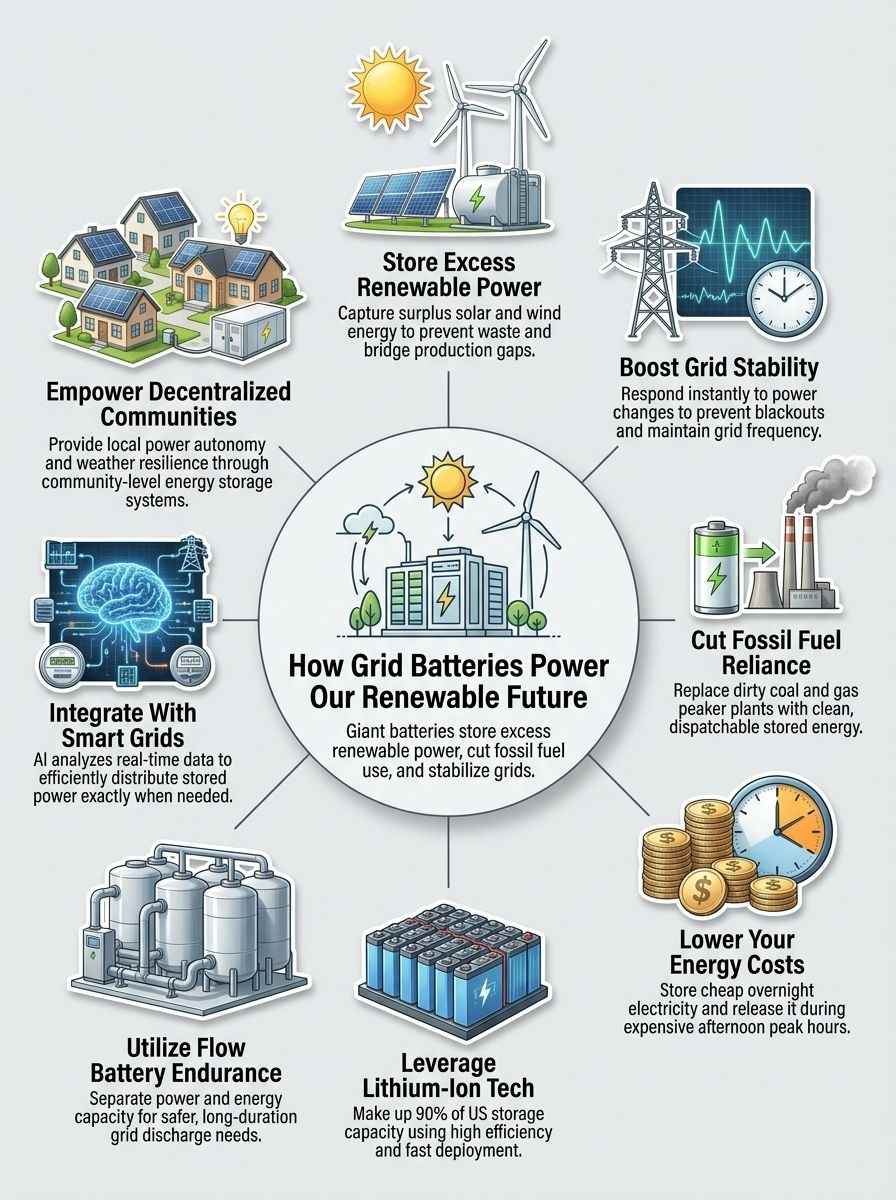
Picture a world where solar panels and wind turbines pump out power, but the sun hides or the breeze dies down—grid-scale batteries step in like a trusty sidekick, storing that extra juice to keep lights on and grids humming smoothly.
They slash reliance on coal plants, trim your electric bill by dodging peak prices, and build a tougher system against outages, making clean energy feel like a smart, everyday win.
Balancing Renewable Energy Variability
Grid-scale battery storage tackles the ups and downs of renewable energy, like wind and solar. These sources produce power unevenly, you know, with gusty winds or cloudy days throwing things off.
Batteries step in and smooth those generation fluctuations from wind and solar. They enable a steadier power supply, almost like a trusty sidekick keeping the lights on. Picture a rollercoaster ride, but batteries flatten the wild loops into gentle hills.
They store and release electricity quickly, supporting grid operations during periods of variable renewable output.
These systems mitigate the “duck curve” by storing surplus midday solar energy for evening use. Think of it as saving leftovers for dinner, avoiding waste. Grid-scale batteries bridge gaps between renewable energy supply and actual electricity demand.
They make sure power flows when folks need it most, like during peak evening hours. This setup cuts waste and boosts efficiency, turning tricky variability into a manageable flow.
Enhancing Grid Stability and Resilience
Power grids face ups and downs, like a boat rocking on choppy waves. Grid-scale batteries jump in fast to smooth those fluctuations. They provide rapid response to power changes, which enables real-time frequency regulation.
Think of them as the grid’s quick-thinking guardian. An Energy Management System, or EMS, monitors and controls these battery operations. It responds instantly to grid needs, keeping everything steady.
These systems even offer black start capabilities. That means they help the grid recover quickly from outages, almost like flipping a switch to restart the party.
Battery storage boosts grid resilience in big ways. It prevents blackouts and supports critical infrastructure, acting as a reliable backup during tough times. Imagine your home’s power staying on during a storm, thanks to this tech.
Engineers design these setups to handle surprises, much like a safety net under a tightrope walker. The EMS plays a key role here too, watching every move to avoid disasters. With these batteries, grids stand stronger against failures, giving you peace of mind.
Folks in the energy field see this as a game-changer for reliable power.
Reducing Dependence on Fossil Fuels
Grid-scale batteries cut our need for fossil fuels, plain and simple. They store extra power from wind and solar sources. Dispatch that energy when you need it most. This setup knocks out those old fossil fuel peaker plants that fire up during high demand.
Imagine ditching a gas-guzzling car for a smooth electric ride; batteries do that for the grid. They provide a clean swap for meeting peak electricity needs. Fossil generators step aside as these systems take over.
Batteries push broader decarbonization in the energy world. They help slash carbon emissions by favoring renewables over coal or gas. Think of it like trading junk food for fresh veggies; the grid gets healthier.
Reliance on dirty fuels drops fast. Support for clean energy grows stronger every day.
Lowering Energy Costs Through Peak Shaving
Batteries cut costs, folks, by tackling those pricey peak times. Here’s how it works: utilities face high demand during hot afternoons, so they crank up expensive power plants. Peak shaving steps in.
Grid-scale batteries store cheap electricity overnight, then release it during those busy hours. This slashes bills for everyone. Businesses love it too. They dodge high rates with smart storage.
Energy arbitrage makes it even better. Store power when prices drop low, sell it back when they spike. Simple as that.
These systems also push back big expenses on the grid. No need for costly upgrades to wires and poles right away. Batteries handle local peaks instead. Utilities save money, pass it on to you.
Imagine deferring a huge bill, like putting off a car repair by fixing the small stuff first. Transmission lines stay efficient. Distribution networks last longer. It all adds up to lower energy costs across the board.
Role of Grid-Scale Battery Storage in Enabling Renewable Energy
Picture a windy day when turbines spin like crazy, churning out more power than the grid can handle right then. Grid-scale battery systems swoop in, soak up that surplus from wind and solar sources, and release it during calm spells or peak demand, turning fickle renewables into a steady force that powers homes without a hitch.
Storing Excess Renewable Energy
Grid-scale battery systems capture and store excess electricity from solar and wind sources during low-demand periods. Imagine them as giant sponges soaking up extra power that would otherwise go to waste.
They turn sunny afternoons or windy nights into opportunities, holding onto that energy like a squirrel stashes nuts for winter. These setups maximize the total efficiency and utilization of renewable energy projects.
You know how frustrating it feels when good things slip away? Well, batteries prevent that loss, keeping the power ready for action.
Stored energy gets released during peak demand, helping to bridge production gaps. Think of it as a reliable friend who shows up right when you need a hand. Solar panels might slow down at dusk, and wind turbines could calm in still air, but these systems step in smoothly.
They let you flip on lights or run appliances without a hitch, making renewables feel more dependable. Folks often worry about inconsistent green power, yet batteries ease that concern, turning what-ifs into steady flows.
Reducing Energy Curtailment
Renewable energy sources like solar and wind often produce more power than the grid needs at certain times. This leads to curtailment, where operators shut down production to avoid overloads.
Grid-scale batteries step in here. They capture that surplus energy instead of letting it go to waste. Picture a giant sponge soaking up extra sunshine or wind power during peak hours.
Operators store it for later use, cutting down on lost opportunities.
This approach boosts the economics of renewable investments. Batteries handle overgeneration events, so more clean energy flows into the grid without waste. Think of it as turning potential trash into treasure.
Investors see better returns, and the whole system becomes more effective. Renewables penetrate deeper into our power mix, thanks to this smart storage.
Supporting Grid Decarbonization
Grid-scale battery storage cuts reliance on fossil-fuel peaker plants, and it minimizes curtailment too. This setup pushes grid decarbonization forward, step by step. Consider your local power grid as a busy kitchen during dinner rush, where batteries act like smart fridges that store extra food to avoid waste.
They enable higher shares of renewables, creating a cleaner energy landscape. Batteries make the system more resilient against blackouts or spikes in demand. Grid-scale storage systems play a key role in hitting big clean energy targets.
Think about those ambitious climate goals we all hear about, like slashing emissions fast. Batteries help by storing solar or wind power that might otherwise go unused. This reduces the need for dirty backup plants.
You know, it’s like having a trusty sidekick that keeps the lights on without the smoke. Such systems support a shift to renewables, making the grid tougher and greener.
Challenges Facing Grid-Scale Battery Storage
You know, rolling out those massive lithium-ion setups isn’t cheap, and folks often balk at the upfront bucks needed to get them humming. Plus, wrangling red tape from policies can feel like herding cats, but hey, stick around to see how innovators are flipping the script.
High Initial Costs
Grid-scale battery storage projects demand big money right from the start. Think of it like buying a fancy electric car; you pay a lot upfront, even if gas savings come later. These setups need huge capital investment to build, and that scares off some folks.
Prices for batteries keep dropping, sure, but high initial costs still block wide use across the board.
Folks worry about the payback period too, you see, because those cost factors hit the wallet hard. They shape how soon a project turns profitable, or if it does at all. Grid operators juggle these numbers, like a tightrope walker eyeing the drop below, to decide on going green with storage.
Financial viability hangs in the balance, pushing teams to hunt for smarter funding paths.
Technological Advancements and Scalability
Advancements in battery tech spark excitement for grid storage. Solid-state batteries improve capacity, safety, and efficiency. Lithium-sulfur batteries do the same, pushing limits further.
These upgrades tackle old problems, like short battery life or risky failures. Picture your phone’s battery lasting days instead of hours; that’s the kind of leap we’re seeing here.
Mobile Energy Storage Systems, or MESS, bring fresh ideas with their flexibility in time and location. They move energy where grids need it most, like a roaming helper during peak times.
Large-scale adoption grows feasible as material tech advances. Experts model MESS fleets to check operational feasibility and financial performance. In renewable-rich grids, these models reveal smart ways to boost profits and cut waste.
Think of it as fleets of energy trucks, ready to roll when solar or wind power surges. Such innovations demand quick scaling, yet they promise a smoother path for clean energy. Readers, these steps feel like cracking a tough code, one breakthrough at a time.
Regulatory and Policy Hurdles
Grid-scale battery storage faces big roadblocks from outdated rules. Regulatory and policy frameworks must change fast to handle new storage tech and fresh business ideas. Think of it like trying to fit a square peg into a round hole, folks; these old setups just don’t match today’s needs.
Market rules and incentives shape how we adopt and place these systems. They guide the whole process, yet many fall short.
Current ways of operating often miss the boat on shifting market vibes. This leads to poor investments that waste time and money. Picture a team playing by yesterday’s playbook in a brand-new game; things get messy quick.
We need smarter policies to boost efficiency and spark real progress in renewable energy storage.
Future Prospects of Grid-Scale Battery Storage
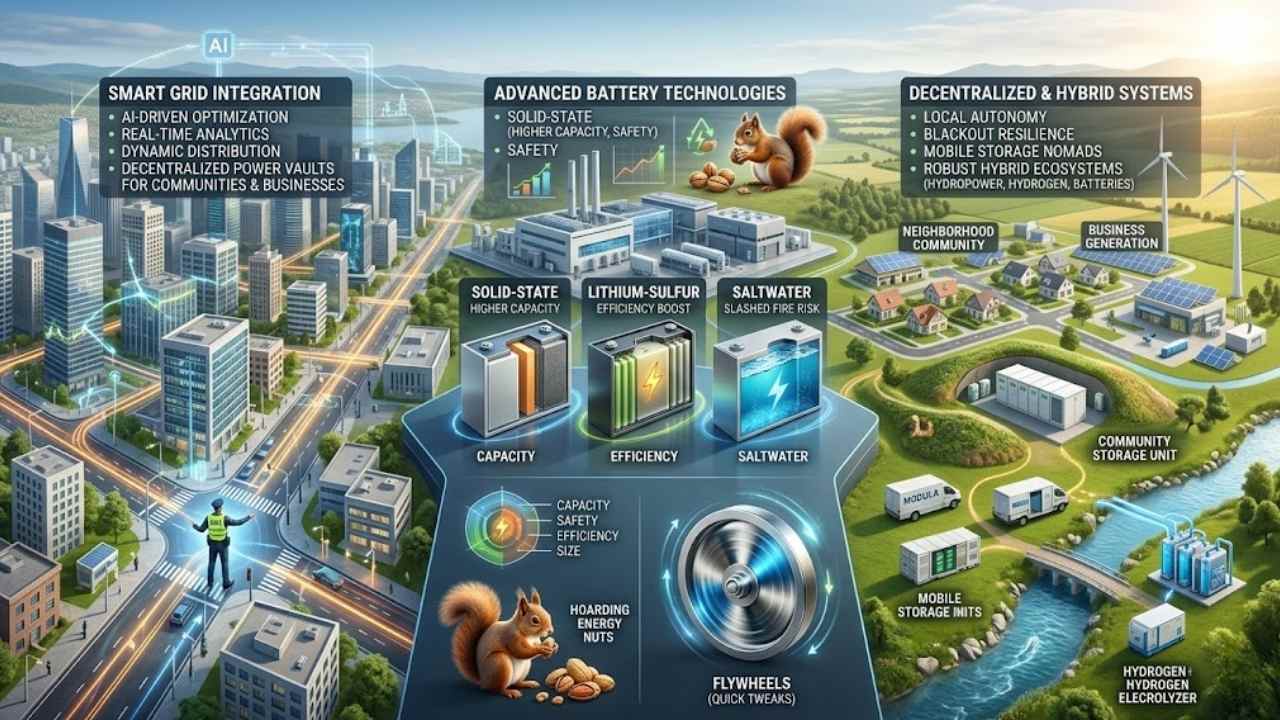
8. Future Prospects of Grid-Scale Battery Storage: Imagine a world where massive lithium-ion packs team up with clever power networks to store solar and wind power like a squirrel hoarding nuts for winter, paving the way for smarter grids that dodge blackouts, fresh tech like solid-state cells that last longer and charge faster, and scattered setups mixing pumps and heat tanks for homes and towns—hey, if you’re hooked on how this green revolution sparks up, stick around for the full scoop!
Integration with Smart Grids
Grid-scale battery storage teams up with smart grids to change the energy game. Imagine you have these massive batteries storing power from the sun and wind. They connect to smart grids that use AI and real-time analytics.
This setup optimizes energy distribution like a traffic cop directing cars during rush hour. Communities see big wins here. Decentralized energy storage lets them generate and store their own renewable energy.
Businesses do the same, cutting back on grid dependence. It’s like giving everyone their own power vault, right in their backyard.
Smart grid integration makes operations more dynamic and responsive. Think of it as upgrading from an old flip phone to a smartphone. AI crunches data in real time, spotting peaks and dips before they cause trouble.
Batteries release stored energy just when needed, keeping everything smooth. This approach supports grid decarbonization too, pushing out fossil fuels. You feel the empathy here, folks, as we all chase cleaner air.
Decentralized systems empower local spots, from small towns to big factories. They store excess renewable power, avoiding waste and boosting resilience.
Development of Advanced Battery Technologies
Scientists push forward with solid-state batteries. These packs boost capacity and safety over old types. Imagine a battery that holds more power, like a bigger gas tank for your car.
Lithium-sulfur versions join the mix, ramping up efficiency too. Labs test these now, aiming for grids that store renewable energy better. You see, they cut risks and last longer, making clean power more reliable.
Saltwater batteries pop up as a fresh choice. They slash fire dangers compared to lithium-ion ones. Think of them as the calm cousin in the family, steady and safe. Flywheels spin in for quick frequency tweaks, handling short bursts well.
Teams blend these with grids, eyeing hybrid setups that mix strengths. This progress opens doors to smarter energy storage, folks.
Decentralized and Hybrid Energy Storage Systems
Decentralized energy storage systems put power in your hands, literally. They boost local energy autonomy and resilience, so communities handle blackouts like pros. Imagine your neighborhood grid acting like a trusty sidekick, storing solar or wind power right where you need it.
No more relying on far-off plants that flake out during storms.
Hybrid systems mix battery storage with renewables, such as hydropower and hydrogen, to build tougher energy setups. They create robust ecosystems that keep the lights on, no matter what.
Plus, mobile battery storage systems, or MESS, are on the rise. These units zip around to offer flexible grid services, matching demand wherever it spikes. Think of them as energy nomads, ready to save the day.
Final Thoughts
Grid-scale battery storage powers the shift to renewables by storing extra energy from sun and wind, smoothing out supply dips like the duck curve. These systems, from lithium-ion setups to flow batteries, boost grid stability and cut costs through smart peak shaving, making clean power more reliable and affordable.
Imagine: they slash fossil fuel use and curb energy waste, paving the way for a greener grid that saves money and the planet. Check out reports from the U.S. Department of Energy for in-depth insights into emerging tech like compressed air storage.
Go ahead, embrace these innovations; they light up a sustainable future we can all charge toward.
FAQs
1. What is grid-scale battery storage, and why does it matter for renewable energy?
Grid-scale battery storage acts like a giant power bank for the electric grid, storing extra energy from sources like solar panels and wind turbines. It helps keep the lights on when the sun isn’t shining or the wind isn’t blowing, making renewables more reliable. Think of it as the trusty sidekick that turns flaky friends into dependable partners.
2. How does grid-scale battery storage enable more use of renewable energy?
It captures surplus power during peak production times, then releases it when demand spikes. This smooths out the ups and downs of renewables, like a shock absorber on a bumpy road.
3. What benefits come from using grid-scale battery storage with renewables?
It cuts down on fossil fuel use by storing clean energy for later, which saves money and reduces pollution. Plus, it stabilizes the grid, preventing blackouts that could leave you in the dark during a storm. Imagine your power supply as steady as a rock, thanks to these smart systems.
4. Are there challenges with grid-scale battery storage for renewable energy?
Costs can be high upfront, but prices are dropping fast as tech improves. Batteries also need proper recycling to avoid environmental headaches, yet innovations are tackling that head-on. It’s like planting a tree; the effort pays off in the long run.