
Ever felt confused jumping into forex trading? You stare at charts, wondering which currency pairs fit your style. It’s like picking teams in a game, but you don’t know the players yet. Many beginners face this hassle, chasing the best currency pairs to trade without clear guidance. That uncertainty can lead to quick losses or missed chances.
Over 80% of daily forex trades happen with just a handful of major pairs. This fact shows why they dominate the scene. Our post cuts through the noise, explaining major, minor, and exotic pairs in easy steps.
You’ll learn their perks, risks, and how to match them to your goals. Get ready for clarity.
Understanding Forex Currency Pairs
Ever wondered how traders swap bucks for euros in the wild forex market? Imagine: every pair pits a base currency against a quote one, like a boxing match where you bet on the winner, and that setup drives the whole exchange game.
What are Forex Currency Pairs?
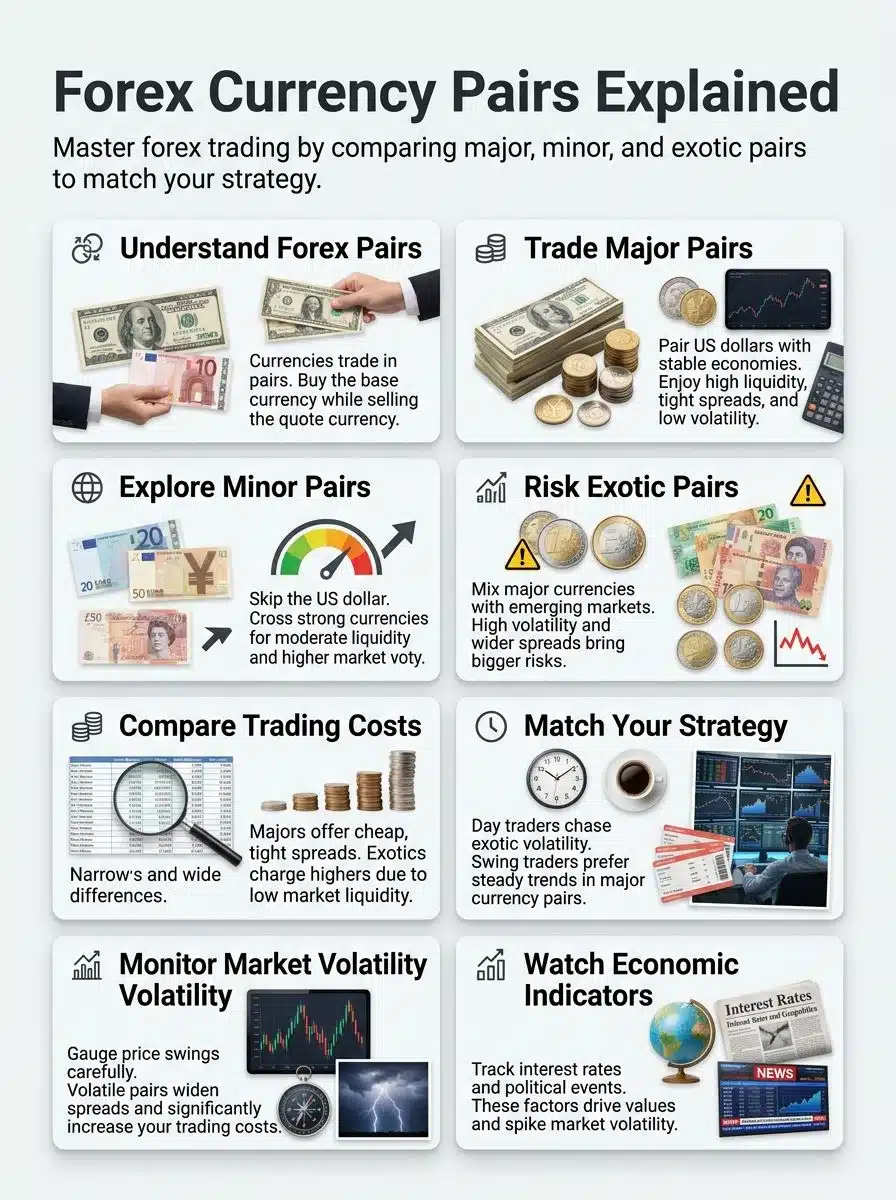
Forex currency pairs form the backbone of currency trading in the spot market. Traders buy one currency and sell another at the same time, betting on exchange rates to shift in their favor.
Think of it like a seesaw, where one side goes up as the other dips. These pairs drive speculation and help folks hedge against market volatility. You see them listed as codes, like EUR/USD, showing the base currency first and the quote currency second.
In the forex market, currencies are always traded in pairs, just like a dance where one leads and the other follows. – Anonymous Trader
Base currency stands as the one you buy or sell, while quote currency tells you the price in that unit. Liquidity plays a big role here, with popular pairs offering tight spreads for easier trades.
Economic indicators from big economies influence these rates daily. Cross-currency pairs skip the US dollar, adding variety to your trading strategies.
Base Currency vs. Quote Currency
In currency pairs, the base currency comes first. It acts like the main player in a trade. Traders buy or sell one unit of this base against the quote currency. The quote currency sits second.
It shows how much you need to spend to get that base unit. Take EUR/USD as an example. Here, the euro serves as the base currency. The U.S. dollar works as the quote. If the exchange rate hits 1.10, you pay 1.10 dollars for one euro.
This setup drives all forex trading. Pairs like these form the backbone of the market. Volatility in these rates sparks speculation opportunities. Traders watch economic indicators to predict shifts. Now, let’s look at major currency pairs and why they dominate the scene.
Major Currency Pairs
Picture major currency pairs as the rock stars of forex, dominating the stage with high liquidity and tight spreads that make trading feel like a smooth ride. They pair the US dollar with other big players from stable economies, drawing in traders who crave reliability and quick moves without wild surprises.
Definition of Major Currency Pairs
Major currency pairs lead the pack in forex trading. They pair the US dollar with top currencies from strong economies. Traders love them for high liquidity and tight spreads. These pairs see massive daily exchange volumes. You find them in the spot market, driving speculation and market analysis.
People often call them the “majors” for good reason. EUR/USD stands out as the most traded pair worldwide. USD/JPY follows closely, tied to Japan’s economy. GBP/USD reflects UK events, while AUD/USD links to Australia’s resources. Each one offers low volatility compared to others, making them great for beginners.

In forex, major pairs act like the main highways of currency exchange, smooth and busy, says trading expert John Murphy.
Examples: EUR/USD, USD/JPY, GBP/USD, AUD/USD
Major currency pairs dominate the forex market with high liquidity and tight spreads. Traders love them for their stability and ease in currency trading.
- EUR/USD stands as the most traded pair in forex, often called the “euro dollar.” It pits the euro against the US dollar, reflecting key economic indicators from Europe and America. You see massive volume here, with daily trades exceeding $1 trillion, making it ideal for beginners in market analysis. Imagine it as the heavyweight champion of currency exchange, where volatility stays low, but opportunities abound in speculation.
- USD/JPY pairs the US dollar with the Japanese yen, a favorite for its ties to Asian economic shifts. Traders watch this one closely during Tokyo sessions, as it responds fast to interest rate changes and global events. Liquidity runs high, spreads remain narrow, and it offers a gateway to understanding cross-currency pairs without extreme risks.
- GBP/USD, or “cable,” matches the British pound against the US dollar, buzzing with action from London markets. Economic indicators like UK inflation data drive its moves, and it shows more volatility than some majors, perfect for strategies chasing quick profits. Picture it as a lively dance between two strong currencies, where trading costs stay reasonable.
- AUD/USD links the Australian dollar to the US dollar, influenced heavily by commodity prices and Pacific trade. This pair shines in forex for its connection to emerging markets and resource-based economies. You get solid liquidity here, with spreads that support spot market trades, and it rewards those who track global volatility patterns.
Benefits of Trading Major Currency Pairs
Traders love major currency pairs for their high liquidity. You get quick buys and sells without big price swings. Think of it like a busy highway, where traffic flows smoothly and fast.
This means lower spreads, so you keep more of your profits in forex trading. Pairs like EUR/USD see billions traded daily, making them stable picks for beginners.
Experienced folks also dig them for steady volatility. Economic indicators from big economies drive these pairs, giving clear signals for strategies. Spot market speculation feels less risky here, with tight exchange rates. Picture trading as a game, and majors offer the fairest odds. Now, let’s shift gears to minor currency pairs.
Minor Currency Pairs
Ever wondered what happens when you mix strong currencies without the U.S. dollar in the mix, like pairing the euro with the pound? These minor pairs, often called crosses, offer fresh trading chances with their own twists on liquidity and spreads, so keep reading to see why they might fit your strategy.
Definition of Minor Currency Pairs
Minor currency pairs skip the US dollar altogether, teaming up currencies from strong economies around the world. Traders call them cross-currency pairs in forex lingo, and they offer a fresh twist on currency trading without relying on Uncle Sam’s buck.
Imagine two heavy hitters like the euro and the pound duking it out directly; that setup keeps things lively in the exchange rates game.
Folks trade these pairs for their mix of liquidity and market volatility, often spotting chances tied to economic indicators from Europe or Asia. Take EUR/GBP as a classic; it pits the euro against the British pound, sparking trades based on Brexit buzz or EU growth stats.
Then there’s AUD/NZD, blending Aussie and Kiwi dollars for a down-under showdown, or GBP/CAD, where the pound faces off with the Canadian loonie amid oil price swings. These crosses let you speculate on spot market moves without the greenback’s shadow.
Examples: EUR/GBP, AUD/NZD, GBP/CAD
Traders often pick minor currency pairs for their unique market moves. These pairs skip the US dollar and offer fresh chances in forex trading.
- EUR/GBP pits the euro against the British pound, a classic cross-currency pair that reacts fast to European and UK economic indicators like Brexit news or interest rate shifts, which can spike volatility and tighten spreads during busy trading hours.
- AUD/NZD links the Australian dollar with the New Zealand dollar, two neighbors in the currency exchange world that dance to commodity prices and regional economy vibes, making them a go-to for traders eyeing lower liquidity but solid speculation plays in emerging markets.
- GBP/CAD matches the British pound with the Canadian dollar, where oil prices and trade deals stir the pot, leading to wider spreads yet rewarding market analysis for those with sharp trading strategies focused on spot market swings.
Key Characteristics of Minor Pairs
Those examples, like EUR/GBP, AUD/NZD, and GBP/CAD, show how minor pairs mix strong currencies without the US dollar. Minor pairs often come from big economies in Europe, Asia, or other spots.
They skip the greenback, so traders call them cross-currency pairs. Liquidity drops a bit here compared to majors. That means spreads can widen, especially during quiet market hours.
Volatility picks up, too, offering chances for quick moves in forex trading. Imagine you’re swapping euros for pounds, and a surprise economic indicator from the UK shakes things up. Fun, right? But it demands sharp market analysis.
Cross-currency pairs shine in their link to specific economies. They react fast to regional news, like interest rate changes or trade deals. Exchange rates fluctuate based on those factors, not just global trends.
Traders find value in lower competition, which can mean bigger rewards with smart strategies. Costs stay reasonable, though not as tight as major pairs. Spot market action here feels more personal, tied to emerging markets or stable ones.
You might spot patterns in currency exchange data that majors overlook. Keep an eye on economic indicators; they drive the show in these pairs.
Exotic Currency Pairs
Exotic pairs team up a major currency, say the US dollar, with one from a developing market, like Turkish lira in USD/TRY, Swedish krona in USD/SEK, or South African rand in EUR/ZAR, promising big wins if you play smart but packing punches from wild swings and thin trading action. Craving tips on taming these beasts? Stick around for more!
Definition of Exotic Currency Pairs
Traders often spot exotic currency pairs in the forex market. These pairs mix a major currency, like the US dollar or euro, with one from an emerging market or smaller economy. Imagine: you pair the strong USD with the Turkish lira, and boom, you get USD/TRY.
Folks trade these for a shot at big moves, but they come with wider spreads due to lower liquidity. Examples include USD/SEK, where the dollar meets the Swedish krona, or EUR/ZAR, linking the euro to the South African rand. Volatility runs high here, thanks to factors like economic indicators in those regions.
You might find excitement in these crosses, yet they demand sharp market analysis to handle the risks.
Examples: USD/TRY, USD/SEK, EUR/ZAR
Exotic currency pairs spice up forex trading by linking big players with currencies from emerging or less-traded markets. They bring higher volatility and wider spreads, perfect for traders chasing bold moves in the currency exchange game.
- USD/TRY pairs the US dollar with the Turkish lira, a classic exotic setup driven by Turkey’s emerging economy and its sensitivity to political shifts. Traders watch this pair for sharp swings tied to inflation data and central bank moves, often seeing lower liquidity that amps up the excitement in spot market speculation. Economic indicators like Turkey’s GDP reports can send exchange rates soaring or crashing, making it a hot pick for those into market volatility from Middle Eastern influences.
- USD/SEK matches the US dollar against the Swedish krona, blending a major currency with one from a stable but smaller European economy outside the eurozone. This exotic pair reacts to Sweden’s export-heavy economy and interest rate changes, offering traders chances for gains amid moderate volatility and tighter spreads than some wilder exotics. Currency trading here often hinges on global oil prices and EU economic news, drawing folks who analyze cross-currency pairs for steady, yet unpredictable, action.
- EUR/ZAR combines the euro with the South African rand, highlighting exotic risks from Africa’s commodity-driven markets and political events. Volatility spikes in this pair due to gold and mining sector news, pushing traders to study liquidity dips and wider spreads for smart entries. Economic indicators such as rand fluctuations against emerging markets make it ideal for strategies focused on speculation, where big rewards come with the thrill of handling currency exchange uncertainties.
Risks and Rewards of Trading Exotic Pairs
Trading exotic currency pairs brings big rewards, like the chance for hefty profits in volatile markets. Imagine this, you spot a sharp move in USD/TRY amid Turkey’s economic shifts, and bam, your speculation pays off with gains that majors rarely match.
These pairs often tie to emerging markets, where exchange rates spike from news on economic indicators or political events. Traders love the thrill, as high volatility opens doors to quick wins in the spot market. You feel that rush, right? It beats sticking to predictable crosses.
Low liquidity hits hard with exotic pairs, jacking up spreads and trading costs that eat into your profits. Sudden currency swings from unstable economies can wipe out accounts fast if you’re not careful with your strategy.
Think about EUR/ZAR, where South Africa’s market volatility might surprise you with overnight losses. Political risks add fuel to the fire, making these pairs a wild ride. Stay sharp on market analysis to dodge the pitfalls, or you could end up regretting that bold move.
Comparing Major, Minor, and Exotic Pairs
You know, picking the right currency pair feels like choosing a dance partner; some move smoothly and steadily, while others spin you around with wild energy. Stick around as we chat about what sets them apart, and you might just spot the perfect match for your next trade.
Liquidity and Volatility
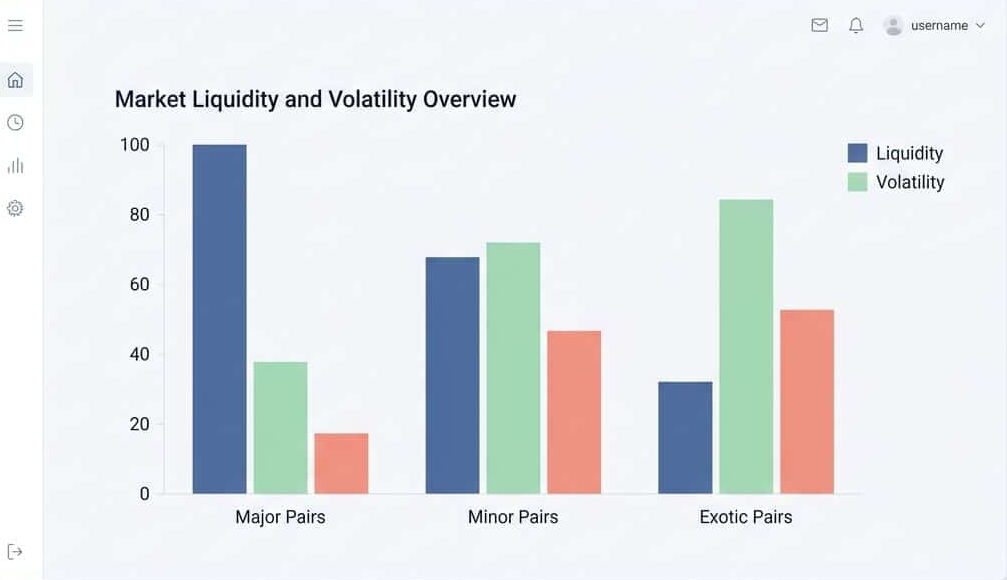
Let’s compare liquidity and volatility across these currency pairs, folks, because they can make or break your trading day.
| Currency Pair Type | Liquidity | Volatility |
|---|---|---|
| Major Pairs | These boast the highest liquidity, reader, with massive daily trading volumes that keep spreads tight and trades smooth, like butter on toast. | They show lower volatility, so expect steadier price moves, which suits beginners who hate wild rides. |
| Minor Pairs | Liquidity sits at a moderate level here, offering decent trading action without the chaos of low-volume pairs. | Volatility ramps up a bit more than majors, giving you chances for bigger swings, if that’s your jam. |
| Exotic Pairs | Brace yourself, these have the lowest liquidity, leading to wider spreads and potential slippage that can surprise you mid-trade. | High volatility rules exotic pairs, creating sharp price jumps that reward the bold but punish the unprepared, much like a rollercoaster with no safety bar. |
That sets the stage for accessibility, so let’s check how easy these pairs are for traders like you.
Accessibility for Traders
Traders often wonder how easy it is to jump into trading different currency pairs.
| Pair Type | Accessibility Level | Why It Matters to You |
|---|---|---|
| Major Pairs | Super easy access | You can trade them on almost every platform, no sweat, like grabbing coffee from your corner shop. |
| Minor Pairs | Pretty straightforward | Most brokers offer them, but you might need to check availability, kind of like finding a good parking spot in a busy lot. |
| Exotic Pairs | More challenging | Not every broker lists them, and you could face limits, picture trying to hail a cab in a quiet suburb at midnight. |
Costs play a big role, too, so let’s check out trading costs and spreads next.
Trading Costs and Spreads
Let’s talk about trading costs and spreads, because they can make or break your forex game, like hidden fees at a buffet.
| Pair Type | Trading Costs | Spreads |
|---|---|---|
| Major Pairs | Keep costs low with tight spreads and high liquidity. You save money on each trade. | Spreads often sit at 0.5 to 1 pip. Think of them as a small toll on a busy highway. |
| Minor Pairs | Costs rise a bit due to less trading volume. Still, they beat exotics in affordability. | Expect spreads from 1 to 3 pips. It’s like paying extra for a scenic route. |
| Exotic Pairs | Face higher costs from low liquidity and wider spreads. Budget wisely, or it stings. | Spreads can hit 5 to 20 pips or more. Picture a bumpy road with big potholes. |
Tips for Choosing the Right Currency Pair
Picking the perfect currency pair feels like finding a trusty sidekick in a wild adventure, one that fits your style and dodges the pitfalls. Check out these pointers, and you’ll spot pairs that spark your trades with just the right mix of thrill and smarts.
Assess Market Volatility
Market volatility swings like a roller coaster in forex trading. Traders spot high volatility in pairs from emerging markets, where prices jump fast. You face bigger risks here, but rewards can soar too.
Check economic indicators first; they signal wild moves ahead. Pairs like exotic ones often spike during news events. Stay alert to avoid wipeouts.
Pick pairs that match your comfort with ups and downs. Low volatility suits steady strategies in major currency pairs. High volatility fits bold trades in crosses or exotic exchanges.
Gauge spreads too; volatile pairs widen them and hike costs. Watch currency exchange rates daily for patterns. This keeps your trading sharp and fun.
Consider Your Trading Strategy
Pick your trading strategy first, folks. It guides which currency pairs suit you best. Day traders thrive on high volatility in exotic pairs, like USD/TRY, where quick moves can lead to fast profits.
Swing traders often prefer major pairs, such as EUR/USD, for steady trends and solid liquidity. Think of it like choosing tools for a job; the right fit makes all the difference in forex trading.
Match your approach to pair traits. If you chase low spreads and easy access, stick with major currency pairs to keep costs down. Exotic pairs tempt with big rewards from emerging markets, but they pack risks from wild exchange rates.
Economic indicators play a key role here, so align your strategy with market analysis for smarter speculation in the spot market.
Be Aware of Economic and Political Factors
Pay attention to economic indicators, like interest rates and GDP reports, because they drive currency values in the forex market. These factors can spike volatility, especially in exotic pairs tied to emerging markets.
Imagine: a sudden rate hike in the US boosts the dollar against the euro in EUR/USD, catching traders off guard. Political events add another layer; elections or trade deals shake up exchange rates, much like a storm hitting a calm sea.
Stay alert to news from key economies, as they influence spreads and liquidity across all pairs. Traders often chat about how a Brexit vote rattled GBP/USD, showing politics in action. Keep an eye on these elements to match your trading strategy with real-world shifts. Now, wrap this up with some final words.
Final Words
You’ve seen how major pairs like EUR/USD offer high liquidity and low spreads, while minors like EUR/GBP bring cross-currency action without the dollar, and exotics like USD/TRY spice things up with emerging market thrills.
Pick the right pair by matching it to your strategy, and you’ll trade smarter, not harder. These choices can boost your profits and cut risks in the forex game. Check out sites like Investing.com for live charts and economic calendars to dive deeper. Go ahead, grab that opportunity; your next trade could change everything.
FAQs on Best Currency Pairs To Trade
1. What are major currency pairs, anyway?
Major currency pairs include the big players like EUR/USD and USD/JPY, which see tons of trading action every day. They’re like the popular kids in school, super liquid and easy to trade without wild swings. Think of them as your go-to for steady forex fun.
2. How do minor currency pairs differ from the majors?
Minor currency pairs skip the US dollar, pairing up currencies like EUR/GBP or AUD/NZD instead. They offer decent liquidity but can be a bit more unpredictable, kind of like a sidekick who’s reliable yet full of surprises.
3. What makes a currency pair exotic?
Exotic currency pairs mix a major currency with one from an emerging market, such as USD/TRY or EUR/ZAR. These pairs often have lower liquidity and higher volatility, making them thrilling but risky, almost like betting on an underdog in a sports match.
4. Why might someone trade exotic pairs over majors or minors?
Traders chase exotic pairs for potential big profits from sharp moves, especially if you’re into high-risk adventures. But watch out, spreads can bite hard, so it’s not for the faint of heart. Always remember, it’s like fishing in deep waters; you might catch a whopper or come up empty.