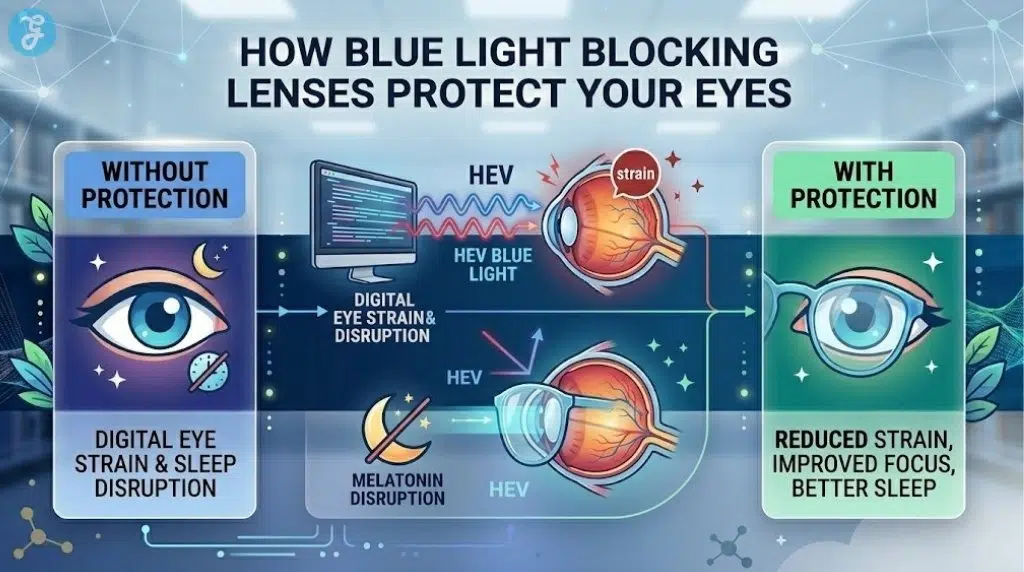
Finding the best blue light blocking glasses to reduce eye strain has become a functional necessity for the modern workforce. In 2026, our lives are dictated by high-resolution screens—from the ultra-wide monitors of backend developers to the smartphones we check before sleep. While digital displays are essential for productivity, they emit a specific frequency of high-energy visible (HEV) light that causes the eye to overwork, leading to headaches, blurred vision, and disrupted circadian rhythms. The latest generation of computer glasses has moved beyond basic yellow tints, utilizing sophisticated multi-layer coatings that filter harmful wavelengths while maintaining color accuracy.
Whether you are grinding through code at midnight or managing a high-volume editorial desk, these glasses provide the optical “shield” needed to maintain peak cognitive performance.
How We Evaluated the Best Digital Eyewear
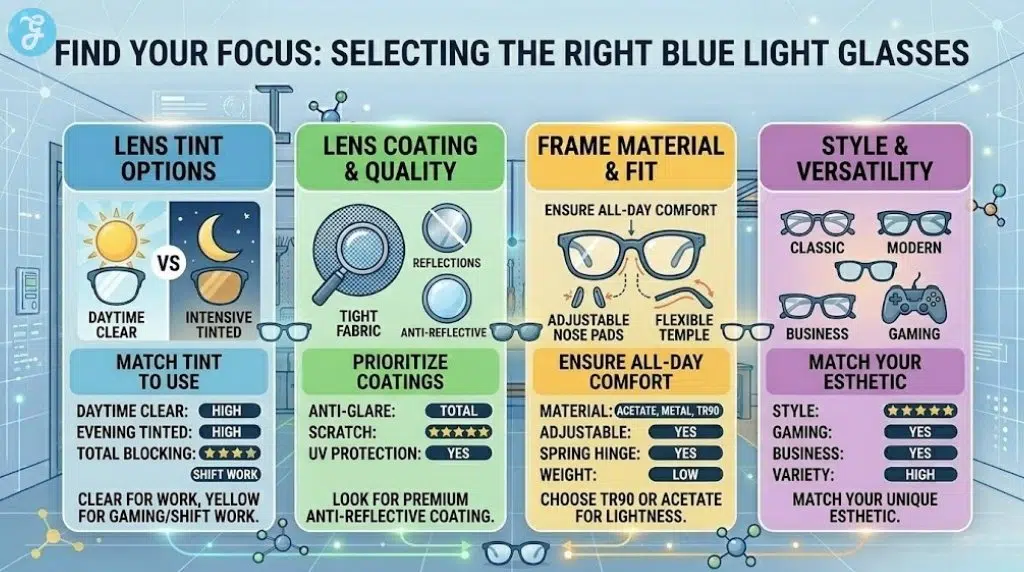
To curate this 2026 list, we looked at the science of the lens. We prioritized glasses that balance effective filtration with daily wearability and style.
| Criteria | Evaluation Metric | Why It Matters |
| Block Rate (HEV) | Percentage of 400nm-450nm light filtered | Determines how much “stress” is actually removed from the eye’s focal system. |
| Color Distortion | Minimal yellow/amber shifting | Critical for designers, editors, and anyone who needs to see “true” colors while working. |
| Lens Clarity | Presence of Anti-Reflective (AR) coatings | Reduces glare from overhead office lights and back-reflections on the lens. |
| Frame Ergonomics | Weight and “Headset Compatibility” | Ensures the glasses remain comfortable during 8-hour shifts, even when wearing headphones. |
The 10 Best Blue Light Blocking Glasses to Reduce Eye Strain
From professional-grade optics to budget-friendly student picks, these 10 brands offer the best defense against digital fatigue.
1. Felix Gray Roebling
Felix Gray is the industry leader for a reason: their blue light filtering technology is baked directly into the lens, not just coated on top. The Roebling is their flagship model, offering a classic round frame that suits most face shapes. They filter 50% of all blue light and almost 90% of the highest energy wavelengths. Because the technology is integrated, the lenses remain clear rather than yellow, making them perfect for professional video calls.
-
Best features: In-lens filtration technology and premium Italian acetate frames.
-
Pros: Zero color distortion; excellent for professional environments.
-
Things to consider: They are a premium investment compared to “over-the-counter” options.
2. Gunnar Optiks Tallac
Gunnar is the heritage brand in this space, originally designed for hardcore gamers. The Tallac model features their patented “amber” tint which is specifically engineered to shift the color spectrum for maximum contrast and eye relaxation. They also feature a unique “wrapped” frame design that helps keep natural moisture in the eye, preventing the “dry eye” syndrome associated with long-term screen use.
-
Best features: High-contrast amber tint and moisture-retaining frame design.
-
Pros: The most effective at reducing “visual noise”; great for late-night sessions.
-
Things to consider: The amber tint is very noticeable and will shift your color perception.
3. Zenni Optical Blokz
For those who need a custom prescription alongside blue light protection, Zenni’s Blokz line is the best value-for-money choice. You can add the Blokz coating to almost any of their thousands of frame styles. In 2026, they have upgraded the coating to be virtually colorless while still blocking a significant portion of HEV light. It’s the ultimate “accessible” solution for students and office workers.
-
Best features: Extremely affordable and available in prescription strengths.
-
Pros: Massive variety of styles; great secondary pair for the car or office.
-
Things to consider: The basic frames are lighter and less durable than premium acetate brands.
4. Pixel Eyewear Meru
Pixel Eyewear focuses on the “Designer” aesthetic. Their Meru model offers a sleek, modern look that doesn’t scream “computer glasses.” Their lenses feature a very high-quality anti-reflective coating that eliminates the purple/blue “ghosting” often seen on cheaper blue light glasses. They are the best choice for those who want a minimalist, high-end look without the yellow hue.
-
Best features: Superior anti-reflective (AR) coating and minimalist design.
-
Pros: Very clear lenses; looks like high-end fashion eyewear.
-
Things to consider: The thin metal frames require careful handling.
5. Cyxus Blue Light Filter Glasses
Cyxus is a dominant player in the budget market, offering reliable protection for under $30. Their lenses are made from an impact-resistant polymer that is surprisingly clear. They are a “no-frills” tool that works exceptionally well for those who just need a pair of glasses for occasional heavy computer use or a weekend of movie marathons.
-
Best features: Lifetime warranty and highly durable polymer lenses.
-
Pros: Incredibly affordable; available in a wide variety of “classic” shapes.
-
Things to consider: They lack the premium lens coatings found in Felix Gray or Pixel.
6. TIJN Blue Light Blocking Square Glasses
TIJN has gained a massive following for their “oversized” square frames that have become a 2026 style staple. Beyond the fashion, their lenses are remarkably effective at reducing eye strain during long reading sessions. The larger lens area provides a wider field of “protected” vision, which is helpful if you use multiple monitors and move your eyes frequently.
-
Best features: Large field of view and trendy, oversized aesthetics.
-
Pros: Very comfortable for wider faces; great for a “fashion-forward” look.
-
Things to consider: The large frames can be a bit heavy on the nose after several hours.
7. Baxter Blue Lane
Baxter Blue is an Australian brand focused on “Digital Wellness.” Their Lane model is a versatile, mid-sized frame that features a specialized pigment embedded in the lens. This pigment targets the 400nm-440nm range specifically—the most damaging part of the spectrum. They also offer “Sleep” versions with a darker tint for those who use screens in bed.
-
Best features: Targeted pigment filtration and high-quality build.
-
Pros: Very balanced filtration; supports better sleep cycles.
-
Things to consider: Shipping can be slower depending on your global location.
8. Warby Parker Blue-Light Lenses
If you already wear Warby Parker frames, adding their blue light filter is a seamless upgrade. Their tech is a polycarbonate lens with a built-in filter that blocks significantly more blue light than their standard AR coating. Because they have physical stores in many cities, you can get them professionally adjusted for a perfect fit, which is essential for reducing physical strain on your ears and nose.
-
Best features: Professional fitting services and high-durability polycarbonate.
-
Pros: Excellent “Buy-One-Give-One” social mission; very reliable quality.
-
Things to consider: Adding the filter to your order increases the base price.
9. Izipizi Screen Range
Izipizi is a French brand known for their “soft-touch” finish and flexible hinges. Their Screen range is designed to be lightweight and “fun.” These are the best glasses for travelers or those who work in varying environments because they are nearly indestructible and come in vibrant, modern colors. The “Shape D” is a particular favorite for its universal fit.
-
Best features: Flexible hinges and “soft-touch” matte finish.
-
Pros: Very comfortable and durable; comes with a felt carrying case.
-
Things to consider: The lenses are slightly more prone to smudging than premium glass.
10. Quay Australia Rumours
Quay is the choice for the social media age. Their Rumours frame is a chic, cat-eye style that has been updated for 2026 with improved blue light optics. They are designed for the “Influencer” or digital creator who needs to look great on camera while editing for hours. They offer a “high-fashion” look that provides surprisingly competent eye protection.
-
Best features: High-fashion “Cat-Eye” design and affordable price point.
-
Pros: Great for “Desk-to-Dinner” wear; very photogenic.
-
Things to consider: The fashion-focused frames are often larger and can slide down smaller noses.
Quick Overview
The following table summarizes these top digital defense tools to help you choose the right fit for your workflow.
Comparison Table
| Brand & Model | Lens Tech | Main Strength | Best Use Case |
| Felix Gray Roebling | In-Lens Pigment | Color Accuracy | Professional Video Calls |
| Gunnar Tallac | Amber Tint | Max Eye Relaxation | Late-Night Coding/Gaming |
| Zenni Blokz | Coating | Best Value | Prescription Users |
| Pixel Meru | Clear AR Coating | No Purple Glare | Designers & Creators |
| Cyxus Standard | Polymer Film | Budget Price | Occasional Heavy Use |
| TIJN Square | Large Lens Area | Wide Field of View | Multi-Monitor Setups |
| Baxter Blue Lane | Targeted Pigment | Digital Wellness | General Office Use |
| Warby Parker | Polycarbonate | Professional Fit | Daily Prescription Wear |
| Izipizi Screen | Flex-Frame | Durability/Comfort | Travelers & Commuters |
| Quay Rumours | Fashion Lens | Aesthetic Style | Social Media/Creators |
Quick Picks
If you need a fast recommendation for your desk today:
-
Best Overall Quality: Felix Gray Roebling
-
Best for Serious Strain: Gunnar Tallac (Amber Tint)
-
Best Budget Choice: Zenni Optical Blokz
-
Best for Style: Pixel Eyewear or Quay
Final Thoughts
Choosing among the best blue light blocking glasses to reduce eye strain is an act of proactive health management. By the time your eyes feel “gritty” or your head starts to throb, the damage to your focus is already done. In 2026, where digital immersion is unavoidable, these glasses act as a necessary buffer between your biology and your technology. Whether you choose the high-contrast relief of an amber tint or the professional clarity of an in-lens pigment, the goal remains the same: protecting your vision so you can continue to build, create, and lead in a digital-first world.