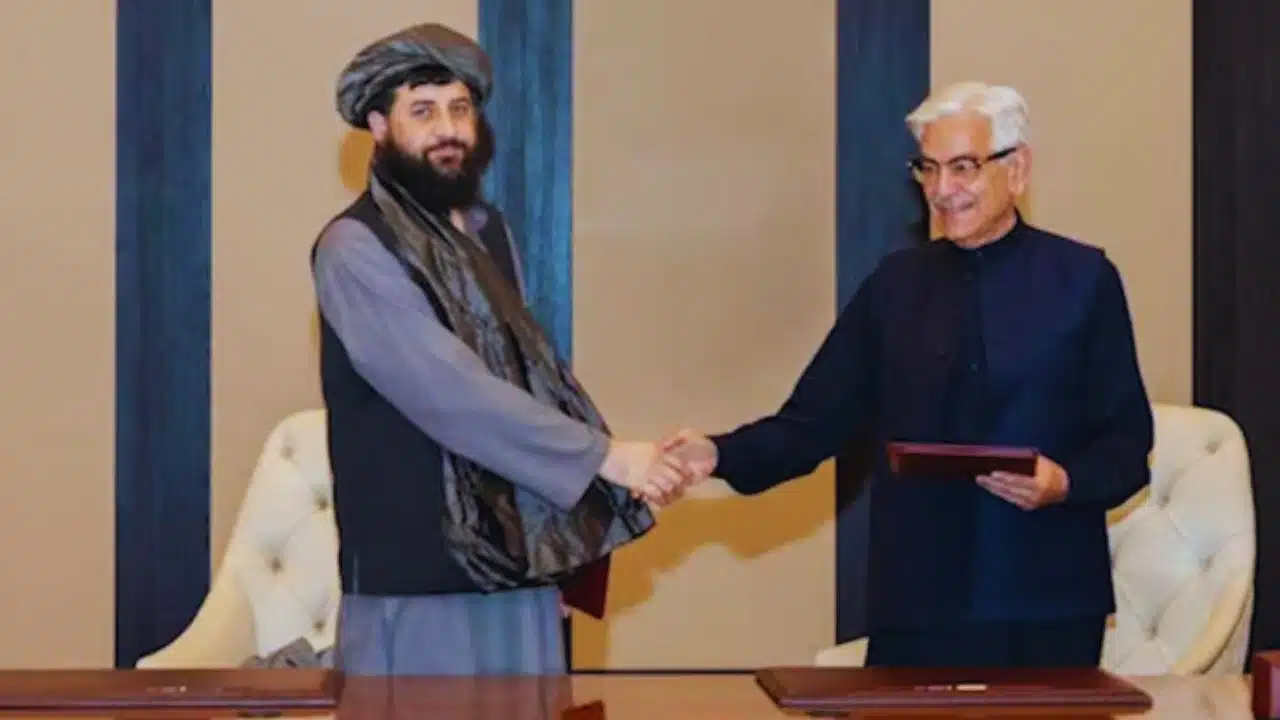
Peace talks between Afghanistan and Pakistan have officially collapsed after several rounds of negotiations failed to produce a breakthrough, though a temporary ceasefire between the two neighboring nations remains intact. The Taliban’s chief spokesperson, Zabihullah Mujahid, confirmed the development on Saturday, acknowledging that discussions broke down due to what Kabul described as an “unrealistic and excessive” demand from Islamabad.
According to Mujahid, Pakistan had asked Afghanistan’s Taliban government to take direct responsibility for Pakistan’s internal security — an expectation that Kabul said went beyond its national capacity and sovereign mandate. The spokesperson explained that while Afghanistan had entered the talks with a sincere intention to stabilize relations and avoid border escalation, Islamabad’s request placed an “unjustifiable burden” on Afghanistan’s government, which is already managing complex domestic challenges.
“The ceasefire that has been established has not been violated by us so far, and it will continue to be observed,” Mujahid stated, emphasizing that Afghanistan remains committed to peace and regional stability despite the collapse of formal dialogue. He added that while Kabul will continue to cooperate with all regional partners to prevent cross-border violence, it cannot assume liability for Pakistan’s internal affairs.
Pakistani Defence Minister Khawaja Muhammad Asif also confirmed that the negotiations, held in Istanbul, had failed to reach a consensus. The discussions were part of a broader initiative to prevent renewed border clashes after a series of violent incidents along the Durand Line in recent months. “The ceasefire will remain in effect as long as there are no attacks launched from Afghan soil,” Asif remarked, signaling that Islamabad remains cautious but will not tolerate what it views as threats emanating from Afghanistan.
The talks’ collapse followed an exchange of gunfire between Afghan and Pakistani troops along the border only a day earlier — an incident that underscored the fragility of the truce. Despite diplomatic efforts, both sides have accused each other of provoking confrontations. Afghan officials claim that Pakistani troops have engaged in unprovoked shelling in border regions, while Islamabad has accused Kabul of allowing anti-Pakistan militants, particularly the Tehrik-e-Taliban Pakistan (TTP), to operate freely from Afghan territory.
Adding to the diplomatic complexity, Turkish President Tayyip Erdogan met Pakistan’s Prime Minister Shehbaz Sharif in Baku on Saturday. Erdogan expressed his hope that the ongoing discussions could eventually lead to “lasting regional stability” and reiterated Turkey’s willingness to facilitate continued dialogue between the two sides. Ankara has played a limited but consistent mediating role in regional peace initiatives involving both Kabul and Islamabad.
Tensions between Afghanistan and Pakistan have escalated sharply in recent months. The two nations, once close allies during the Taliban’s rise to power, now face deep mistrust. In October, their forces clashed in one of the deadliest border incidents since 2021, when the Taliban returned to power after the U.S. withdrawal. Dozens of people were reportedly killed in those confrontations, and Pakistani airstrikes targeted what Islamabad described as militant strongholds inside Afghanistan, including parts of Kabul and Khost.
Both countries had agreed to a temporary ceasefire in Doha in October under the mediation of regional partners. The second round of negotiations, held in Istanbul, was expected to transform that truce into a more durable agreement. However, deep disagreements over the status of militant groups inside Afghanistan derailed progress. Pakistan insists that the Taliban must take concrete steps against groups such as the TTP, which has orchestrated numerous attacks inside Pakistan. The Taliban government, however, has rejected those allegations, asserting that Afghanistan should not be blamed for Pakistan’s internal unrest.
The failure of these talks highlights how fragile the diplomatic and security landscape between the two nations has become. While both sides continue to pledge adherence to the ceasefire, analysts warn that without a structured and enforceable agreement addressing the militant issue, further escalations remain a strong possibility. The collapse of negotiations also comes at a time when Afghanistan faces significant economic hardship, regional isolation, and limited international recognition — factors that have constrained its diplomatic flexibility.
For Pakistan, the breakdown in dialogue is another setback in its long struggle to contain cross-border militancy. Islamabad’s demand that Kabul take a greater role in eliminating anti-Pakistan groups reflects both frustration and urgency as it faces increasing domestic attacks. However, critics say the approach risks overburdening Afghanistan’s fragile governance system and alienating the Taliban leadership further.
Despite the tensions, both countries have stopped short of declaring a formal end to their peace process. The existing ceasefire remains technically active, serving as a thin line between uneasy peace and potential open conflict. Observers believe that external mediation from nations like Turkey and Qatar could still play a vital role in preventing the situation from spiraling into renewed violence.
Escalating Border Tensions and the Path Ahead
The Afghan-Pakistan border, often referred to as one of the most volatile frontiers in the region, has long been a source of friction. Historical disputes, competing territorial claims along the Durand Line, and militant movements have kept the two sides locked in a cycle of mistrust. The latest collapse in peace talks reinforces concerns that even limited ceasefires can unravel quickly without mutual political will.
In recent months, border skirmishes have claimed dozens of lives, displacing civilians and disrupting trade routes vital to both economies. The Taliban’s inability — or unwillingness — to act decisively against anti-Pakistan groups has further strained relations. Pakistan’s military has increased surveillance and troop deployments along key checkpoints, while Afghanistan’s leadership accuses Islamabad of violating its sovereignty through airstrikes and drone incursions.
Experts say that the “beyond capacity” demand at the center of this diplomatic breakdown symbolizes the core of the problem: divergent expectations. Islamabad wants Kabul to act as a security buffer, curbing militant infiltration and guaranteeing stability. Kabul, however, argues that it cannot control every armed faction across its rugged terrain, particularly when facing its own governance and humanitarian crises.
International observers, including the United Nations and the Organization of Islamic Cooperation (OIC), have expressed concern over the potential for renewed conflict. Economic interdependence, especially through border trade and shared infrastructure, adds another layer of urgency to de-escalation. Both countries rely heavily on each other for trade goods, cross-border labor, and regional connectivity projects tied to China’s Belt and Road Initiative. A breakdown in diplomatic communication could jeopardize these economic links and further destabilize an already fragile region.
For now, both Kabul and Islamabad appear to be holding onto the ceasefire as a temporary safeguard against all-out confrontation. But analysts warn that without a new round of talks — and clearer terms on militant activity, border monitoring, and regional cooperation — the peace remains superficial. The region’s stability may depend not only on Afghan and Pakistani leadership but also on how effectively external mediators like Turkey, Qatar, and the broader international community engage to maintain dialogue.
In essence, the failure of these peace talks underscores the limits of bilateral diplomacy in a conflict rooted in decades of mistrust and regional power politics. The coming weeks will determine whether the ceasefire can evolve into genuine peace or collapse under the weight of unresolved grievances.
The Information is collected from India Today and Business Today.