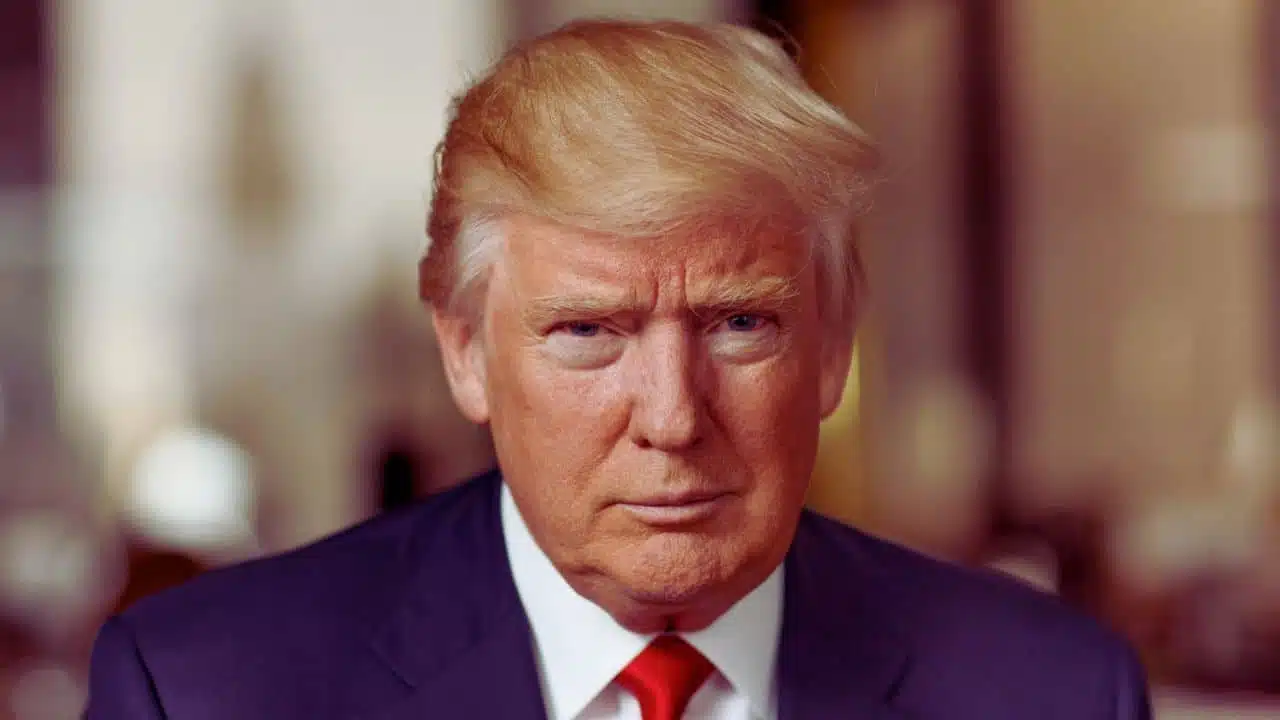
On July 30, 2025, U.S. President Donald Trump dramatically escalated tensions with Brazil by announcing massive tariffs on Brazilian goods and imposing personal sanctions against Supreme Court Justice Alexandre de Moraes, the judge overseeing a high-profile trial of Trump’s far-right ally, Jair Bolsonaro. The move marked one of the most politically charged foreign policy actions of Trump’s second term and triggered immediate backlash from Brazil’s leadership.
50% Tariff Shock: U.S. Moves to Punish Brazil Economically
The White House formally issued an executive order that raised tariffs on Brazilian imports by an additional 40%, bringing the total tariffs to 50%. This decision sent a strong message that the U.S. was willing to use its economic leverage to interfere in what it perceives as political injustice abroad.
While tariffs are a common tool in Trump’s foreign policy playbook, this case stands out because it directly ties economic penalties to Brazil’s internal judicial processes. Unlike previous tariffs aimed at protecting U.S. industries or punishing trade imbalances, this action is being framed as retaliation for what the U.S. government describes as the Brazilian government’s unjust treatment of Bolsonaro and his supporters.
The new duties will be implemented after a seven-day grace period, allowing Brazilian exporters some time to adjust. However, the U.S. carved out strategic exemptions for several high-demand Brazilian products including:
-
Commercial aircraft
-
Concentrated orange juice and orange pulp
-
Raw Brazil nuts
-
Certain categories of iron, steel, and aluminum products
These exemptions suggest that while the tariffs are politically motivated, the U.S. remains cautious not to damage critical supply chains or hurt its own industries that rely on specific Brazilian imports.
Legal War Over Bolsonaro Deepens U.S.–Brazil Rift
The sanctions and tariffs center around the ongoing criminal case against former President Jair Bolsonaro, who is facing serious charges in Brazil. Prosecutors allege that Bolsonaro led a coup attempt in 2022 after losing the national election to President Luiz Inácio Lula da Silva, a left-leaning leader who previously served two terms in the early 2000s.
The criminal case against Bolsonaro includes accusations of plotting to overturn democratic institutions, organize arrests of political rivals, and allegedly orchestrate assassinations of key figures in Brazil’s leadership, including Lula, Vice President Geraldo Alckmin, and Supreme Court Justice Alexandre de Moraes.
The severity of these accusations has placed Bolsonaro at the center of one of the most contentious legal and political battles in Brazilian history. If convicted, Bolsonaro could face up to 40 years in prison. His supporters argue that the trial is politically motivated, while Brazil’s judiciary insists the charges are based on solid evidence and due process.
Alexandre de Moraes: A Central Figure in Brazil’s Political Struggles
Justice Alexandre de Moraes, the main judge overseeing Bolsonaro’s trial, has emerged as a powerful and controversial figure. Over the past several years, he has become known for his uncompromising stance on election disinformation, political violence, and digital misinformation campaigns.
During the 2022 Brazilian elections, Moraes was a vocal and active player in countering misinformation, using his authority as both a Supreme Court Justice and the head of Brazil’s electoral court to take down fake news and prosecute those involved in attempts to disrupt the democratic process.
In 2024, Moraes ordered the temporary suspension of Elon Musk’s platform X (formerly Twitter) in Brazil for a 40-day period. The reason was the platform’s failure to control the spread of disinformation, particularly posts associated with Bolsonaro’s political base. This unprecedented move earned him fierce criticism from the far-right but also support from institutions defending the integrity of democratic elections.
U.S. Sanctions Target Moraes Personally Under the Magnitsky Act
The U.S. Treasury Department and the State Department cited the Global Magnitsky Human Rights Accountability Act as the legal foundation for sanctioning Moraes. This law enables the U.S. government to impose financial and travel restrictions on foreign individuals found to be involved in significant human rights abuses or corruption.
Under these sanctions, any assets Moraes holds in the United States are frozen, and he is barred from entering the country. This is a rare instance where a sitting Supreme Court justice from a democratic country has been individually sanctioned by the U.S., underscoring the gravity of the U.S. government’s accusations against him.
The White House described Brazil’s treatment of Bolsonaro and his supporters as a broad pattern of censorship, legal harassment, and persecution, all of which it deemed a violation of democratic norms and human rights. It specifically named Moraes as a key figure enabling these alleged violations.
Brazil Responds: Strong Pushback from Lula’s Government
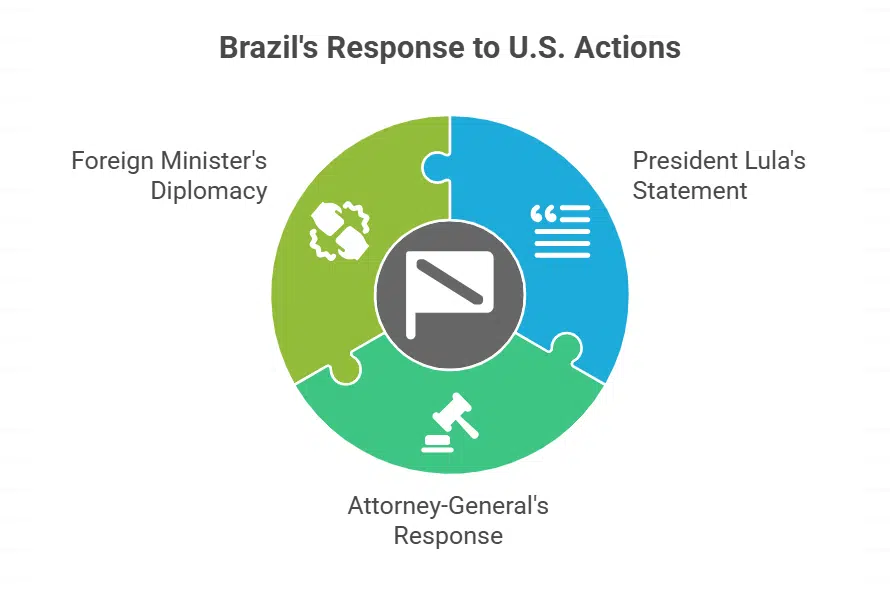
Brazilian President Luiz Inácio Lula da Silva issued a strong statement denouncing Trump’s actions. He emphasized that Brazil’s sovereignty and judicial independence must be respected and that foreign governments should not interfere in the internal affairs of a democratic country.
Brazil’s Attorney-General Jorge Messias also issued a formal response condemning the U.S. sanctions and calling them arbitrary and unwarranted. He stressed that Brazil’s judicial process is transparent, legitimate, and based on legal evidence, not politics.
Foreign Minister Mauro Vieira, who met with U.S. Secretary of State Marco Rubio on July 30, conveyed Brazil’s disapproval during their diplomatic discussions. He reiterated that Brazil’s judicial system would remain firm in its commitment to upholding the rule of law regardless of external pressure.
Political and Diplomatic Fallout: New Risks in U.S.–Brazil Relations
Trump’s decision to impose both tariffs and sanctions simultaneously signals a shift in how the U.S. engages with key Latin American partners. Brazil is one of the largest economies in the region and a long-time strategic partner. Yet, this move indicates that political alignment is becoming a key driver in economic decisions under Trump’s leadership.
By linking tariffs directly to a foreign court case, Trump is blurring the line between economic policy and political intervention. While this may galvanize support from Bolsonaro’s global allies, it also raises questions about the independence of the judiciary and the potential for retaliatory actions from other countries.
Some political analysts believe this could mark the start of a new chapter of geopolitical friction between left-wing and right-wing governments in the Americas, especially as Trump uses his foreign policy platform to support ideological allies like Bolsonaro.
Human Rights Groups Raise Concerns Over Judicial Interference
International observers, including Human Rights Watch, have expressed serious concerns about the U.S. actions. These organizations argue that targeting a judge for fulfilling their judicial duties undermines the principle of judicial independence, a cornerstone of democratic governance.
Legal experts point out that even in contentious cases, independent judicial processes must be allowed to unfold without foreign interference. They worry that this precedent could be used to justify similar actions in other countries, weakening the global framework for human rights and the rule of law.
Bolsonaro’s Allies Celebrate, While Critics Warn of Global Ramifications
While Trump’s measures have been praised by Bolsonaro’s supporters—particularly his son Eduardo Bolsonaro, who has long advocated for U.S. intervention in the case—critics argue that this development may embolden authoritarian movements worldwide.
By framing legal accountability as political persecution, some worry that far-right leaders will feel validated in resisting judicial oversight and discrediting democratic institutions. Others fear that such moves can strain diplomatic alliances and hurt long-term economic cooperation between countries with shared interests.
A Defining Moment for U.S.–Brazil Relations
President Trump’s July 30 executive order imposing 50% tariffs on Brazilian exports and sanctions on Supreme Court Justice Alexandre de Moraes is not just an economic decision—it’s a deeply political maneuver with far-reaching implications. It reflects a new era of foreign policy where ideological loyalty appears to take precedence over traditional diplomacy.
For Brazil, the challenge will be maintaining its judicial integrity and sovereignty in the face of international pressure. For the U.S., this sets a controversial precedent that could have ripple effects throughout Latin America and beyond.
As Bolsonaro’s trial proceeds and political tensions intensify, the world will be watching to see how both democracies handle this extraordinary confrontation.