Have you ever wondered how online deals can be safer, faster, and more reliable? Many people today face issues with trust in digital transactions. Whether it’s buying something online or managing contracts, there’s often doubt about fairness and security.
Here’s a cool fact: smart contracts are changing this. These self-executing agreements on blockchain networks are helping to build trust by being clear and tamper-proof. They cut out middlemen and make things run smoothly.
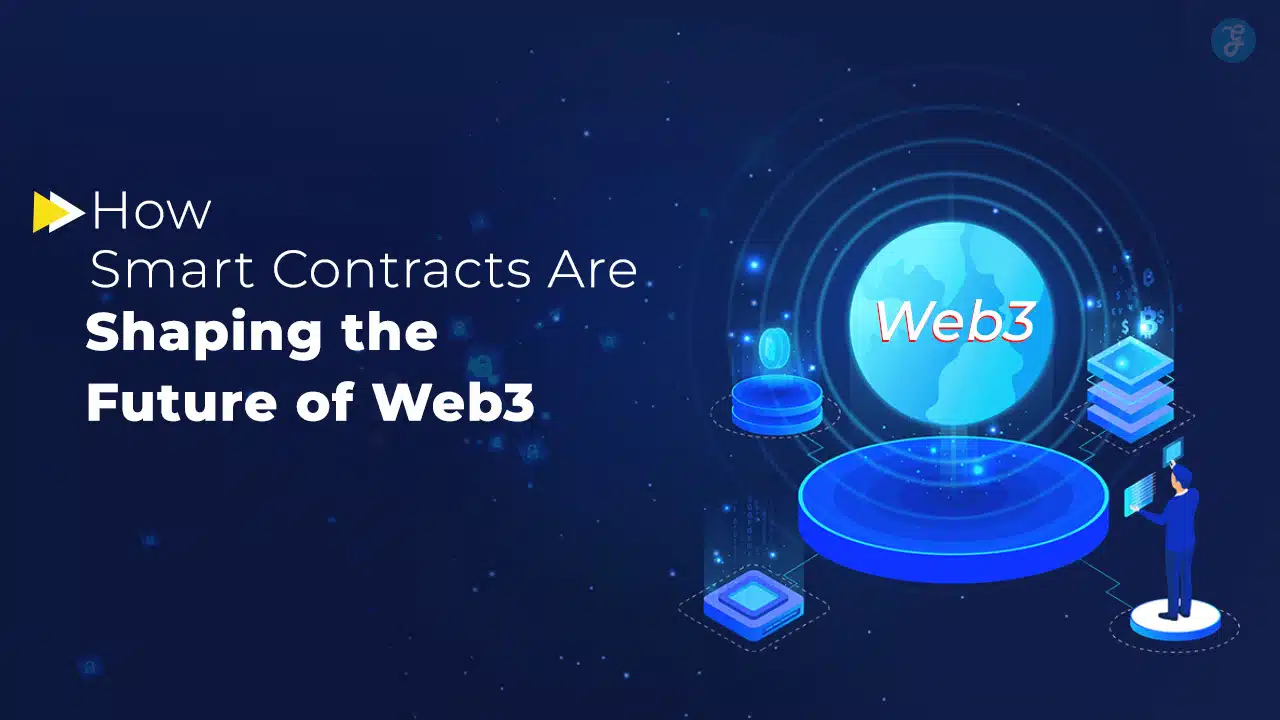
This blog will explain how smart contracts work in Web3, show their real-life uses like supply chains and decentralized finance (DeFi), and discuss challenges they face. It’ll also share future trends that could impact our lives soon.
Keep reading—this might just open your eyes!
Key Takeaways
- Smart contracts are digital agreements that run on blockchains. They remove middlemen, making transactions faster and safer.
- DeFi uses smart contracts to allow peer-to-peer lending, trading, and borrowing without banks. This makes finance fairer and more transparent.
- DAOs use smart contracts for voting and decision-making. They create fair systems where users share control.
- Challenges include coding flaws, slow transaction speeds, high costs, and complex tools. These limit Web3 growth.
- Future trends like AI integration and better blockchain connections will make smart contracts smarter and easier to use. This will help Web3 grow faster.
The Role of Smart Contracts in the Web3 Ecosystem

Smart contracts act like digital agreements that run on blockchain networks. They cut out middlemen, making online transactions faster and safer.
Enabling Decentralized and Automated Processes
Smart contracts run on blockchain networks. They remove middlemen from transactions. These contracts work automatically once coded conditions are met. For example, peer-to-peer lending platforms use them to process loans quickly without banks.
They help manage decentralized autonomous organizations (DAOs). Members vote through secure digital platforms. Results update instantly with no tampering risk. This automation saves time and cuts costs for all parties involved.
Enhancing Transparency and Trust
Public blockchain records keep all transactions visible. This stops tampering and boosts confidence. Users can trace every step, making digital commerce safer. Transparent systems reduce fraud.
Reliable oracles help connect real-world data to smart contracts. They improve trust in areas like insurance claims and derivatives trading. Blockchain technology ensures actions happen as programmed without bias.
Real-World Applications of Smart Contracts in Web3
Smart contracts are reshaping how people handle agreements online. They power automated systems, cutting out the middleman.
Decentralized Finance (DeFi)
DeFi lets people trade, borrow, or lend without banks. Peer-to-peer lending gives loans directly between users. Decentralized exchanges allow trading digital assets securely and quickly.
These platforms run on public blockchains, ensuring transparent transactions.
Real-time oracle data helps DeFi work smoothly. It provides live prices and market info to apps like yield farming tools. This boosts accuracy in operations and builds trust. Users can access these services with just a seed phrase, making banking simpler for everyone globally.
Governance through DAOs
DAOs give users a voice in decisions. These decentralized autonomous organizations run on smart contracts. They let people vote directly instead of relying on leaders. This creates digital democracies, where control is shared.
Users also manage their own data and take part in planning goals. Blockchain technology ensures transparency during votes or fund allocations. The system removes bias, making decisions fair for everyone involved.
Supply Chain and IoT Integration
Smart contracts improve supply chain management by automating tasks. They track goods, confirm payments, and ensure transparent transactions. Blockchain technology stores all data securely.
Suppliers and buyers can see the same information at the same time. This helps build trust among parties.
IoT devices like sensors work with smart contracts to share real-time data. Oracles send details on a product’s location or condition to the blockchain network. For example, temperature-sensitive medical records stay monitored during transport.
This reduces errors and boosts reliability in logistics operations.
Challenges in Smart Contract Implementation
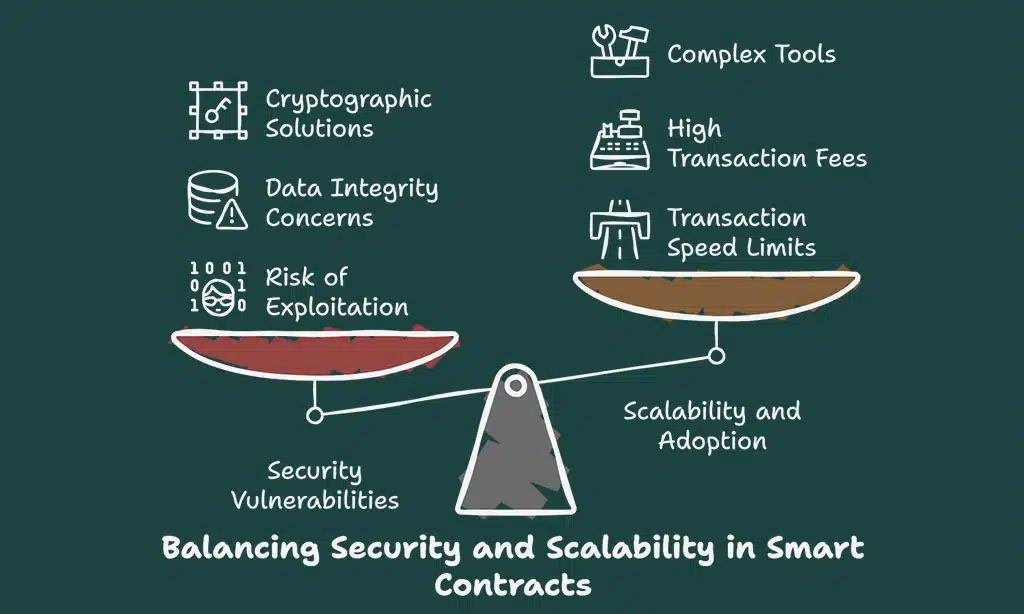
Smart contracts are powerful but not perfect. They can face risks like coding flaws and limited network capacity.
Security Vulnerabilities
Hackers can exploit errors in smart contract code. Flaws like these lead to stolen digital assets and disrupted decentralized applications (dapps). Incorrect or tampered external data also poses risks.
For example, relying on a single source for price feeds in DeFi may cause massive losses.
Cryptographic proofs and multi-source validation help reduce risks. Decentralized oracle networks are another solution. They fetch accurate data from multiple sources, strengthening blockchain security against cyber threats and attacks.
Scalability and Adoption Barriers
Blockchain networks often face slow transaction speeds. Ethereum, for example, can handle about 15 transactions per second. This limits its ability to support large-scale applications like decentralized social media or e-commerce platforms.
High fees during peak times add another hurdle. Users may avoid transactions when costs rise too much.
Complex tools also stop non-technical users from adopting smart contracts and dApps. Writing or managing these contracts requires coding skills. Many new users find this process confusing and time-consuming.
Without simpler systems, Web3 adoption will stay limited to tech-savvy groups only.
Future Trends in Smart Contract Development
Smart contracts are becoming smarter with tech like AI and better integrations. These changes could make systems faster, safer, and more connected.
Integration with AI and Machine Learning
AI and machine learning boost smart contracts. They improve oracle accuracy for tasks like tracking prices or weather data. Better oracles help advanced tools, such as derivatives and insurance on blockchain networks, work smoothly.
These technologies also cut errors in decision-making. For example, AI can predict risks in decentralized finance (DeFi). This makes lending safer and smarter in the digital economy.
Advancements in Interoperability
Blockchains now talk better with each other. This allows smoother transactions and less hassle for users. Interoperability bridges connect blockchain networks, making decentralized applications (dApps) more useful.
For example, moving digital assets between Ethereum and Solana is becoming easier.
Reliable oracles also play a key role here. They help smart contracts access accurate data from outside sources. Insurance contracts and financial tools like derivatives depend on this precision.
These advancements bring us closer to a truly connected digital economy in Web3.
Takeaways
Smart contracts are changing Web3 in big ways. They cut out middlemen, save time, and boost trust. From finance to gaming, their use keeps growing. With better security and tools, adoption will rise fast.
The future of the internet looks brighter with smart contracts leading the charge!
FAQs
1. What are smart contracts, and how do they work in Web3?
Smart contracts are self-executing programs on blockchain networks. They automate tasks like digital payments, real estate transactions, or supply chain management without needing middlemen.
2. How do smart contracts impact decentralized finance (DeFi)?
In DeFi, smart contracts enable peer-to-peer lending, transparent transactions, and market-making by removing the need for banks or brokers.
3. Can smart contracts improve privacy and security online?
Yes, they reduce data breaches by using decentralized blockchain systems and zero-knowledge proofs to protect digital identities and sensitive information like medical records.
4. How can businesses use smart contracts in their operations?
Businesses can manage royalty payments, intellectual property rights, non-disclosure agreements, and even gig economy workflows with ease through automated processes powered by blockchain technology.
5. Are there risks with using smart contracts?
Yes. Security risks exist if the code has flaws or cyber attacks target blockchain technologies. Regulatory uncertainty also makes adoption tricky in some areas.
6. Will smart contracts change how we interact online?
Absolutely! From decentralized social media platforms to a more open internet free from cookies tracking users constantly—smart contracts help create a safer digital democracy within Web 3.0’s ecosystem of dApps and peer-to-peer networks.