Understanding the features of an eco-friendly neighborhood is crucial in today’s fast-evolving urban landscapes. As climate change continues to pose challenges, individuals and communities are becoming more aware of the need to adopt sustainable practices. An eco-friendly neighborhood is not just a place to live—it’s a commitment to reducing environmental impact, improving quality of life, and fostering a sense of responsibility toward the planet.
These neighborhoods blend modern living with eco-consciousness, incorporating innovative solutions such as renewable energy, green spaces, and efficient waste management systems. They provide a blueprint for how we can live harmoniously with nature while enjoying the conveniences of urban life. By understanding the defining characteristics of eco-friendly neighborhoods, we can better advocate for and build communities that prioritize environmental health and sustainability. In this guide, we’ll explore the top ten features that make these neighborhoods a beacon of hope for a greener future.
What Defines an Eco-Friendly Neighborhood?
An eco-friendly neighborhood is a community designed with sustainability in mind. It incorporates environmental practices, promotes efficient resource use, and reduces carbon footprints.
Such neighborhoods prioritize elements like green infrastructure, energy efficiency, and active community involvement in sustainability efforts. The ultimate goal is to create spaces that offer healthier living while minimizing environmental harm.
Key Features of Eco-Friendly Neighborhoods:
| Feature | Benefits |
| Green spaces | Improved air quality, reduced urban heat, mental well-being |
| Renewable energy | Lower greenhouse gas emissions, cost savings |
| Sustainable housing | Reduced energy consumption, healthier indoor environments |
| Walkability | Reduced traffic, better health |
Top 10 Features of an Eco-Friendly Neighborhood You Need to Know
1. Green Spaces and Parks
One of the essential features of an eco-friendly neighborhood is the inclusion of ample green spaces. These areas act as natural air filters, provide habitats for wildlife, and enhance residents’ mental well-being. Case studies like Millennium Park in Chicago exemplify how urban parks can contribute to a city’s sustainability efforts.
Key Benefits of Green Spaces:
| Benefit | Description |
| Air Quality Improvement | Trees and plants absorb carbon dioxide and release oxygen, filtering harmful pollutants. |
| Biodiversity Support | Green spaces provide habitats for birds, insects, and small mammals, promoting ecological balance. |
| Mental Health Boost | Spending time in nature is linked to reduced stress and improved cognitive function. |
| Temperature Regulation | Trees provide shade and reduce the urban heat island effect, cooling down neighborhoods. |
Case Study: Millennium Park, Chicago, USA
Millennium Park demonstrates how urban parks enhance sustainability. The park includes features like green roofs, native landscaping, and innovative stormwater management systems, all contributing to its eco-friendly design.
2. Renewable Energy Sources
Another standout feature is the use of renewable energy sources. Solar panels, wind turbines, and geothermal systems significantly reduce carbon footprints while promoting energy efficiency. Masdar City in the UAE is a prime example of how these systems can power an entire community sustainably.
Types of Renewable Energy Systems:
| Energy Source | Description |
| Solar Panels | Capture sunlight and convert it into electricity, commonly used for homes and street lighting. |
| Wind Turbines | Generate electricity from wind, suitable for open areas within or near the community. |
| Geothermal Systems | Utilize underground heat for heating and cooling buildings. |
Case Study: Masdar City, UAE
Masdar City is a zero-carbon neighborhood powered entirely by renewable energy sources. It features extensive solar farms, energy-efficient buildings, and a smart grid system.
3. Sustainable Housing
Incorporating energy-efficient designs and green roofs, sustainable housing stands out as a key feature of an eco-friendly neighborhood. Projects like BedZED in London showcase how innovative housing solutions can lead to reduced energy consumption and healthier living environments.
Key Features of Sustainable Housing:
| Feature | Description |
| Energy-Efficient Designs | Incorporate natural ventilation, passive solar heating, and insulated walls. |
| Green Roofs | Vegetated roofs improve insulation, reduce stormwater runoff, and support biodiversity. |
| Smart Home Technology | Smart thermostats and energy-monitoring systems help reduce energy use. |
Case Study: BedZED, London, UK
BedZED (Beddington Zero Energy Development) is a pioneering sustainable housing project that includes solar panels, energy-efficient designs, and water-saving systems.
4. Walkability and Bike-Friendly Infrastructure
The features of an eco-friendly neighborhood also include safe and convenient pathways for walking and cycling. These not only reduce reliance on vehicles but also encourage active lifestyles. Amsterdam is a model city for its extensive bike lanes and pedestrian-friendly design.
Features of Walkable Communities:
| Feature | Description |
| Sidewalks and Pathways | Encourage walking by providing safe, well-maintained routes. |
| Bike Lanes | Dedicated cycling infrastructure ensures safety for cyclists. |
| Proximity to Amenities | Schools, shops, and parks are located within walking or cycling distance. |
Case Study: Amsterdam, Netherlands
Amsterdam is famous for its bike-friendly infrastructure, with over 400 kilometers of bike lanes and policies that promote cycling as the primary mode of transportation.
5. Effective Waste Management Systems

Proper waste management is critical for eco-friendly communities. These neighborhoods implement recycling programs, composting facilities, and initiatives to minimize waste generation.
Components of Sustainable Waste Management:
| Component | Description |
| Recycling Programs | Collect and process paper, plastics, and metals for reuse. |
| Composting Systems | Convert organic waste into nutrient-rich compost for gardening. |
| Zero-Waste Initiatives | Promote reducing waste at the source through education and incentives. |
Case Study: Kamikatsu, Japan
Kamikatsu has achieved global recognition for its zero-waste initiatives, recycling over 80% of its waste through rigorous segregation and innovative reuse practices.
6. Water Conservation Systems
Water scarcity is a growing concern, and sustainable neighborhoods address this by implementing conservation systems like rainwater harvesting, greywater recycling, and efficient landscaping.
Water Conservation Strategies:
| Strategy | Description |
| Rainwater Harvesting | Collect rainwater for irrigation and other non-drinking uses. |
| Greywater Recycling | Reuse water from sinks and showers for landscaping and flushing. |
| Native Landscaping | Use drought-resistant plants that require less water and maintenance. |
Case Study: Vauban, Freiburg, Germany
Vauban incorporates water conservation through greywater recycling systems and rainwater harvesting, reducing its dependence on external water supplies.
7. Access to Local and Organic Food
Eco-friendly neighborhoods support access to fresh, local, and organic food through farmers’ markets, urban farms, and community gardens.
Benefits of Local Food Access:
| Benefit | Description |
| Healthier Diets | Residents have access to fresh, pesticide-free produce. |
| Support for Local Farmers | Encourages sustainable agricultural practices and boosts local economies. |
| Reduced Food Miles | Cuts down on transportation emissions and ensures freshness. |
Case Study: Beacon Food Forest, Seattle, USA
The Beacon Food Forest is an urban farming initiative that provides fresh produce while fostering community engagement and education.
8. Eco-Friendly Transportation Options
Sustainable neighborhoods reduce transportation emissions by promoting public transit, carpooling, and electric vehicles (EVs).
Transportation Solutions:
| Solution | Description |
| Public Transit Access | Convenient, affordable transit reduces car dependency. |
| EV Charging Stations | Supports the growing use of electric vehicles. |
| Car-Sharing Programs | Reduces the number of cars on the road, lowering emissions. |
Case Study: Portland, Oregon, USA
Portland is a leader in eco-friendly transportation, with extensive public transit, EV infrastructure, and bike-sharing programs.
9. Community Involvement in Sustainability Efforts
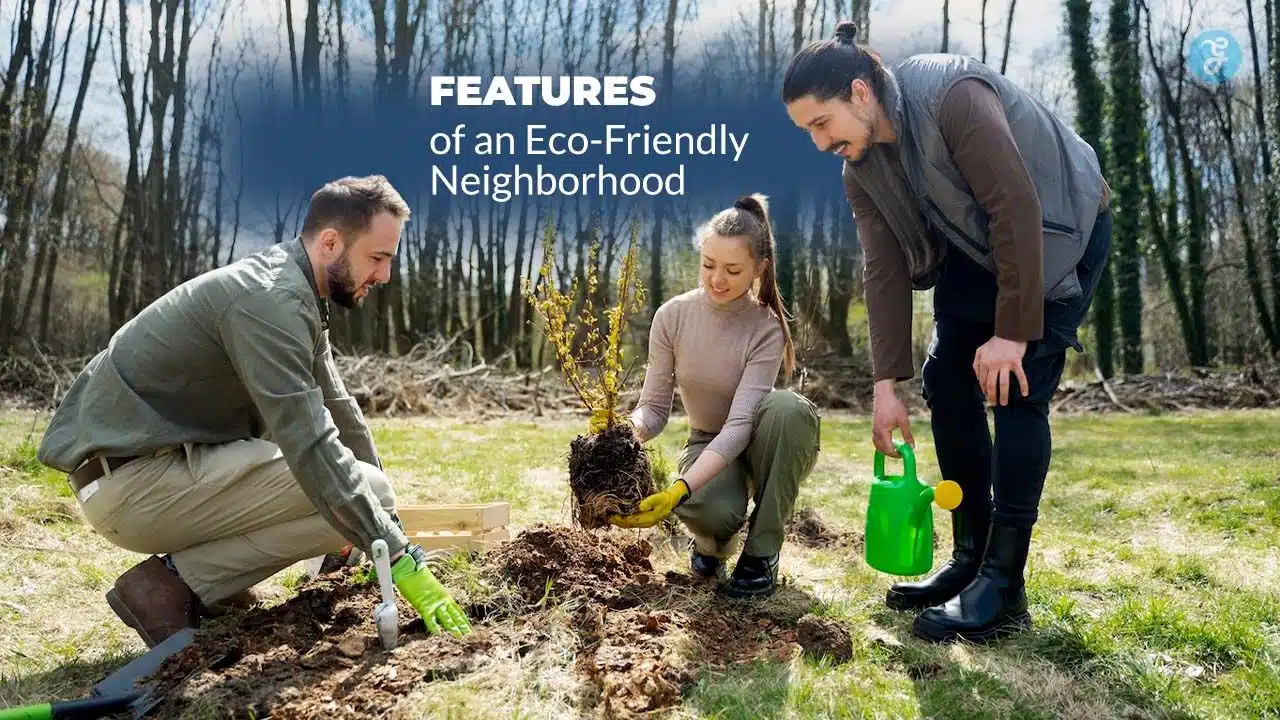
Eco-friendly neighborhoods thrive on community engagement. Active participation in tree planting, recycling drives, and sustainability workshops fosters a culture of shared responsibility.
Examples of Community Involvement:
| Activity | Benefit |
| Tree Planting Events | Increases green cover and promotes environmental awareness. |
| Clean-Up Campaigns | Keeps public spaces clean while raising environmental consciousness. |
| Sustainability Education | Workshops educate residents on energy saving and waste reduction. |
10. Smart and Energy-Efficient Technology
Smart technology enhances sustainability by optimizing resource use. Features like LED lighting, smart grids, and energy-monitoring systems improve efficiency and reduce waste.
Examples of Smart Technology:
| Technology | Benefit |
| Smart Thermostats | Adjust heating and cooling based on occupancy, reducing energy use. |
| LED Lighting | Uses less energy and lasts longer than traditional lighting. |
| Energy Monitoring Systems | Helps track and reduce energy consumption. |
Takeaway
Eco-friendly neighborhoods represent more than just a housing trend—they are a pathway to a sustainable, healthier future. By integrating the features of an eco-friendly neighborhood, such as green spaces, renewable energy solutions, and community involvement, these spaces offer a comprehensive approach to modern living that respects and preserves the environment.
The benefits of such neighborhoods are far-reaching. Residents enjoy improved health and well-being, reduced utility costs, and a stronger sense of community. Beyond individual gains, these neighborhoods contribute to global efforts to combat climate change by reducing carbon footprints and promoting sustainable practices.
As we look toward the future, building and advocating for eco-friendly neighborhoods will play a vital role in shaping resilient and environmentally conscious communities. Whether you’re a homeowner, urban planner, or policymaker, understanding and implementing these features can drive meaningful change. Together, we can create neighborhoods that not only sustain but also thrive for generations to come.