Epic Games is once again turning to the courts to challenge Apple’s refusal to restore Fortnite to the U.S. App Store. In a fresh legal filing, the gaming company urged U.S. District Judge Yvonne Gonzalez Rogers to order Apple to review and approve Fortnite if the submission meets Apple’s own App Store guidelines.
Epic argues that Apple’s inaction violates an earlier federal court ruling — one that explicitly prevents Apple from rejecting apps simply because they include links to external payment methods.
The filing, submitted late Friday, includes a letter from Apple stating that it will not review Fortnite’s latest submission until the U.S. Ninth Circuit Court of Appeals makes a decision on Apple’s request for a partial stay of the injunction currently in place. Apple says it is waiting for legal clarity before it acts. Epic, however, sees it differently — calling Apple’s refusal to act a clear case of “retaliation” stemming from the years-long legal feud between the two tech giants.
Epic Says Apple Backtracked on Its Word
According to Epic’s legal team, Apple had “expressly and repeatedly” assured both Epic and the court that it would approve a new version of Fortnite as long as the app met App Store guidelines. Epic insists its latest version does just that. The company says it has followed the rules, and therefore, Apple has no legal grounds to delay or deny its submission.
Epic further emphasized that it had already submitted Fortnite twice to the U.S. App Store. The most recent version includes content aligned with the European Union release of the game — a move likely aimed at ensuring cross-market consistency. But rather than reinstating Fortnite in the U.S., Apple has instead removed the game from the EU App Store as well.
This global takedown raised new concerns. Epic alleges that Apple’s refusal to approve the U.S. version triggered cascading effects that caused Fortnite to be unavailable in Europe too. Apple, however, disputes this characterization. It claims it only asked Epic to resubmit the app without the U.S. storefront listed in the app’s metadata to avoid regional conflicts — a request Apple claims was procedural.
Epic Pushes for Court Enforcement and Contempt Ruling
In its filing, Epic asks Judge Gonzalez Rogers not only to enforce her previous injunction but also to hold Apple in contempt once more for non-compliance. The company is seeking a court mandate that would force Apple to approve any Epic submission — including Fortnite — as long as it complies with App Store policies.
Epic’s request is rooted in the judge’s April 2024 ruling, which found Apple in civil contempt for failing to comply with a court order that required it to allow developers to inform users about alternative payment methods. In that decision, the judge sharply criticized Apple’s conduct and even raised the possibility of criminal contempt charges against the company’s executives, including CEO Tim Cook, if violations continued.
Legal experts note that while Gonzalez Rogers didn’t initially mandate Fortnite’s return in her 2021 ruling, the current context — including Apple’s prior commitments and the tone of her recent contempt ruling — might sway the court in Epic’s favor.
Apple’s Argument: Await the Ninth Circuit Decision
Apple remains firm in its stance. The company insists it is acting within its rights by pausing Epic’s app review process until the Ninth Circuit Court of Appeals rules on its request for a partial stay of the injunction. Apple believes that it could face “irreparable harm,” including massive financial losses, if it is forced to comply with the injunction while the appeal remains unresolved.
In Apple’s view, the delay is legally justified and necessary to preserve the status quo while higher courts consider the broader implications of the injunction. But Epic sees this delay as an intentional act to stall competition and punish the company for pushing back against Apple’s tightly controlled app ecosystem.
Background: The Long-Running Legal Fight
The Epic v. Apple saga dates back to 2020, when Epic Games deliberately bypassed Apple’s in-app purchase system in Fortnite, leading Apple to remove the game from the App Store for violating its developer agreement. Epic responded by filing an antitrust lawsuit, accusing Apple of running a monopolistic platform that stifles competition and innovation.
The case culminated in a 2021 ruling by Judge Gonzalez Rogers that largely sided with Apple, finding that Epic had breached its contract. However, the judge also ordered Apple to allow developers to steer users toward alternative payment options — a major blow to Apple’s longstanding 30% commission model.
That ruling has since been the subject of multiple appeals, with both companies trading legal jabs over how the injunction should be interpreted and enforced. The April 2024 contempt ruling came after Epic accused Apple of failing to follow the court’s directive to allow external payment links in apps.
Global Fallout: Fortnite Blocked in the EU
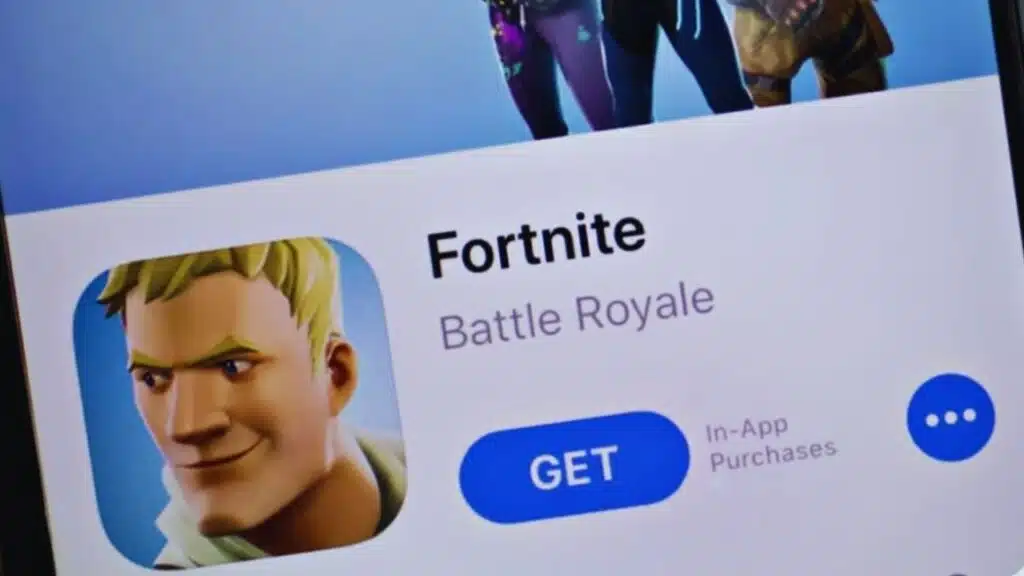
Epic’s troubles with Apple are now spilling across borders. In March 2025, Epic managed to bring Fortnite back to iOS in the European Union under the region’s Digital Markets Act (DMA) — a new law designed to increase competition among digital platforms.
But shortly after Epic submitted the updated version of Fortnite — which included code for both the U.S. and EU storefronts — Apple allegedly responded by removing the game from the EU App Store, citing metadata issues. Epic says Apple demanded separate app builds for each geography, which contradicts Apple’s own guidelines that promote the use of a single global app binary.
As of now, Fortnite is once again inaccessible on iPhones and iPads across both the U.S. and EU, dealing a blow to millions of mobile gamers worldwide.
What’s at Stake for the Industry
This legal fight has wide-reaching implications far beyond Fortnite. It represents a critical test of how much control Apple can exert over its App Store and how freely developers can communicate with users about alternative billing systems.
Epic CEO Tim Sweeney has publicly framed the case as a battle for “digital freedom,” stating that the company has spent over $100 million in legal fees alone. Despite the costs, Sweeney maintains the fight is worth it to protect the rights of developers and consumers.
If Epic prevails, the decision could encourage other developers to challenge Apple’s 30% commission, potentially reshaping the economic model of mobile app distribution. Conversely, a victory for Apple would reinforce the tech giant’s control over the iOS ecosystem.
What Happens Next?
Judge Gonzalez Rogers must now decide whether Apple is indeed in contempt of court once again. If she sides with Epic, the court could order Apple to immediately approve Fortnite and other compliant apps submitted by Epic Games. That would mark a major milestone in this years-long battle and could even prompt further regulatory scrutiny of Apple’s App Store policies.
Until then, the fate of Fortnite — and the broader app economy — remains in legal limbo.
The Information is Collected from The Verge and Bloomberg.