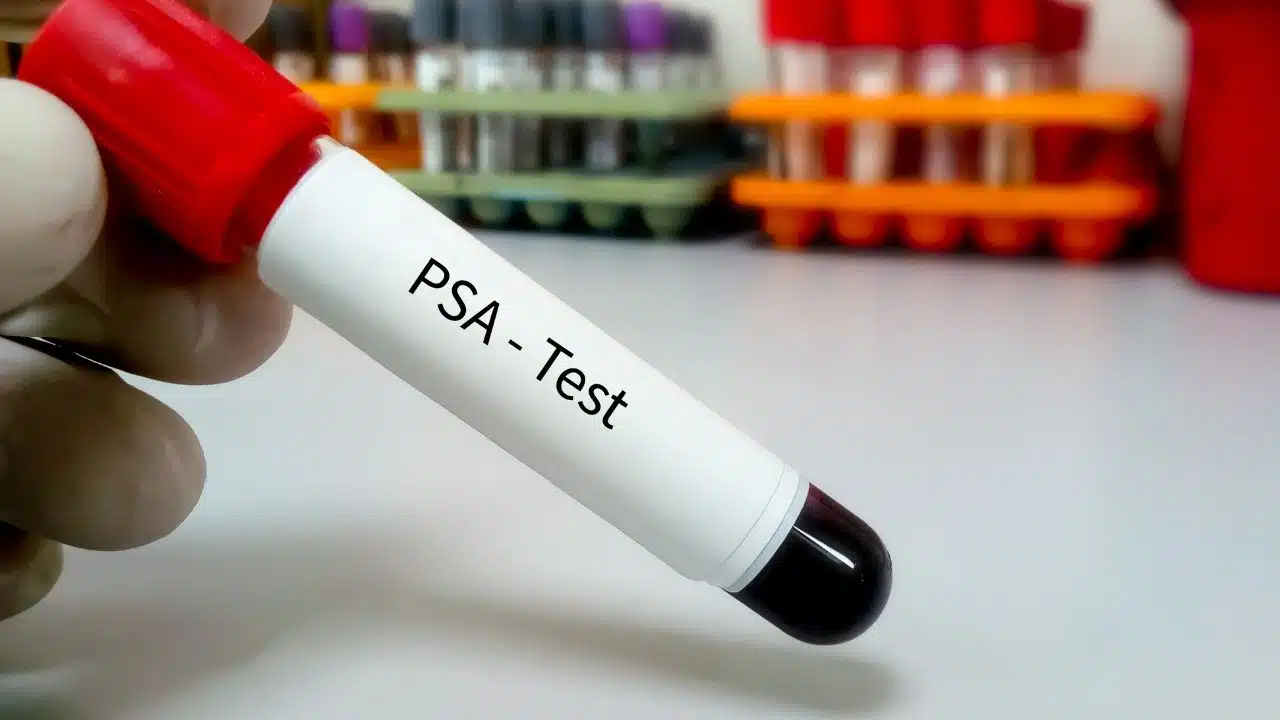
For more than a decade, experts couldn’t make up their minds over the PSA test to screen for prostate cancer. This has confused both doctors and patients. Let’s examine the facts.
What is the PSA test?
PSA stands for Prostate Specific Antigen. Antigens are tiny identification proteins on the surface of prostate cells. Since they are normally shed into the bloodstream where they can be measured, they serve as markers of prostate activity. In adult men, there are normal PSA averages according to age.
In healthy men the PSA concentration in the blood is expected to be small. However, any prostate activity can cause the level to rise. For example, having sex, riding a bike, or even a doctor’s finger exam stimulates the gland, so more PSA is shed. The bump in a PSA test after such activity quickly returns to normal, but men should be told to refrain from such things for a few days before a blood draw. On the other hand, some things that cause a PSA rise are likely to remain unless the source goes away. This includes infection or prostatitis, or a normal aging-related gland enlargement called BPH (benign prostatic hyperplasia). These cause a lingering rising PSA.
Here’s the catch: prostate cancer also makes PSA rise because of tumor activity. Can you see where this is a problem? Cancer is not the only cause of rising PSA, but it might be. How to know?
Who’s Afraid of the Big Bad PSA Test?

In 2012 there were no clear ways to predict if a screening test actually meant cancer. Thus, a government medical advisory board began discouraging broad annual PSA screening. At that time, the only way to know if a suspicious PSA result meant prostate cancer was doing a needle biopsy to test the prostate cells. In fact, a million men each year were sent for a biopsy—and most of them did not have cancer. Yet they had to undergo an often-painful test that had side effect risks. Even worse, the biopsy often gave false positives or false negatives. However, if it was positive for cancer, the next step was usually a radical (whole gland) treatment by surgery or radiation. These procedures left untold numbers of men with urinary, sexual or bowel side effects—sometimes for the rest of their lives. All because the PSA test was inconclusive.
Today’s guidelines recommend that a doctor and patient consider PSA testing on an individual basis. If the test indeed leads to immediate biopsy and immediate aggressive treatment, there’s good reason to fear the “big bad PSA test”. But this is no longer the case! I have good news.
The problems I just identified are solved. There is no more reason to send a man with a suspicious PSA for an immediate biopsy. Thanks to better lab tests and noninvasive prostate imaging, it’s possible to know upfront if a biopsy is needed. There are three simple steps that avoid about a third of biopsies:
- Do a re-test within several weeks to rule out lab error.
- If the result is still high, the patient should have a special kind of imaging scan called a multiparametric MRI (mpMRI). This 3-dimensional, detailed portrait of the prostate will reveal if a suspiciously dangerous-looking area is present. If none is seen, no biopsy is necessary and the next year’s PSA will indicate if there’s still a problem, in which case the MRI will be repeated.
- Additional biomarker tests (blood, urine) are now available that can detect the presence of cancer clues. A doctor can decide if one should be prescribed based on the PSA and MRI results.
The USPSTF could not see how to resolve the dilemma. Thus, their 2018 position is that men who are at low risk for PCa should talk with their doctors about the costs and benefits of a PSA test in their own situation. Sadly, since PSA became optional, the number of men being diagnosed at a later PCa stage has slowly been on the rise, due to the drop in the number of annual PSA tests.
PSA Tests Save Lives and Quality of Life
Here’s more good news: If a biopsy is needed, an MRI-guided targeted biopsy uses a minimal number of needles to sample the numbed-up area visible on the scan—which is the least invasive yet most accurate way to diagnose a tumor. And here’s the best news of all: When prostate cancer is found early—thanks to the PSA test sending up a red flag—chances are it is still low-risk and contained in the gland. At that point, a patient has far more choices than he would have had in 2012! Options include
- hold off on any treatment for the time being, but monitor using PSA and MRI, which is called Active Surveillance;
- have a focal treatment such as Focal Laser Ablation or other outpatient treatment that destroys the tumor while preserving healthy prostate tissue (this controls the cancer yet has minimum risk of side effects) and does not close off any future treatment options;
- have a radical treatment like surgery or radiation using an advanced technology that reduces side effect risks.
Studies show that broad screening saves lives because it’s a gateway to early cancer detection. There’s no longer any reason to avoid a simple blood test due to fear of harsh consequences. With the earlier problems solved, the only side effect of the PSA test is early detection, leading to less invasive treatments with fewer side effect risks. I personally encourage all men starting at age 50 (younger if they have known risk factors) to have an annual PSA test. To my mind, this is a win-win plan for all men.
NOTE: This content is solely for purposes of information and does not substitute for diagnostic or medical advice. Talk to your doctor if you have health concerns or questions of a personal medical nature.