The pace of innovation in night vision technology has been nothing short of breathtaking. A report by Markets and Markets suggests that the night vision device market size was valued at $7.1 billion in 2022 and is expected to grow by 8.4% from 2022 to 2030. With this upward trajectory, the market size could reach $11.2 billion by 2028. This forecasted growth is a testament to the increasing demand and technological advancements in this field.
Night vision technology, once primarily used by military personnel, has now found applications across various sectors. The digital transformation in this arena has improved the clarity and range of vision in low-light conditions and made these devices more accessible to the general public.
As we dive deeper into this topic, we will explore how digital night vision technology has evolved, its current capabilities, and future developments that could further revolutionize our nighttime experiences.
Historical Perspectives on Seeing in the Dark
Our zest for navigating darkness is as old as humankind. Ancient Polynesians have been navigating the dark, virtually seeing through it to navigate the vast oceans. In fact, they used the stars to navigate the vast Pacific Ocean in the dark. These voyages were thousands of nautical miles, and those mariners made countless trips from Hawaii (North Pacific) to Tahiti (South Pacific) and other places beyond any sight of land.
This fascination with nocturnal visibility further materialized with the advent of the first mechanical light-amplification device during World War II.
Origins of night vision technology
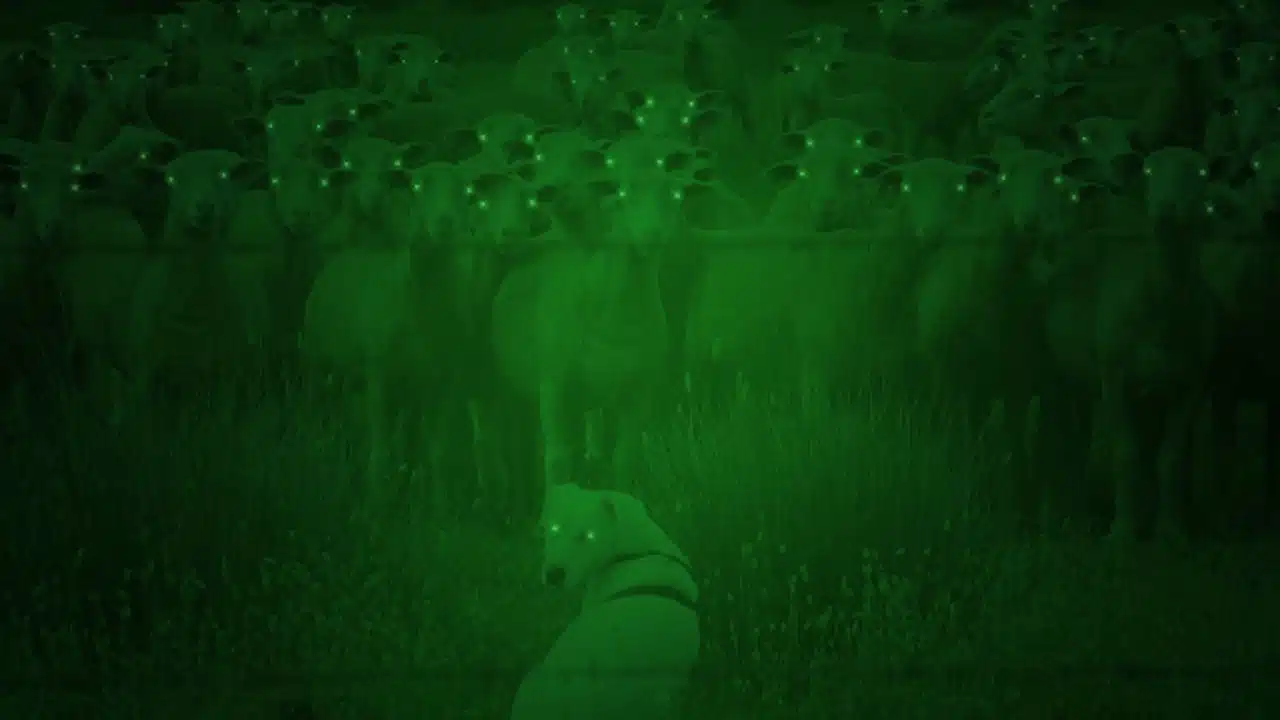
The nascent stage of night vision was marked by bulky Image Intensifier Tubes (IITs) capable of magnifying ambient light. Although a breakthrough, the grainy, green-hued images left much to be desired in terms of clarity and color rendition.
The transition from analog to digital
Digital night vision –- a quantum leap from IITs –- is a confluence of advanced optics, sensors, and image processing algorithms. By leveraging digital sensor technology, it can harvest and intensify minimal light, translate it to digital information, and project a detailed, color-filtered image.
What’s Under the Hood: Understanding Digital Night Vision?
Let’s look into the technology’s anatomy and peer into the intricacies of digital night vision, underscoring what sets it apart from its analog precursor.
Core technologies behind digital night vision
The crux of digital night vision lies in the CMOS and CCD sensors, which churn out clear images by converting light into electrical signals. These sensors work with specialized software to enhance the visual output, providing a crisp depiction of the environment, even in pitch-black conditions.
Key components and operation
A digital night vision device typically comprises a lens system, a photocathode tube, an amplifier, and a display screen. Incoming light photons pass through the lens and meet the sensor. Subsequently, the photocathode converts the photons into electrons, which are then multiplied by the amplifier before being converted back into photons for human discernment on display.
Use Cases of Night Vision Technology Across Sectors
The reach of digital night vision stretches across multiple spheres, each reaping unique benefits from this after-dark prowess. Here are a few use cases of this technology:

Military and security
In defense and security, the ability to observe enemy movements covertly, even during moonless nights, is a strategic boon. The digital edge also offers features like image recording and data sharing, fostering intelligence and surveillance operations.
Aside from the military, night vision technology has found its way into security cameras. These devices leverage the enhanced vision of digital night vision to monitor areas with low or no light, keeping people and property safe.
Wildlife and environmental research
Researchers and conservationists are turning to digital night vision to minimize intrusion in natural habitats. It aids in non-invasive observation of nocturnal species and has even enabled discoveries of new behavioral patterns and species placements.
Cars and the automotive industry
The automotive world is steering into the future with Head-Up Displays (HUDs) and Advanced Driver-Assistance Systems (ADAS), including digital night vision. This integration significantly improves driver safety, projecting enhanced images of the road ahead and alerting to potential hazards obscured by darkness or weather, thereby reducing accidents.
Advancements in Digital Night Vision
Ongoing R&D and commercial competition continue to refine digital night vision, ushering in enhancements that redefine how we see in the dark.
Enhancing the image quality
Advancements have brought about substantial enhancements in image quality, addressing the graininess and pixelation issues that plagued early models. High-resolution screens and state-of-the-art image processing algorithms now offer clear, detailed displays that match and sometimes surpass daytime footage.
Integration with other technologies
The growth of digital ecosystems has allowed seamless integration of night vision with other smart devices, opening up hitherto inconceivable scenarios. From wirelessly streaming live feeds to virtual and augmented reality applications, the amalgamation with other technologies amplifies the utility of digital night vision across the board.
The Boundless Horizon of Digital Night Vision
The future of digital night vision appears limitless, with advancements paving the way for even more innovative applications. Integrating digital night vision into various aspects of our lives promises to enhance safety and open new possibilities for exploration and innovation. The ongoing development in this field is a testament to human ingenuity, demonstrating our relentless pursuit of breaking boundaries and improving our interaction with the world around us, even in the dark.