

Navigating the digital landscape requires a clear understanding of where your audience spends their time and how they consume content. While both platforms exist under the Meta umbrella, they serve distinct purposes and facilitate different types of social interaction. Recognizing these nuances is essential for anyone looking to build a personal brand or scale a business through social media.
How We Selected Our 5 Key Instagram vs Facebook Differences
To identify the most critical points of divergence, we examined user behavior data and platform-specific features. Our goal was to highlight differences that impact how users perceive information and how creators should tailor their approach.
The following benchmarks were utilized to filter the numerous technical variations into the most significant functional differences.
| Selection Metric | Focus Area | Relevance Level |
| User Demographics | Age groups and geographic distribution | High |
| Content Consumption | How users interact with photos versus text | Very High |
| Marketing Efficacy | Conversion rates and organic reach potential | High |
| Interaction Style | Public sharing versus private community building | Medium |
Understanding these criteria helps clarify why certain platforms perform better for specific types of communication.
The Fundamental Distinctions in the Instagram vs Facebook Ecosystem
Success on social media depends on matching your message to the environment of the platform. These five differences explain why a single strategy rarely works across both networks and how you can optimize your presence for each.
1. Target Audience Demographics and User Age
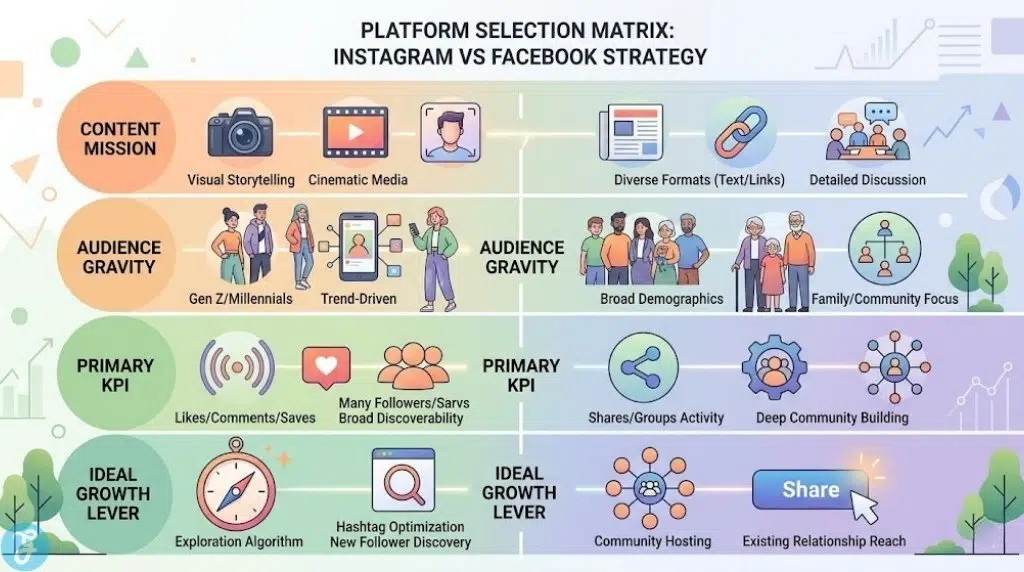
The most visible difference between the two platforms is the age of the people who use them most frequently. Instagram tends to attract a younger audience that prioritizes aesthetics and trend-driven content. In contrast, Facebook maintains a broader user base that includes older generations who use the platform for family updates and local community news.
Best for:
-
Brands targeting Gen Z and Millennials who value visual storytelling.
Why We Chose It:
-
It dictates the tone and language used in successful posts.
-
Age data is a primary factor in setting up effective advertising campaigns.
-
It explains why certain cultural trends go viral on one platform but not the other.
Things to consider:
-
Younger users are increasingly moving toward short-form video on both platforms.
As the audience changes, the actual format of the content must also shift to meet their expectations.
2. Visual Focus versus Information Sharing
Instagram was built as a mobile-first, visual platform where the image or video is the primary focus of every post. Facebook allows for a much more diverse range of content, including long-form text, external links, and complex event pages. This makes one better for inspiration and the other better for detailed discussion or coordination.
Best for:
-
Creators who want to showcase high-quality photography or cinematic video.
Why We Chose It:
-
Visual quality directly affects the engagement rate on Instagram.
-
Facebook handles link sharing and outbound traffic much more effectively.
-
The user interface of each platform is designed around these specific content types.
Things to consider:
-
Text-only posts on Facebook can often reach more people than images in certain groups.
The way people interact with this content also varies significantly based on the platform’s social architecture.
3. Engagement Styles and Community Interaction
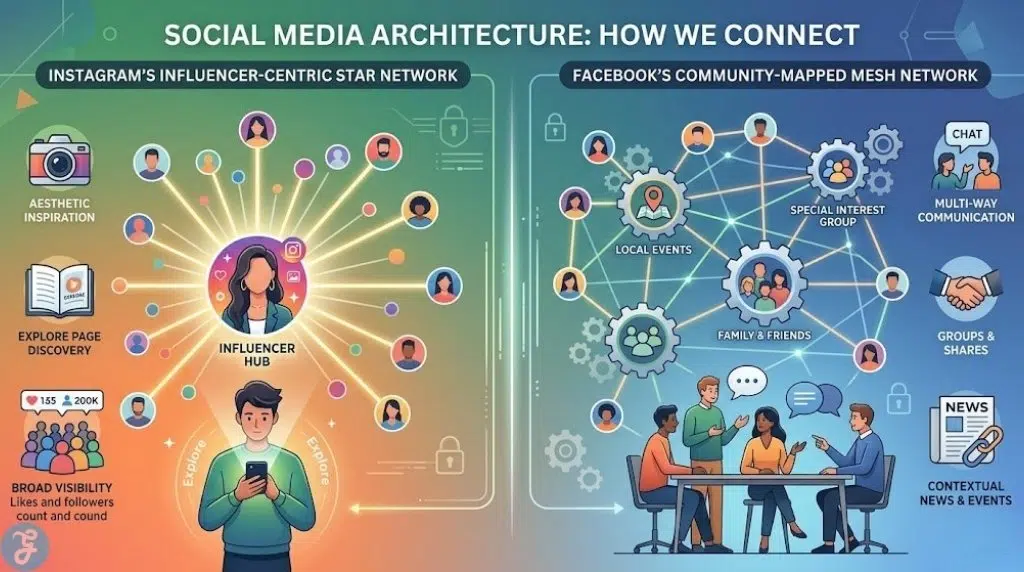
Engagement on Instagram is often quick and fleeting, characterized by likes and short comments. Facebook encourages deeper interactions through its Groups feature, where users join specific communities to discuss niche interests or local events. This creates a difference between broad, shallow popularity and deep, focused community building.
Best for:
-
Building a tight-knit community or hosting detailed discussions.
Why We Chose It:
-
Groups are currently the most active part of the Facebook experience.
-
Instagram engagement is driven more by influencers and public discovery.
-
The “Share” function is a more powerful tool for virality on Facebook.
Things to consider:
-
Managing a Facebook Group requires more moderation than an Instagram profile.
Platform functionality also dictates how effectively you can drive traffic to external websites or stores.
Instagram relies heavily on hashtags and the Explore page to help users find new content they might like. Facebook discovery is more tied to personal connections and the specific pages or groups a user has already followed. This means Instagram is often better for reaching new people, while Facebook is better for maintaining existing relationships.
Best for:
-
New businesses looking to get discovered by a wider audience without ads.
Why We Chose It:
-
The Explore algorithm is highly effective at surfacing relevant niche content.
-
Facebook’s news feed is increasingly focused on friends and family content.
-
Hashtag strategy remains a vital part of growth on Instagram.
Things to consider:
-
Search functionality on Facebook is often better for finding specific old posts or events.
Finally, the way users think and feel while browsing each app influences how they react to your content.
5. User Intent and Browsing Mindset
Users typically open Instagram for entertainment, inspiration, or to see what is trending in the visual world. People often visit Facebook for a more utility-driven experience, such as checking for event details, reading news, or looking for items on the Marketplace. Matching your content to this mindset is the key to achieving high engagement.
Best for:
-
Product discovery and lifestyle inspiration.
Why We Chose It:
-
It explains why “shoppable” posts feel more natural on Instagram.
-
Facebook users are more likely to engage with informative or news-based content.
-
Understanding intent helps in creating content that doesn’t feel intrusive.
Things to consider:
-
The mindset can shift depending on the time of day or the device being used.
An Overview Of Instagram vs Facebook Strategies
Choosing the right platform involves looking at how these differences align with your specific goals. The following breakdown provides a quick reference for the strengths of each network in a professional context.
The information provided below highlights where each platform excels in the modern digital landscape.
| Feature | Instagram Strength | Facebook Strength |
| Primary Format | Photos and Reels | Links and Text |
| Best Audience | 18 to 34 year olds | 35 to 65+ year olds |
| Growth Tool | Explore and Hashtags | Groups and Shares |
| Buying Intent | Visual Inspiration | Practical Research |
Our Top 3 Differences and Why?
While all five points are important, these three represent the most significant hurdles for creators.
-
Target Demographics: This is the starting point for every marketing plan.
-
Visual vs Information: This determines how you spend your content creation budget.
-
Community Interaction: This dictates how you will spend your time managing the audience.
How to Choose the Right Platform Between Instagram vs Facebook for Your Content?
Determining where to focus your energy requires an honest look at your resources and your message. By following a simple selection framework, you can avoid wasting time on a platform that does not support your primary objectives.
-
Audit Your Assets: Decide if you have the capability to produce high-quality visual content consistently.
-
Define Your Goal: Determine if you want to drive traffic to a website or build a visual brand identity.
-
Identify Your Audience: Research where your ideal customer or follower spends their leisure time.
To help you decide where to post your next update, consider the following logic based on your immediate needs.
| Choose Instagram if… | Choose Facebook if… |
| Your message is best told through a short video. | You need to share a link to a blog post or news article. |
| You want to reach a younger, trendy demographic. | You are organizing a local event or community meetup. |
| You are selling products that are highly visual. | You want to foster long-form discussions in a group. |
The Final Checklist
-
[ ] Identify the primary age group you are trying to reach.
-
[ ] Determine if your content is better as an image or a text post.
-
[ ] Check if you need to drive users to an external website link.
-
[ ] Decide if you want to build a public following or a private group.
-
[ ] Assess if you have the time for high-frequency visual updates.
Shaping Your Social Media Presence
Choosing between these platforms is not about finding which one is better, but rather which one is better for you right now. By tailoring your content to the specific strengths of each network, you ensure that your message reaches the right people in a way that feels natural to them.
Frequently Asked Questions About Instagram vs Facebook
Can I post the same content to both platforms at once?
Answer: You can use tools to cross-post, but it is rarely effective because the formatting requirements and user expectations are so different. It is better to tweak the caption and image size for each network.
Which platform is better for small businesses?
Answer: Instagram is often better for product-based businesses that rely on visuals, while Facebook is superior for service-based businesses that need to build local trust. Both can be effective if used correctly.
Does Facebook own Instagram?
Answer: Yes, both platforms are owned by Meta, which allows you to run ads across both networks simultaneously through a single dashboard. This integration makes managing paid campaigns much simpler.
Is organic reach dead on Facebook?
Answer: Organic reach on pages has declined, but it is still very high within Facebook Groups where users are actively looking for specific topics. For pages, you often need to use a mix of video and paid promotion.
Which platform has better privacy settings?
Answer: Both platforms offer extensive privacy controls, but Facebook provides more granular options for who can see specific posts, whereas Instagram is generally either fully public or fully private.





















