

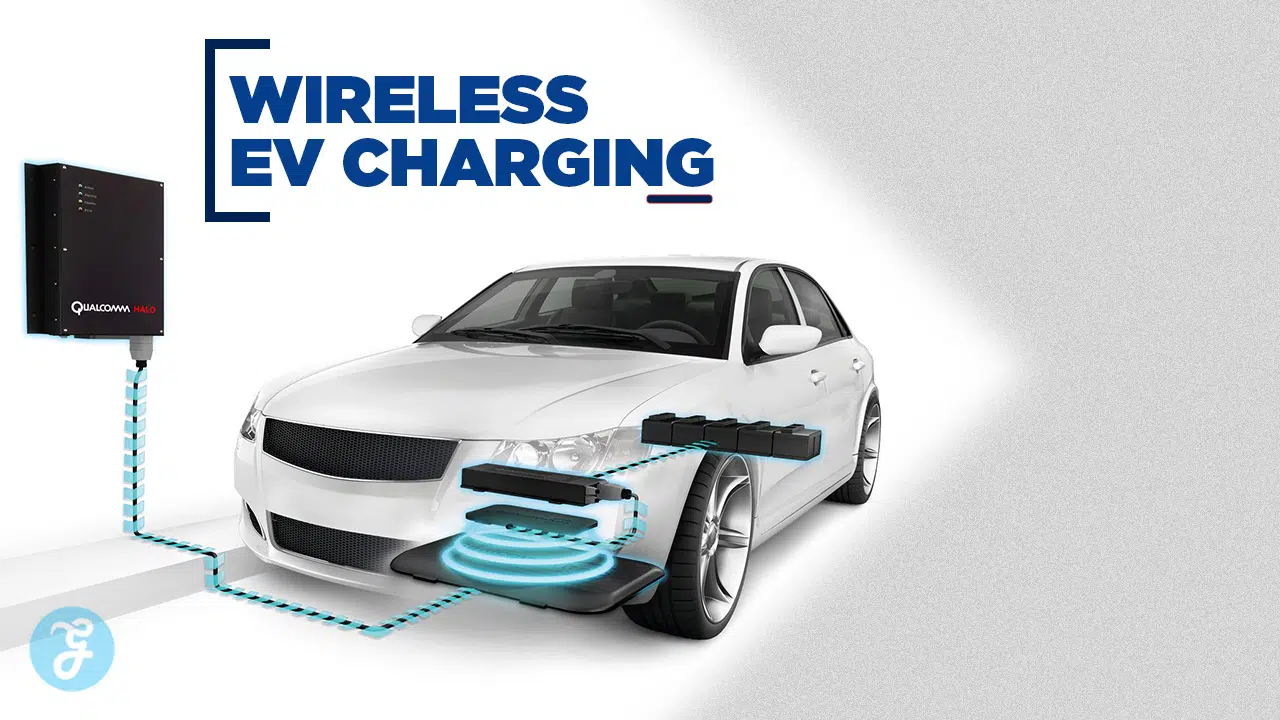
Charging an electric vehicle often feels like a necessary evil. You have to untangle cables, navigate broken connectors, or stand in the rain waiting for an app to sync. While plugging in is the standard today, it is also the single biggest friction point for new adopters.
Wireless EV Charging removes this physical step entirely by using magnetic fields to transfer energy. This technology is not just about laziness; it is the missing link for fully autonomous vehicles that cannot plug themselves in.
This guide breaks down the real-world efficiency of these systems, the price difference compared to standard chargers, and the specific companies driving this shift in the United States.
We will look at the data, the costs, and the road ahead.
What is Wireless EV Charging?
Wireless EV charging, formally known as inductive charging, uses electromagnetic fields to transfer energy between two copper coils—one on the ground and one on the car. It eliminates the need for physical cords, similar to how you might charge a modern smartphone, but on a much larger scale.
Definition and Overview
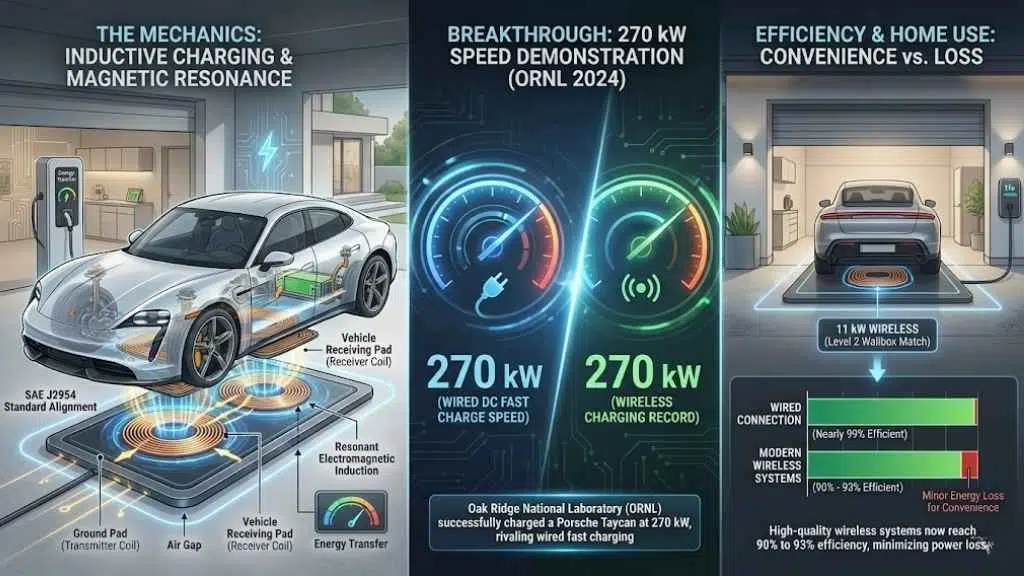
The core technology relies on the principle of resonant electromagnetic induction. A ground pad (the transmitter) creates a magnetic field, which the vehicle’s receiving pad captures and converts back into electricity for the battery.
While early versions were slow, modern systems are governed by the SAE J2954 standard, which was solidified in 2024 to ensure safety and interoperability across different automakers.
“Recent breakthroughs have shattered old power limits. In 2024, researchers at Oak Ridge National Laboratory (ORNL) successfully wirelessly charged a Porsche Taycan at 270 kW. That is comparable to the speed of a wired DC Fast Charger, proving this tech is ready for more than just overnight top-ups.”
How it Works: Magnetic Resonance and Inductive Charging
The process begins when you park your vehicle over a charging pad. The system detects the car’s presence and aligns the magnetic frequency between the two coils. Once connected, the energy bridges the “air gap”—the space between the ground and the car chassis.
Current commercial systems for home use typically operate at 11 kW, which matches the speed of a standard Level 2 wallbox. This efficiency is critical; while wired connections are nearly 99% efficient, high-quality wireless systems now reach 90% to 93% efficiency. This means you lose very little power for the convenience of never touching a cable.
Types of Wireless EV Charging
Wireless charging is not a one-size-fits-all solution. The hardware required for an electric scooter is vastly different from what powers a city bus.
The industry categorizes these systems by power level and vehicle type.
| Category | Power Level | Best Use Case |
|---|---|---|
| Light Duty | < 1 kW | Scooters, E-bikes, Drones |
| Medium Duty | 3.3 kW – 22 kW | Passenger Sedans, SUVs, Robotaxis |
| Heavy Duty | 50 kW – 450 kW+ | City Buses, Delivery Trucks, Semis |
Light Duty Wireless Charging (1 kW and Below)
Light duty systems are designed for micromobility. Electric scooters and e-bikes use these small, low-power pads to keep fleets charged without labor-intensive battery swapping.
For example, shared scooter operators use this tech to force users to park in designated “charging zones,” which solves the problem of scooters cluttering sidewalks. These systems are simple and inexpensive. They do not require liquid cooling or complex alignment sensors because the power transfer is low. The main goal here is organization and trickle charging rather than speed.
Medium Duty Wireless Charging (3.3 kW – 50 kW)
This category covers almost all passenger electric vehicles. Most home wireless chargers, like the WiTricity Halo, target the 11 kW “sweet spot.” This speed allows a typical EV, such as a Tesla Model Y or Ford Mustang Mach-E, to fully recharge overnight. Manufacturers are beginning to integrate this at the factory level. For instance, the Genesis GV60 has been used extensively in pilot programs to test factory-installed receiver pads.
For the consumer, the experience is seamless: you pull into your garage, and the car begins charging automatically. There is no need to handle heavy cables, which is a significant benefit for drivers with limited mobility.
Heavy Duty Wireless Charging (75 kW and Higher)
Heavy duty charging is where the economic case is strongest. Transit agencies use these high-power systems to charge buses during short layovers. Link Transit in Wenatchee, Washington, serves as the gold standard for this technology in the US. They operate a fleet of over 20 electric buses that use **300 kW** wireless chargers from InductEV. These buses charge for just a few minutes at each stop, allowing them to run 24 hours a day without returning to a depot.
This “opportunity charging” means the buses can carry smaller, lighter batteries, which increases their passenger capacity and efficiency. The success in Washington proves that wireless charging can completely replace diesel refueling for heavy transit.
Key Advantages of Wireless EV Charging
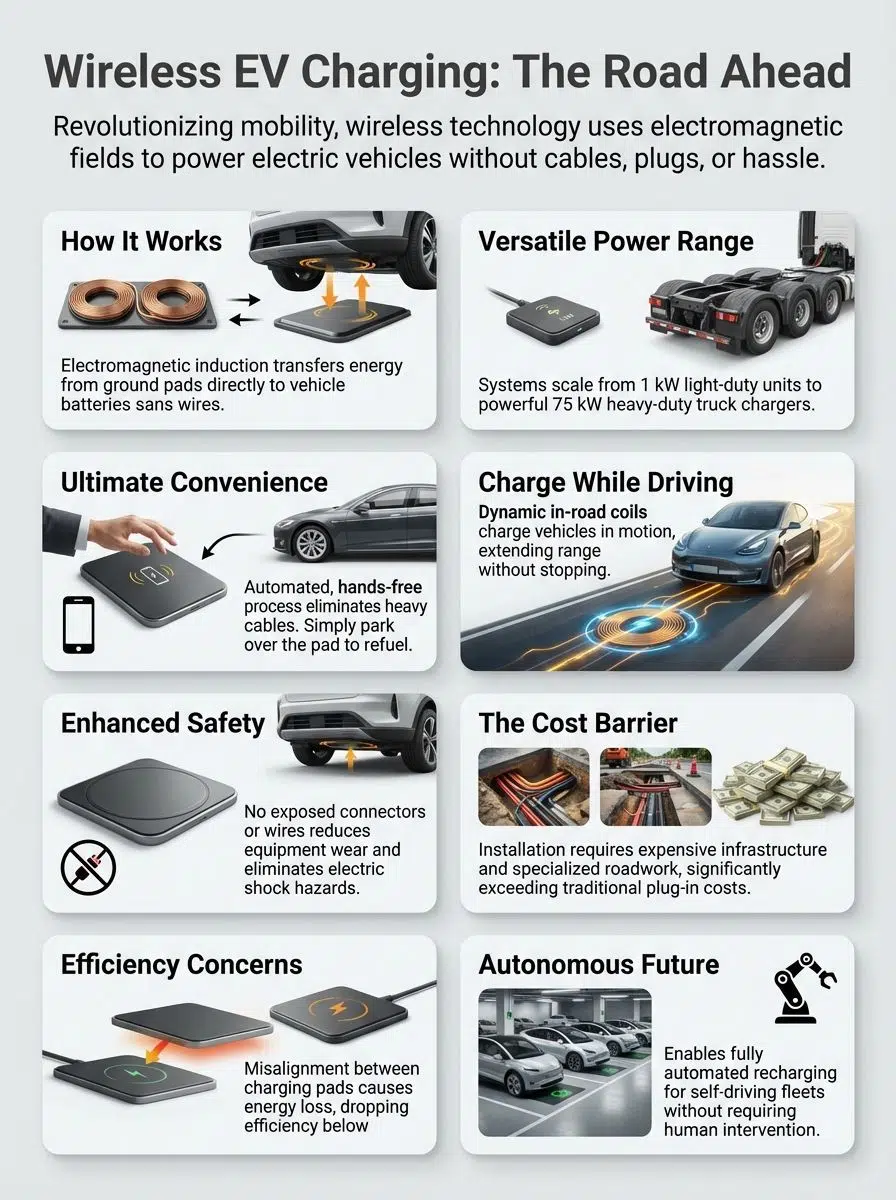
The benefits of wireless charging extend beyond just not having to plug in. For commercial fleets and autonomous future planning, it solves expensive operational problems.
- True Automation: It enables the “park and forget” experience. For future autonomous robotaxis, this is mandatory, as there is no driver to step out and plug in the car.
- Reduced Maintenance Costs: Physical charging guns are the most frequently broken part of public chargers. Removing the connector eliminates mechanical wear and tear, saving fleet operators thousands in repairs.
- Vandalism Proof: With no copper cables exposed, there is nothing for thieves to steal—a growing issue for charging stations in cities like Los Angeles and Seattle.
- Weather Resilience: You never have to handle wet, dirty, or frozen cables. The systems are fully sealed and work perfectly through rain, snow, and ice.
Convenience and Automation
The primary draw for regular drivers is simplicity. You park your car, and it charges. The system communicates with your vehicle via Wi-Fi or Bluetooth to handle payment and authentication instantly. This frictionless experience is what companies like Tesla are betting on for their upcoming autonomous taxi networks.
Enhanced Safety and Durability
Traditional plugs wear out. The constant friction of plugging and unplugging degrades the pins, leading to connection faults. Wireless pads are encased in durable resin and concrete, meaning they can be driven over without damage. Because there are no exposed metal contacts, the risk of electric shock is effectively zero, even if the parking spot is flooded.
Dynamic Charging: Charging While Driving
Dynamic charging is the holy grail of EV infrastructure. It involves embedding coils under the asphalt to charge vehicles as they drive over them. Electreon has successfully deployed this in Detroit on 14th Street. This quarter-mile pilot allows modified Ford E-Transit vans to pick up energy while moving. By Spring 2026, officials plan to expand this project to a stretch of Michigan Avenue. If successful, this technology could allow heavy trucks to travel interstate distances without ever stopping to recharge, fundamentally changing how we transport goods.
Challenges of Wireless EV Charging
Despite the advantages, wireless charging has not yet replaced the plug. Cost and physical limitations remain significant hurdles that the industry is working to clear.
Higher Installation and Infrastructure Costs
Wireless convenience comes with a premium price tag. While a standard Level 2 home charger might cost $600 to buy and install, a wireless system like the WiTricity Halo can cost between $3,500 and $4,000 installed. This includes the ground pad, the wall box, and the labor to install the receiver on the vehicle.
For public infrastructure, the costs are even higher. Digging up roads to install dynamic charging coils involves expensive civil engineering work. Until these costs come down, wireless charging will likely remain a premium feature rather than the default standard.
Efficiency Losses Compared to Plugged Charging
Physics dictates that transferring power through the air is less efficient than through a copper wire.
However, the gap is closing. The Efficiency Reality Check:
- Wired Charging: Typically 98-99% efficient from wall to car.
- Wireless Charging: Typically 90-93% efficient from grid to battery.
While a 7% loss sounds small, it adds up over the lifetime of a vehicle. For a fleet of buses, that wasted energy represents a real operational cost that managers must weigh against the savings in maintenance.
Retrofitting Requirements for Standard EVs
Most electric cars on the road today are not “wireless ready.” To use these systems, you currently need to install an aftermarket receiver kit. This retrofit process is invasive; it requires bolting a heavy pad to the underside of the car and splicing into the high-voltage battery system.
This modification can cost upwards of $3,000 and may void the manufacturer’s warranty. Until automakers like Ford, Hyundai, and Tesla build these receivers into the chassis at the factory, adoption will be slow.
Leading Companies in Wireless EV Charging
A few key players are dominating the US market, each carving out a specific niche from residential to heavy transit.
WiTricity
WiTricity is the biggest name in consumer wireless charging. Based in Massachusetts, they hold many of the foundational patents for magnetic resonance technology. Their flagship Halo system delivers 11 kW of power, making it the top choice for residential applications. They have licensed their technology to major suppliers, meaning when you see a factory-installed wireless option on a future EV, it is likely using WiTricity tech.
Electreon
Electreon specializes in the road itself. They are the company behind the famous Detroit 14th Street dynamic charging pilot. Their focus is on “Electric Roads”—infrastructure that powers buses and trucks while they move. This approach allows for smaller batteries in commercial vehicles, as they can sip power continuously throughout their route.
Plugless Power
Plugless Power was one of the first to market with aftermarket kits for the Nissan LEAF and Tesla Model S. They provide a retrofittable solution that lets owners of older EVs upgrade to wireless charging. While they focus on the consumer retrofit market, their systems have proven that the technology is durable enough for years of daily use.
InductEV
Formerly known as Momentum Dynamics, InductEV is the leader in high-power commercial systems. Their success with the Link Transit fleet in Washington proves their hardware works in harsh real-world conditions. Their pads deliver up to 450 kW, which is necessary for keeping municipal buses running all day. They focus strictly on fleets, taxi queues, and port vehicles, where the return on investment is immediate due to labor savings.
Future Prospects of Wireless EV Charging
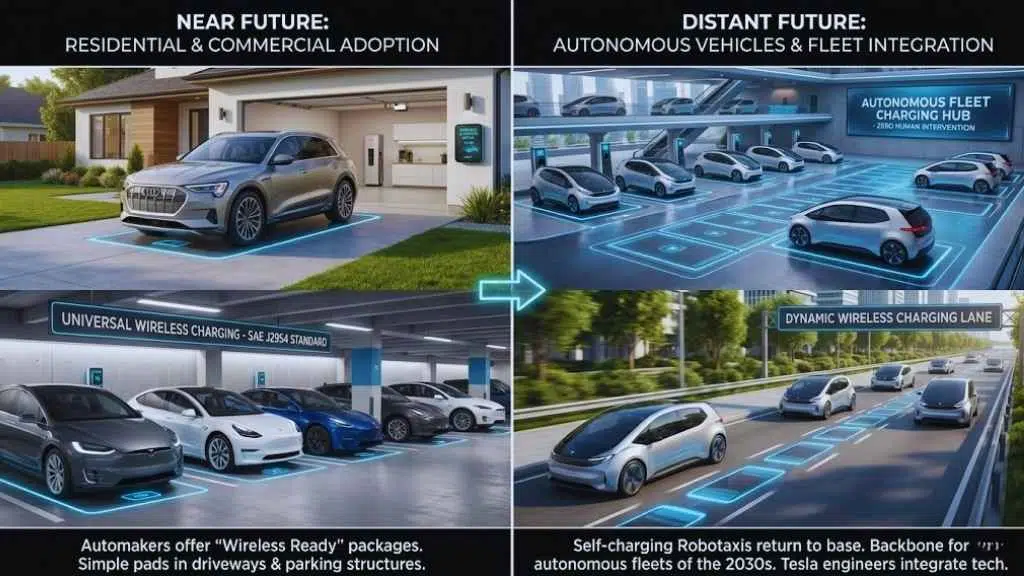
The technology is maturing fast, moving from science projects to commercial products.
Adoption in Residential and Commercial Sectors
As the SAE J2954 standard becomes universal, we will see more automakers offer “Wireless Ready” packages. This will likely start with luxury vehicles where the $4,000 premium is less of a barrier. Eventually, simple pads will become common in premium parking structures and private driveways, making plugging in feel as outdated as hand-cranking a window.
Integration with Autonomous Vehicles and Fleets
This is the inevitable end-game. Tesla heavily hinted at this direction by acquiring engineers from wireless charging firm Wiferion in 2023. For a Robotaxi to be truly viable, it must be able to return to a base and charge itself without human help. Wireless charging is the only robust solution for this, serving as the backbone for the autonomous fleets of the 2030s.
Final Words
Wireless EV charging transforms the electric vehicle experience from a manual chore into a seamless background process. While costs are currently high—often exceeding $3,500 for a home setup—the convenience and maintenance benefits are undeniable, especially for commercial fleets.
Innovations from companies like WiTricity and InductEV are closing the efficiency gap, while projects like Detroit’s electric road prove the tech works in the real world. As autonomous driving nears reality, the plug will eventually disappear. For now, the future of charging looks invisible, efficient, and easier than ever.






















