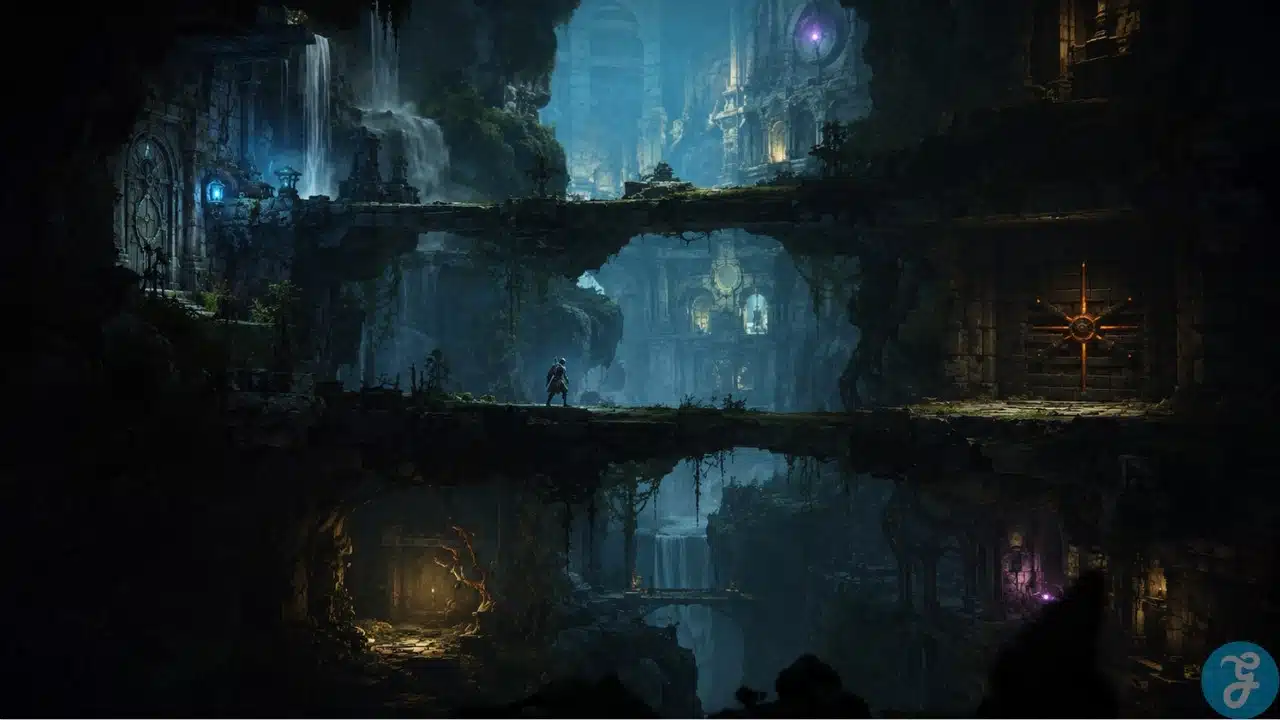
Walking face-first into a locked door, a ridiculously high ledge, or a boss that pulverizes your character in two hits can feel incredibly frustrating. In most video games, that is a sign of poor pacing or bad balancing. In this specific corner of the gaming world, however, getting hopelessly blocked is exactly the point. Here is the Metroidvania Genre Explained through the lens of what actually makes these games tick, moving past the basic historical trivia to look at how they turn hitting a brick wall into a deeply satisfying gameplay loop.
What Actually Makes a Game a Metroidvania
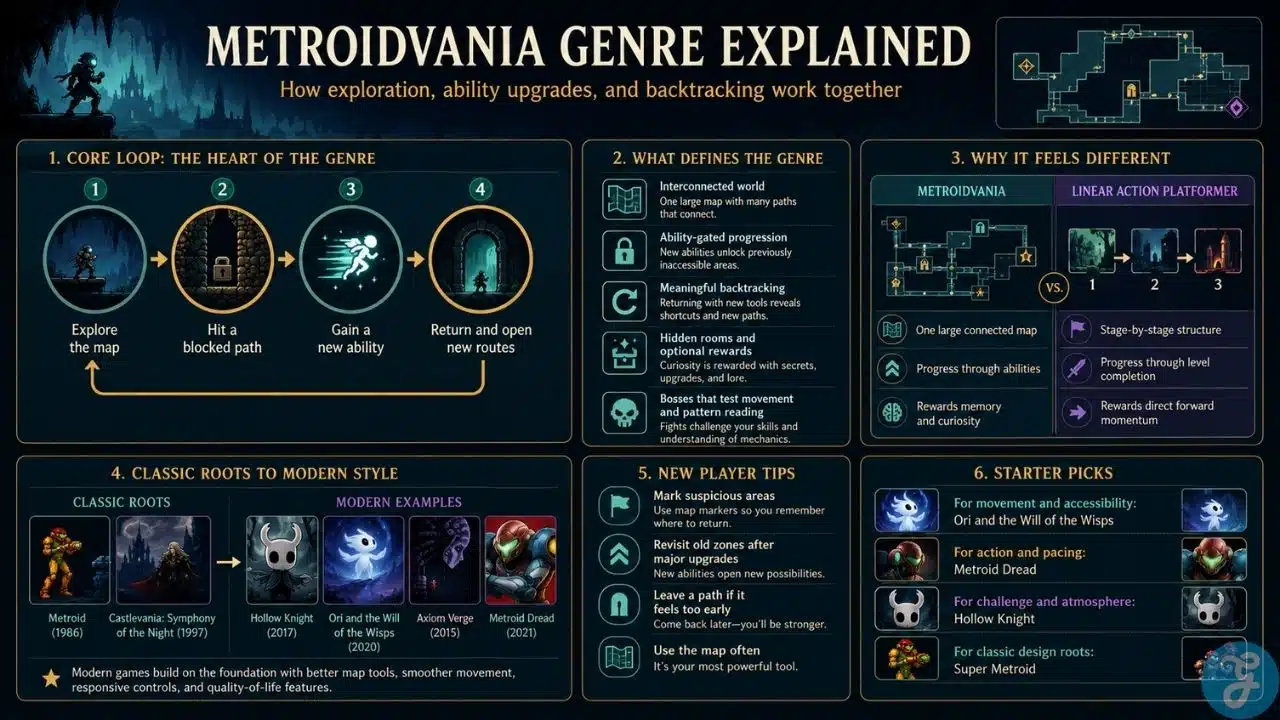
Instead of picking separate stages from a linear main menu, you are dropped into one massive, interconnected world map. This layout functions like a giant spiderweb of distinct zones, ancient tunnels, and vertical shafts that constantly loop back into each other.
You do not progress through this world by simply racking up experience points or reaching a traditional exit door. You progress by expanding how you move. Getting a classic double jump, a high-speed dash, or a grappling hook completely changes how you look at the architecture of the game. A gap that looked impossible to cross an hour ago suddenly becomes a clear invitation to discover a new boss encounter, a hidden upgrade, or an entirely new region of the map.
A basic platformer challenges you to clear a series of obstacles to reach the end of a level. A Metroidvania challenges you to thoroughly understand a living environment.
The Two Sides of the Family Tree
The genre name is a mashup of Metroid and Castlevania, representing two core design philosophies that still shape modern games.
The Metroid side of the family tree favors isolating atmospheres, quiet exploration, and letting the player figure things out on their own. Super Metroid remains the gold standard for this approach. It completely trusts the player, using subtle visual cues, enemy placements, and room architecture to guide you through a hostile alien world without ever resorting to a heavy-handed tutorial or an intrusive quest tracker.
Castlevania: Symphony of the Night took that foundational maze-like structure and injected it with deep role-playing elements. Suddenly, exploration was rewarded with weapon drops, armor stats, leveling systems, and magical spells. You were not just collecting tools to bypass environmental obstacles; you were actively customizing a character build to survive increasingly brutal combat encounters.
Modern developers constantly pull from both lineages. Hollow Knight captures that lonely, tense environmental storytelling of classic Metroid while incorporating demanding combat. Meanwhile, titles like Bloodstained: Ritual of the Night lean directly into the stat-heavy, loot-dropping mechanics of the Castlevania tradition.
The Reality of Backtracking
Trudging backward through areas you already cleared is the single feature that can make or break a game in this genre.
When a developer gets it right, backtracking creates a genuine lightbulb moment. You remember a strange, out-of-reach ledge from three hours ago, sprint back to it with your newly unlocked wall-climb ability, and feel incredibly clever for connecting the dots. The world feels hand-crafted and deliberate, rewarding your memory and attention to detail.
When it is done poorly, backtracking feels like cheap padding designed to artificially extend the length of the game. You find yourself running through the exact same hallways, fighting the exact same low-level respawning enemies, only to find a minor collectible that does not actually help you progress. Great world design respects your time by opening up hidden shortcuts, placing fast-travel points logically, or providing movement upgrades that allow you to sprint through early-game zones in a fraction of the time it originally took.
The Evolutionary Shift in The Metroidvania Genre
| Feature | Classic Roots | Modern Interpretations |
| Player Guidance | Minimal signposting; high chance of getting totally lost | Optional map markers and flexible quality-of-life tools |
| Difficulty Curve | Punishing checkpoints and occasionally cryptic secrets | Smoother retry loops balanced by high-skill boss checks |
| Movement Feel | Starts heavy, unlocking utility gradually | Incredibly fluid and kinetic right from the opening screen |
Common Mental Traps for New Players
Navigating an unmapped world requires a completely different mindset than a standard action game. If you are diving into the genre for the first time, keep these habits in mind.
-
Stop trying to force your way through an impossible jump. If a ledge is just out of reach, you are likely missing a mandatory movement tool. Do not waste thirty minutes trying to glitch your way up. Mark the spot on your map and move on to a different corridor.
-
Get comfortable reading the map screen. Look closely for those tiny, uncolored openings on the borders of your map lines. Those gaps almost always point directly toward an unexplored room or a hidden breakable wall.
-
Do not stress about finding absolutely everything immediately. Chasing a 100 percent completion rate before you even have your full movement toolkit unlocked will only lead to burnout. Focus on pushing the main path forward first.
-
Change how you view a dead end. A locked door or a flooded cavern is not a roadblock. Think of it as a promise from the developer that the world will make perfect sense once you find the right key.
Is This Genre For You?
If you want a flashing waypoint marker telling you exactly where to run every thirty seconds, you will likely find these games incredibly tedious. They demand patience, visual memory, and a genuine willingness to get lost for a little while.
But if you love the thrill of independent discovery, nothing quite matches the moment a massive map finally clicks together in your head. When a hidden elevator suddenly connects a late-game volcanic zone back to the quiet village where you started the game, the map stops feeling like a confusing maze and starts feeling familiar. Your progress is not just tracked by a percentage bar; it is measured by how well you have mastered the world around you.