

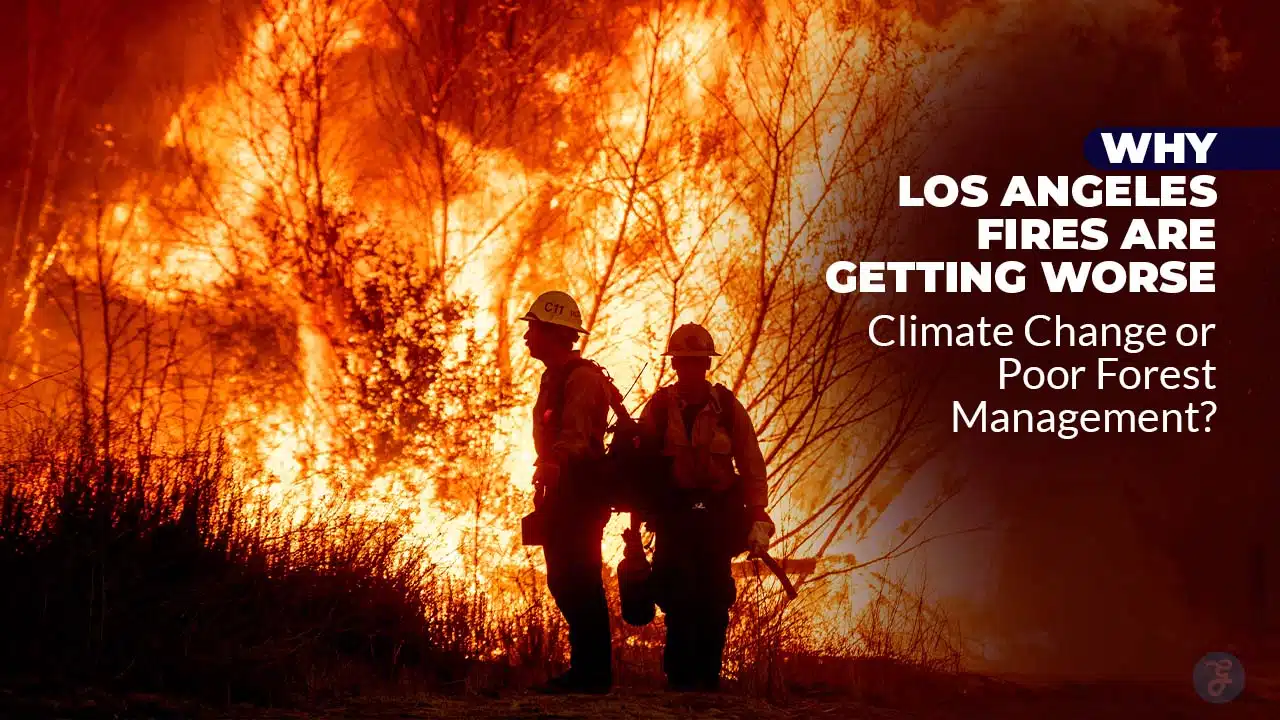
Los Angeles, a city known for its sprawling urban landscape and scenic beauty, has increasingly become a battleground for devastating wildfires. Each year, the flames grow more intense, displacing thousands, destroying homes, and leaving a lasting scar on the environment.
The alarming rise in wildfire frequency and severity has left many asking: Why Los Angeles fires are getting worse? Experts point to two primary culprits—climate change and poor forest management. While both factors play a role, determining which is the dominant force shaping this crisis is essential for implementing effective solutions.
This article explores how climate change and flawed land management contribute to LA’s worsening wildfire problem and what can be done to mitigate future disasters.
The Rising Frequency and Severity of Los Angeles Fires
Historically, wildfires have been a natural part of California’s ecosystem, but in recent decades, their occurrence and intensity have surged at an unprecedented rate. Data from the California Department of Forestry and Fire Protection (CAL FIRE) shows that since the early 2000s, wildfires have grown in both frequency and acreage burned.
The 2018 Camp Fire, the deadliest in California’s history, and the 2021 Dixie Fire, the largest single (non-complex) fire in state history, highlight this growing crisis.
Between 2000 and 2020, California saw a fivefold increase in annual wildfire destruction. Los Angeles, in particular, has witnessed destructive fires such as the Woolsey Fire (2018) and the Bobcat Fire (2020).
The fires are burning more structures, forcing massive evacuations, and leading to prolonged air pollution due to toxic smoke. As temperatures rise and vegetation dries out, the city finds itself increasingly vulnerable to these infernos.
Why Los Angeles Fires Are Getting Worse: Is Climate Change the Key Factor?
The increasing frequency and intensity of wildfires in Los Angeles have raised pressing concerns among residents, scientists, and policymakers. Many are left wondering why Los Angeles fires are getting worse with each passing year.
Is it the impact of climate change, or is poor forest management to blame? Understanding the underlying causes of this crisis is essential to developing sustainable solutions that can mitigate future disasters.
1. Rising Temperatures and Dry Conditions
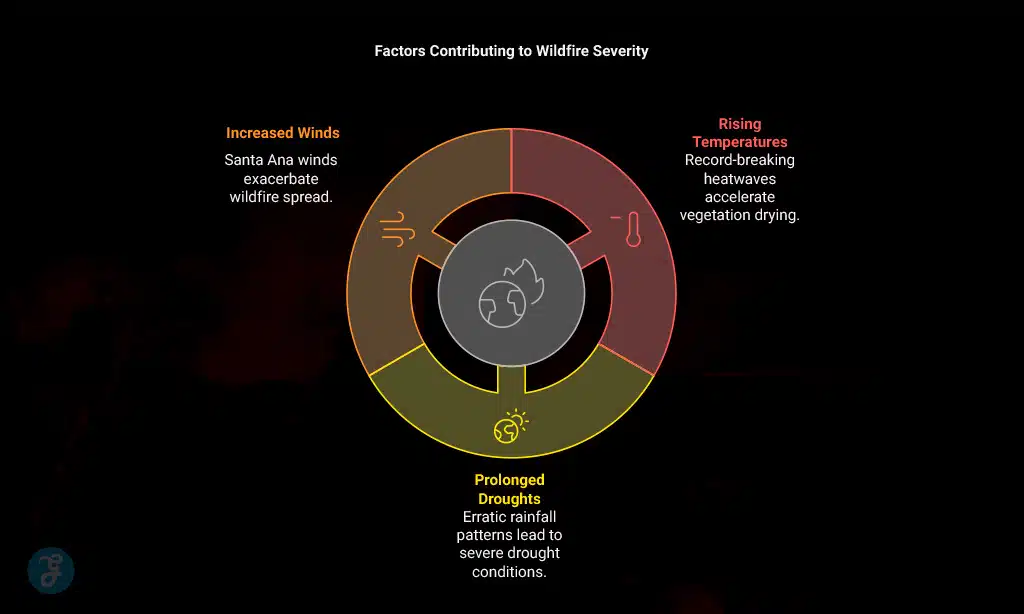
Los Angeles has been experiencing record-breaking heatwaves, with summer temperatures consistently exceeding 100°F (38°C). This excessive heat accelerates the drying of vegetation, turning forests and grasslands into fire-prone fuel beds.
According to the National Oceanic and Atmospheric Administration (NOAA), the average temperature in California has risen by nearly 3°F since the late 19th century, a seemingly small shift that has dramatic effects on fire risk.
2. Prolonged Droughts and Changing Rainfall Patterns
Another key contributor to the increasing severity of LA’s wildfires is prolonged drought. Rainfall patterns have become erratic, with long dry spells punctuated by intense, short-lived rainstorms. This inconsistency causes vegetation to grow rapidly during wet periods, only to dry out and become kindling for fires when drought conditions return.
Research from the University of California indicates that California has faced its driest conditions in over 1,200 years, largely driven by climate change.
3. Increased Winds and Extreme Weather Events
Los Angeles’ infamous Santa Ana winds, which blow hot, dry air from inland deserts toward the coast, exacerbate wildfire conditions. These powerful winds fan flames, making fires spread at alarming speeds.
Climate change has contributed to more frequent and intense wind events, further worsening the problem. Additionally, increased lightning storms due to global warming have ignited more fires in remote areas, adding to the crisis.
Why Los Angeles Fires Are Getting Worse: Poor Forest Management as a Neglected Crisis?
Wildfires in Los Angeles are becoming more frequent and destructive, leaving communities vulnerable and prompting urgent discussions on their root causes. While climate change plays a significant role, poor forest management has also exacerbated the crisis.
Experts argue that decades of fire suppression policies, lack of controlled burns, and insufficient resource allocation have created a landscape primed for catastrophic fires. Understanding how mismanagement has contributed to the worsening situation is essential for developing proactive solutions that can help prevent future disasters.
1. Overgrown Forests and Fuel Buildup
For decades, fire suppression policies have emphasized extinguishing fires as quickly as possible, leading to an accumulation of dry vegetation that acts as fuel for future fires. This lack of controlled burns—a practice used by Indigenous communities and many other fire-prone regions—has left California’s forests overgrown and highly combustible.
2. Urban Expansion into Fire-Prone Areas
As Los Angeles expands, more residential and commercial developments encroach upon fire-prone wilderness areas. Many neighborhoods are now situated in the Wildland-Urban Interface (WUI), where homes are surrounded by dense vegetation.
These areas are particularly vulnerable because human activity (power lines, campfires, vehicles) often sparks fires that rapidly spread in dry, overgrown environments.
3. Government Policies and Resource Allocation
While millions of dollars are spent on firefighting efforts each year, far less is allocated toward preventative measures like controlled burns, clearing brush, and investing in fire-resistant infrastructure. Experts argue that proactive management could significantly reduce fire severity, yet bureaucratic hurdles, environmental concerns, and funding limitations have slowed progress.
The Blame Game: Climate Change vs. Poor Management—Which is the Bigger Culprit?
There is no simple answer to whether climate change or poor forest management is the leading cause of LA’s worsening wildfires. Scientists widely agree that both factors are deeply interconnected.
- Climate change is intensifying droughts, heatwaves, and winds, making fire conditions worse.
- Poor forest management has created fuel-rich landscapes, allowing fires to grow uncontrollably.
A study by the Proceedings of the National Academy of Sciences (PNAS) found that climate change has doubled the area burned by wildfires in the western U.S. since the 1980s, while fire suppression policies have simultaneously allowed fuels to build up. Addressing only one issue without tackling the other is insufficient.
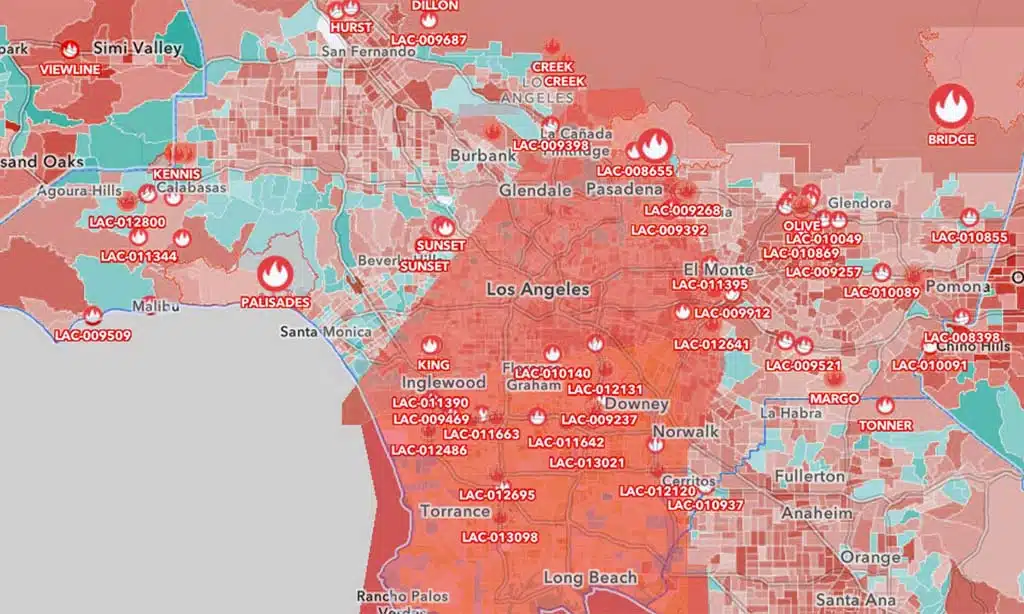
Los Angeles Wildfire-Affected Regions in 2025
Solutions and Preventive Measures
1. Stronger Climate Action Policies
- Reducing greenhouse gas emissions to slow temperature rise.
- Investing in renewable energy and reducing dependence on fossil fuels.
- Developing water conservation strategies to mitigate droughts.
2. Improved Forest Management Strategies
- Increasing controlled burns to clear excess vegetation.
- Implementing sustainable logging practices to maintain balanced forests.
- Encouraging private landowners to participate in fire prevention efforts.
3. Urban Planning and Fire-Resistant Infrastructure
- Enforcing stricter building codes in fire-prone areas.
- Using fire-resistant materials in new constructions.
- Creating defensible space zones around homes by clearing flammable vegetation.
4. Public Awareness and Community Preparedness
- Educating residents about wildfire risks and evacuation plans.
- Strengthening community-based fire response programs.
- Encouraging insurance companies to incentivize fire-resistant home upgrades.
Takeaways
Los Angeles’ worsening wildfires are not the result of a single cause but rather a combination of climate change and inadequate forest management. Rising temperatures, prolonged droughts, and extreme weather events are making conditions ripe for fires, while decades of poor land management and urban expansion have only made matters worse.
To curb this growing crisis, a multifaceted approach is needed—one that combines climate mitigation, sustainable forestry practices, responsible urban planning, and community awareness.
As California faces a hotter and dryer future, the time to act is now. Whether through stronger climate policies or more proactive fire management, the key to preventing future infernos lies in acknowledging and addressing both factors simultaneously. Only then can Los Angeles hope to break the cycle of destruction and build a more fire-resilient future.





















