

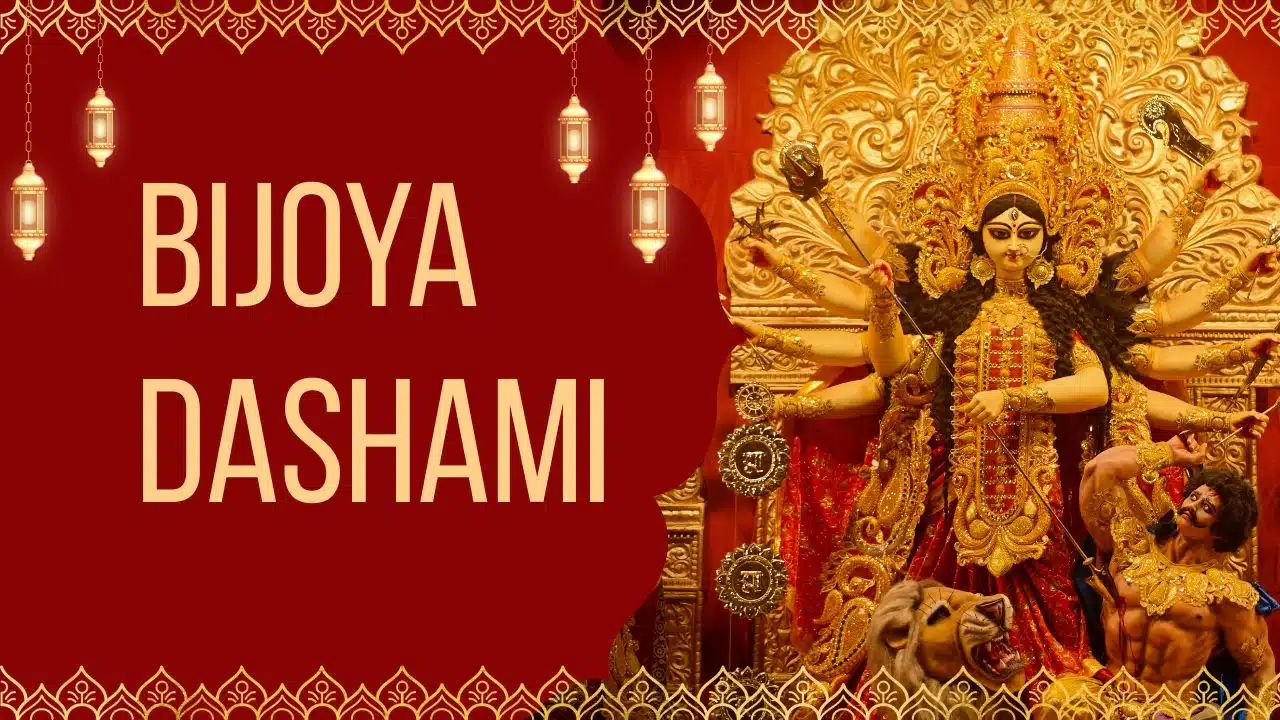
Durga Puja is one of the most awaited festivals for Bengalis and Hindus across the world. From the rhythmic beats of the dhak to the fragrance of shiuli flowers and the dazzling pandals, every moment of the festival is filled with joy, devotion, and togetherness. Yet, after days of worship, celebrations, and cultural festivities, comes a day that is both cherished and heartbreaking—Bijoya Dashami, the final day of Durga Puja.
On this day, devotees experience a unique mix of emotions. There is the joy of triumph, as Bijoya Dashami symbolizes the victory of good over evil. But alongside it lies a deep sorrow of farewell, as devotees bid adieu to Goddess Durga, who is believed to return to her celestial abode. This bittersweet blend of celebration and sadness makes Bijoya Dashami one of the most emotionally powerful days of the festival.
The Spiritual Meaning of Bijoya Dashami
Bijoya Dashami is not only the conclusion of Durga Puja but also a deeply symbolic day that carries profound spiritual meaning. Beyond the rituals and celebrations, it reminds devotees of timeless truths—about the triumph of good over evil, the cyclical nature of life, and the enduring bond between humanity and the divine. This spiritual depth makes Bijoya Dashami both a day of victory and an emotional farewell, weaving together faith, philosophy, and devotion.
Victory of Good Over Evil
At its core, Bijoya Dashami celebrates the eternal triumph of righteousness. The day marks the victory of Goddess Durga over Mahishasura, the buffalo demon who had terrorized heaven and earth. This victory is not just a mythological tale—it serves as a reminder that no matter how powerful evil may seem, it will always be overcome by truth, justice, and divine strength.
Return of the Goddess
While the day is celebrated as a moment of triumph, it is also regarded as the time when Goddess Durga departs from her earthly devotees. After spending five joyous days on earth, she is believed to return to Mount Kailash, to her husband, Lord Shiva. This creates an atmosphere of separation and longing, as devotees feel the absence of the divine presence they had so vividly experienced during the festival.
Rituals of Bijoya Dashami
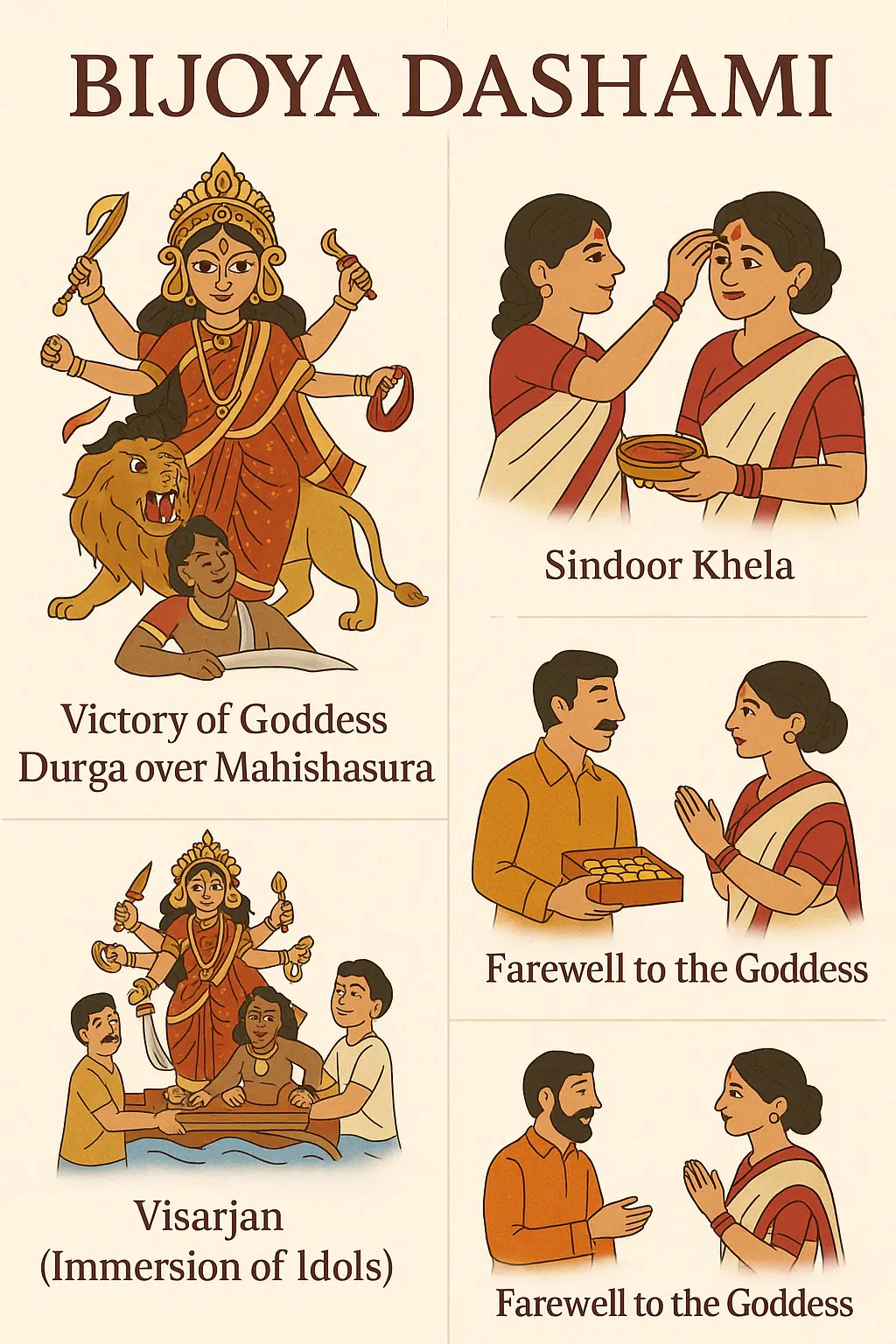
Bijoya Dashami is marked by rituals that beautifully blend devotion, tradition, and emotion. From the vibrant Sindoor Khela to the heartfelt immersion processions, each practice reflects both celebration and farewell. These customs not only honor Goddess Durga but also strengthen bonds within families and communities, making the day unforgettable for devotees across generations.
Sindoor Khela
One of the most iconic rituals of Bijoya Dashami is Sindoor Khela (the game of vermillion). Married women first apply sindoor (vermillion) on the goddess’s idol and then smear it on each other’s foreheads. This ritual symbolizes the blessings of Durga for long marital lives, prosperity, and protection.
Over the years, Sindoor Khela has become more than just a tradition. It has evolved into a cultural spectacle, covered widely in media and social platforms. However, it has also sparked conversations about inclusivity—whether widows, unmarried women, or those from non-Hindu communities can participate. These debates reflect how traditions evolve in a changing world while retaining their essence.
Immersion (Visarjan)
The Visarjan, or immersion of the idol, is perhaps the most emotional moment of Bijoya Dashami. Large processions with music, dhak beats, dancing, and chanting of “Bolo Durga Mai Ki Jai!” fill the streets. Families, communities, and friends walk together to carry the idol to nearby rivers or ponds for immersion.
Yet, as the idol slowly sinks into the water, tears often flow from the eyes of devotees. It is a farewell filled with hope—an assurance that Maa Durga will return next year to bless them again. Recently, many puja committees have adopted eco-friendly immersions to protect the environment, replacing traditional paints and materials with sustainable alternatives.
Exchange of Greetings
Another beautiful custom of Bijoya Dashami is the exchange of greetings known as “Shubho Bijoya.” Younger people touch the feet of elders, receive blessings, and share sweets. Neighbors visit each other, families reunite, and communities strengthen their bonds. This tradition ensures that even as the festival ends, the spirit of unity and goodwill continues.
The Joyful Side of Bijoya Dashami
Even though Bijoya Dashami carries the sorrow of farewell, it is equally a celebration of victory, hope, and new beginnings. The day is filled with laughter, shared meals, and the warmth of community as people greet each other with “Shubho Bijoya.” It is a reminder that every ending also opens the door to fresh opportunities and stronger bonds of togetherness.
Celebrating Triumph
For many, the most joyous part of Bijoya Dashami is the reminder that good always prevails. The victory of Durga over Mahishasura inspires courage and hope in people’s lives, encouraging them to face challenges with resilience.
Community Bonding
The day also reinforces social harmony. Families visit relatives, friends exchange sweets, and neighbors greet each other warmly. Even those who may have been estranged often reconcile during this time, as Bijoya is seen as a period of forgiveness and new beginnings.
A New Beginning
Bijoya Dashami is not just an ending but also a beginning. Farmers in many regions pray for good harvests, artists and musicians begin new projects, and households plan ahead with optimism. It is believed that starting fresh ventures after Dashami brings success and blessings from the Goddess.
The Sorrowful Side of Bijoya Dashami
Despite the joy of triumph, Bijoya Dashami is marked by an undeniable sadness. After days of devotion, music, and togetherness, devotees must part with Maa Durga. Her departure feels like the loss of a beloved family member.
Tears in the Procession
The immersion procession is as emotional as it is grand. Many chant and dance with overflowing energy, but beneath the celebration lies a deep sense of sorrow. The moment the idol disappears into the water, devotees break down in tears, expressing the pain of separation.
Cultural Nostalgia
For many, Bijoya Dashami also brings nostalgia. The dismantling of pandals, the silence of the dhak, and the fading lights create a sense of emptiness. It reminds people of the impermanence of life—that all joyous moments eventually pass, only to return again with renewed hope.
Regional Variations of Bijoya Dashami
While the essence of Bijoya Dashami remains the same—the farewell to Goddess Durga and the celebration of good’s triumph over evil—the rituals and traditions vary from region to region. In some places, the day is marked with grandeur and massive processions, while in others it is observed with intimate family gatherings and quiet prayers. These regional flavors not only enrich the festival but also showcase the cultural diversity that makes Bijoya Dashami unique across Bangladesh and India.
Bangladesh
In Bangladesh, Bijoya Dashami holds a deeply emotional place in the Hindu community. After days of vibrant Durga Puja celebrations, the farewell is marked by both devotion and tears, with immersions taking place in rivers and ponds across Dhaka, Chattogram, Sylhet, and other cities. The rituals often carry a stronger sense of cultural identity, as the festival becomes not just a religious event but also a symbol of heritage and resilience for the minority community.
West Bengal
In Kolkata and across West Bengal, Bijoya Dashami is celebrated with grandeur. Sindoor Khela in pandals attracts huge crowds, and massive processions accompany the visarjan. The day is followed by weeks of social visits, where people greet each other with “Shubho Bijoya” and exchange traditional sweets like naru and sondesh.
Assam and Tripura
Here, the celebrations are similar to Bengal but often more community-centered and intimate. Families gather in homes, share meals, and offer prayers together.
Other States
In Odisha, Karnataka, and Bihar, Bijoya Dashami overlaps with Dussehra. Effigies of Ravana are burnt to symbolize the victory of Lord Rama, connecting the celebration to a wider Indian cultural context.
Bijoya Dashami 2025: Date and Timings
In 2025, Bijoya Dashami will be observed on October 2, 2025 (Thursday).
-
Sindoor Khela Muhurat: Morning to early afternoon (exact timing varies by location).
-
Visarjan Muhurat: Afternoon to evening, with the most auspicious time around sunset.
These timings are considered ideal for performing rituals, exchanging greetings, and bidding farewell to the Goddess.
Why Bijoya Dashami Resonates Emotionally Even Today
The magic of Bijoya Dashami lies in its duality. It mirrors life itself—filled with moments of victory, joy, and togetherness, yet inevitably marked by partings and endings. It teaches important lessons:
-
Acceptance: Every celebration has an end, just as every journey has its pauses.
-
Gratitude: Cherish the divine presence, family, and community during the festival.
-
Hope: Even in separation, there is the promise of reunion—Maa Durga will return next year.
In a modern world where life often feels fragmented and rushed, Bijoya Dashami continues to bind people together through shared emotions, reminding us of the deeper connections that define humanity.
Takeaways
Bijoya Dashami is more than just the final day of Durga Puja. It is a tapestry of emotions, weaving together joy and sorrow, triumph and farewell, community and nostalgia. From the vibrant Sindoor Khela to the tearful visarjan, every ritual reflects the human journey of meeting and parting, of celebrating victories while learning to let go.
As the idols dissolve into rivers and chants fade into silence, devotees carry with them a renewed sense of strength, unity, and hope. Bijoya Dashami reminds us that while endings may bring sadness, they also sow the seeds of new beginnings. And with the blessing of Maa Durga, the promise of joy always returns.
Shubho Bijoya!





















