

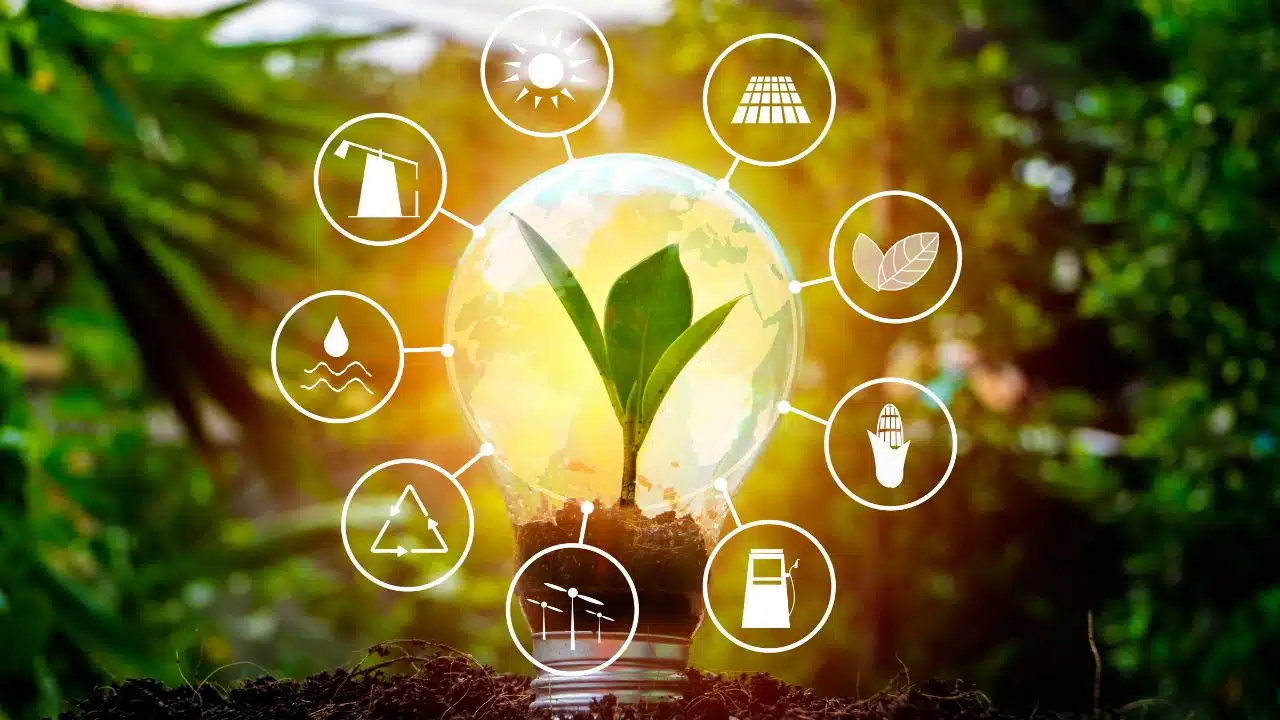
Green plants are fascinating life forms, vital to sustaining life on Earth. But have you ever wondered, where do green plants get their energy from?
The answer lies in a process that is as remarkable as it is essential: photosynthesis. Let’s dive into how plants harness energy to fuel themselves and the planet.
The Basics of Photosynthesis
Photosynthesis is the process by which green plants use sunlight, water, and carbon dioxide to produce glucose (sugar) and oxygen. This complex biochemical reaction takes place primarily in the leaves, where specialized structures called chloroplasts contain the green pigment chlorophyll. Chlorophyll is responsible for absorbing light energy and initiating the photosynthetic process.
The overall equation for photosynthesis can be summarized as:
6CO2 + 6H2O + light energy → C6H12O6 + 6O2
This seemingly simple equation represents a series of intricate steps that occur within the plant cells.
The Two Stages of Photosynthesis
Photosynthesis occurs in two main stages: the light-dependent reactions and the light-independent reactions (also known as the Calvin cycle).
Light-Dependent Reactions
The light-dependent reactions take place in the thylakoid membranes of the chloroplasts. During this stage:
- Chlorophyll absorbs light energy, exciting electrons.
- These excited electrons are passed through an electron transport chain, generating ATP (adenosine triphosphate) and NADPH (nicotinamide adenine dinucleotide phosphate).
- Water molecules are split, releasing oxygen as a byproduct.
Light-Independent Reactions (Calvin Cycle)
The light-independent reactions occur in the stroma of the chloroplasts. In this stage:
- The ATP and NADPH produced in the light-dependent reactions are used to power the conversion of carbon dioxide into glucose.
- This process, known as carbon fixation, is facilitated by the enzyme RuBisCO.
- The resulting glucose molecules serve as the primary energy source for the plant.
The Importance of Chlorophyll
Chlorophyll plays a crucial role in photosynthesis by:
- Absorbing light energy, primarily in the red and blue portions of the visible spectrum
- Reflecting green light, giving plants their characteristic color
- Initiating the electron excitation that drives the light-dependent reactions.
Factors Affecting Photosynthetic Efficiency
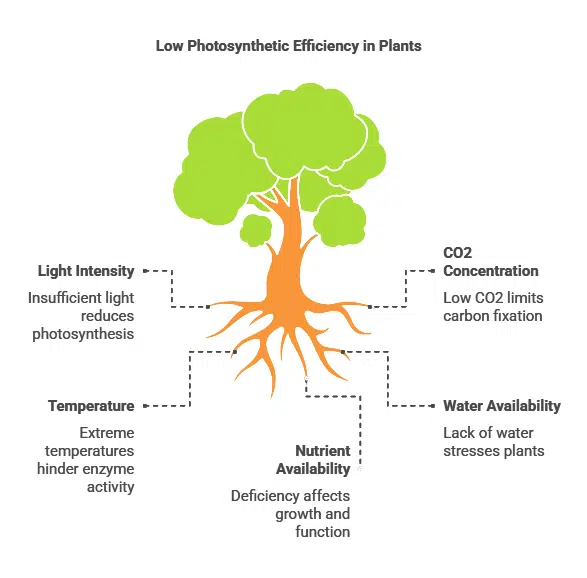
Several factors influence the efficiency of photosynthesis in green plants:
- Light intensity
- Carbon dioxide concentration
- Temperature
- Water availability
- Nutrient availability
Optimal conditions for these factors can significantly enhance a plant’s ability to produce energy through photosynthesis.
The Global Impact of Photosynthesis
Photosynthesis is not just crucial for plants; it has far-reaching effects on our planet and its inhabitants:
- Oxygen production: Photosynthesis is responsible for producing the majority of Earth’s atmospheric oxygen.
- Carbon dioxide absorption: Plants act as natural carbon sinks, helping to mitigate the effects of climate change.
- food chain foundation: The glucose produced by plants forms the basis of most food chains.
- Fossil fuel formation: Ancient photosynthetic organisms are the source of today’s fossil fuels.
Photosynthetic Efficiency: A Closer Look
While photosynthesis is an incredibly important process, it’s not always as efficient as one might expect. The theoretical maximum energy conversion efficiency for C3 plants (which include most crop plants) is about 4.6%, while for C4 plants (like corn and sugarcane), it’s around 6%.
However, in real-world conditions, the efficiency is often much lower:
| Plant Type | Theoretical Maximum Efficiency | Average Observed Efficiency |
| C3 Crops | 4.6% | 1.8-2.2% |
| C4 Crops | 6.0% | 2.3-3.5% |
| Biofuel Crops | 6.6% | 4.9-6.6% |
These figures highlight the potential for improving crop yields through enhanced photosynthetic efficiency.
Enhancing Photosynthetic Efficiency
Scientists are exploring various strategies to improve photosynthetic efficiency in plants, particularly in important food crops. Some approaches include:
- Optimizing the Calvin cycle enzymes
- Improving light capture and utilization
- Reducing photorespiration in C3 plants
- Enhancing CO2 concentration mechanisms
These efforts could lead to significant increases in crop yields, helping to address global food security challenges.
The Role of Photosynthesis in Renewable Energy
The principles of photosynthesis are inspiring new approaches to renewable energy production. For example:
- Artificial photosynthesis systems aim to mimic the natural process to produce clean fuels.
- Biofuel production from algae and other photosynthetic organisms is being explored as a sustainable energy source.
- Photovoltaic cells, while not directly based on photosynthesis, draw inspiration from the light-harvesting capabilities of plants.
Photosynthesis in Different Environments
Plants have evolved various adaptations to perform photosynthesis in diverse environments:
- Desert plants, like cacti, have modified leaves (spines) and stems to reduce water loss while still capturing sunlight.
- Aquatic plants have specialized structures to access CO2 dissolved in water.
- Shade-tolerant plants have adaptations to maximize light capture in low-light conditions.
The Future of Photosynthesis Research
Ongoing research into photosynthesis holds promise for addressing some of humanity’s most pressing challenges:
- Improving crop yields to feed a growing global population
- Developing more efficient biofuels and renewable energy sources
- Creating plants that are more resilient to climate change
- Enhancing carbon sequestration to mitigate global warming
Takeaways
So, where do green plants get their energy from? They derive it through photosynthesis—a process that transforms sunlight into glucose while releasing oxygen. This remarkable mechanism not only sustains plant life but also supports nearly all life on Earth by providing food and oxygen.
Understanding how green plants get their energy highlights their indispensable role in maintaining ecological balance and addressing global challenges like climate change and food security.
























