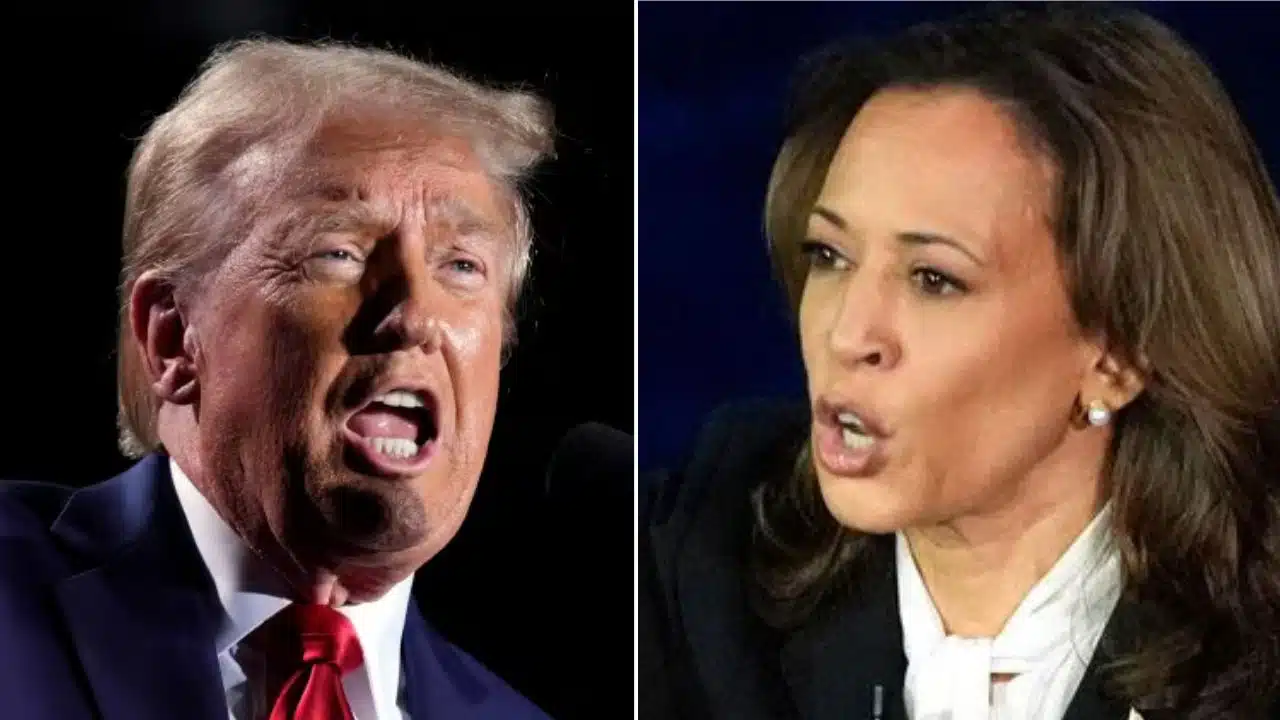
On November 5, 2024, American voters will cast their ballots to choose the next president of the United States in a highly anticipated election that could be historic. This year’s close race between Vice President Kamala Harris, the Democratic candidate, and former President Donald Trump, the Republican candidate, has captivated both national and global attention. The results could be announced quickly in some areas, but due to the tight margins in key states, the official outcome may not be clear until much later.
The complexity of the 2024 election arises from several factors, including legal challenges, recount procedures, and the impact of state-specific vote-counting rules, all of which could contribute to a longer-than-usual wait for final results.
When Are the 2024 Presidential Election Results Expected?
Historically, the U.S. has seen presidential election winners announced late on election night or in the early hours of the next morning. However, there have also been times when the final outcome was delayed due to close races, recounts, or legal challenges, as seen in 2000. This year, the high level of competition in multiple swing states suggests that the winner may not be confirmed until later than usual.
The Impact of Close Margins and Recounts
In key swing states, such as Pennsylvania, a recount is automatically triggered if the margin between the top two candidates is less than 0.5%. In 2020, for instance, the final margin in Pennsylvania was just over 1.1%, a narrow result that kept the nation in suspense for several days. In this election, a similarly tight margin could lead to recounts in other states as well, potentially pushing back the announcement of a winner.
Additionally, the expected recounts in close states are not the only factors that could delay the results. Legal challenges, particularly those focused on voter eligibility, registration procedures, and ballot access, could also contribute to a longer wait. These challenges are already underway, with over 100 pre-election lawsuits filed nationwide, primarily by Republicans. The outcome of these legal cases may not affect the election directly, but they could complicate the vote-counting process, particularly in states where the race is expected to be extremely close.
Other Potential Delays: Election Day Disruptions
Concerns over disruptions at polling locations on election day also add another layer of uncertainty. Instances of voter intimidation, technical glitches, or disputes over polling hours could lead to temporary polling closures, delayed vote counts, and additional legal actions that would ultimately slow down the reporting process.
However, there is also some reason to believe that counting may be faster this year in certain states. States such as Michigan have made significant improvements in vote-counting processes since 2020, when a surge in mail-in ballots during the COVID-19 pandemic led to delays. This year, far fewer votes are expected to be cast by mail, which could speed up the tally in comparison to the previous election.
Timeline of Previous Presidential Election Announcements
The 2020 presidential election provides a recent example of the challenges involved in declaring a winner. Although the election took place on Tuesday, November 3, media outlets were not able to declare Joe Biden the winner until late on Saturday, November 7, after Pennsylvania’s final votes confirmed his lead. The delay was primarily due to a large volume of mail-in ballots and close results in critical swing states.
In contrast, results were much faster in other recent elections. In 2016, when Donald Trump won the presidency, he was announced as the victor around 3 a.m. EST the following day. Barack Obama’s re-election in 2012 was projected before midnight on election night, providing voters with a quick outcome. The 2000 election, however, remains an outlier due to the unprecedented legal battle between George W. Bush and Al Gore. After a contested vote in Florida, the U.S. Supreme Court ruled to end the recount process on December 12, more than a month after the election. This decision awarded Bush the presidency, setting a record for one of the longest delays in announcing an election winner in modern history.
Key Swing States to Watch on Election Night 2024
As with any U.S. presidential election, certain battleground states are expected to play a pivotal role in determining the winner. While all votes contribute to the national outcome, seven swing states will be particularly important in 2024: Arizona, Georgia, Michigan, Nevada, North Carolina, Pennsylvania, and Wisconsin. These states will have varied timelines for reporting results due to differences in their poll closing times, voting procedures, and rules for counting mail-in and absentee ballots. Here’s a closer look at each of these critical states:
Georgia
Polls close at 7 p.m. EST in Georgia, a key battleground state where early and mail-in ballots are counted first, followed by in-person votes. Election officials estimate that approximately 75% of votes will be tallied within the first two hours after polls close, meaning that a preliminary result could be available before midnight. However, a final count may not be confirmed until late into the night.
North Carolina
In North Carolina, polls close 30 minutes after Georgia at 7:30 p.m. EST. Initial results may come in relatively quickly, but complications could arise in areas that were affected by a September hurricane. Despite these potential delays, North Carolina’s election officials are optimistic that the majority of votes will be counted before the end of the night.
Pennsylvania
Known as the “Keystone State,” Pennsylvania is perhaps the most closely watched swing state this election cycle. Polls close at 8 p.m. EST, but due to state regulations, officials are not permitted to start counting mail-in and absentee ballots until election day itself. This rule may lead to significant delays, with experts predicting that it could take at least 24 hours for enough votes to be counted to project a winner.
Michigan
In Michigan, where polls close at 9 p.m. EST, election officials are permitted to begin processing votes up to a week before election day, a change that could expedite results. However, Michigan law prohibits the release of any results until the polls officially close, meaning that while preliminary counts may be ready, the full result is unlikely to be announced until late Wednesday.
Wisconsin
In Wisconsin, polls also close at 9 p.m. EST. While smaller counties may report results shortly after polls close, major population centers often require more time to process and tabulate votes. Experts anticipate that the state may not have a definitive outcome until at least Wednesday.
Arizona
Arizona is expected to begin releasing initial results around 10 p.m. EST. However, these results may not be fully representative, as many postal ballots, especially those dropped off on election day, may take several days to count. Maricopa County, Arizona’s largest district, has warned that it could take up to 13 days to complete counting in close races.
Nevada
Nevada’s vote count is also expected to be slower, as the state allows mail-in ballots to be counted as long as they are postmarked by election day and received by November 9. This rule could lead to a multi-day counting period, particularly if the race is tight.
How Vote Counting Works in U.S. Presidential Elections
The vote-counting process in U.S. elections is conducted meticulously to ensure accuracy and integrity. The initial tally includes in-person votes cast on election day, followed by early votes and mail ballots. The final count also includes overseas and military ballots, which may arrive later due to logistical delays.
Local election officials, who may be appointed or elected depending on the state, oversee the canvassing process, where each ballot is verified, processed, and counted. This process involves confirming that the number of ballots matches the number of registered voters, checking each ballot for issues such as tears or other damage, and feeding ballots into electronic scanners that tabulate results. In certain cases, manual recounts or double-checks may be necessary to ensure that every vote is counted accurately.
Each state has its own rules governing the canvassing process, including regulations about who can participate, the order in which votes are counted, and how partisan observers may monitor and challenge the process. Transparency is emphasized to ensure public trust, with strict guidelines on how observers can interact with election officials.
What If the Presidential Election Results Are Contested?
After all valid votes are counted, the Electoral College ultimately determines the winner of the U.S. presidential election. Each state is assigned a specific number of electoral votes, which are awarded to the candidate who wins the popular vote in that state. These votes are then certified by the states and cast in the Electoral College, with a final count taking place on January 6 in a joint session of Congress.
In 2020, this certification process faced unprecedented challenges when then-President Trump encouraged supporters to protest Congress’s certification of Joe Biden’s victory. The situation escalated into an attack on the Capitol, which temporarily delayed the proceedings. Following these events, lawmakers voted to certify the results, though 147 Republicans objected unsuccessfully.
Since then, reforms have been implemented to clarify that the vice president has no authority to reject electoral votes. However, experts warn that there may still be attempts to contest the results at the state or local level if the 2024 race is close.
Inauguration Day for the 2024 Presidential Election Winner
The candidate who wins the 2024 presidential election will be inaugurated on January 20, 2025, marking the 60th presidential inauguration in U.S. history. The ceremony will take place on the grounds of the U.S. Capitol, where the president-elect will take an oath to “preserve, protect, and defend” the Constitution of the United States. Following the swearing-in, the new president will deliver an inaugural address, signaling the start of their term in office.