Adding chemicals in the wrong order can cause chemical imbalances and make water problems worse. It can also make the chemicals ineffective and result in more expensive repairs. To prevent these problems, be sure to follow the proper order when adding chemicals to your pool. Below are some common problems that occur when you add chemicals in the wrong order.
Algaecide
When adding pool chemicals, there are several things to remember. The first one is the amount. It is important to use the right dosage to maintain a balanced pH level. This will prevent your pool from becoming unbalanced, which will allow algae to grow. Afterward, you should add algaecide, which kills existing algae and prevents new algae spores from spawning. The recommended maintenance dose is three ounces of algaecide per ten thousand gallons weekly.
Chlorine is a common pool chemical. The best way to add it is to use a tablet. It can come in different types. After you have chosen the correct one, insert the tablets into the water until you reach the desired level. The ideal range of chlorine concentrations is between 1 and 3 ppm.
Calcium is another key component of water. If the calcium level is too high, it can cause scaling on the surface of your pool. To reduce this, add an anti-scaling solution. You can also add muriatic acid or sodium bisulfate, which will help reduce the hardness of the water. Another essential chemical is an algaecide, which will prevent algae growth. Choose a low-foaming variety that won’t affect your pool’s other chemicals.
It is important to add pool chemicals in the correct order. Incorrectly adding them can cause chemical imbalances and make other pool problems worse. Not only is this unsanitary, but it can also increase your chemical costs. Aside from making matters worse, adding the wrong chemicals will also reduce their effectiveness.
The pH level is another important factor when adding pool chemicals. The ideal pH level for your pool is between seven. This will allow the other chemicals to work more effectively. If it is too low, your pool will be acidic and may even damage the plaster. Furthermore, too high a pH level will cause calcium deposits and scales.
Calcium buildup can lead to discoloration around the edge of your pool and damage its structure. Keeping your pH level between 7.2 and seven is ideal. If your calcium levels are too high, calcium chloride should be added. The manufacturer’s instructions will give you the exact dosage required. Also, you should add cyanuric acid, which is a stabilizer. This helps the chlorine work more effectively and last longer.
Sanitizer
When adding chemicals to your swimming pool, it is important to add them in the correct order to avoid a chemical imbalance and potentially dangerous results. Not adding chemicals in the proper order can make them ineffective, increase the risk of a chemical reaction, and even cost you money. To avoid these problems, read the label on each product carefully and add them in smaller amounts, to begin with. You can also test the water after adding each chemical to see what effect it has.
Pool chemicals are designed to work at specific pH levels, so it is important to check the pH level before adding any chemicals. You want the water pH level to be between 7.4 and 7.6. If the pH is too high or too low, you may need to add muriatic acid or an alkaline solution. After you add these chemicals, be sure to retest them to ensure they are working properly.
First, you should add an alkalinity increaser to your pool water. Copper and silver are two minerals that increase alkalinity and lower pH levels. By doing this, your pool will be well-balanced, which will help your sanitizers work more efficiently. Copper and silver ions are two minerals that work faster than chlorine.
Chlorine is the most common pool sanitizer and is used to kill bacteria. It’s available in tabs and sticks and can also be added by hand. Chlorine levels should be between 1-3 parts per million. If you need more chlorine, consider adding more dichlor, a granular form of chlorine.
You can buy chlorine granules online or at your local pool supply store. Floaters, skimmers, and automatic chlorinators can also help you add chemicals to your pool. The amount you add to your pool depends on the type of chlorine you are using, but the recommended dosage for a given product is 4 pounds.
First, you must measure total alkalinity (pH). A high pH level will bring your pool chemicals closer to their desired levels. If you find the levels too high or too low, try lowering the level by adding muriatic acid or borax. If the total alkalinity is too low, you can add sodium bicarbonate or soda ash to the water. It is important to remember that calcium builds up in your pool and can damage the pool’s materials. The ideal Calcium Hardness level is between 200 and 400 ppt.
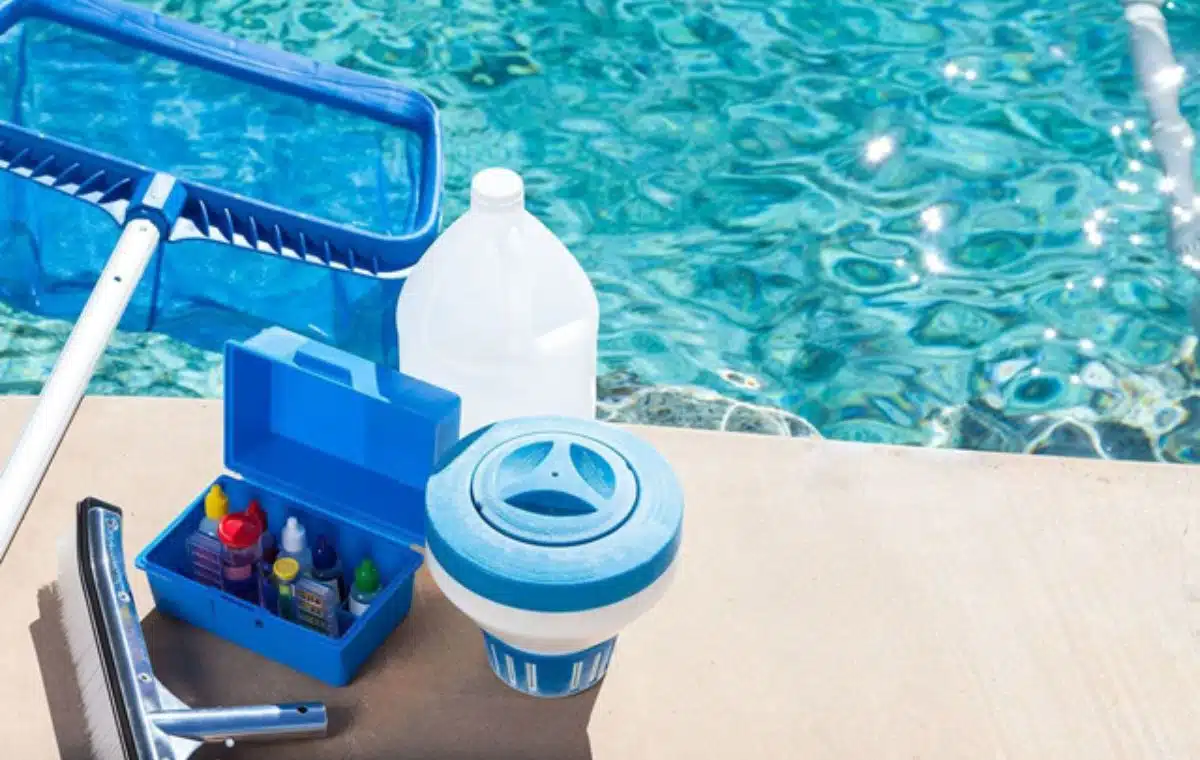
You should test your pool water with a test kit to determine the pH and sanitizer levels. The Taylor K-2005 is used by pool stores for this purpose. These kits come in several ranges, with the lower end being more appropriate for most situations. Also, you should add a Stain and Scale chemical to avoid the appearance of stains in your pool, as well as a Clarifier to get rid of tiny particles and floaters in the water.
Algaecide can help prevent and eliminate algae blooms. Be sure to research the different types of algaecide before you add them to your pool. Different types of algaecides have different maintenance and treatment doses. A maintenance dose of algaecide should be added every week or so.
Stabilizer
When it comes to pool chemicals, there is a specific order that you must follow. You can call a pool chemical company to find out what you need to add, and they can even come to your home to give you advice. There are nine steps involved in the process. The first three are for “balancing” the water, and the second six are for turning tap water into the pool water.
Adding pool chemicals in the wrong order can lead to chemical imbalances and can make water issues worse. The wrong order can also increase the costs of chemicals. It’s best to read the instructions carefully and ask a pool professional for assistance. You should also be aware of the safety data sheets (SDS) of the chemicals you plan to use. The SDS sheets list the hazards, the amount of each chemical, and what to do if you spill any of the chemicals.
The total alkalinity of the water is one of the most important factors to balance. It will ensure that other chemicals, like chlorine, are at the proper level. Ideally, total alkalinity should be between 7.4 and 7.6 ppm. If you want to lower it, you can use muriatic acid, dry acid, or borax. Calcium hardness should be between 200 and 400 ppm.
Chlorine is a key ingredient for swimming pools. It sanitizes the water and helps keep it safe for multiple swimmers. To get the best effect from chlorine, however, you must also add a stabilizer and pH decrease. These two compounds can work together to make the water more stable and save you money.
Chlorine should be added to the water in the order in which they are needed. If the water contains high levels of stabilizer, the chlorine will not be as effective. A stabilizer will protect chlorine from UV rays. If it is too stable, you can add cyanuric acid or stabilized chlorine.
Chlorine dispensers are available online and at pool supply stores. The cheapest type is a simple floater; sophisticated models can cost hundreds of dollars in the U.S. But be sure to check with the manufacturer for the exact dosage. Cyanuric acid can treat 10,000 gallons of water. When adding this chemical, make sure to wear gloves and goggles.
Before adding any chemicals to the water, you should first test the water to see how much chlorine is in the water. You should make sure the water balance is in the lowest range before adding any other chemicals. This step is vital in order to avoid algae, which can damage your water. Then, add calcium hypochlorite and cyanuric acid. After that, you should test your water to make sure the pH level is within the proper range.
You should also add a sequestrant to the water, which will prevent metals from staining the pool walls and plumbing. It’s a good idea to use a sequestrant during all opening and closing processes of your pool.