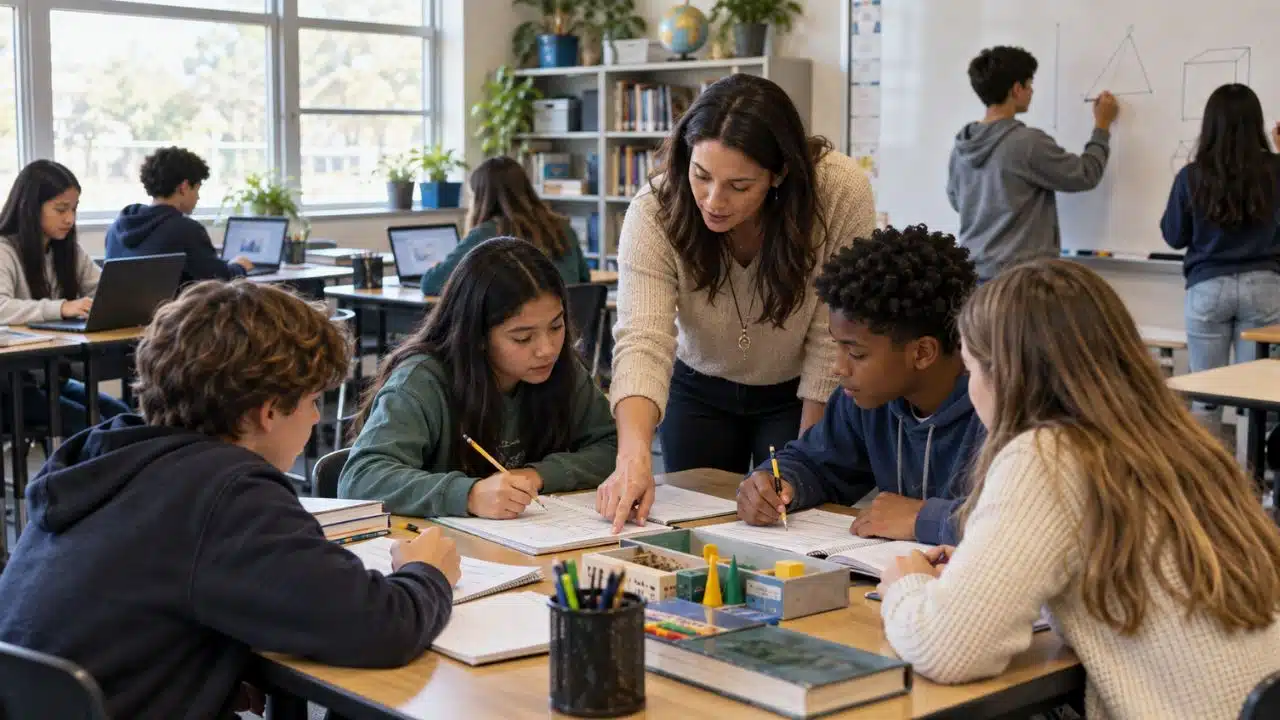
Blended learning combines face-to-face teaching with purposeful online learning. That sounds simple, but it means more than giving students tablets, uploading homework, or replacing printed worksheets with digital versions.
I think the clearest way to understand blended learning is to see it as one connected learning experience. The online component should prepare students for classroom work, extend it, or help teachers decide what to teach next. When the two parts have no meaningful connection, the classroom may be technology-rich, but it is not necessarily using blended learning well.
What Blended Learning Actually Means
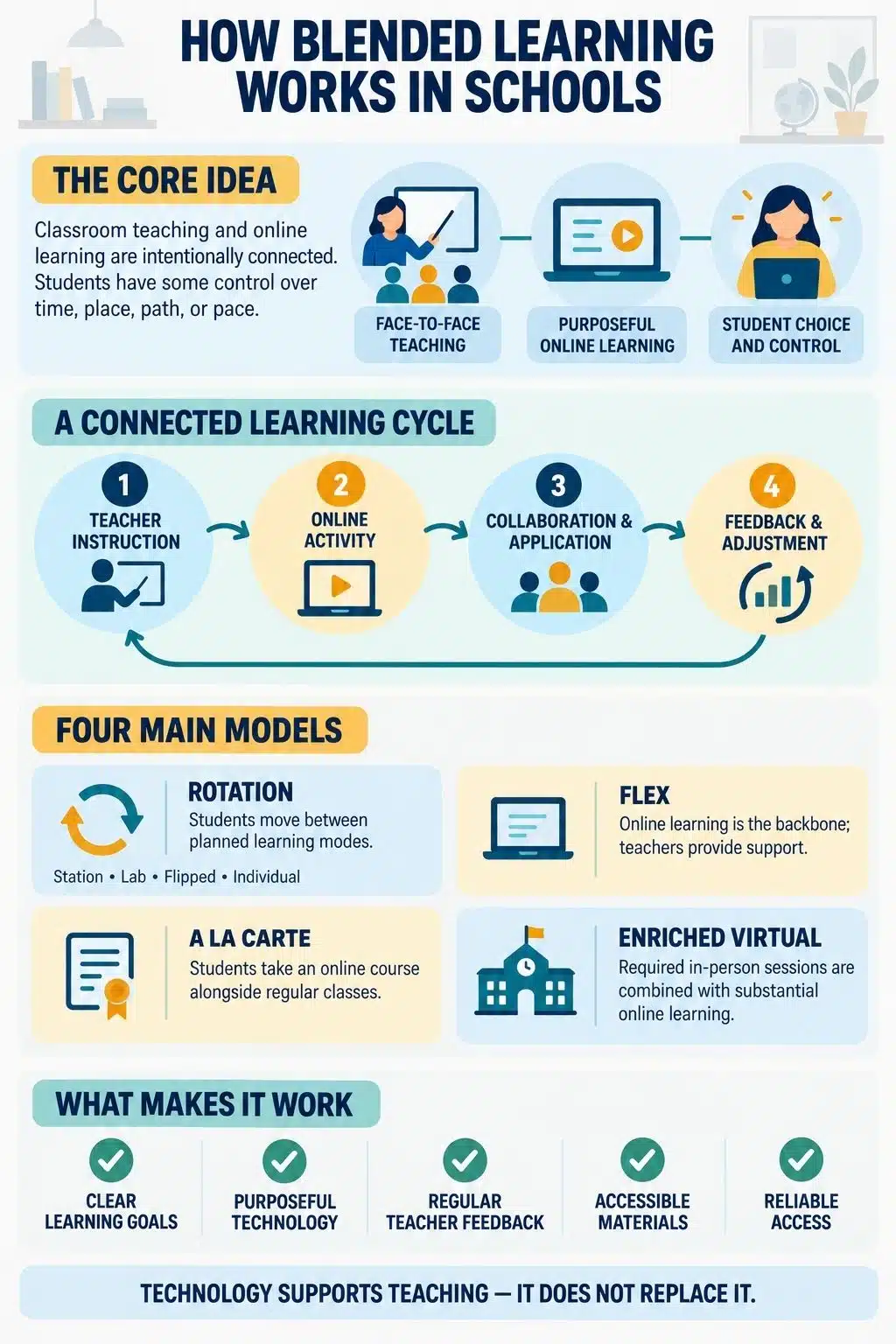
A widely used K–12 definition includes three elements:
- Some learning happens online.
- Students have some control over the time, place, path, or pace of that learning.
- Online and face-to-face activities are deliberately connected.
For example, students might watch a short science explanation and complete a diagnostic quiz online. The teacher reviews the answers, forms small groups, reteaches a misunderstood concept, and then guides students through an experiment.
The quiz is not an isolated digital task. It directly influences the classroom lesson. I would not describe a lesson as meaningfully blended simply because students use a learning app. The important question is whether technology improves the learning process.
Blended learning is also different from several related terms:
- Hybrid learning is often used as a synonym, although some schools use it specifically for schedules that alternate between school and home.
- Flipped learning is one type of blended learning in which students review introductory material before class and apply it during class.
- Fully online learning normally lacks the regular supervised face-to-face component.
- Emergency remote teaching is a temporary response to disruption rather than a carefully designed long-term model.
- Personalized learning is an educational goal. Blended learning may support personalization, but it does not guarantee it.
How Schools Use the Main Blended Learning Models
Schools organize blended learning in several ways. The four most widely recognized models are Rotation, Flex, A La Carte, and Enriched Virtual.
| Model | How it works | Common use |
| Rotation | Students move between learning activities, including at least one online component. | Classroom instruction, practice, projects and small-group support |
| Flex | Online instruction forms the course’s backbone, while teachers provide tutoring, feedback, seminars and practical activities. | Flexible secondary programs, intervention and alternative education |
| A La Carte | A student takes one or more courses online while attending a physical school for other subjects. | Advanced subjects, languages, electives or courses unavailable locally |
| Enriched Virtual | Students complete much of their work remotely but attend scheduled face-to-face sessions. | Older students and learners needing flexible attendance |
These models describe how instruction is organized. They are not a quality ranking, and no single model is best for every student or subject.
The Four Rotation Models
Rotation is the model families are most likely to recognize in an ordinary classroom.
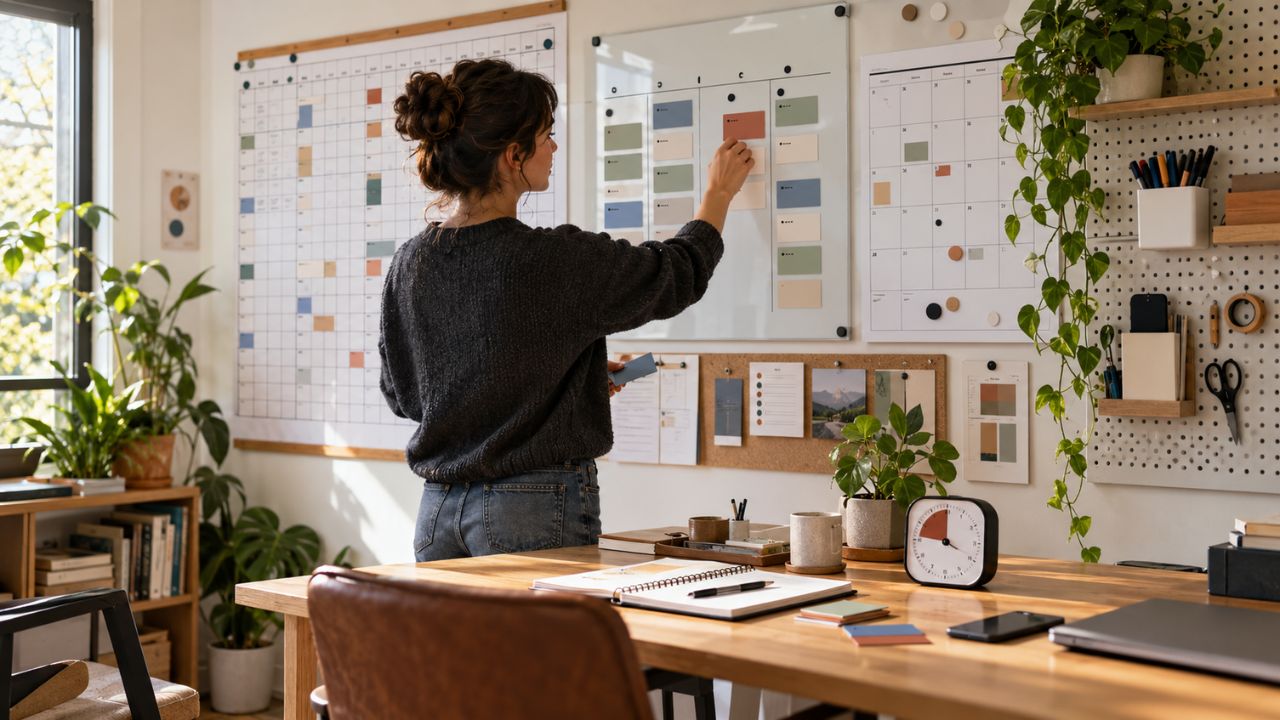
- In Station Rotation, students move between activities. One group may work with the teacher, another may solve a problem collaboratively, and another may complete an online task.
- In Lab Rotation, students move to a computer laboratory or shared device area. This can help schools that cannot provide every student with a personal device.
- In a Flipped Classroom, students review selected material before class. Classroom time is then used for problem-solving, discussion, experiments, projects, or teacher feedback. Sending a video home without redesigning the classroom lesson is a weak version of this model.
- With Individual Rotation, each student follows a schedule based on individual needs and may not complete every station. This can support differentiation, but it requires close supervision so students do not become isolated or overly dependent on software.
What Blended Learning Looks Like During a School Day
Blended learning changes according to students’ ages, subjects, and available resources.
In a primary mathematics class, students might rotate between teacher-led instruction, collaborative problem-solving, independent practice, and a short adaptive digital activity. The teacher can use the results to plan the next lesson.
At secondary level, students may review an explanation before class and then spend classroom time writing, debating, conducting experiments, or solving more difficult problems.
A student might also take an online course that the school cannot offer locally. A teacher or mentor at the school should still monitor progress, provide support, and intervene when the student struggles.
Schools also use blended learning for targeted intervention, enrichment, project work, temporary continuity, and flexible programs for students who cannot follow a conventional daily timetable.
Why Schools Choose Blended Learning
Schools usually introduce blended learning to solve a specific problem rather than simply to increase technology use.
Potential advantages include:
- Allowing students to revisit selected material
- Giving teachers faster information about misconceptions
- Creating more time for small-group instruction
- Supporting different levels of practice or enrichment
- Expanding access to courses
- Making learning more flexible during absence or disruption
- Developing digital and self-management skills
These benefits are not automatic.
Flexible pacing can help students, but younger learners may need clear schedules and regular check-ins. Digital assessment can reveal incorrect answers, but it cannot always explain why a student is confused. Teachers must interpret the information and decide what support is appropriate.
Blended learning can also create more active classroom time, but only when the lesson is redesigned. If schools simply add online work to existing assignments, students receive more work rather than a better learning experience.
Does Blended Learning Work?
The evidence is encouraging, but it needs careful interpretation.
An earlier systematic review found only 11 K–12 studies that met its criteria. Many interventions were short, and the findings were mixed. At that time, the research base was too limited for broad conclusions.
A larger 2022 meta-analysis examined 84 studies involving 30,377 K–12 students. On average, blended learning produced better results than conventional face-to-face comparison conditions, particularly for cognitive outcomes.
That does not mean every blended program will improve achievement. The studies involved different age groups, subjects, teachers, technologies, learning activities, and intervention lengths.
Some blended programs also provided more learning time, additional resources, faster feedback, or more collaboration. Those features may partly explain their results. It would be misleading to credit the technology alone.
My takeaway is that blended learning can improve outcomes when it is designed well. Teacher involvement, student interaction, accessibility, instructional quality, and implementation matter more than the model’s name.
What Can Go Wrong?
Poorly planned blended learning can create new problems or deepen existing ones.
Unequal Access
Students may lack a suitable device, stable internet, electricity, technical support, or a quiet place to work. Home-based activities can also transfer costs and supervision responsibilities to families.
Schools should provide alternatives such as loan devices, downloadable materials, printed work, campus study time, and reliable repair support.
Passive Screen Use
Long videos, repetitive quizzes, and digital worksheets can be just as passive as weak traditional instruction.
There is no universal percentage of learning that should happen online. The better question is whether the screen adds educational value and what it replaces.
Self-Management Demands
Blended learning may require students to manage time, navigate platforms, follow schedules, and ask for help.
Schools should teach these skills directly. Being comfortable with entertainment apps does not automatically make a student ready to learn independently online.
Teacher Workload
Connecting online and classroom activities takes planning. Teachers may also need to monitor data, troubleshoot devices, produce accessible materials, and support students across several platforms.
Schools need to provide training, planning time, instructional coaching, and technical support.
Accessibility and Privacy
Digital materials should include readable layouts, captions, transcripts, keyboard access, suitable contrast, and compatibility with assistive technology.
Schools should also understand what student data a platform collects, why it is needed, who can access it, and how long it is retained. A dashboard should support professional judgment, not replace it.
What Good Blended Learning Looks Like
When I judge a blended-learning program, I look for a clear connection between the teaching method and the learning goal.
A strong program should include:
- A defined educational problem it is intended to solve
- Connected online and face-to-face activities
- Regular teacher explanation, feedback and intervention
- Meaningful student interaction
- Accessible materials and non-digital alternatives
- A realistic plan for devices and connectivity
- Screen use balanced with discussion, writing, movement and practical work
- Training and planning time for teachers
- Evaluation based on learning rather than logins or time online
Parents can ask one especially useful question: How does the online work affect what the teacher does next? If the school cannot explain that connection, the technology may not be fully integrated into instruction.
The Real Value Is in the Design
I do not see blended learning as a competition between teachers and technology. Each should do what it handles best.
Online tools can make selected content easier to revisit, provide low-stakes practice, and expand course access. Teachers provide judgment, explanation, relationships, discussion, and support.
When schools connect those strengths thoughtfully, blended learning can become more than screen-based instruction. It becomes a practical way to make teaching more flexible, responsive, and focused on what students actually need.
Frequently Asked Questions on Blended Learning
1. Is blended learning the same as hybrid learning?
The terms are often used interchangeably. However, some schools use “hybrid” specifically for schedules that alternate between school and home. Families should check how their school defines the terms.
2. Is blended learning better than traditional classroom learning?
It can produce better results when the activities are connected and students receive strong teacher support. A well-taught conventional lesson can still be more effective than poorly designed digital instruction.
3. How much screen time does blended learning require?
There is no universal amount or ideal percentage. The appropriate level depends on the student’s age, the activity, accessibility needs, content quality, and whether the screen adds genuine value.
4 .Is blended learning suitable for young children?
It can be suitable when online activities are brief, purposeful, accessible, and supported by an adult. Young children still need conversation, play, movement, writing, physical materials, and face-to-face interaction.
5 .Does blended learning replace teachers?
No. It may change how teachers use classroom time, but their role remains central. Teachers still provide explanation, feedback, motivation, assessment, relationships, safeguarding, and decisions about what students need next.