

Green technology, also known as clean technology, is revolutionizing how we interact with the environment.
This innovation focuses on reducing environmental impact and conserving natural resources. But what are five types of green technology making waves in sustainability today? Let’s explore.
1. Renewable Energy Technologies
Renewable energy technologies harness natural resources to generate clean, sustainable power. This category includes some of the most well-known and widely adopted green technologies.
Solar Power
Solar energy has become increasingly accessible and efficient in recent years. Photovoltaic (PV) panels convert sunlight directly into electricity, while solar thermal systems use the sun’s heat for water heating and space conditioning. The global solar energy market is experiencing remarkable growth, with a projected compound annual growth rate (CAGR) of 20.5% from 2023 to 2030.
Wind Power
Wind turbines, both onshore and offshore, capture the kinetic energy of moving air to generate electricity. Wind power is one of the fastest-growing renewable energy sources, with global capacity expected to nearly double by 2027.
Hydropower
Hydroelectric systems use the energy of flowing water to produce electricity. While large-scale dams are controversial due to their environmental impact, small-scale and run-of-river hydropower projects offer more sustainable alternatives.
2. Energy Efficiency Technologies
Energy efficiency technologies aim to reduce energy consumption while maintaining or improving performance. These innovations are crucial for minimizing waste and lowering carbon footprints.
Smart Grids
Smart grids use digital technology to monitor and manage electricity distribution, improving efficiency and reliability. These systems can integrate renewable energy sources more effectively and respond to changes in electricity demand in real time.
LED Lighting
Light-emitting diode (LED) technology has revolutionized lighting efficiency. LEDs use up to 90% less energy than traditional incandescent bulbs and last significantly longer.
High-Efficiency HVAC Systems
Advanced heating, ventilation, and air conditioning (HVAC) systems utilize smart controls, improved insulation, and energy recovery ventilation to dramatically reduce energy consumption in buildings.
3. Sustainable Transportation
The transportation sector is a significant contributor to greenhouse gas emissions. Green technologies in this area focus on reducing the environmental impact of how we move people and goods.
Electric Vehicles (EVs)
Electric vehicles are rapidly gaining popularity as battery technology improves and charging infrastructure expands. Global EV sales are projected to reach 26.8 million units by 2030.
Hydrogen Fuel Cells
Hydrogen fuel cell vehicles produce electricity through a chemical reaction between hydrogen and oxygen, emitting only water vapor. While still in early stages of adoption, this technology holds promise for long-distance and heavy-duty transportation.
Biofuels
Advanced biofuels derived from non-food biomass sources offer a renewable alternative to fossil fuels, particularly for aviation and other hard-to-electrify sectors.
4. Waste Management and Recycling Technologies
Innovative waste management technologies are crucial for reducing landfill use and promoting a circular economy.
Waste-to-Energy Systems
These technologies convert municipal solid waste into usable forms of energy, such as electricity or heat, through processes like incineration, gasification, or anaerobic digestion.
Advanced Recycling
New recycling technologies can process materials that were previously difficult or impossible to recycle. For example, chemical recycling breaks down plastics into their molecular components for reuse in new products.
Composting Systems
Large-scale composting facilities and home composting solutions help divert organic waste from landfills, reducing methane emissions and producing valuable soil amendments.
5. Water Conservation and Treatment Technologies
As water scarcity becomes an increasingly pressing issue globally, technologies that conserve and purify water are critical.
Desalination
Advanced desalination technologies, such as reverse osmosis and forward osmosis, are becoming more energy-efficient and cost-effective, making seawater a viable freshwater source for coastal regions.
Water Recycling Systems
Greywater recycling systems treat and reuse water from sinks, showers, and laundry for non-potable purposes like irrigation and toilet flushing, significantly reducing overall water consumption.
Smart Water Meters
These devices provide real-time data on water usage, helping utilities and consumers identify leaks and reduce waste. Smart water management systems can reduce water losses by up to 25%.
The Impact of Green Technology
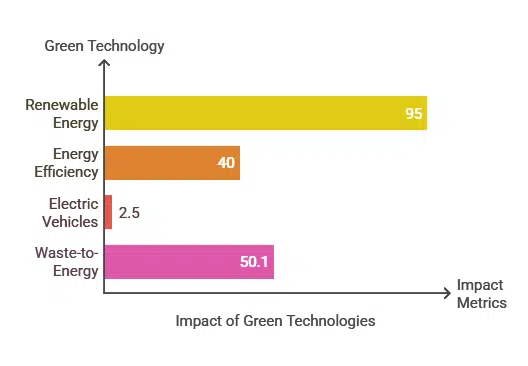
The adoption of these five types of green technology is having a profound impact on our environment and economy. Here are some key statistics that highlight their growing importance:
| Green Technology Sector | Impact |
| Renewable Energy | Expected to provide 95% of the growth in global power capacity through 2026. |
| Energy Efficiency | Could deliver more than 40% of the emissions reductions needed to meet global climate goals. |
| Electric Vehicles | Projected to reduce oil demand by 2.5 million barrels per day by 2030. |
| Waste-to-Energy | The global market is expected to reach $50.1 billion by 2027. |
| Water Technology | The smart water management market projected to grow to $21.4 billion by 2025. |
As these technologies continue to evolve and become more widely adopted, they promise to play a crucial role in addressing climate change, resource scarcity, and other environmental challenges. The green technology revolution is not just about preserving our planet; it’s also driving innovation, creating jobs, and opening up new economic opportunities.
However, it’s important to note that while these technologies offer tremendous potential, they are not without challenges. Issues such as the environmental impact of manufacturing solar panels and batteries, the intermittency of renewable energy sources, and the need for significant infrastructure investments must be addressed as we transition to a greener future.
Takeaways
The question “What are five types of green technology?” can be answered by highlighting renewable energy, energy efficiency, sustainable transportation, waste management and recycling, and water conservation technologies.
As these innovations continue to evolve and become more widely adopted, they promise to play a crucial role in mitigating climate change and preserving our planet’s resources for future generations.






















