Green beauty is on the rise, with more consumers seeking eco-friendly and sustainable personal care products. However, not all brands live up to their claims.
Many engage in greenwashing, a deceptive marketing practice that makes a product appear more environmentally friendly than it truly is.
This guide will help you identify 7 ways to spot greenwashing in beauty and personal care, ensuring you make informed and responsible choices.
Understanding Greenwashing in Beauty & Personal Care
Greenwashing occurs when companies use misleading claims, labels, or imagery to appear more sustainable than they actually are. This can include vague language, fake certifications, or strategic branding that capitalizes on consumer trust.
Many brands invest in marketing efforts rather than real sustainability initiatives, leading to consumer confusion and unethical business practices.
Why Greenwashing Is a Growing Concern in the Beauty Industry
The beauty and personal care sector is flooded with products claiming to be “natural,” “organic,” and “eco-friendly.” However, with little regulation on these terms, brands can exploit them without meeting real sustainability standards. This misleads consumers, contributes to environmental harm, and reduces the incentive for brands to genuinely invest in eco-friendly solutions.
How Brands Use Marketing Tactics to Mislead Consumers
Many brands use green packaging, buzzwords, and selective ingredient highlighting to create an illusion of sustainability. Some might claim a product is “clean” while including harmful ingredients or showcase a “vegan” label without ethical sourcing practices. Often, these companies spend more on marketing than on developing truly sustainable products.
7 Ways to Spot Greenwashing in Beauty & Personal Care
Let’s take a look.
1. Vague or Misleading Claims
Many beauty brands use broad and unverified claims to attract eco-conscious consumers. Some brands intentionally leave out critical details that would expose their actual environmental impact.
Terms Like “Natural” and “Eco-Friendly” Without Proof
| Misleading Claim | Why It’s Greenwashing |
| “All Natural” | No regulation ensures all ingredients are safe or organic. |
| “Eco-Friendly” | Often used without proof of reduced environmental impact. |
| “Sustainable” | May lack transparency on sourcing and production. |
How to Verify Authenticity of Sustainability Claims
- Look for brands that disclose full ingredient lists and environmental impact reports.
- Check if companies provide third-party certifications or lab testing.
- Avoid brands that rely solely on marketing buzzwords without concrete data.
2. Lack of Third-Party Certifications
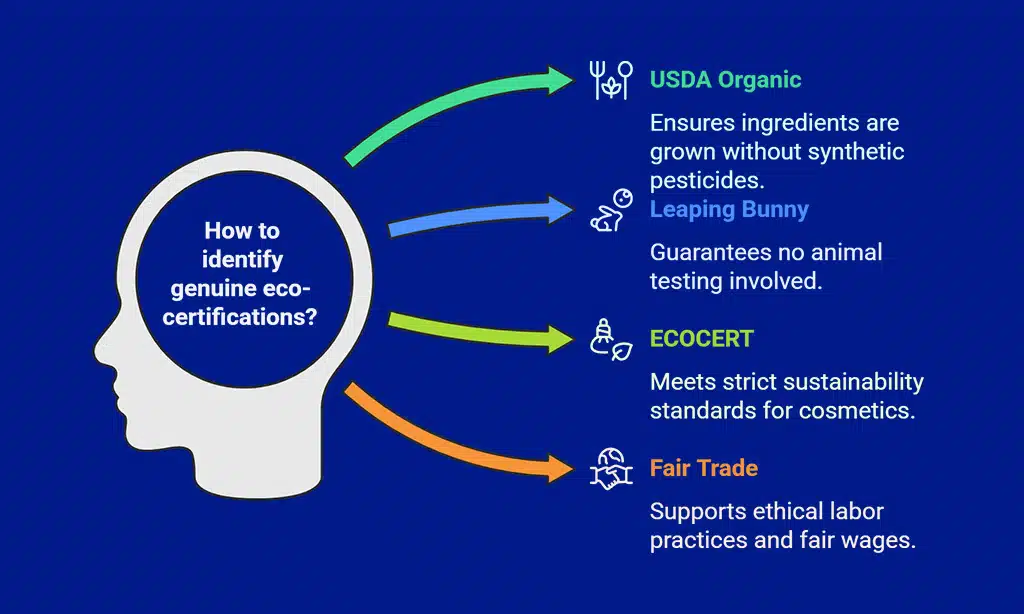
True sustainability and ethical sourcing require independent verification. Many brands create their own unofficial seals to appear credible.
Key Eco-Certifications to Look For
| Certification | What It Ensures |
| USDA Organic | Ingredients are grown without synthetic pesticides. |
| Leaping Bunny | No animal testing is involved in the product. |
| ECOCERT | Natural and organic cosmetics meet strict sustainability standards. |
| Fair Trade | Supports ethical labor practices and fair wages. |
Fake or Misleading Seals – How to Identify Them
- Cross-check the certifying organization’s website for authenticity.
- Beware of labels that look official but lack a verifiable certifying body.
- Avoid brands that provide no information on the issuing authority of their “certifications.
3. Hidden Harmful Ingredients
Many “green” products still contain harmful chemicals that contradict their sustainability claims. Some ingredients have long-term health risks despite being marketed as safe.
Common Toxic Ingredients Found in “Green” Products
| Ingredient | Harmful Effects |
| Parabens | Linked to hormone disruption and possible carcinogenic effects. |
| Phthalates | Found in fragrances, known to harm reproductive health. |
| Sulfates (SLS & SLES) | Can cause skin irritation and strip natural oils. |
| Synthetic Fragrances | Often contain undisclosed chemicals with health risks. |
How to Read and Analyze Product Labels
- Scan for scientific ingredient names rather than marketing terms.
- Use apps like Think Dirty or EWG’s Skin Deep to check safety.
- Research the source of key ingredients and whether they have been tested for toxicity.
4. Overuse of Green Imagery and Buzzwords
Many brands use visual elements to create an eco-friendly illusion without real impact.
How Brands Use Packaging to Mislead Consumers
| Greenwashing Tactic | How It Misleads Consumers |
| Earth-tone packaging | Gives a false impression of sustainability. |
| Nature imagery | Implies eco-friendliness without factual support. |
| “Biodegradable” claims | Often lacks verification or clear timelines for decomposition. |
5. Unclear or Misrepresented Supply Chain Transparency

If a brand does not disclose where and how its products are made, it is a red flag.
What to Look for in Ethical Sourcing and Production Claims
- Brands should disclose where and how ingredients are sourced.
- Companies that highlight worker wages, conditions, and fair trade practices are more trustworthy.
- Avoid brands that lack detailed supply chain transparency reports.
6. Minimal or No Sustainable Impact
Some brands claim sustainability without actual environmental benefits. Brands that truly make an impact often invest in environmental initiatives, sustainable packaging, and carbon footprint reduction.
Are Brands Making Real Environmental Contributions?
| Sustainability Effort | Genuine or Greenwashing? |
| Carbon-neutral pledge | Verify if backed by credible carbon offset programs. |
| Ocean plastic reduction | Must show proof of cleanup initiatives. |
| Zero-waste claims | Look for detailed waste management reports. |
7. Exaggerated Claims Without Evidence
Many brands use overly ambitious statements without factual backing.
How to Cross-Check Sustainability Claims
- Visit independent watchdog websites like Ethical Consumer or EWG.
- Look for brands that share their impact through yearly reports.
- Compare brand statements with industry-wide sustainability benchmarks.
How to Make Informed Beauty & Personal Care Choices
Reliable Resources for Verifying Sustainability Claims
| Resource | Purpose |
| The Environmental Working Group (EWG) | Evaluates product safety and environmental impact. |
| Good On You | Rates fashion and beauty brands on ethical practices. |
| Fair Trade and B Corp directories | Identify certified sustainable brands. |
Wrap Up
The beauty industry is full of greenwashing tactics that mislead consumers. By understanding these 7 ways to spot greenwashing in beauty & personal care, you can make informed choices that align with real sustainability.
Always research brands, verify certifications, and prioritize transparency over vague claims. The more consumers demand genuine eco-friendly products, the more the industry will shift towards true sustainability.