

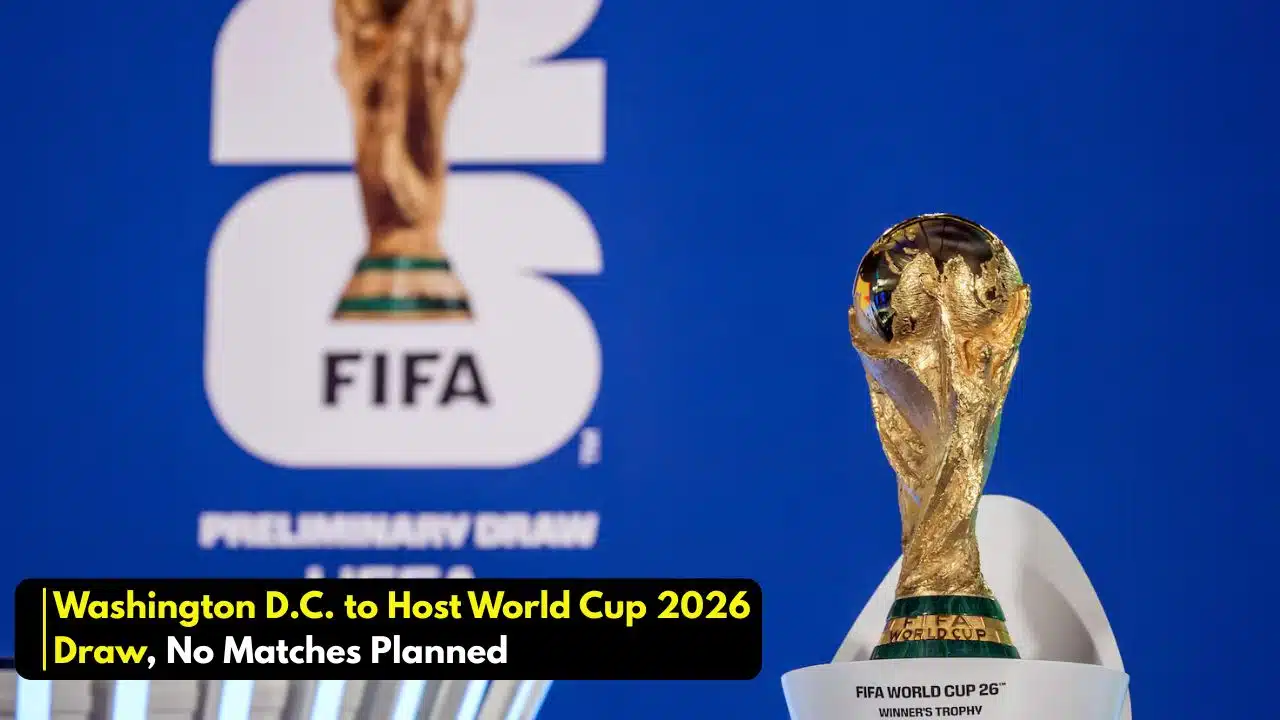
Washington, D.C. is set to make history on December 5, 2025, as the John F. Kennedy Center for the Performing Arts hosts the Final Draw for the FIFA World Cup 2026. This marks the first time the U.S. capital will play a central role in the global football spectacle, despite the city not being selected as a host for any tournament matches. The draw will be a pivotal moment for fans, players, and officials alike, as the 48 qualified teams are officially grouped for the most expansive World Cup in history, hosted across the United States, Canada, and Mexico.
The Draw Ceremony: A Capital Affair
The Final Draw for the FIFA World Cup 2026 will begin at 12:00 noon local time (17:00 GMT) at the Kennedy Center, one of Washington D.C.’s most iconic venues. FIFA President Gianni Infantino will preside over the event, which is expected to attract team officials, ambassadors, media representatives, and a limited number of fans from each of the 16 host cities involved in the tournament. The draw itself is anticipated to last approximately 45 minutes, but the entire ceremony will feature fan experiences, entertainment, and global broadcasts, making it a true celebration of football unity.
Fans from each host city will have a chance to participate in a special lottery for complimentary VIP admission to the event, with procedures to be announced soon. The Kennedy Center, renowned for its cultural significance and state-of-the-art facilities, will provide a fitting backdrop for this historic moment, blending sport, diplomacy, and artistry in the nation’s capital.
Why Washington, D.C. Was Chosen for the Draw
Washington D.C. was selected for the Final Draw due to its symbolic status as the heart of American democracy and its rich history with international events. FIFA officials and U.S. leaders, including President Donald J. Trump, highlighted the city’s global recognition and logistical advantages when making the announcement at the White House in late 2021. The Kennedy Center’s central location, security infrastructure, and cultural prestige made it an ideal choice for such a high-profile event.
Despite not hosting matches, D.C. remains deeply connected to the World Cup narrative. The city’s bid to become a host venue was ultimately unsuccessful, but its role in the draw ensures that the capital will be a focal point for fans and media worldwide as the tournament’s group stage is revealed.
The Draw Format and Pot Structure
The draw will divide the 48 qualified teams into four pots of 12. Pot 1 will include the three host nations—Canada, Mexico, and the United States—alongside the top nine teams in the November 2025 FIFA Men’s World Ranking. Pot 2 will consist of the next 12 highest-ranked teams, Pot 3 will hold the following 12, and Pot 4 will include the remaining qualifiers, including those from inter-continental playoffs.
Each group will be formed by drawing one team from each pot, ensuring balanced competition. The hosts will be assigned to specific group positions: Mexico to A1, Canada to B1, and the United States to D1. This process guarantees that no group will have more than one host nation, and it sets the stage for a fair and exciting group stage.
Why Washington, D.C. Won’t Host Matches
Despite its status as the U.S. capital and its enthusiasm for hosting World Cup games, Washington, D.C. was not selected as a match venue. The primary reason was the lack of a stadium that met FIFA’s stringent requirements. FedEx Field (now Northwest Stadium) in Landover, Maryland, was considered the only viable option, but it was deemed outdated and in need of significant upgrades that were not feasible before 2026.
Additionally, the stadium’s location, traffic challenges, and ownership issues further hampered D.C.’s bid. The stadium’s owner at the time, Dan Snyder, was embroiled in controversies and unwilling to invest the necessary funds. While a new stadium is planned for the Washington Commanders, it will not be ready until 2030, missing the World Cup window. The city’s bid was eventually merged with Baltimore, but even this partnership did not secure a spot for the capital in the match schedule.
The Impact on Local and Global Fans
For Washington, D.C. residents and visitors, the draw represents a unique opportunity to be part of World Cup history. The city will host fan festivals, watch parties, and special events around the Kennedy Center, allowing locals to celebrate the global football community. The draw will be broadcast live to millions around the world, with FIFA’s media partners ensuring global coverage.
While D.C. fans won’t see World Cup matches at home, the city’s involvement in the draw and its status as the host of this milestone event will boost tourism, civic pride, and international attention. The Kennedy Center’s role in the ceremony underscores the intersection of sport, culture, and diplomacy, making Washington, D.C. a central character in the World Cup 2026 story.
What Comes Next After the Draw
The draw will reveal the group stage matchups, but the full match schedule—including venues and kick-off times—will be announced 24 hours later. FIFA’s approach allows for strategic placement of games based on time zones across the three host countries, ensuring optimal viewing and logistical efficiency.
For the teams, the draw sets the stage for months of preparation, training, and anticipation. The group stage will determine which nations advance to the knockout rounds, with the tournament culminating in a grand final at MetLife Stadium in New Jersey. The draw’s results will shape the narrative of the entire tournament, influencing everything from fan travel plans to media coverage.
The Broader Significance
Hosting the Final Draw in Washington, D.C. is more than a logistical decision—it’s a statement about the global reach of football and the importance of inclusivity in major sporting events. The Kennedy Center’s selection reflects FIFA’s desire to celebrate the sport’s universal appeal and to bring the World Cup experience to cities that may not have the infrastructure for matches but possess cultural and historical significance.
The draw will also serve as a reminder of the collaborative spirit required to stage an event of this magnitude. From the White House to the Kennedy Center, from local fans to global media, the World Cup 2026 will be a testament to the power of sport to unite people across borders and backgrounds.
Looking Ahead
As December 5 approaches, excitement is building in Washington, D.C. and around the world. The Final Draw will be a celebration of football, culture, and international friendship, marking the start of the journey toward the biggest and most diverse World Cup in history. While the city won’t host matches, its role in the draw ensures that the “Capital of the Free World” will be a key player in the global football narrative for years to come.
The World Cup 2026 promises to be a landmark event, and Washington, D.C.’s involvement in the draw is a fitting tribute to the city’s enduring legacy and its place on the world stage.





















