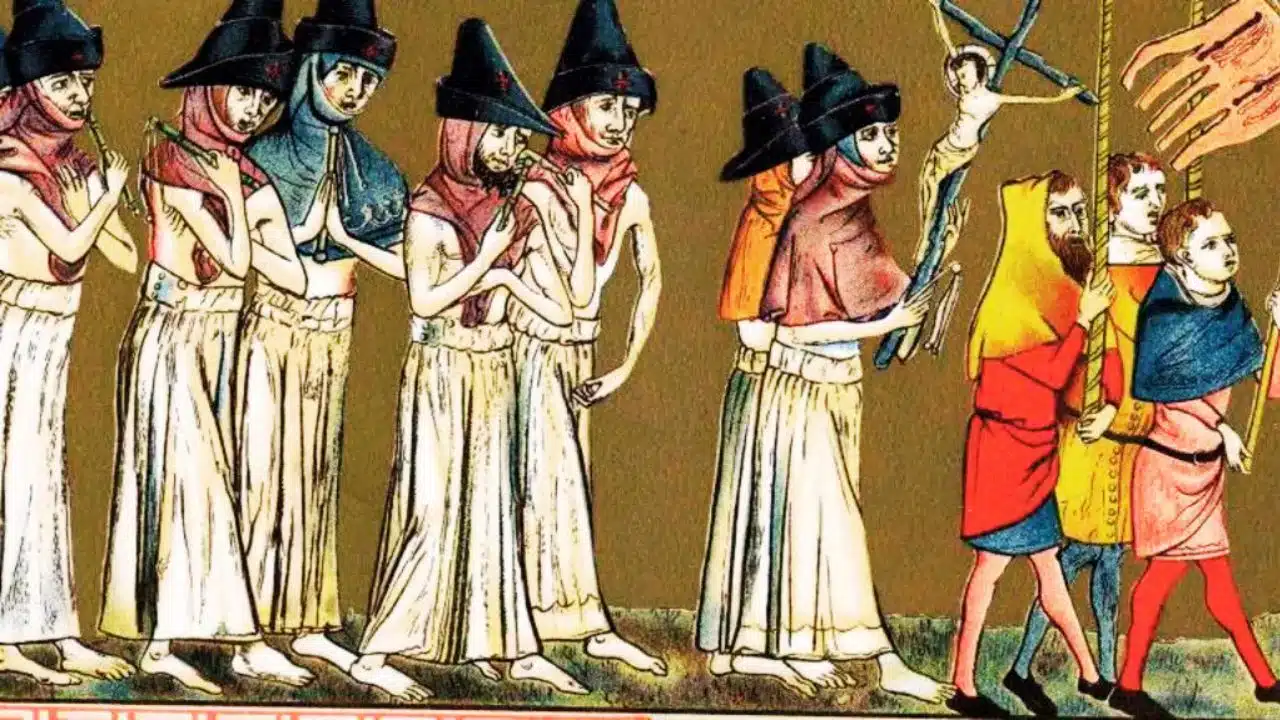
Researchers say a powerful volcanic eruption in the mid‑1340s likely cooled the Mediterranean climate, disrupted food supplies and may have opened the door for the Black Death plague to enter Europe via grain ships from the Black Sea.
Scientists link mystery eruption to medieval pandemic
An international team of climate scientists and historians has proposed that an unidentified volcanic eruption around the year 1345 helped trigger the chain of events that led to the Black Death, one of the deadliest pandemics in history.
The study, published in the journal Communications Earth & Environment, argues that the eruption caused several years of unusually cold, wet summers in the Mediterranean, driving famine and forcing Italian maritime powers such as Venice, Genoa and Pisa to import grain from the northern Black Sea, where the plague bacterium was circulating.
According to the authors, these emergency grain shipments likely carried fleas infected with Yersinia pestis, the bacterium that causes plague, into crowded port cities in 1347, helping to spark the wave of disease that went on to kill an estimated 30% to 60% of Europe’s population within a few years.
Key facts about the new study
| Item | Detail |
| Research team | Led by climate scientist Ulf Büntgen and climate historian Martin Bauch, with an interdisciplinary group of co‑authors |
| Publication | Communications Earth & Environment (Nature Portfolio), published 3 December 2025 |
| Core claim | A large volcanic eruption or cluster of eruptions around 1345 cooled the climate and helped set up conditions for the Black Death |
| Region of focus | Mediterranean basin, northern Black Sea region and wider Europe |
| Pandemic impact | Black Death killed a large share of Europe’s population between about 1347 and 1353, with losses up to 60% in some areas |
How cooling and famine opened the door to plague
The new research links a perfect storm of natural and human factors: a major eruption that injected large amounts of sulfur into the stratosphere, several years of cold and cloudy summers, crop failures, and emergency shifts in long‑distance grain trade.
Tree‑ring temperature records and ice‑core chemistry suggest that volcanic aerosols from an eruption in or near the tropics around 1345 cut sunlight and cooled summer temperatures across much of southern Europe for at least two to three years.
Historical grain price data and city records show that harvest failures and dearth from 1345 to 1347 pushed Italian city‑states to buy cereals from the Mongol‑ruled Golden Horde around the Sea of Azov, intensifying grain flows from Black Sea ports into Venice and Genoa just before the plague appeared in those harbours in 1347.
Timeline from eruption to Black Death
| Year / period | Event described |
| Circa 1345 | Large, sulfur‑rich volcanic eruption (or several eruptions) injects ~14 Tg of sulfur into the stratosphere, far exceeding the 1991 Pinatubo level |
| 1345–1347 | Cooler, cloudier summers and heavy rains cause widespread crop failures in parts of Italy and the wider Mediterranean |
| 1346–1347 | Grain prices spike and authorities in Italian city‑states impose strict grain regulations and seek new import sources |
| 1347 | Italian fleets secure grain from the northern Black Sea and Sea of Azov to avert famine, bringing cargoes back to Mediterranean ports |
| Late 1347–1348 | Black Death outbreaks are reported in major ports such as Venice, Genoa and Marseille, then inland across much of Europe |
Researchers argue that rats and fleas on these grain ships, and possibly fleas surviving in grain dust during the voyage, provided a direct route for Yersinia pestis from wildlife reservoirs in Central Asia and the Black Sea steppe into densely populated European port cities.
The study also notes that some Italian and European cities that were relatively self‑sufficient in grain and did not rely on Black Sea imports, such as Rome and Milan, seem to have escaped the first wave of the Black Death, which supports the proposed trade‑linked mechanism.
Evidence from tree rings, ice cores and medieval records
To build their case, the authors combined climate proxies with medieval documents, using methods that range from dendrochronology to economic history.
They analysed maximum latewood density in thousands of tree‑ring samples from across Europe, finding an abrupt sequence of cold summers from 1345 to 1347, including rare blue ring features in trees from the Spanish Pyrenees that indicate unusually harsh growing‑season conditions.
The team then examined ice cores from Greenland and Antarctica and identified sulfur spikes aligned with 1345 and nearby years, consistent with one major volcanic eruption or a short cluster of eruptions not linked to any historically recorded volcano.
Main types of evidence cited
| Evidence type | What it shows |
| Tree rings | Sharp summer cooling in 1345–1347, especially over the Mediterranean region |
| Ice cores | Large volcanic sulfur injections around 1345, pointing to a powerful, likely tropical eruption |
| Grain prices | Exceptional wheat price spikes in Italy, Catalonia, Egypt and Mecca around 1346–1347 |
| City regulations | Emergency grain policies and unrest in Italian communes at the peak of the dearth |
| Port and trade records | Renewed and intensified grain trade between Italian republics, the Golden Horde and the eastern Mediterranean |
| Plague outbreak chronologies | First Black Death cases track closely with major grain‑importing ports and trade routes |
Documentary sources from Italy, France and the wider Mediterranean describe darkened skies, heavy rains, floods, failed grape harvests and simultaneous shortages of grain across several regions, which the authors interpret as social traces of the same climate shock seen in the physical records.
In their reconstruction, the climatic downturn did not cause the plague bacterium itself but created the food insecurity that activated a century‑old grain‑supply system in ways that unintentionally moved Yersinia pestis into new environments and populations.
Experts welcome new piece of a complex puzzle
Specialists not involved in the study say the work offers an important new angle on why the Black Death hit Europe when and where it did, while stressing that volcanic activity is only part of a much larger picture.
Medical historian Monica H. Green said the findings help clarify the timing of the 1347–1350 pandemic but emphasised that local rodent reservoirs and long‑standing plague infrastructure in Eurasia still played a central role in sustaining the disease.
Historian Hannah Barker noted that previous research focused heavily on trade and biology, and argued that formally adding climate and volcanism into the analysis provides a useful, but not definitive, piece of evidence about the pandemic’s origins.
What scientists agree on – and what is debated
| Aspect | Current view among experts |
| Role of Yersinia pestis | Broad agreement that the Black Death was caused by Y. pestis spread via rodents and fleas |
| Black Death death toll | Many studies estimate 30%–60% mortality in parts of Europe between 1347 and 1353 |
| Volcanic eruption in 1345 | Strong proxy evidence for a major eruption; exact volcano and location remain unknown |
| Link to grain trade | New study makes a detailed case that climate‑driven grain imports from the Black Sea seeded plague in Italian ports |
| Universality of mechanism | Some cities reliant on local grain escaped early outbreaks, while some non‑Italian ports were also hit early, suggesting multiple transmission routes |
| Strength of eruption–plague link | Many researchers see the link as plausible but emphasise that correlation does not prove a single causal pathway |
Even the study’s authors caution that their scenario is probabilistic, not a courtroom‑style proof, and acknowledge that human‑to‑human transmission, other trade goods and military movements also contributed to the spread of the disease.
Outside commentators say the work highlights how small shifts in climate can interact with political decisions, trade networks and ecological systems to create cascading risks that are difficult to foresee.
Lessons for climate, trade and disease today
By tracing how a fourteenth‑century eruption may have amplified famine and redirected trade in ways that accelerated a pandemic, the authors argue that the Black Death should also be understood as an early example of climate‑linked globalisation risk.
They warn that in a warmer, more interconnected world, climate shocks—whether from volcanoes or human‑driven change—can again alter food systems and trade routes in ways that increase the chance that animal diseases spill over into human populations and spread rapidly.
The study points to COVID‑19 and recent outbreaks of other zoonotic diseases as reminders that modern societies need to plan for complex climate–trade–health interactions, not just the direct effects of temperature or rainfall.
Why the new Black Death research matters now
| Issue today | Insight suggested by the study |
| Food security under climate stress | Climate shocks can force sudden, long‑distance food imports that reshape disease pathways |
| Global trade networks | Highly optimised supply chains can unintentionally move pathogens across continents |
| Pandemic preparedness | Risk assessments should consider indirect drivers like eruptions, droughts or floods that alter human behaviour |
| Historical analogues | Medieval climate–disease interactions can inform modern planning for cascading risks |
Researchers say the next steps include identifying the exact volcano responsible for the 1345 sulfur spike, refining regional climate reconstructions in Eurasia and improving maps of medieval plague outbreaks and trade flows.
They argue that although the precise circumstances of the Black Death are unique, the broader lesson—that environmental shocks and human systems can interact in unexpected ways to unleash disease—remains highly relevant for policymakers today.