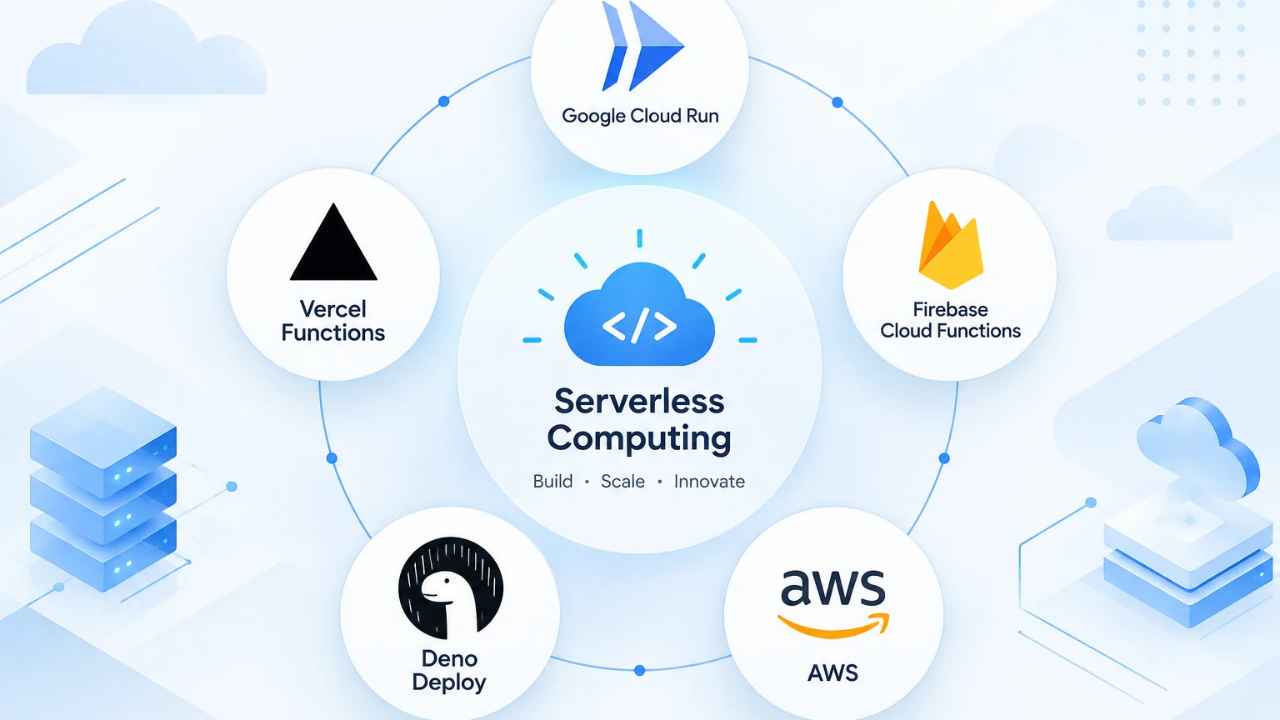
A SaaS marketplace strategy is not simply a plan to publish a product page on AWS Marketplace, Microsoft Marketplace, Salesforce AppExchange, Shopify App Store, or another platform. It is a plan for using that marketplace to help the right customers discover, evaluate, purchase, activate, manage, or renew the product.
That difference matters. A listing makes a product available. A strategy explains why the company is there, which part of the buying journey the marketplace should improve, and whether the channel is worth the cost and operational work.
My view is straightforward: a SaaS company should enter a marketplace to solve a real customer or commercial problem, not because competitors have listings there.
What a SaaS Marketplace Strategy Actually Means
A complete strategy connects the marketplace to the wider business. It identifies the target buyer, the most relevant platform, and the job the marketplace is expected to perform. It also covers pricing, packaging, billing, account provisioning, support, renewals, partner involvement, sales attribution, and channel economics.
Before entering a marketplace, a SaaS company should be able to answer questions such as:
- Are customers expected to discover the product there or arrive after speaking with sales?
- Will the marketplace generate demand, process transactions, support integrations, or perform several of these roles?
- Can buyers purchase directly, request a private offer, or only contact the company?
- How will marketplace customers receive and manage product access?
- Who will own support, expansion, and renewal?
- How will sales representatives and partners receive credit?
- Do the expected margins justify the channel’s fees and operating costs?
If those decisions have not been made, the business has a listing project rather than a marketplace strategy.
The Marketplace’s Role Matters More Than the Listing
One of the most useful distinctions is the difference between marketplace-sourced revenue and marketplace-transacted revenue.
A marketplace-sourced customer discovers the product through the marketplace and enters the buying journey from there.
A marketplace-transacted customer may discover the product through content, a referral, an event, a partner, or the direct sales team. The customer then uses the marketplace to complete the purchase.
That second route is common in enterprise SaaS. A customer may already want the product but prefer marketplace purchasing because it offers consolidated billing, an established vendor relationship, a familiar procurement process, or possible access to eligible cloud-spending commitments.
In that situation, the marketplace did not create demand. It reduced buying friction. That is still valuable. It simply needs to be measured honestly.
Cloud Marketplaces and App Ecosystems Serve Different Buyers
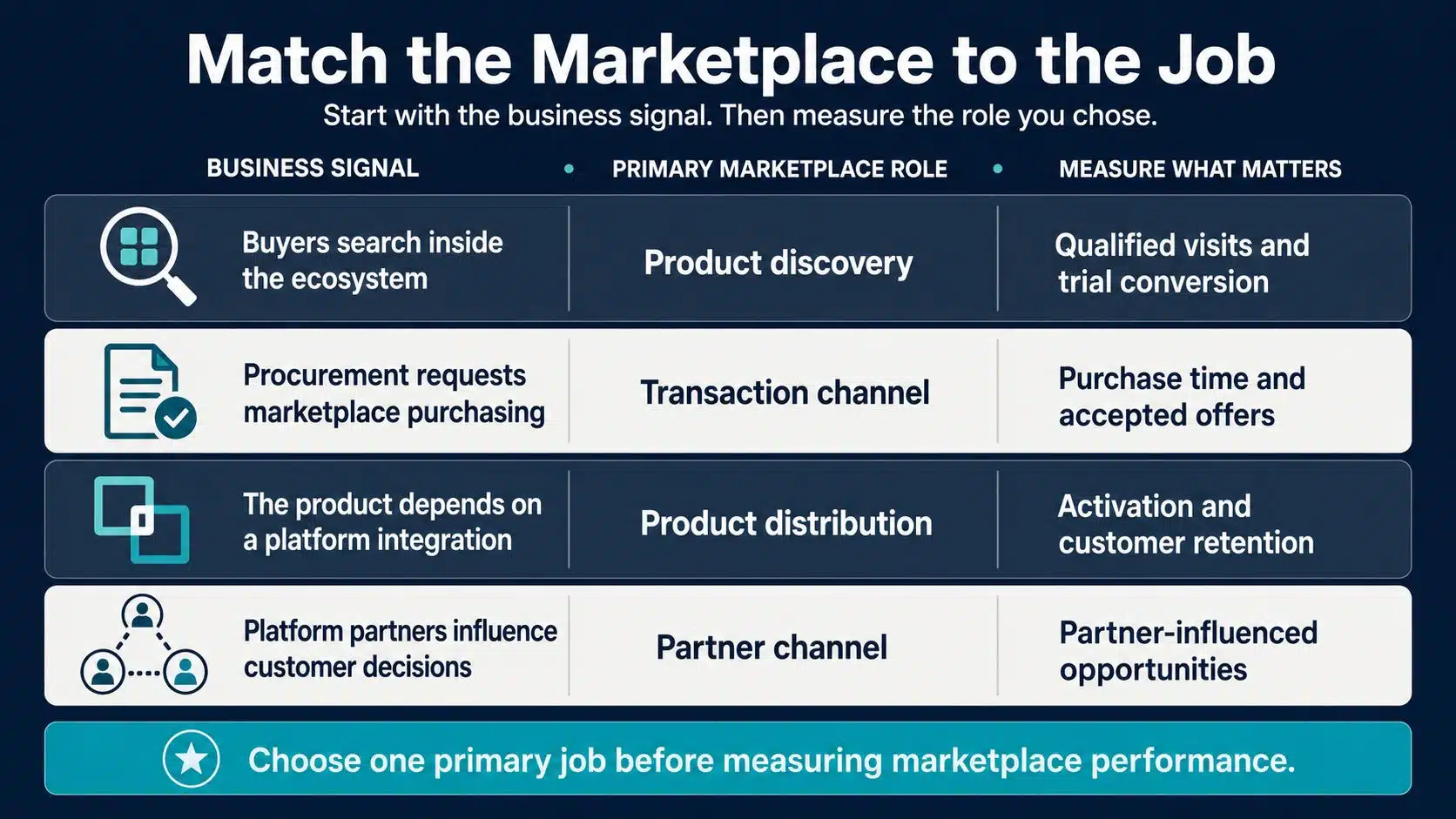
Not every marketplace plays the same role. Cloud marketplaces operated by major cloud providers often function as enterprise procurement channels. They may support negotiated private offers, centralized billing, partner participation, and different subscription or usage-based purchasing models.
Some purchases may count toward a customer’s existing cloud commitment, but this depends on the provider, product, agreement, and transaction structure. A vendor should confirm eligibility before making that part of its sales pitch.
App ecosystem marketplaces are often closer to product distribution channels. A customer might use an ecosystem marketplace to discover, install, authorize, pay for, and manage an app connected to a platform such as Shopify, Salesforce, Atlassian, or HubSpot.
The integration is usually more important in this model. A workflow app built for Jira, for example, may rely on the Atlassian ecosystem for both discovery and delivery. An enterprise security platform, by contrast, may use a cloud marketplace mainly to process deals its sales team has already developed.
Vertical marketplaces provide another option. They may have smaller audiences, but those audiences can be highly relevant when the marketplace is trusted within a specific industry.
The best marketplace is not necessarily the largest one. It is the one that matches how the company’s actual customers work and buy.
When a SaaS Marketplace Is Worth Using
Marketplace expansion makes the most sense when there is evidence of customer demand, ecosystem fit, or purchasing friction.
Customers are already asking for it
Repeated customer requests are the clearest signal. Those requests may come from procurement, finance, IT, or a cloud-management team rather than the person using the software. Sales teams should record them carefully. A pattern of otherwise promising deals slowing down because customers want a particular purchasing route is meaningful evidence.
Customer pull is more useful than noticing that several competitors have marketplace listings.
The target customers already use the ecosystem
A marketplace becomes more valuable when the company’s ideal customers are concentrated around the related cloud provider, business platform, or industry ecosystem.
Audience size alone can be misleading. A smaller marketplace with a strong match to the product may produce better results than a large one where buyers have little reason to notice or trust the listing.
The product has a meaningful platform connection
For ecosystem apps, the integration should be part of the product’s value rather than a thin excuse to enter the marketplace.
Customers should be able to see what the connection helps them accomplish. If the integration is unreliable, difficult to configure, or barely related to the main product, marketplace visibility is unlikely to create sustained use.
Procurement is delaying healthy deals
A marketplace can be valuable when the customer understands the product, accepts its value, and wants to move forward, but the normal purchasing process is causing delays.
It cannot repair weak positioning, poor product-market fit, unclear pricing, or a sales pipeline filled with unqualified prospects. Marketplaces remove certain purchasing obstacles; they do not create a reason to buy.
The company can support the channel properly
Marketplace readiness is partly product and operational readiness.
The business needs stable pricing, dependable provisioning, clear entitlements, responsive support, and a workable renewal process. Someone must also own the listing, private offers, platform requirements, reporting, and internal coordination.
Without that ownership, marketplace customers can become trapped between the platform and the vendor whenever something goes wrong.
When a Marketplace Is More Distraction Than Strategy
I would hesitate to invest heavily in a marketplace while the company is still changing its ideal customer, main use case, or pricing every few months.
The investment is also difficult to justify when:
- The only objective is “more exposure.”
- Few target customers use or request the marketplace.
- The product has no meaningful connection to the platform.
- Pricing cannot be represented clearly through the marketplace’s purchasing models.
- Margins cannot absorb transaction fees, discounts, or partner costs.
- The company cannot reliably manage provisioning, billing changes, support, and renewals.
- Sales and partner teams have no agreement about ownership or compensation.
- No one has been assigned to operate the channel after launch.
A marketplace adds another commercial and technical system to maintain. That complexity should solve a problem that customers or revenue teams can clearly describe.
What Must Work Before the First Customer Buys
Publishing the product page is usually the visible part of the launch. The harder work begins when someone clicks the purchase button.
The marketplace and SaaS product need a dependable way to recognize the transaction, create or connect the customer’s account, apply the correct plan, and keep the subscription status accurate.
Usage-based products may also need reliable metering and reporting. Contract products need processes for offer creation, acceptance, expiration, renewal, and amendment.
The team should map less obvious situations as well:
- What happens if the buyer already has a direct account?
- Can a direct customer move to marketplace billing?
- How are upgrades, additional seats, and usage handled?
- Who investigates a failed provisioning event?
- What happens inside the product when a subscription is cancelled?
- Who contacts the customer before renewal?
- How are refunds, disputed charges, or expired private offers handled?
These are not merely back-office concerns. A customer who pays successfully but cannot access the product has experienced a product failure.
Marketplace approval should not be overstated either. A platform may review products against its own listing, technical, or security requirements, but that does not replace the customer’s legal, privacy, security, or compliance checks.
Count the Full Cost of the Channel
Marketplace fees and revenue-sharing terms vary by platform, product type, transaction, partner structure, and program. They can also change, so current terms should be checked before the financial model is approved. The platform fee is not the full cost.
A realistic calculation should account for: Contract revenue minus marketplace fees, customer discounts, reseller or partner share, infrastructure, sales compensation, support, and marketplace operations.
A lower transaction fee does not automatically make one marketplace more profitable. The company also needs to consider engineering maintenance, reporting work, partner administration, private-offer management, and the amount of manual support each transaction requires.
Internal incentives matter just as much. If a sales representative develops the opportunity but loses credit when the buyer uses a marketplace, the sales team may avoid the channel. If a partner influences the deal, the company needs a fair and consistent way to recognize that contribution.
The customer’s preferred purchasing route should not become an internal argument about who owns the revenue.
How I Would Choose and Test the First Marketplace
I would begin with customer evidence rather than trying to launch everywhere.
The selection decision should consider:
- Which marketplaces customers already use.
- What procurement teams request during active deals.
- Whether the product has a genuine technical relationship with the platform.
- How well the available contract and pricing models fit the product.
- The full economics of a realistic transaction.
- The platform’s security, support, reporting, and technical requirements.
- Whether there is a credible partner or co-selling opportunity.
Co-selling should be treated carefully. Marketplace participation may create access to partner programs or platform sales teams, but promotion is not automatic. Such programs commonly have eligibility, technical, revenue, and process requirements.
Once a marketplace has been selected, I would test it with a limited group of real customers. A focused pilot can reveal provisioning problems, confusing instructions, pricing mismatches, and internal ownership gaps before the company invests in a wider launch.
Starting with one marketplace also keeps the learning manageable. Every additional platform can bring separate integrations, contracts, billing rules, offer processes, reports, and partner relationships.
Multi-marketplace distribution can be worthwhile, but it should follow proven demand.
Measure the Channel Honestly
Marketplace revenue by itself does not explain how the channel is performing.
I would separate opportunities into three categories:
- Marketplace-sourced: The marketplace introduced the customer or generated the opportunity.
- Marketplace-assisted: The platform, its sales team, or a partner meaningfully influenced the opportunity.
- Marketplace-transacted: The opportunity came from elsewhere, but the purchase was completed through the marketplace.
This prevents a company from crediting the marketplace for demand created by its sales or marketing teams. It also reveals what the marketplace is genuinely good at doing.
Depending on the strategy, useful measures may include:
- Qualified opportunities sourced through the marketplace.
- Listing-to-trial and trial-to-paid conversion.
- Private offers created and accepted.
- Time required to move from commercial agreement to purchase.
- Average contract value.
- Renewal and expansion rates.
- Contribution margin after channel costs.
- Partner-influenced revenue.
- Provisioning failures and manual support work.
The measures should match the marketplace’s intended role. A procurement-focused channel should not be judged mainly by page views, just as a product-led app marketplace should not be judged only by the value of a few enterprise contracts.
Building Your Own Marketplace Is a Different Decision
Creating a company-owned marketplace is not the same as selling through an established one.
An owned marketplace may make sense when a SaaS company has a meaningful installed customer base, stable APIs, customer demand for complementary products, and third-party developers or service providers ready to participate.
The company then has to attract and support both buyers and sellers. It must establish quality and security rules, help customers discover useful products, manage access, oversee billing or payouts where applicable, and handle disputes or policy violations.
This is a platform strategy, not a simple distribution feature.
Network effects do not appear simply because a marketplace exists. Without enough useful supply and customer demand, the result may be little more than an expensive partner directory. In many cases, improving integrations or creating a curated partner catalog is a more sensible first step.
Make the Channel Earn Its Complexity
A sound SaaS marketplace strategy starts with a customer problem that already exists.
The marketplace might help customers find a product inside a platform they trust. It might make an integration easier to install. It might give an enterprise buyer a more convenient procurement route. It could also support partners or make negotiated deals easier to transact.
Any of those outcomes can justify the channel. What does not justify it is the assumption that publishing a listing will automatically produce leads, partnerships, or faster sales.
I would move forward when there is clear customer pull, a strong ecosystem fit, or repeated procurement friction, and when the company is ready to support the entire customer journey. If those conditions are missing, the better decision may be to improve the product, pricing, or direct buying experience first.
The marketplace should earn its complexity by making a real purchase or product experience noticeably easier.
Frequently Asked Questions on SaaS Marketplace Strategy
1. Will a SaaS marketplace listing automatically generate leads?
No. A listing can improve visibility, but qualified demand still depends on product relevance, positioning, proof, reviews, ecosystem fit, and active go-to-market work. Some marketplaces are much stronger at processing existing demand than creating new demand.
2. Which SaaS marketplace should a company choose first?
Choose the marketplace most closely connected to how target customers already work and buy. Customer requests, procurement data, platform usage, integration relevance, and workable economics are better signals than marketplace size.
3. Can a SaaS company sell directly and through a marketplace?
Yes. Many SaaS companies support both routes. A customer may negotiate with the direct sales team and complete the purchase through a marketplace. Clear rules for pricing, sales credit, customer ownership, and renewal help prevent conflict.
4. Do marketplace purchases count toward a customer’s cloud commitment?
Some eligible purchases may count, but not every product or transaction qualifies. The answer depends on the cloud provider, the customer’s agreement, and the structure of the offer. Eligibility should be confirmed before it is promised.
5. When should a SaaS company build its own marketplace?
An owned marketplace becomes realistic when the company has a substantial customer base, stable APIs, demand for complementary solutions, and partners willing to build them. Without those conditions, a partner directory or focused integration program is usually a more practical starting point.