

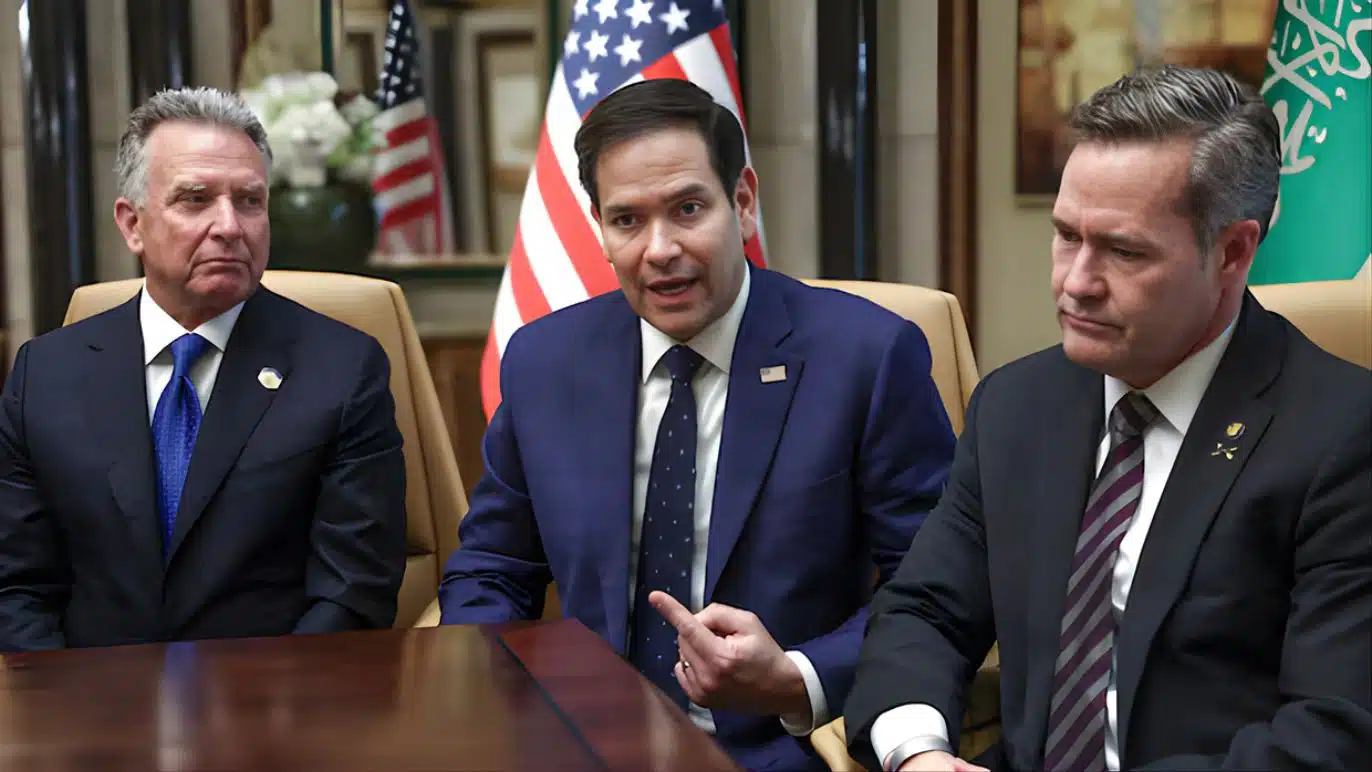
The United States and Russia have convened peace talks in Miami, Florida, in a renewed effort to end the ongoing war in Ukraine. These negotiations, led by senior envoys from both nations, have been described as “constructive” by Russian officials, yet significant divisions persist between the warring parties and their international backers. The talks come at a critical juncture, as both sides continue to exchange long-range strikes even as diplomats attempt to hammer out a framework for a ceasefire and eventual peace agreement.
High-Stakes Diplomacy in Miami
Over the weekend, Russian President Vladimir Putin’s envoy, Kirill Dmitriev, arrived in Miami to meet with U.S. Special Envoy Steve Witkoff and President Donald Trump’s son-in-law Jared Kushner. Dmitriev, who also serves as the CEO of the Russian Direct Investment Fund, told reporters that the discussions were proceeding positively and would continue into Sunday. U.S. Secretary of State Marco Rubio was also expected to participate, underscoring the high-level nature of these talks.
The U.S. has proposed a new format for negotiations that would include not only Ukraine, Russia, and the United States, but also European representatives. Ukrainian President Volodymyr Zelenskyy confirmed that the U.S. indicated it would hold a separate meeting with Russian representatives, with a format that may eventually involve Ukraine, America, Russia, and Europe.
The Contentious 20-Point Peace Plan
At the heart of these negotiations is a 20-point peace plan that has evolved from an initial 28-point proposal. Ukraine handed a revised version of this plan to the United States in early December, narrowing the scope of the original draft and focusing on key issues such as territorial arrangements, governance of the Zaporizhzhia Nuclear Power Plant, and the use of frozen Russian assets for Ukraine’s reconstruction.
The plan calls for:
-
Affirmation of Ukraine’s sovereignty, but with significant territorial concessions, including the withdrawal of Ukrainian forces from parts of Donetsk Oblast and the recognition of Crimea as Russian territory.
-
A non-aggression pact between Russia, Ukraine, and Europe, with the U.S. acting as mediator.
-
Ukraine’s commitment not to join NATO, and the establishment of a demilitarized buffer zone in eastern Ukraine.
-
Economic incentives, including the lifting of sanctions on Russia and the allocation of frozen Russian assets for Ukraine’s reconstruction.
-
Security guarantees for Ukraine, inspired by NATO’s Article 5, with the U.S. and its European allies pledging to defend Ukraine against any future Russian aggression.
Security Guarantees and Territorial Concessions
The security guarantee is a major point of contention. The U.S. proposal would obligate the U.S. and its European partners to treat any aggression against Ukraine as an attack on the entire transatlantic community, potentially triggering a coordinated military response. This commitment would last for an initial period of ten years, with the possibility of renewal.
However, the territorial concessions demanded by Russia remain a major obstacle. The plan stipulates that Ukraine must withdraw from parts of the Donbas region and accept Russia’s control over Crimea. Russia has also demanded that Ukraine’s military be limited to 600,000 troops, a reduction from its current size. Ukrainian officials have expressed reluctance to accept these terms, arguing that they undermine Ukraine’s sovereignty and national interests.
Reactions and Political Controversy
The Miami talks have sparked intense debate both domestically and internationally. Critics argue that the U.S.-backed peace plan favors Russian interests and demands significant concessions from Ukraine. Senator Roger Wicker, Republican chair of the Senate Armed Services Committee, stated that Ukraine should not be compelled to surrender its lands to Vladimir Putin.
Ukrainian President Zelenskyy has been cautious in his public statements, emphasizing the need for “real, concrete dialogue” and refusing to compromise on Ukraine’s core interests. He has also called on Washington to intensify pressure on Russia, while Putin has insisted that his demands must be met for diplomacy to succeed.
European leaders have also expressed concern about the proposed plan, with some arguing that it does not go far enough to protect Ukraine’s sovereignty. European officials have spent the past two weeks working to coordinate security guarantees for Kyiv, including the establishment of a demilitarized zone along the current frontlines and troop pledges for training Ukrainian forces and monitoring any ceasefire.
Ongoing Military Conflict
Despite the diplomatic efforts, the war in Ukraine continues to rage. As negotiators met in Miami, Russia and Ukraine exchanged long-range drone strikes, with Ukraine’s air force reporting that Russia launched 97 drones overnight, of which 75 were shot down or suppressed. Russia’s Defense Ministry claimed to have downed at least three Ukrainian drones.
Putin has reiterated his hardline stance, stating that peace is only possible on the basis of principles he outlined in a speech last year, which include Ukraine’s permanent exclusion from NATO and the withdrawal of Ukrainian forces from all territory Russia claims in eastern and southeastern Ukraine. He has also claimed that military momentum is with Moscow’s forces, saying its troops are “advancing on all fronts”.
The Path Forward
The Miami peace talks represent a critical moment in the effort to end the war in Ukraine. While the negotiations have been described as constructive, significant divisions remain between the parties. The U.S. 20-point peace plan offers unprecedented security guarantees for Ukraine but demands significant territorial concessions that Kyiv has been reluctant to accept. European leaders are also working to coordinate their own security guarantees and ensure that any agreement protects Ukraine’s sovereignty.
As the talks continue, the international community will be watching closely to see whether a compromise can be reached that brings an end to the war and establishes a lasting peace in the region.
























