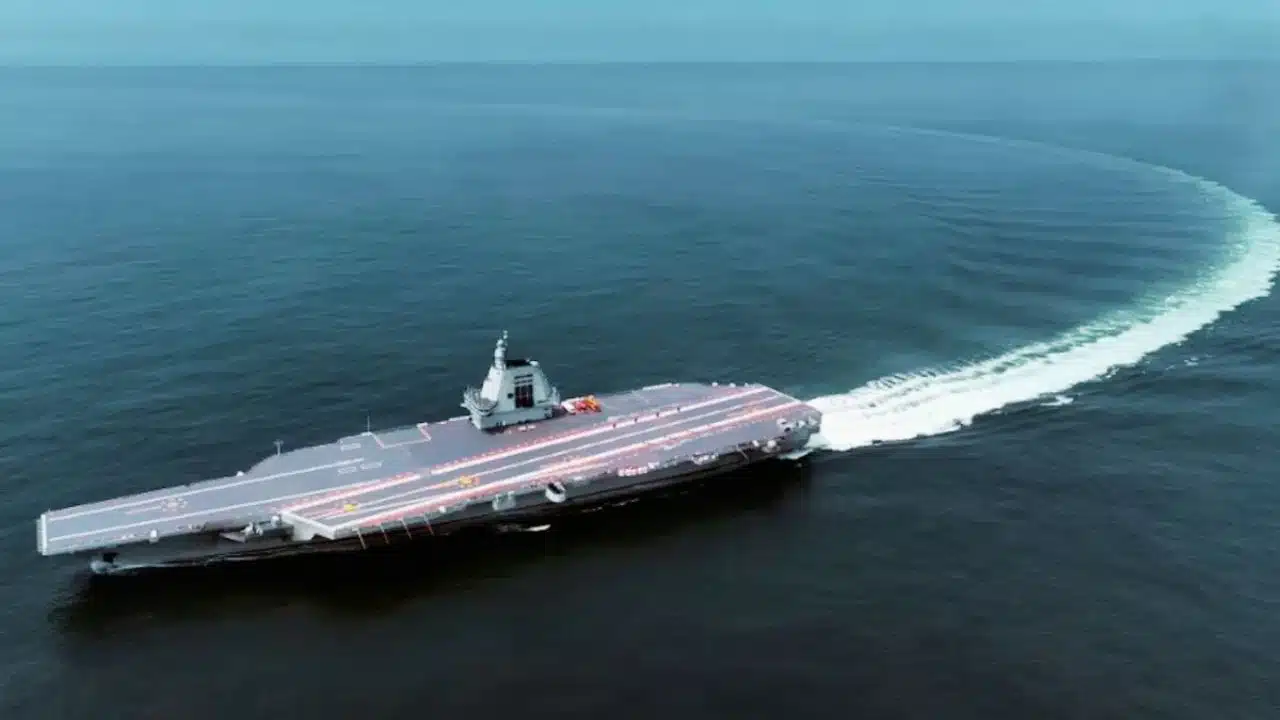
The contest for control of the Pacific skies is intensifying as the United States and China accelerate military deployments, warplane development, and regional alliances that could shape the balance of power for decades. From long-range bombers and stealth jets to new air bases and missile networks, both sides are preparing for a potential showdown over Taiwan, the South China Sea, and critical sea lanes that carry much of the world’s trade.
At stake is not just regional influence but the broader rules-based order in the Indo-Pacific, where air superiority is viewed as a decisive factor in any future conflict.
A Strategic Theater Stretching From Hawaii to the Himalayas
The Pacific is no longer just a distant oceanic buffer for Washington—it has become the primary arena of great-power competition. For Beijing, it is the gateway from a historically “continental” power to a blue-water global force.
Military planners describe a vast operational theater:
- To the east, the U.S. projects power from Hawaii, Guam, and increasingly from northern Australia.
- To the west, China pushes outward from its coastal megacities and fortified islands in the South China Sea.
- In between lie Japan, the Philippines, Taiwan, and other key partners whose airspace and basing rights could prove decisive.
Control of this airspace is essential not only for defending territory but also for protecting critical maritime chokepoints, securing supply lines, and ensuring access for military and commercial traffic.
China’s Rapid Military Aviation Build-Up
China’s People’s Liberation Army Air Force (PLAAF) has undergone one of the fastest transformations of any air force in modern history. Once reliant on outdated Soviet-era fighters, it now fields a growing roster of advanced aircraft.
Key elements of China’s air power push include:
- Stealth fighters: The Chengdu J-20, China’s first operational stealth fighter, is being produced in increasing numbers. Beijing increasingly uses it for patrols near Taiwan and the East China Sea, signaling confidence in its capabilities.
- Long-range bombers: Development of the H-20 stealth bomber, intended to threaten U.S. bases across the Pacific, continues under tight secrecy. If fielded as advertised, it could extend China’s conventional and nuclear reach deep into the second island chain.
- Mass-produced 4.5-generation jets: China’s J-10C, J-11B, and J-16 fighters combine modern avionics, long-range missiles, and electronic warfare capabilities, giving the PLAAF significant mass and flexibility.
- Unmanned systems: From reconnaissance drones over the Taiwan Strait to experimental “loyal wingman” concepts, unmanned aircraft are becoming a key part of China’s air strategy.
Alongside new platforms, China has invested heavily in training, logistics, refueling capacity, and integrated air defense networks featuring long-range surface-to-air missiles.
The U.S. Response: Retaining the Edge, Spreading the Risk
The United States still holds clear advantages in combat experience, high-end stealth aircraft, and networked warfare, but U.S. commanders increasingly warn that superiority can no longer be assumed.
Washington’s response rests on three pillars:
- Advanced aircraft: The U.S. Air Force and Navy continue to deploy fifth-generation aircraft such as the F-22 Raptor and F-35 Lightning II across the Pacific, with rotations in Japan, South Korea, and carrier strike groups.
- Distributed basing: To counter China’s growing missile threat to large, fixed bases like Guam and Kadena in Okinawa, the Pentagon is pursuing “Agile Combat Employment.” This concept envisions dispersing aircraft across smaller, more agile airfields throughout the region, including in the Philippines and Micronesia.
- Allied integration: U.S. forces increasingly train to operate seamlessly with partner air forces, sharing surveillance data, coordinating patrols, and rehearsing joint responses to crises.
Senior U.S. officials repeatedly emphasize that retaining air dominance in the Pacific will require not just more planes but smarter basing, more robust supply lines, and resilient communications networks under cyber and electronic attack.
Taiwan: The Flashpoint That Shapes Air Planning
Taiwan sits at the heart of the competition. Both Chinese and U.S. military planning centers on scenarios involving a blockade, coercion campaign, or outright invasion of the self-governed island that Beijing claims as its own.
For China, air dominance over and around Taiwan would be essential to:
- Suppress Taiwan’s air defenses and air force.
- Prevent or delay U.S. and allied reinforcements from reaching the island.
- Provide cover for amphibious and airborne operations.
For Washington, keeping air corridors open and ensuring Taiwan can defend its airspace are critical to deterring Beijing. The U.S. regularly flies reconnaissance missions and bomber flights near the island while conducting exercises with allies that simulate rapid reinforcement and air defense operations.
The result is a constantly tense environment in which Chinese and U.S. aircraft frequently operate in close proximity, raising concerns about miscalculation or accidents.
Island Chains and the Battle for Access
Strategists often describe the Pacific in terms of “island chains” that shape military movement and access. The first island chain runs from Japan through Taiwan and the Philippines to the South China Sea; the second runs through Guam and Micronesia.
China seeks to:
- Break through the first island chain to operate more freely in the Western and Central Pacific.
- Push U.S. forces farther east, complicating their ability to intervene quickly in a crisis.
The U.S. and its partners aim to:
- Maintain control of key airfields and ports along the first and second island chains.
- Build overlapping air and missile defense networks that can withstand early strikes.
This competition has transformed remote islands into strategic assets. Small airstrips in the Philippines, northern Australia, and Pacific island nations are being upgraded for military use, refueling operations, and rapid deployments.
Allies and Partners: Force Multipliers in the Sky
The Pacific air race is not a purely bilateral contest. U.S. alliances and partnerships across the region are central to the emerging balance.
- Japan is dramatically ramping up defense spending and acquiring advanced F-35 fighters, long-range missiles, and upgraded air defenses. Tokyo is also expanding joint exercises with the U.S. and Australia.
- Australia is investing in F-35s, long-range strike capabilities, and under AUKUS, advanced technologies including potential future unmanned platforms and deep strike systems.
- The Philippines has shifted toward closer security cooperation with Washington, granting expanded access to bases that can support U.S. aircraft near the South China Sea and Taiwan.
- South Korea continues to field advanced fighters and integrated air defenses, while coordinating closely with U.S. forces on the Korean Peninsula.
These countries do not always align perfectly on every issue, but collectively they offer basing, airspace, and political support that significantly complicate China’s strategic calculus.
Missiles, Air Defense, and the Blurring of Air and Space
Air dominance in the Pacific is no longer just about fighters and bombers. Long-range precision missiles, integrated air defense systems, satellites, and cyber capabilities are increasingly intertwined with traditional air power.
China’s arsenal of ballistic and cruise missiles is central to its strategy. These systems are designed to:
- Target air bases, runways, and fuel depots early in a conflict.
- Hold U.S. carriers and large surface ships at risk.
- Challenge U.S. freedom of maneuver inside the first and second island chains.
The U.S. is responding with:
- Hardening and dispersing airfields to survive initial strikes.
- Developing its own long-range fires, including hypersonic missiles, to hold Chinese assets at risk.
- Investing heavily in missile defense systems, space-based surveillance, and electronic warfare.
In this environment, air dominance increasingly depends on the ability to protect and reconstitute key nodes—satellites, radars, data links, and logistical hubs—as much as on aircraft performance.
Escalation Risks and Close Calls
With more patrols, intercepts, and reconnaissance flights, the risk of dangerous encounters has risen sharply. U.S. officials have accused Chinese pilots of unsafe behavior in international airspace, releasing cockpit footage of close passes and aggressive maneuvers. Beijing, in turn, accuses Washington of provocative surveillance near its coastlines.
Analysts warn that:
- A mid-air collision or misinterpreted maneuver could rapidly escalate tensions.
- Crisis communication channels between Beijing and Washington remain fragile and underused.
- Domestic politics in both countries could make de-escalation harder in the aftermath of an incident.
These concerns have prompted renewed calls for air encounter protocols and military-to-military dialogue, but progress has been uneven and vulnerable to broader diplomatic strains.
Technology Race: From AI-Assisted Combat to Drones
Beneath the visible deployments lies a technology race that could redefine air warfare. Both Washington and Beijing are pouring resources into:
- Artificial intelligence: AI-assisted decision support, targeting, and mission planning aim to shorten reaction times and sift through vast volumes of sensor data.
- Autonomous and semi-autonomous drones: Swarming drones, “loyal wingmen” flying alongside manned aircraft, and high-altitude surveillance platforms could change how air forces operate in contested environments.
- Electronic warfare: Jamming, spoofing, and disrupting communications and radar are increasingly central to gaining an edge without firing a shot.
The side that better integrates these tools into a coherent, resilient system could gain a decisive advantage, especially in the early hours of a conflict.
Economic Stakes and Global Implications
The race for Pacific air dominance is not just a military story. The sea lanes and air routes crisscrossing the region carry a large share of global trade, energy shipments, and high-value manufacturing goods.
A serious crisis, even short of war, could:
- Disrupt shipping and air freight, with cascading effects on supply chains.
- Shake financial markets, especially in Asia, Europe, and North America.
- Force regional governments to choose sides more openly, reshaping alliances and trade patterns.
This economic interdependence imposes a strong incentive on all sides to manage competition and avoid conflict, even as military preparations accelerate.
A Future Defined by Deterrence and Uncertainty
The United States and China both argue that their actions are defensive in nature: Washington says it seeks to uphold a free and open Indo-Pacific, while Beijing insists it is protecting its sovereignty and security.
Yet the net result is an intensifying arms race in the skies above the Pacific:
- More sophisticated aircraft and missiles.
- More contested airspace and intercepts.
- More bases, alliances, and overlapping defense networks.
Whether this evolving balance produces stable deterrence or sharpens the risk of confrontation will depend on decisions made in Washington, Beijing, and regional capitals in the years ahead. For now, the Pacific remains the central arena where two great powers test the limits of their reach—and where air dominance could decide the outcome of any future crisis.