
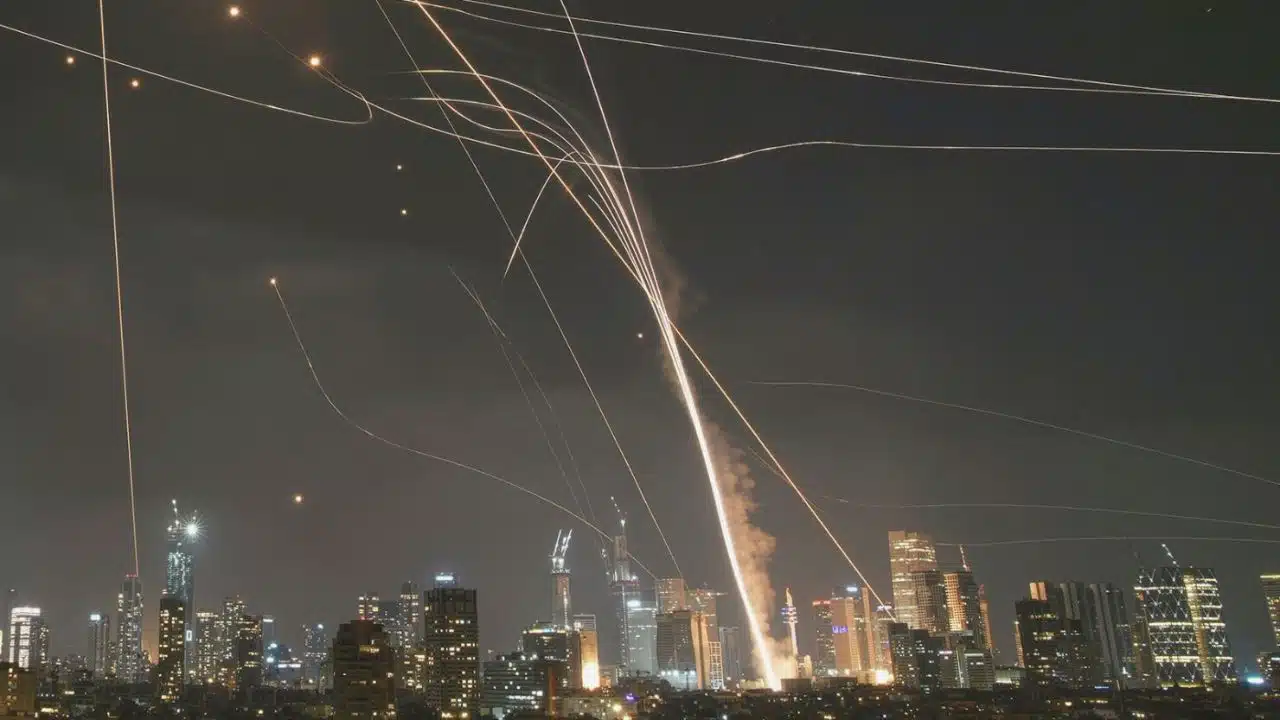
Tehran is reportedly ramping up its ballistic missile manufacturing to prepare for a potential massive assault on Israel, with factories operating around the clock to enable the launch of up to 2,000 missiles in a single barrage. This buildup comes months after a 12-day war in June 2025 that left both nations on high alert, raising concerns among regional experts that another confrontation could be imminent. Israeli officials, meanwhile, are monitoring these developments closely, viewing Iran’s actions as a direct threat to national security.
The June 2025 War: A Prelude to Renewed Tensions
The current escalation traces back to Israel’s surprise airstrikes on Iran’s nuclear facilities in June 2025, which targeted key infrastructure including missile production sites and enrichment centers. Iran retaliated with approximately 500 ballistic missiles over 12 days, resulting in significant casualties: 32 deaths and over 3,000 injuries in Israel, while more than 1,000 people perished in Iran from Israeli counterstrikes. The conflict, which also involved U.S. airstrikes on Iranian nuclear sites, ended in a fragile ceasefire brokered by Washington, but damage assessments now suggest Iran’s core capabilities were less impaired than initially believed.
Experts note that while the war depleted some of Iran’s missile stocks, it failed to dismantle its broader program, allowing Tehran to rebuild swiftly. Israeli Prime Minister Benjamin Netanyahu had warned of Iran’s production rate surging to 300 missiles per month, potentially leading to a stockpile of 20,000 over six years, though verification remains challenging amid restricted international access. The ceasefire has not quelled hostilities; instead, it has fueled a cycle of mutual suspicion, with both sides fortifying defenses in anticipation of round two.
Iran’s Missile Buildup: Aiming to Overwhelm Israel’s Defenses
At the heart of the renewed alarm is Iran’s aggressive push to enhance its missile arsenal, with reports indicating factories are producing thousands of advanced ballistic missiles designed for saturation attacks. Unlike the staggered launches in June, where Iran fired about 500 missiles over multiple days, Tehran now seeks the capacity to unleash 2,000 in one go, overwhelming Israel’s multi-layered defense systems like Iron Dome and David’s Sling.
Iranian engineers are reportedly working 24/7 shifts, focusing on medium-range ballistic missiles (MRBMs) with improved accuracy and range, potentially incorporating solid-fuel technology for quicker deployment. Analysts estimate Iran has already replenished much of its depleted stock—firing around 700 MRBMs in June left it with 300 to 1,300 remaining—while accelerating production to reach four-digit figures above 1,000. A senior Iranian source told the International Crisis Group that this strategy prioritizes quantity over precision, embodying the regime’s doctrine that “quantity is a quality of its own” in asymmetric warfare against a technologically superior foe.
This buildup is not isolated; it aligns with Iran’s broader military posture, including proxy activities through groups like Hezbollah and the Houthis. Regional observers warn that such preparations could enable strikes on Israeli cities like Tel Aviv and Jerusalem, far surpassing the limited impacts seen in prior exchanges where only 6% of missiles hit populated areas. No evidence points to an immediate attack, but the scale of production signals Tehran’s intent to deter or preempt Israeli aggression.
Nuclear Ambitions: The Uranium Stockpile Shadowing the Crisis
Compounding the missile threat is Iran’s persistent nuclear program, which survived the June strikes with a stockpile of highly enriched uranium sufficient for up to 11 nuclear warheads. Israeli intelligence believes this material was relocated to secure underground sites, while Tehran claims it was buried under rubble—a narrative dismissed by experts as a cover for continued enrichment.
The expiration of the 2015 Joint Comprehensive Plan of Action (JCPOA) in recent months has removed key oversight mechanisms, allowing Iran to operate a new enrichment facility without international inspectors. Supreme Leader Ayatollah Ali Khamenei has rejected renewed diplomacy, stating cooperation with the U.S. is impossible while Washington supports Israel and maintains a Middle East military presence. Gulf states, including Saudi Arabia and the UAE, view this opacity as a powder keg, with many believing another Israeli preemptive strike is “almost inevitable” to neutralize the nuclear risk.
U.S. President Donald Trump’s “maximum pressure” policy, including heavy sanctions, has further isolated Iran, pushing it toward self-reliance in both missiles and nuclear tech. Talks between Washington and Tehran collapsed before the June war, and with no revival in sight, the lack of transparency heightens the stakes for any missile exchange potentially escalating into a nuclear crisis.
Israel’s Response: Preparing for a More Aggressive Defense
Jerusalem is not standing idle, with senior officials signaling readiness for a “much more aggressive” retaliation in any future conflict, aiming to extend operations beyond the 12-day limit of June. The Israel Defense Forces (IDF) have bolstered air defenses and conducted drills simulating massive Iranian barrages, while intelligence operations track Tehran’s factories in real-time. A high-ranking Israeli source indicated the ultimate goal is regime change in Iran by the end of Trump’s term, viewing the current buildup as unfinished business from the summer war.
Prime Minister Netanyahu has publicly reiterated that Israel will strike preemptively if Iran nears nuclear breakout capability, echoing warnings issued since June. Despite the strain on resources—Israel intercepted most incoming missiles in the last conflict—experts believe its qualitative edge, including U.S.-backed systems, could still prevail against numerical superiority. However, the psychological toll is evident: the June strikes killed civilians, including children, prompting vows from Israeli leaders to protect the homeland at all costs.
Regional and Global Implications: A Tinderbox in the Middle East
The Iran-Israel standoff reverberates across the region, drawing in Arab powers wary of Tehran’s influence. Saudi Arabia, Egypt, and the UAE have deepened ties with Washington, leveraging economic partnerships to counter Iran and push for Gaza resolutions as a stabilizing factor. Syria’s post-Assad leadership, once an Iranian ally, now seeks U.S. support, further eroding Tehran’s strategic depth.
Globally, the crisis risks broader involvement, with Trump hinting at possible U.S. intervention while denying prior complicity in Israeli strikes. Energy markets remain jittery, as any escalation could disrupt oil flows through the Strait of Hormuz, spiking prices worldwide. Diplomatic efforts, including potential backchannel talks, appear stalled, leaving the international community to watch as both nations edge closer to the brink.