The energy landscape across the British coastline has shifted into a high-gear delivery phase as we move through 2026. With the announcement of the record-breaking Allocation Round 7 (AR7) results in January, which secured a massive 8.4 GW of new capacity, the industry is now focused on the practical hurdles of construction and grid integration. Meeting the ambitious 50 GW target by 2030 requires a tactical approach to revenue contracts and supply chain management.
This guide explores the essential strategies for succeeding in the current Offshore Wind Power market.
How We Selected Our 9 Best UK Offshore Wind Power Tips
To provide actionable guidance for the 2026 environment, we analyzed the latest regulatory updates from the Department for Energy Security and Net Zero and the performance metrics from the National Energy System Operator (NESO). Our selection focuses on the massive shift in grid connection logic and the introduction of extended revenue horizons that defined the AR7 auction. We prioritized strategies that address the core bottlenecks of planning consent and supply chain concentration.
The following benchmarks were used to evaluate which strategies offer the most significant advantage for developers and stakeholders this year.
-
Contractual Security: Evaluating the impact of the new 20-year CfD term on project bankability.
-
Grid Readiness: Focusing on the “Gated” connection process that prioritizes shovel-ready projects.
-
Planning Speed: Analyzing the success of the NSIP “Early Adopters” programme for faster decisions.
-
Innovation Viability: Assessing the commercial pathway for floating wind and hydrogen co-location.
By filtering these developments through the lens of the Clean Power 2030 Action Plan, we identified the nine most critical tips for the current market.
The current era of offshore development is defined by a “first ready, first connected” philosophy that rewards developers who have secured their supply chains and planning consents early. These nine tips provide the strategic roadmap needed to move from a successful auction bid to a fully operational wind farm.
The most significant change in the recent auction cycle involves the fundamental structure of the government’s price guarantee.
1. Leverage the New 20-Year CfD Revenue Horizon
For the first time in 2026, the government has extended the Contracts for Difference (CfD) term from 15 to 20 years. Large-scale portfolios like the 6.9 GW RWE award in AR7 utilized this longer horizon to significantly improve their debt coverage ratios. This extension provides a more stable revenue stream that better aligns with the 25 to 30 year operational life of modern high-capacity turbines.
Best for: Finance directors and institutional investors seeking long-term yield and improved project IRR.
Why We Chose It:
-
A longer contract allows developers to offer more competitive bids by spreading capital costs.
-
It materially increases the probability of reaching a Final Investment Decision (FID) in a high-interest environment.
-
The extended term reduces the annual debt repayment burden for the project.
Things to consider: Bidders must account for the fact that a longer contract duration may lead to lower weighted average strike prices compared to shorter terms.
While the revenue contract is essential, the ability to actually deliver that power to the consumer depends on the grid queue.
2. Optimize for the NESO “Gated” Connection Process
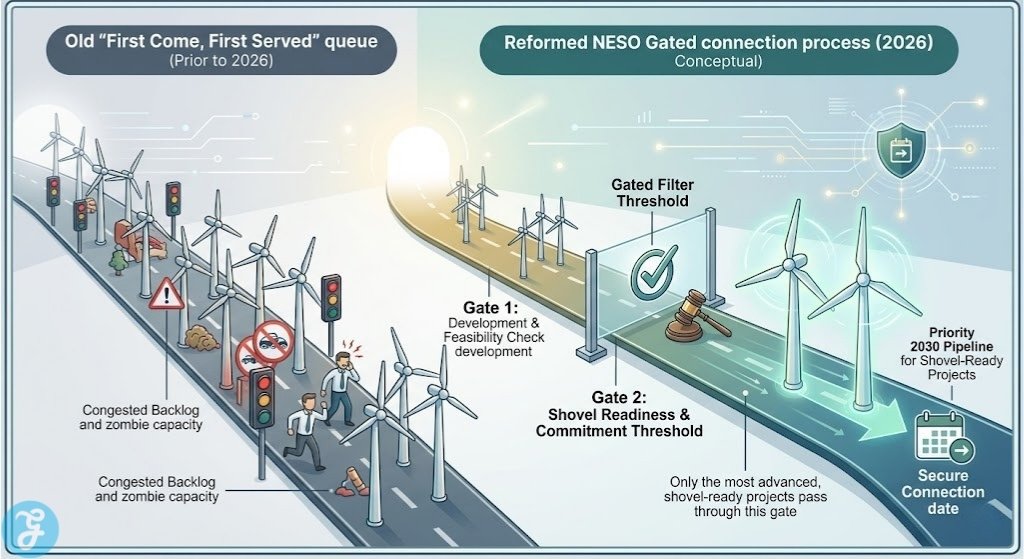
The National Energy System Operator (NESO) has fully operationalized its “Gated” connection process to clear the historical backlog of stalled projects. Projects are now sorted based on their readiness to build, with “Gate 2” status required for a firm connection date. Successfully navigating these gates requires rigorous proof of land rights and financial capability.
Best for: Development managers and grid specialists who need to secure a viable “export” date.
Why We Chose It:
-
It replaces the outdated “first come, first served” model with a logic based on project deliverability.
-
Alignment with national energy targets provides a prioritized path for high-impact offshore arrays.
-
It provides much higher certainty for investors regarding when a project will actually generate revenue.
Things to consider: NESO is conducting much tighter financial audits, and failing to show progress could lead to a project losing its place in the queue.
Securing a grid slot is only half the battle, as the physical infrastructure requires a streamlined planning approach.
3. Utilize the NSIP “Early Adopters” Planning Programme
The Secretary of State has increasingly used the Nationally Significant Infrastructure Project (NSIP) “Early Adopters” programme to fast-track decisions. This initiative focuses the examination process on the most critical environmental issues from day one. Projects like Outer Dowsing have shown that this approach can reduce the time to a Development Consent Order by several months.
Best for: Consenting leads and environmental consultants looking to avoid long-term planning bottlenecks.
Why We Chose It:
-
It front-loads the consultation process to identify and resolve local objections before the formal application.
-
The programme utilizes specialized examination teams that are trained to handle the scale of 2026 projects.
-
A faster DCO decision allows for earlier procurement of long-lead items like turbines and cables.
Things to consider: This pathway requires a significantly higher upfront investment in stakeholder engagement and data collection.
Once planning is secured, the focus shifts to the physical availability of the components needed for construction.
4. Secure Supply Chain Capacity via Multi-Project Synergy
The concentration of capacity in the 2026 awards has put an immense strain on the global supply chain for turbines and foundations. Developers who bundle their procurement across multiple projects or portfolios gain significantly more leverage with original equipment manufacturers. This multi-project approach is the most effective way to secure a priority status in a market where vessel and factory slots are limited.
Best for: Procurement officers and project directors managing portfolios of more than 2 GW.
Why We Chose It:
-
Bundling contracts provides the scale needed to lock in prices against future inflationary pressures.
-
Strategic partnerships with suppliers ensure that your project is not bumped for a higher-paying competitor.
-
It allows for the sharing of specialized installation vessels across multiple sites to reduce downtime.
Things to consider: Relying on a single major supplier across multiple projects increases your exposure if that supplier faces technical or financial issues.
While traditional fixed-bottom arrays lead the current build-out, the industry is moving into deeper waters.
5. Identify Floating Wind “Niche” Opportunities
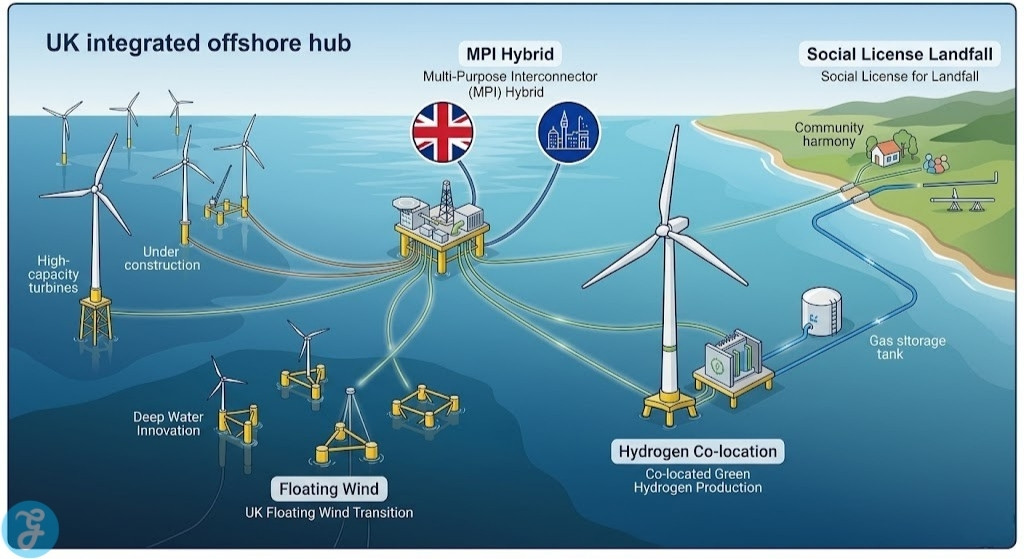
The successful 193 MW allocation for floating wind in AR7, including the 92.5 MW Pentland project, proves that this technology is moving toward commercial maturity. While strike prices remain higher at around £216 per MWh, these projects are essential for unlocking the deeper waters of the Celtic Sea and the Scottish coast. Floating Offshore Wind Power represents the primary growth area for the post-2030 energy mix.
Best for: Technology developers and specialized investors aiming to lead the next decade of offshore engineering.
Why We Chose It:
-
Floating technology can access higher and more consistent wind speeds found further from the shore.
-
Specialized CfD “innovation” pots protect these early-stage projects from being outbid by fixed-bottom arrays.
-
It enables the UK to maintain its position as a global hub for offshore engineering and assembly.
Things to consider: The infrastructure for large-scale floating wind assembly is still being developed in key UK ports.
The way that energy travels from the sea to the home is also undergoing a fundamental architectural change.
6. Transition to Multi-Purpose Interconnectors (MPIs)
The UK is rapidly moving away from point-to-point connections in favor of Multi-Purpose Interconnectors (MPIs). These “offshore hybrids” allow a wind farm to connect to multiple national grids simultaneously. This flexibility allows the developer to export power to whichever market offers the highest price at that moment, which significantly boosts the total revenue per MWh.
Best for: Commercial strategists and asset managers looking to maximize revenue through cross-border trade.
Why We Chose It:
-
MPIs reduce the total amount of coastal infrastructure and cabling needed to land power on the shore.
-
They provide a diversified revenue stream that is less dependent on the domestic UK market price.
-
The model is a core pillar of the new NESO North Sea “Supergrid” strategy.
Things to consider: The regulatory framework for cross-border trading involves complex grid codes that require specialized legal management.
Minimizing the footprint of these projects is essential for maintaining the support of the coastal communities.
7. Prioritize Social License for Cabling Landfall
Public resistance to onshore cabling and substations remains a primary risk to project timelines in 2026. The most successful developers are those who utilize Horizontal Directional Drilling (HDD) to bypass sensitive beaches and offer transparent community benefit funds. Building a “social license” is now a prerequisite for a smooth DCO examination and an eventual grid connection.
Best for: Community engagement teams and public relations officers working in sensitive coastal regions.
Why We Chose It:
-
Proactive engagement reduces the likelihood of costly judicial reviews that can stall a project for years.
-
Local support is increasingly viewed by regulators as a metric of project “deliverability.”
-
Community benefit funds create a long-term positive legacy for the project in the local region.
Things to consider: Developers should ensure that their community benefit commitments are standardized and fairly distributed.
As the industry grows, the first generation of wind farms is also approaching a major milestone.
8. Explore Life Extension and “Repowering” Potentials
Many of the UK’s early offshore projects are reaching the end of their original 20-year lifespans in 2026. Repowering these sites involves replacing older turbines with much larger and more efficient 15 MW models. This strategy is highly attractive because the site already has an established grid connection and a proven wind resource history.
Best for: Asset owners and O&M leads managing early-2000s era offshore sites.
Why We Chose It:
-
It avoids the decade-long wait for a new grid connection at an unproven site.
-
Existing consents can often be amended rather than needing a completely new DCO application.
-
Repowering allows for a significant increase in energy output from the same geographical footprint.
Things to consider: The structural integrity of the existing foundations must be rigorously tested before they can support much larger modern turbines.
The final frontier of the current market involves using wind power to solve the problem of energy storage.
9. Integrate with Green Hydrogen Production Hubs
To avoid curtailment during periods of high wind and low demand, developers are increasingly co-locating with green hydrogen electrolyzers. This allows “excess” power to be converted into a transportable gas that can be sold to industrial clusters. By 2026, the first wave of these integrated hubs is moving toward full construction in the North East and Scotland.
Best for: Integrated energy companies and industrial clusters looking for a reliable zero-carbon fuel source.
Why We Chose It:
-
Hydrogen production provides a valuable “sink” for power that the grid cannot currently take.
-
It diversifies the revenue streams of the wind farm by entering the industrial gas market.
-
Hydrogen integration is a key component of the government’s strategy for decarbonizing heavy industry.
Things to consider: The business model for green hydrogen is still evolving and requires a deep understanding of gas market dynamics.
Overview of UK Offshore Wind Power in 2026
The current state of the offshore market is one of rapid delivery supported by a more mature revenue and grid framework. The table below summarizes the key targets and performance metrics defining the sector this year.
The following data reflects the national targets and the current status of the offshore wind pipeline.
| Metric | 2026 Status | 2030 Target | Primary Mechanism |
| Operational Capacity | 16.2 GW | 50.0 GW | CfD AR7 – AR11 |
| AR7 Allocation | 8.4 GW (Record) | N/A | 20-Year Contracts |
| Grid Connection | Gated Reform | Gate 2 Priority | NESO Delivery Pipeline |
| Floating Wind | 193 MW Awarded | 5.0 GW | Innovation Subsidies |
| Supply Chain | High Concentration | Diversified Hubs | Port Investment Fund |
Our Top 3 Critical Factors and Why?
While all nine tips are vital, these three factors will have the most significant impact on project success in 2026.
-
Revenue Security: The 20-year CfD term is the single most important factor for securing the multi-billion pound financing needed for construction.
-
Grid Deliverability: Under the new NESO rules, being “ready-to-go” is the only way to avoid a decade-long wait for a grid connection.
-
Social License: Maintaining the support of coastal communities is essential for passing the final planning hurdles and avoiding legal delays.
How to Optimize Your Offshore Project by Yourself?
Navigating the 2026 offshore market requires a proactive approach to both the technical and the regulatory requirements of the sector. By aligning your project with the latest national standards, you can ensure a smoother path to commissioning.
-
Review Your Connection Agreement: Ensure your project meets the “Gate 2” criteria for a firm connection date under the new NESO rules.
-
Audit Your Supply Chain: Diversify your procurement to avoid being caught in the bottleneck created by the concentration of AR7 awards.
-
Evaluate Repowering Potential: If you own an aging site, begin the feasibility study for life extension or turbine replacement today.
-
Engage with MPI Consultations: Stay close to the evolving regulatory framework for multi-purpose interconnectors to capture future revenue upside.
The following table can help you determine the most appropriate strategy based on your project’s current development stage.
| Focus on Planning & Grid if… | Focus on Procurement & Finance if… |
| Your project is in the early “Gate 1” phase. | You have secured a DCO and a Gate 2 connection offer. |
| You are preparing for the AR8 or AR9 auctions. | You have a successful CfD award from AR7. |
| You need to secure local social license for landfall. | You are targeting a Final Investment Decision this year. |
The Final Checklist
-
[ ] Verify that your project fits the 20-year CfD eligibility criteria for future rounds.
-
[ ] Check the status of your grid connection against the NESO 2030 priority list.
-
[ ] Identify if your site is eligible for the NSIP “Early Adopters” programme.
-
[ ] Secure early slots with foundation and turbine suppliers to avoid 2028 bottlenecks.
-
[ ] Review the impact of the 2026 National Planning Policy Framework on your specific site.
Sustaining Global Leadership in the North Sea
The UK remains the global leader in offshore wind development, but the next four years are the most critical in its history. By utilizing the new 20-year revenue horizons, navigating the gated grid reforms, and securing a genuine social license, the industry can deliver on the promise of clean and affordable power. The success of Offshore Wind Power in 2026 is a testament to the resilience of a sector that is now the backbone of the British energy system.
Frequently Asked Questions About Offshore Wind Power
How long is a standard offshore wind contract in 2026?
Answer: Following the reforms introduced for AR7, the standard Contracts for Difference (CfD) term is now 20 years, up from the previous 15-year standard.
What is the difference between Gate 1 and Gate 2 connections?
Answer: Gate 1 is for early-stage projects that are still developing, while Gate 2 is for projects that have reached specific milestones and are ready for construction.
Is floating wind as cheap as fixed-bottom wind yet?
Answer: No, floating wind strike prices remain significantly higher at over £210 per MWh compared to around £91 per MWh for fixed-bottom projects.
Can a project lose its CfD if it is not built on time?
Answer: Yes, every CfD has a “Target Commissioning Window” and a “Longstop Date” and failing to meet these can lead to the contract being terminated.
What is the goal for UK offshore wind by 2030?
Answer: The UK government has set a target of 50 GW of operational offshore wind capacity by the year 2030.