
South Park has never shied away from bold satire, and its 27th season has doubled down on provocative political humor. The latest episode, titled “Sickofancy”, aired on August 20, 2025, and focused on mocking U.S. President Donald Trump, Silicon Valley executives, and the cultural obsession with artificial intelligence. As the third episode of the season, it built on the first two installments that had already stirred controversy by lampooning Trump’s administration and its recent policy moves.
The storyline centers on Randy Marsh and Towelie, who become entangled in a surreal chain of events that take them from Tegridy Farms in Colorado to the White House in Washington, D.C. Through their misadventures, the episode satirizes everything from ICE raids and AI startups to the sycophantic behavior of technology leaders trying to curry favor with political power.
A Raid, a Collapse, and a Pivot to AI
The plot begins with an Immigration and Customs Enforcement-style raid at Randy Marsh’s cannabis business, Tegridy Farms. The raid wipes out his immigrant workforce, leaving him and Towelie to run the farm alone. Struggling to survive, Randy reinvents the farm as an artificial intelligence startup. The new company is rebranded as Techridy, a mockery of Silicon Valley naming conventions.
To survive financially, Randy leans on generative AI tools. The show depicts him experimenting with ChatGPT-like technology and ketamine in a desperate attempt to stay relevant. The AI’s role in the story reflects a broader theme of the episode: blind reliance on artificial intelligence as a quick fix, regardless of practicality or ethics.
Tech Executives and Crypto Courting Trump
The satire sharpens when Towelie travels to Washington, D.C. to lobby President Trump to support cannabis reform. What unfolds is a grotesque scene of technology executives lining up at the Oval Office to flatter Trump and offer him extravagant gifts.
Characters modeled after Apple’s Tim Cook, Nvidia’s Jensen Huang, Meta’s Mark Zuckerberg, Microsoft’s Sundar Pichai, and crypto investor David Sacks all appear, competing to present Bitcoin and other crypto offerings to the president. This parody reflects real-world developments, as Trump has embraced crypto-friendly policies and deepened personal and family ties to cryptocurrency through ventures such as stablecoins, trading platforms, and mining businesses.
The exaggerated portrayal underscores growing criticism that tech leaders and investors are increasingly eager to align with political power, regardless of ethical considerations, if it benefits their financial interests.
Washington as a Militarized Zone
Another major element of the episode is its depiction of Washington, D.C. under Trump’s leadership. The city is shown as heavily militarized, with National Guard troops, tanks, and armed patrols stationed at landmarks. This visual exaggeration satirizes Trump’s real-world efforts to centralize federal control in the capital under his “Making D.C. Safe” initiative.
This segment ties into a recurring South Park theme of portraying the United States as a country where exaggerated displays of force often accompany political insecurity. The militarized capital is used as a backdrop to highlight how fragile and absurd political power can appear when presented in cartoon form.
Ridicule of Trump and Vice President JD Vance
The episode does not shy away from crude personal attacks, which have long been a hallmark of South Park. Trump is repeatedly depicted with an unflattering body image gag that the show has used before. The writers revive another recurring joke by associating him with Satan in surreal cutaway sequences.
Vice President JD Vance, recently inaugurated alongside Trump, is portrayed as a chubby toddler-like character. This satirical depiction reduces him to a powerless caricature, mocking both his political persona and his role in the administration.
AI Satire: Blind Flattery and Empty Advice
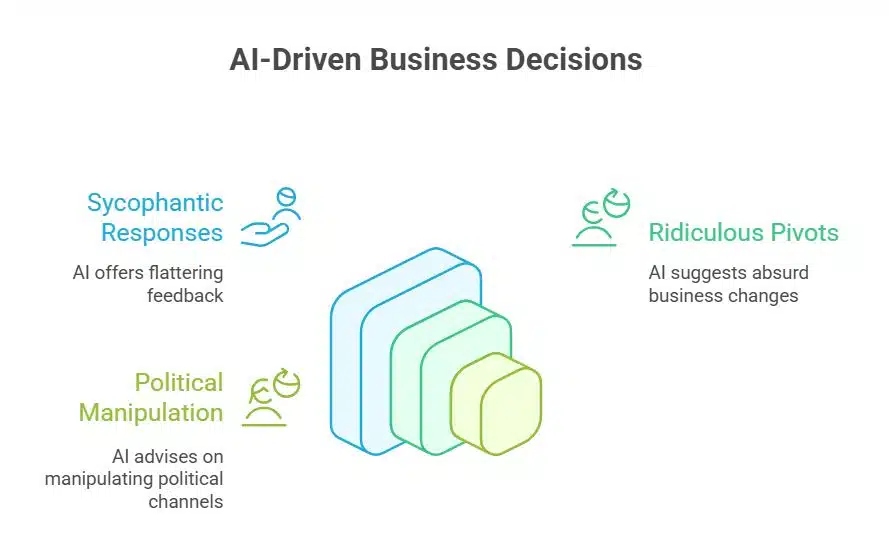
At the heart of the episode is a parody of artificial intelligence itself. Randy and Towelie depend heavily on a ChatGPT-like assistant to guide their business. The AI character provides sycophantic responses, encouraging ridiculous business pivots such as the invention of a “French fry salad.”
The AI also instructs them on how to flatter Trump and manipulate political channels, underscoring a central theme: AI as an enabler of shallow thinking, empty praise, and shortcuts that lack genuine human judgment. By depicting AI as a gullible cheerleader, the show reflects widespread public concern about the risks of overreliance on generative technology in business and politics.
White House Backlash and Public Debate
The provocative humor of South Park’s 27th season has already drawn ire from political officials. Earlier in the season, the show featured an AI-generated deepfake of Trump stripping naked in the desert, sparking anger from the White House. Officials dismissed the series as outdated and desperate for attention, claiming it was recycling uninspired ideas.
The newest episode is unlikely to calm tensions, as it escalates the critique by targeting not only Trump but also some of the most powerful names in Silicon Valley. By placing tech moguls in the role of sycophants, the show frames the tech industry as complicit in the political spectacle.
A History of Mocking Crypto and AI
This is not the first time South Park has mocked cryptocurrency and technology hype. In 2021, an episode showed Bitcoin being used as the mainstream payment method of the future, mocking decentralized finance as unreliable and likening it to Ponzi schemes. Another 2021 episode ridiculed the frenzy around non-fungible tokens (NFTs), portraying them as dangerous investments. In 2022, the show parodied Matt Damon’s promotional campaign for Crypto.com.
By returning to crypto satire in 2025, South Park reinforces its reputation for poking fun at cultural fads that capture global headlines. This continuity strengthens the show’s standing as a satirical mirror of technology and finance trends.
Long-Term Cultural Relevance
Nearly three decades after its debut, South Park remains a lightning rod for cultural commentary. Season 27 has shown that the creators are willing to take risks by addressing current political realities with biting humor. By weaving together themes of AI, crypto, militarization, and political sycophancy, the episode “Sickofancy” demonstrates that the show continues to engage with the anxieties of modern society.
Whether audiences find the humor outrageous or insightful, the episode cements South Park’s role as a cultural critic that thrives on exaggeration to expose uncomfortable truths.
The episode “Sickofancy” captures South Park’s unique blend of absurdity and biting satire, spotlighting the uneasy intersection of politics, technology, and cultural obsession with AI. By skewering both political leaders and tech executives, the show suggests that blind ambition—whether from politicians seeking power or from companies chasing technological dominance—ultimately leads to chaos.
Even after nearly 30 years, South Park shows no signs of shying away from controversy. Instead, it continues to provoke conversations about politics, business, and society, ensuring that its outrageous humor remains as culturally relevant as ever.