

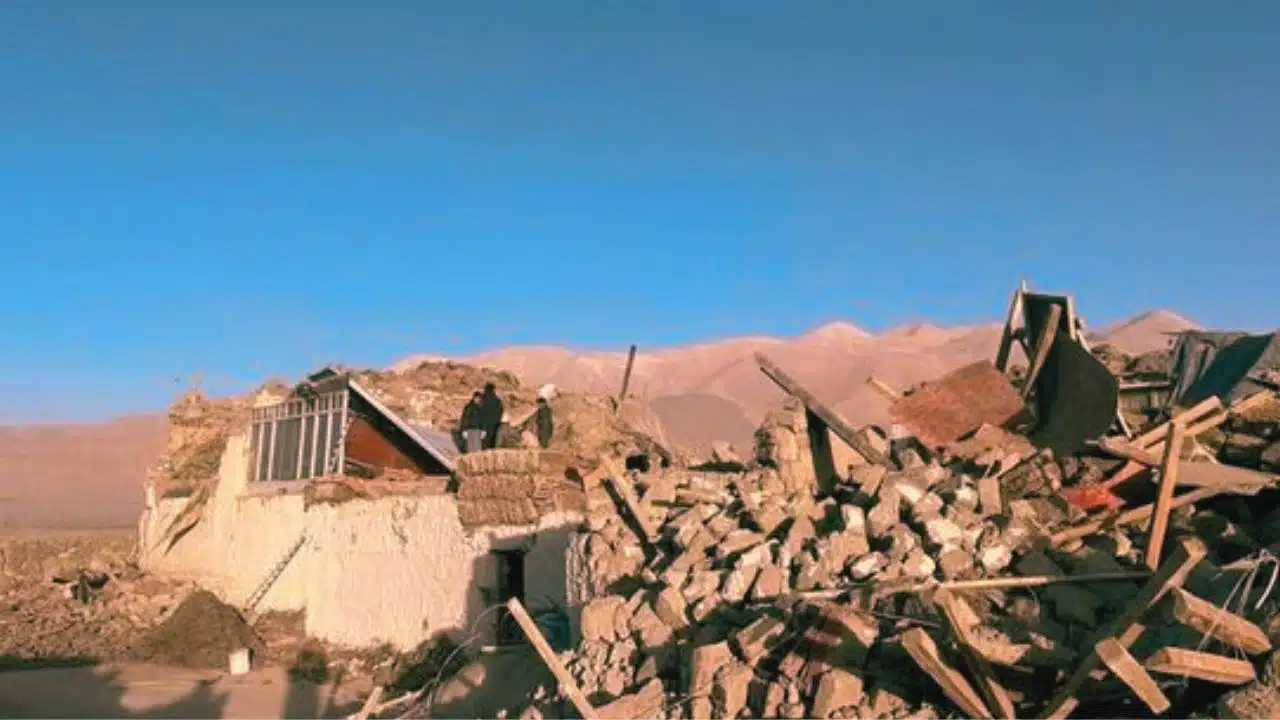
On Tuesday, January 7, 2025, a magnitude 7.1 earthquake struck the foothills of the Himalayas in Tibet, leaving a trail of devastation in its wake. This was one of the most powerful earthquakes the region has experienced in recent years. The quake’s epicenter was located in Tingri, approximately 80 kilometers (50 miles) north of Mount Everest, shaking not only Tibet but also neighboring countries, including Nepal, Bhutan, and India.
Chinese officials reported that over 400 people trapped in the rubble have been rescued, while more than 30,000 residents have been evacuated from the affected areas. Despite these efforts, the death toll has risen to at least 126 people, with 188 others injured.
Epicenter and Scope of the Quake
The epicenter of the earthquake was in the Tingri region of Tibet, a high-altitude area near Mount Everest. Known for its breathtaking landscapes, the region’s mountainous terrain is also part of the Qinghai-Tibetan plateau, one of the world’s most seismically active zones. The earthquake struck with such intensity that it was felt across borders, shaking buildings in Nepal, Bhutan, and parts of northern India.
Southwestern China and the Himalayan belt frequently experience earthquakes due to the ongoing collision between the Indian and Eurasian tectonic plates. These tectonic forces, which are responsible for pushing up the Himalayan mountain range, make the region particularly vulnerable to seismic activity.
Impact on Local Communities
The quake caused significant destruction in the Shigatse region, which is home to about 800,000 people. Initial surveys reported that over 3,600 homes had been destroyed, leaving thousands of families without shelter. Survivors spent the night outdoors in sub-zero temperatures, with temperatures dropping as low as minus 18 degrees Celsius (0 degrees Fahrenheit).
Hypothermia and dehydration are now major concerns for those who remain trapped under the rubble or without access to adequate shelter. Many residents have also lost access to basic necessities such as food, water, and medical supplies.
Rescue and Relief Efforts
China has mobilized a massive rescue operation to respond to the disaster. More than 500 personnel and 106 ambulances have been dispatched to the affected areas to assist the injured and search for survivors. Emergency supplies, including tents, food rations, thermal clothing, and portable electrical generators, reached the quake zone by late Tuesday.
Chinese state broadcaster CCTV confirmed that all damaged roads in the region have been repaired and reopened, allowing rescue teams to reach remote areas more efficiently. Rescue operations, however, remain challenging due to the region’s rugged terrain and the risk of aftershocks.
Aftershocks and Continued Threats
The China Earthquake Networks Centre reported more than 500 aftershocks following the initial quake, with magnitudes reaching up to 4.4. These tremors not only complicate rescue efforts but also pose additional risks to already fragile structures.
Seismologists warn that aftershocks could continue for days, potentially causing further damage to buildings and infrastructure. Residents have been advised to remain cautious and avoid unstable structures.
Historical Context of Earthquakes in the Region
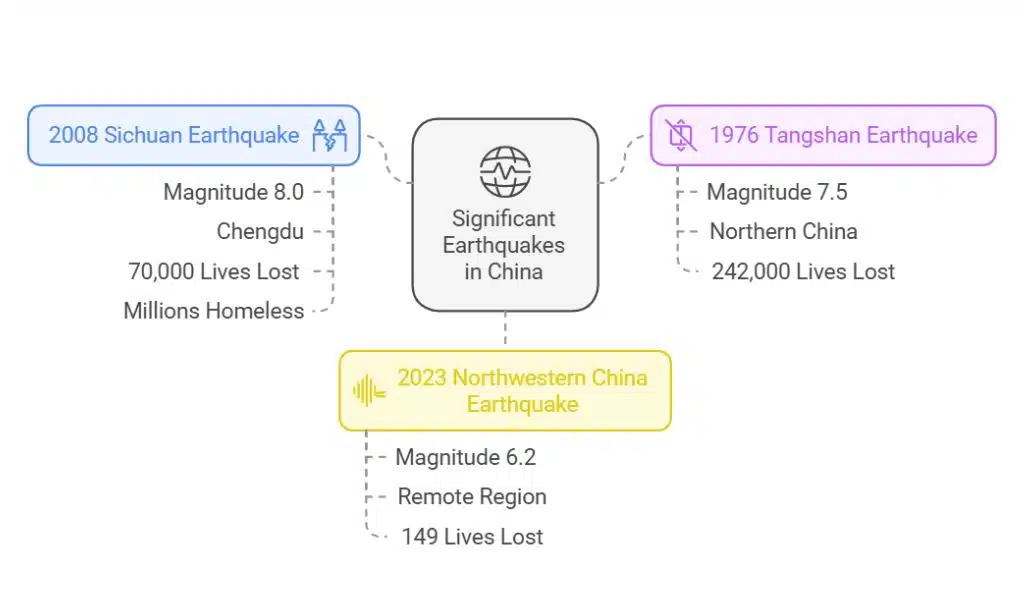
The Qinghai-Tibetan plateau and its surrounding regions have a long history of devastating earthquakes. Over the past five years alone, the area within 200 kilometers of Tuesday’s epicenter has experienced 29 earthquakes with magnitudes of 3.0 or higher.
Some of the most notable earthquakes in the region’s history include:
- 2008 Sichuan Earthquake: A magnitude 8.0 quake struck Chengdu, claiming at least 70,000 lives and leaving millions homeless.
- 1976 Tangshan Earthquake: One of the deadliest quakes in modern history, this magnitude 7.5 earthquake killed over 242,000 people in northern China.
- 2023 Northwestern China Earthquake: A magnitude 6.2 earthquake killed at least 149 people in a remote region.
Tuesday’s quake is the strongest to hit Tibet in recent years, surpassing the devastation caused by the 2023 tremor.
Humanitarian Challenges in High-Altitude Areas
Tibet’s high-altitude environment adds unique challenges to rescue and relief efforts. The combination of thin air, freezing temperatures, and difficult terrain makes it harder for rescue teams to operate effectively. Many survivors have been left without proper shelter, making them vulnerable to extreme weather conditions.
Authorities are working to set up temporary shelters and distribute blankets and thermal clothing to prevent hypothermia among displaced residents. Emergency medical teams are also prioritizing treatment for injuries and cold-related illnesses.
International Implications
While the earthquake was primarily concentrated in Tibet, tremors were felt in neighboring countries. Nepal, Bhutan, and India reported shaking but have not recorded any fatalities or significant damage. However, the event has reignited discussions about earthquake preparedness and resilience in the Himalayan region, which is home to millions of people.
International humanitarian organizations may play a role in supporting Tibet’s recovery efforts, especially in providing long-term aid to rebuild homes and infrastructure.
Political and Cultural Dimensions
The Tibetan plateau is not only geologically active but also politically sensitive. Beijing administers Tibet as an autonomous region within China and has faced criticism from rights groups and Tibetan exiles for alleged restrictions on cultural and religious freedoms.
In the aftermath of the earthquake, some have raised concerns about whether relief efforts will adequately address the needs of Tibet’s rural and remote communities. Beijing has emphasized its commitment to providing swift and comprehensive support to all affected areas.
The earthquake serves as a stark reminder of the region’s vulnerability to natural disasters. Experts stress the importance of improving earthquake-resistant infrastructure, especially in high-risk zones like Tibet.
Early warning systems, community education programs, and robust disaster response plans can help minimize the impact of future earthquakes. Governments in the region are also encouraged to collaborate on cross-border disaster preparedness initiatives, given the shared seismic risks.
A Region in Mourning
As rescue operations continue, families in Tibet are mourning the loss of loved ones while facing the daunting task of rebuilding their lives. The full extent of the damage is still being assessed, but the quake’s impact on communities, infrastructure, and livelihoods is expected to be long-lasting.
The people of Tibet, known for their resilience in the face of adversity, now face the challenge of recovering from one of the region’s worst natural disasters in recent years. With continued support from local authorities, international agencies, and neighboring countries, there is hope for rebuilding and healing in the months to come.
























