

Halloween, celebrated on October 31, is one of the most beloved holidays worldwide, cherished for its playful scare tactics, creative costumes, and eerie decor. However, the history of Halloween traces back thousands of years to an ancient festival that held deeply spiritual significance for the people of early Europe.
From ancient Samhain rituals to today’s neighborhood trick-or-treating and global Halloween-themed parties, the holiday has evolved remarkably, intertwining folklore, religious practices, and popular culture. This article explores Halloween’s origins and its transformation from a sacred festival to a major commercial holiday.
The History of Halloween: The Celtic Festival of Samhain
Halloween’s roots go back to the ancient Celtic festival of Samhain, celebrated around November 1. Samhain (pronounced “sow-in”) marked the end of the harvest season and the onset of winter, a period the Celts associated with darkness and death. During this time, it was believed that the boundary between the world of the living and the dead blurred, allowing spirits to roam the earth.
[Video Credit @irishmyths]
The Celts, who occupied regions of modern-day Ireland, the United Kingdom, and northern France, believed these spirits included both ancestors and otherworldly entities who could harm or protect them. Large bonfires, animal sacrifices, and the wearing of costumes—often made from animal hides—were all part of their rituals to ward off these spirits and celebrate their connection to the dead.
Samhain in its original form was thus a sacred celebration deeply entwined with the natural world and the supernatural.
The Influence of Christianity: All Saints’ Day and All Hallows’ Eve
By the 9th century, Christianity had spread into Celtic territories, and the Church aimed to integrate local customs into its own calendar to facilitate conversion. In 1000 AD, the Church officially designated November 1 as All Saints’ Day, or All Hallows’ Day, a day to honor saints and martyrs. The night before, October 31, became known as All Hallows’ Eve, which over time would morph into “Halloween.”
This adaptation was meant to replace pagan practices with a Christian holiday, although many of Samhain’s customs were preserved. For example, bonfires continued as part of All Saints’ celebrations, and costumes were adapted to represent saints, angels, or even demons. The merging of Samhain’s folklore with Christian doctrine created the foundation of Halloween as a night of both reverence and mystery.
Halloween Comes to America: Adapting and Evolving Traditions
In the 19th century, Halloween began to spread to America, primarily due to the influence of Irish and Scottish immigrants who brought their Halloween traditions with them. Although early American Halloween celebrations were less widely practiced, the holiday gained popularity in rural communities.
Many traditional Samhain customs, such as lighting bonfires, were adapted for American settings. In addition, the Puritan influence initially limited Halloween’s spread, as New England colonies considered it to be a celebration of witchcraft and paganism.
By the late 19th century, Halloween had started to gain traction as a community event with secular overtones. Halloween parties, games, and costumes became popular as communities began to host events that allowed people to celebrate without religious or superstitious connotations.
This shift marked the beginning of Halloween as a community-centered celebration, paving the way for the addition of activities like pumpkin carving and trick-or-treating that would later define the holiday.
The Birth of Trick-or-Treating
One of Halloween’s most beloved traditions, trick-or-treating, has its origins in medieval Europe. During this time, a practice known as “souling” saw children and poor adults go door-to-door on Hallowmas (November 1), offering prayers for the souls of the dead in exchange for “soul cakes.” This evolved in some areas into “guising,” where children would dress up and perform songs, jokes, or other “tricks” to earn their treats.
When Halloween arrived in America, it took on a life of its own. By the early 20th century, trick-or-treating became popular, especially among children, who would go door-to-door asking for candy in exchange for performing a “trick.”
This tradition grew significantly after World War II, thanks to post-war prosperity and the baby boom, which encouraged the production of candies and Halloween-themed marketing. Today, millions of children and families still participate in trick-or-treating as a staple of Halloween celebrations.
The Evolution of Halloween Costumes and Decor
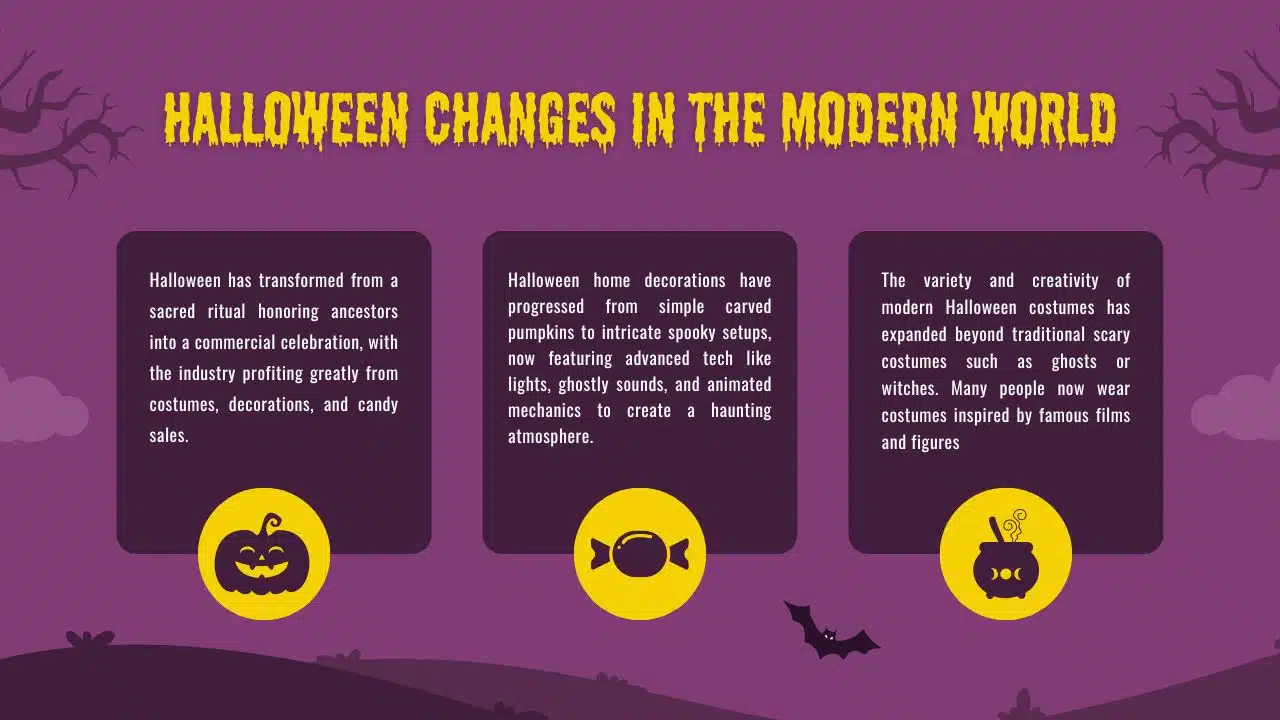
The Halloween costumes we see today have evolved from humble beginnings. Early Celtic costumes were designed to protect the wearer from malicious spirits, using materials like animal hides and masks. With time, these costumes became more elaborate and imaginative. In America, costume themes shifted from supernatural beings like ghosts and witches to popular culture icons.
By the mid-20th century, costumes were not only spooky but also playful, allowing people to dress up as anything from fairy tale characters to historical figures.
Halloween decor followed a similar path of transformation. Initially, Halloween decorations focused on seasonal items like pumpkins and gourds. Over the years, decorations became increasingly sophisticated, incorporating eerie elements like skeletons, haunted house motifs, and horror movie themes.
This evolution reflects Halloween’s shift from a solemn spiritual event to a more theatrical, light-hearted celebration.
Global Spread and Variations of Halloween
While Halloween’s roots are in Celtic and European traditions, it has expanded globally, often adapted to fit local customs and beliefs. In Mexico, for instance, Día de los Muertos (Day of the Dead) occurs around the same time and also honors the dead. However, this holiday is rooted in Aztec traditions and incorporates Mexican art, music, and bright colors in contrast to Halloween’s darker themes.
In Japan, Halloween has gained popularity in recent decades, with large costume parades and events in cities like Tokyo. However, Japanese Halloween celebrations emphasize cosplay and festive gatherings more than trick-or-treating.
Similarly, countries like Canada, the UK, and Australia have seen a rise in Halloween activities, adapting traditional elements with a regional twist, proving Halloween’s appeal as a universally adaptable holiday.
Modern-Day Halloween: A Commercial and Cultural Phenomenon
Halloween has grown from an ancient festival into a commercial giant. In the United States alone, Halloween spending on costumes, candy, and decorations exceeds billions of dollars each year.
Halloween’s ability to change with the times and fashions has fueled this growth by allowing for a wide variety of celebrations that appeal to all ages. Costume stores, candy manufacturers, and theme parks capitalize on the Halloween season, turning it into a full-blown industry.
Pop culture has played a massive role in Halloween’s enduring popularity. Horror movies, books, and even themed TV shows have turned Halloween into more than just a holiday; it’s a cultural experience. Modern Halloween parties often include themed food, music, and decor inspired by horror films and urban legends, making it a staple of the entertainment industry.
In the digital age, Halloween has taken on new dimensions, with social media playing a key role in promoting trends and ideas. Halloween costumes, recipes, and decor are some of the most shared topics online, and influencers have turned Halloween into an opportunity to showcase creativity.
Social media challenges, such as viral costume and makeup transformations, have brought Halloween’s reach to global proportions, making it one of the most visually celebrated holidays.
Takeaways
Halloween’s journey from a sacred Celtic festival to a multibillion-dollar industry is a testament to its adaptability and appeal. What began as a night to ward off spirits has transformed into a holiday that celebrates creativity, community, and a touch of mystery. Halloween’s core themes—celebrating the unknown, embracing individuality, and coming together as a community—remain relevant across cultures and generations.
Looking ahead, Halloween will continue to change as a result of international influences, technological advancements, and emerging cultural trends. But one thing is certain: whether through costume parades, trick-or-treating, or social media, Halloween will remain a beloved celebration of both the spooky and the playful, reminding us each year to embrace the mysteries and joys that lie just beyond the everyday.





















