

The future of the internet is here, and it’s called Web3. This new phase of the web brings a paradigm shift, prioritizing decentralization, privacy, and user control.
To fully grasp its potential, it’s crucial to understand the foundational terms that define Web3.
Whether you’re an enthusiast, developer, or investor, mastering these 15 must-know terms in web3 technology that will prepare you to navigate the exciting world.
What is Web3 Technology?
Web3 refers to the next generation of the internet that leverages blockchain technology to create decentralized applications (dApps) and platforms. Unlike Web2, which is centralized and controlled by large corporations, Web3 is decentralized, empowering users with greater control over their data and online interactions. Web3 envisions an internet where users can own digital assets, control their identity, and interact peer-to-peer without relying on intermediaries.
| Feature | Web2 | Web3 |
| Ownership | Controlled by platforms | Controlled by users |
| Data Storage | Centralized servers | Decentralized networks |
| Intermediaries | Essential for transactions | Peer-to-peer interactions |
| Security | Vulnerable to single points of failure | Distributed and more resilient |
The Top 15 Must-Know Terms in Web3 Technology
Let’s dive into the essential terms that will help you understand the Web3 ecosystem.
1. Blockchain
A blockchain is a decentralized, digital ledger that records transactions across a network of computers. Each block contains a list of transactions, and once added to the chain, it becomes immutable.
| Key Features of Blockchain |
| Decentralized |
| Transparent |
| Secure |
| Immutable |
2. Decentralization
Decentralization refers to the distribution of data and control across a network rather than a central authority. In Web3, decentralization ensures that no single entity has excessive power.
| Benefits of Decentralization |
| Eliminates single points of failure |
| Enhances security |
| Promotes transparency |
3. Smart Contracts
Smart contracts are self-executing programs with predefined rules. They automatically execute transactions once conditions are met, eliminating the need for intermediaries.
| Applications of Smart Contracts |
| Automated financial transactions |
| Token creation |
| Supply chain management |
4. Cryptocurrency
Cryptocurrency is a digital currency that uses cryptography for secure transactions. Cryptocurrencies are integral to Web3, serving as a medium of exchange and a tool for incentivizing network participation.
| Popular Cryptocurrencies |
| Bitcoin (BTC) |
| Ethereum (ETH) |
| Solana (SOL) |
| Cardano (ADA) |
5. Decentralized Applications (dApps)
Decentralized Applications, or dApps, are applications that run on blockchain networks. They are open-source, autonomous, and operate without central control.
| Examples of dApps |
| Uniswap (Decentralized Exchange) |
| Aave (DeFi Lending) |
| OpenSea (NFT Marketplace) |
6. DeFi (Decentralized Finance)
DeFi refers to financial systems built on blockchain technology, eliminating intermediaries like banks. It includes services like lending, borrowing, and trading.
| Benefits of DeFi |
| Lower fees |
| Increased accessibility |
| Greater transparency |
7. NFT (Non-Fungible Token)
An NFT is a unique digital asset that represents ownership of a specific item, such as art, music, or virtual real estate. NFTs are created on blockchains and cannot be replicated.
| Common Uses of NFTs |
| Digital art |
| Collectibles |
| Virtual land |
| Gaming assets |
8. DAO (Decentralized Autonomous Organization)

A DAO is an organization managed by smart contracts, where decisions are made collectively by its members through voting mechanisms.
| Advantages of DAOs |
| Transparent governance |
| Decentralized control |
| Community-driven |
9. Wallet
A digital wallet is used to store cryptocurrencies and interact with blockchain networks. Wallets can be hot (online) or cold (offline).
| Popular Wallets |
| MetaMask |
| Trust Wallet |
| Ledger |
10. Tokenomics
Tokenomics refers to the economic model of a cryptocurrency or token, including its supply, distribution, and utility.
| Key Aspects of Tokenomics |
| Supply (circulating and total) |
| Incentive structures |
| Use cases |
11. Layer 1 Blockchain
A Layer 1 blockchain is the base level of a blockchain network, such as Ethereum or Bitcoin. These blockchains handle all transactions and operations natively.
| Examples of Layer 1 Blockchains |
| Bitcoin |
| Ethereum |
| Binance Smart Chain |
12. Layer 2 Solutions
Layer 2 solutions are built on top of Layer 1 blockchains to improve scalability, reduce transaction costs, and increase speed.
| Popular Layer 2 Solutions |
| Polygon |
| Arbitrum |
| Optimism |
13. Interoperability
Interoperability is the ability of different blockchain networks to communicate and work together seamlessly.
| Benefits of Interoperability |
| Enhanced collaboration |
| Greater innovation |
| Broader ecosystem adoption |
14. Consensus Mechanism
A consensus mechanism is a protocol that ensures all participants in a blockchain network agree on the state of the ledger.
| Types of Consensus Mechanisms |
| Proof of Work (PoW) |
| Proof of Stake (PoS) |
| Delegated Proof of Stake (DPoS) |
15. Web3 Browser
A Web3 browser allows users to interact directly with decentralized applications. These browsers integrate features like cryptocurrency wallets and blockchain interaction.
| Popular Web3 Browsers |
| Brave Browser |
| Opera Crypto Browser |
| MetaMask Mobile |
Why Knowing These Web3 Terms is Essential?
Understanding these terms is vital to navigate Web3 effectively. Whether you aim to invest, develop, or simply use decentralized platforms, these concepts form the foundation of Web3. They empower you to:
- Make informed decisions about blockchain and cryptocurrency investments.
- Participate in decentralized ecosystems.
- Stay ahead in the rapidly evolving digital landscape.
Challenges in Learning Web3 Jargon
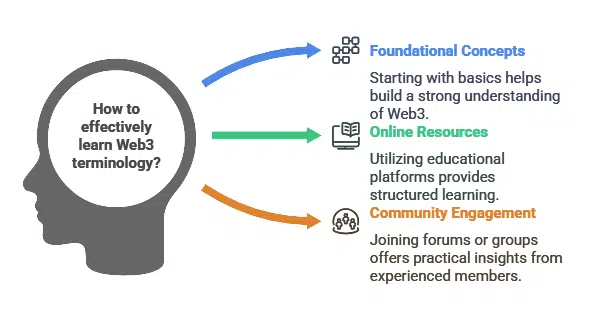
Learning Web3 terminology can feel overwhelming, especially for beginners. However, here are a few tips to simplify the process:
- Start with foundational concepts: Begin with the basics like blockchain, decentralization, and cryptocurrency.
- Use online resources: Platforms like Ethereum’s website and Binance Academy offer free educational content.
- Engage with the community: Join Web3 forums or social media groups to learn from experienced members.
Takeaways
Web3 technology is revolutionizing the way we interact with the internet. By understanding these 15 must-know terms, you’ll be better equipped to navigate this decentralized world and take advantage of its endless possibilities. Keep exploring, stay informed, and embrace the future of the internet.






















