In a world where regulations evolve faster than most businesses can adapt, compliance has become not just a necessity but a strategic pillar for organizational resilience.
As global standards expand and industries become more interconnected, the integration of technology into compliance practices is no longer optional; it’s essential.
Today, compliance leaders are leveraging automation, artificial intelligence, and integrated governance systems to streamline your compliance workflows and maintain a competitive edge.
The Rising Tide of Compliance Technology
Compliance technology changes from a back-office cost center into a business enabler in 2025.
Manual audits, spreadsheets, and siloed databases have created inefficiencies for compliance teams across industries.
The new compliance landscape rewards entities that embrace digital transformation.
Cloud-based technologies, predictive analytics, and AI-based monitoring systems characterize many compliance operations.
Requirements are increasing in numerous areas of compliance, like data privacy, AI accountability, and third-party risk management.
Rather than react to regulatory changes reactively, organizations use technology to anticipate changes and comply within their business processes.
AI and Automation: The Engines of Modern Compliance
Artificial intelligence drives the most change in the compliance landscape because it can identify risk in real time using a risk-based approach, monitor rules and regulations, and cut compliance costs.
Predictive analytics can help identify problem areas in advance of them resulting in compliance violations.
Automated tools also enforce compliance rules and procedures and conduct internal audits.
This removes redundancy and provides compliance leaders with a single view of compliance.
Automated compliance can also be integrated with the rest of the enterprise information infrastructure, such as HR systems or financial databases.
Continuous Compliance and Real-Time Monitoring
Traditional compliance models relied on periodic reviews that often left gaps between audit cycles.
Today’s reality demands continuous compliance, where monitoring happens in real time.
Modern platforms allow companies to review data as it’s generated, automatically flagging anomalies or nonconformities.
This approach saves time during assessments and ensures that corrective actions are taken instantly.
Real-time reporting dashboards also make it easier for executives to translate complex compliance data into actionable insights, supporting transparency and governance objectives.
Evolving Regulations and Global Standards
Early compliance models relied on scheduled audits; the time between these audits created gaps in compliance.
Today’s compliance model is continuous and based on real-time monitoring.
Contemporary platforms provide companies with data as it is generated, flagging nonconformities or anomalies automatically.
It saves time during the assessment phase, and corrective action can be taken immediately.
Executives can use dashboards.
These dashboards use real-time data to change data into perceptions that can be acted upon.
Objectives for transparency and governance are also met.
Cloud Compliance: Security Meets Accessibility
Regulatory regimes diverge around the world, among the biggest problems for businesses, which causes regulations to overlap and contradict in privacy and cybersecurity.
An answer to this challenge is dynamic compliance architectures that bridge compliance controls across regulations.
Smart compliance frameworks use dynamic regulation libraries and machine learning to automate policy alignment with changing regulations.
Flexible compliance systems are needed to ensure operational resilience and the continuity of the finance, healthcare, technology, and other industries.
Integrating Data Privacy and Cybersecurity
Over half of organizations worldwide have transitioned their compliance programs to the cloud.
This is due to the scalability, real-time updates, and improved data integrity that cloud solutions provide.
Cloud compliance software provides organizations with a centralized hub for teams around the globe to manage policies, audits, and risks.
Drive encryption technologies and multi-factor authentication, and zero-trust models restrict access to the compliance documentation to only those who have proper authorization.
This balances accessibility and security, concepts with which many companies grapple, since hybrid and remote work becomes more common.
Third-Party and Supply Chain Compliance
Governments scrutinizing organizations for collecting, processing, and sharing personal and company data, so data privacy transforms compliance.
Particularly common technologies that comply with digital infrastructure encrypt automatically and transmit data securely through protocols.
Cybersecurity mandates change the rules, with organizations no longer only expecting to protect their data but also to prove they comply with regulations.
Compliance tools automatically collect evidence for security audits within organizations.
This collection allows the organizations to show compliance during inspections or vendor assessments.
The Human Element: Governance and Ethics
In addition, the modern requirements for compliance technology go beyond the internal controls.
Today’s businesses have large supply chains that include suppliers, distributors, and partners that have compliance risks.
Compliance systems give vendor monitoring.
This monitoring gives visibility.
This monitoring sends alerts when suppliers break compliance rules or certifications expire.
This minimizes operational disruption.
Where third-party transparency is valued, this captures the modern regulator’s driving interest in accountability at each tier of supply chains.
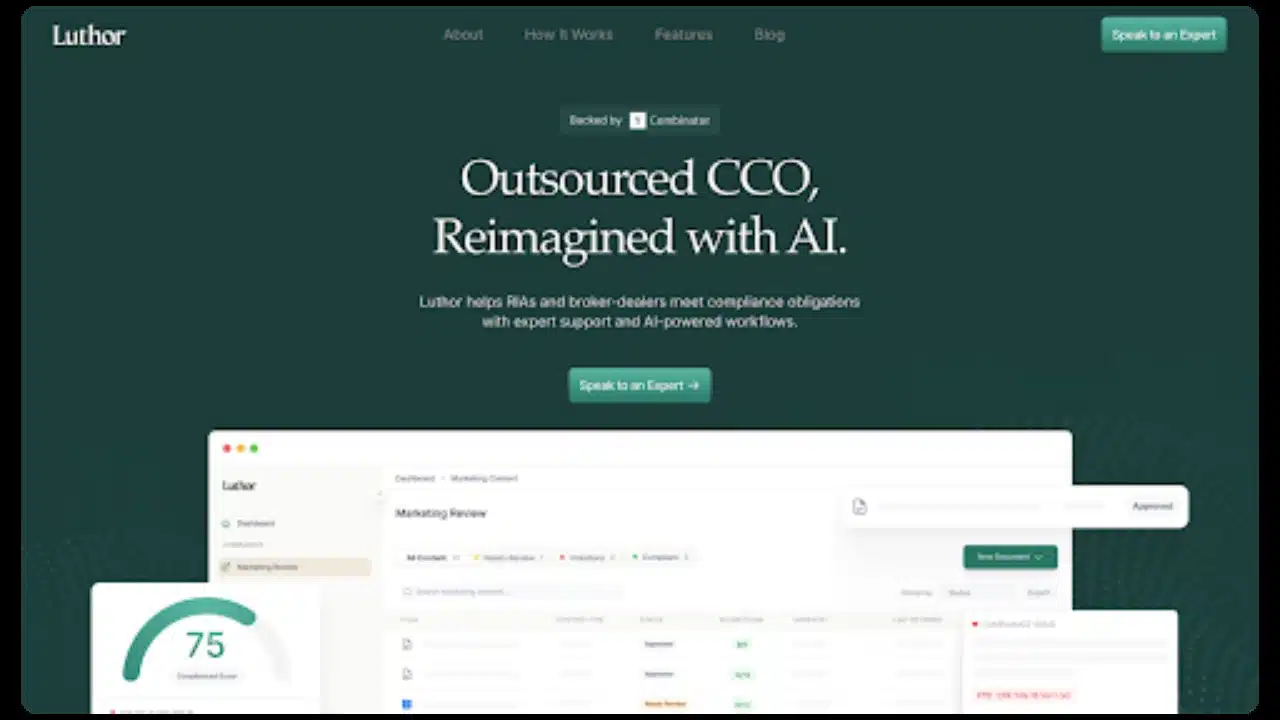
How Luthor.ai is Powering Smarter Compliance
Despite automation and AI’s prevalence when people discuss compliance improvements, culture remains important it depends on senior leadership’s ethical commitment, transparency, and accountability.
This technological approach is supplemented through training, continuing education, and internal awareness campaigns, as more companies realize their employees need to know the “why” of compliance, not just the “how”, creating a culture that embraces both automation and human oversight.
Future Outlook: From Compliance to Competitive Advantage
The coming years will redefine how organizations perceive compliance.
It’s no longer about keeping regulators satisfied but about using compliance infrastructure as a growth engine.
By embedding governance directly into technology systems, organizations can accelerate go-to-market operations, strengthen stakeholder confidence, and reduce the risk of costly breaches.
Moreover, as sustainability and environmental governance frameworks expand, compliance will interlink more deeply with corporate responsibility.
Technology will serve as the bridge uniting operational excellence, ethical integrity, and regulatory alignment.
A Strategic Imperative
In 2025 and beyond, compliance success will hinge on how well organizations adapt to digital-first realities.
Integrating automation, predictive analytics, and continuous monitoring will not only streamline your compliance workflows but also future-proof business resilience.
By treating compliance as a strategic asset not an administrative burden leaders can transform an evolving regulatory landscape into an opportunity for innovation, efficiency, and trust.
The message is clear: in today’s digital era, technology-driven compliance isn’t just best practice it’s business-critical.