


Being self-employed in the UK offers flexibility and independence, but it also comes with significant tax responsibilities.
Unlike employees who have their taxes deducted automatically, self-employed professionals must calculate, report, and pay their own taxes. Managing taxes effectively can help reduce liabilities, maximize savings, and avoid penalties.
However, without proper planning, self-employed individuals may find themselves struggling with unexpected tax bills, fines, or missed deductions. This guide provides 12 essential tax tips for self-employed professionals in UK to help navigate tax obligations efficiently while ensuring financial stability and compliance.
Understanding Tax Obligations as a Self-Employed Professional
Managing taxes effectively is one of the most critical aspects of running a successful self-employed business in the UK. Without a clear understanding of tax responsibilities, professionals may face unexpected liabilities, penalties, or missed opportunities for tax relief. By familiarizing yourself with the different types of taxes and registration requirements, you can stay compliant and ensure financial stability.
What Taxes Do Self-Employed Professionals Need to Pay??
If you are self-employed in the UK, you are responsible for several types of taxes, which differ from PAYE employees. It is crucial to understand your obligations to avoid legal troubles and ensure smooth financial planning. Below are the main taxes you need to consider:
| Tax Type | Description | Thresholds (2024) |
| Income Tax | Tax applied to taxable profits | £12,570 tax-free, then 20%-45% depending on income |
| National Insurance Contributions (NICs) | Social security payments for benefits and pension | Class 2: £3.45/week, Class 4: 9% on profits above ¥12,570 |
| Value Added Tax (VAT) | Tax on goods and services | Register if turnover exceeds £90,000 |
Understanding these tax obligations will help you structure your finances better and avoid compliance issues.
How to Register for Self-Assessment?
All self-employed professionals must register with HM Revenue & Customs (HMRC) for self-assessment tax filing. Filing a tax return is mandatory, even if your income is below the tax-free threshold.
Steps to Register:
- Visit the HMRC website and create a Government Gateway account.
- Provide business details, including type of work and expected earnings.
- Receive your Unique Taxpayer Reference (UTR) number via mail.
- Submit tax returns annually before the deadline to report income and claim deductions.
Important Deadlines:
| Action | Deadline |
| Register for Self-Assessment | 5 October (if newly self-employed) |
| Submit Paper Tax Return | 31 October |
| Submit Online Tax Return | 31 January |
| Pay Tax Bill | 31 January |
12 Tax Tips for Self-Employed Professionals in UK
Staying on top of your taxes is crucial for financial stability and long-term success as a self-employed professional in the UK. From managing expenses to optimizing tax deductions, implementing smart tax strategies can help minimize liabilities while ensuring compliance with HMRC regulations. Below are 12 essential tax tips for self-employed professionals in UK to help you navigate the complexities of self-employment taxation effectively.
1. Keep Accurate Financial Records
Accurate bookkeeping is essential for tax compliance, expense tracking, and financial planning. Without organized records, self-employed professionals may struggle with HMRC audits or miss out on claimable deductions.
Additionally, maintaining a clear financial record helps in forecasting cash flow, making informed business decisions, and preparing for future tax liabilities. Proper documentation also allows self-employed professionals to claim all eligible deductions, ensuring they do not overpay their taxes. Investing in bookkeeping practices early can prevent stress and financial mismanagement down the line.
Tips for Record-Keeping:
- Keep invoices, receipts, bank statements, and contracts in digital and paper formats.
- Use accounting software like QuickBooks, FreeAgent, or Xero for automated tracking.
- Store records for at least five years to meet HMRC’s legal requirements.
| Recommended Accounting Software | Features |
| QuickBooks | Automated tax calculations, receipt scanning |
| Xero | Multi-currency support, real-time reports |
| FreeAgent | HMRC-approved tax filing, cash flow tracking |
2. Understand Allowable Business Expenses

Many self-employed professionals miss out on tax savings by failing to claim allowable expenses. These deductions can significantly lower taxable income and help maximize profits. Whether it’s office supplies, travel expenses, or marketing costs, understanding and categorizing these expenses correctly is essential.
Keeping detailed records and consulting with an accountant can ensure that self-employed professionals take full advantage of every available deduction, reducing their overall tax burden and keeping more of their hard-earned income.
Deductible Expenses Include:
| Expense Category | Examples |
| Office Costs | Rent, utilities, internet, stationery |
| Travel | Business mileage, train tickets, accommodation |
| Marketing | Website costs, advertising, social media promotion |
| Professional Fees | Accountant fees, business insurance |
| Equipment | Laptops, software, tools |
Always keep receipts and detailed records of these expenses to provide evidence during tax filings.
3. Claim Work-from-Home Deductions
Self-employed professionals who work from home can claim deductions for household expenses related to their business. These deductions can significantly reduce taxable income and help improve overall financial efficiency. Whether you use a dedicated home office or a shared space, it’s important to track your business-related expenses carefully. HMRC provides two methods for calculating work-from-home expenses:
| Method | How It Works |
| Simplified Flat Rate | Deduct £10-£26 per month based on work hours |
| Actual Cost Method | Claim specific portions of rent, utilities, internet |
4. Separate Business and Personal Finances
Mixing personal and business finances can complicate tax calculations and lead to financial mismanagement. Without a clear separation, tracking deductible expenses and assessing profits can become a cumbersome task, increasing the risk of errors and potential penalties from HMRC.
Establishing a structured approach to financial management is essential for accurate tax reporting and long-term business sustainability. Opening a business bank account offers these benefits:
- Clear separation of income and expenses.
- Simplifies tax filing and reduces audit risks.
- Helps in building a professional business credit profile.
5. Make Use of Tax-Free Allowances
Self-employed professionals can take advantage of several tax-free allowances to lower their liabilities and optimize their overall financial planning. These allowances help reduce taxable income, allowing professionals to retain more of their hard-earned money. By strategically utilizing these exemptions, self-employed individuals can better manage their cash flow while remaining compliant with tax regulations. Understanding and claiming these allowances is an essential step in minimizing unnecessary tax expenses.
| Allowance | Description | Limit (2024) |
| Personal Allowance | Tax-free income threshold | £12,570 |
| Trading Allowance | Tax-free earnings for small businesses | £1,000 |
| Capital Gains Allowance | Tax-free gains from selling business assets | £6,000 |
6. Stay on Top of VAT Responsibilities
If your turnover exceeds £90,000, VAT registration is mandatory. Failing to register can result in hefty fines and unnecessary financial strain. VAT compliance is crucial for avoiding penalties and ensuring smooth business operations. Choosing the right VAT scheme can help optimize cash flow, simplify accounting, and potentially reduce tax liabilities, making it an essential consideration for self-employed professionals in the UK.
| VAT Scheme | Who It’s For | Key Benefit |
| Standard VAT | Businesses with VAT-able sales | Reclaim VAT on purchases |
| Flat Rate Scheme | Small businesses | Lower admin, fixed VAT percentage |
| Cash Accounting | Businesses with fluctuating cash flow | Pay VAT only when paid by customers |
7. File Tax Returns Early to Avoid Penalties
Filing early avoids last-minute stress and penalties, giving you ample time to correct errors, gather necessary documents, and seek professional advice if needed. Additionally, early filing allows you to better plan your finances, ensuring you have sufficient funds set aside for tax payments without facing unexpected burdens. Avoiding the rush also reduces the risk of technical issues or submission errors on the HMRC portal, leading to a smoother and stress-free process.
| Filing Method | Deadline |
| Paper Return | 31 October |
| Online Return | 31 January |
8. Set Aside Money for Tax Payments
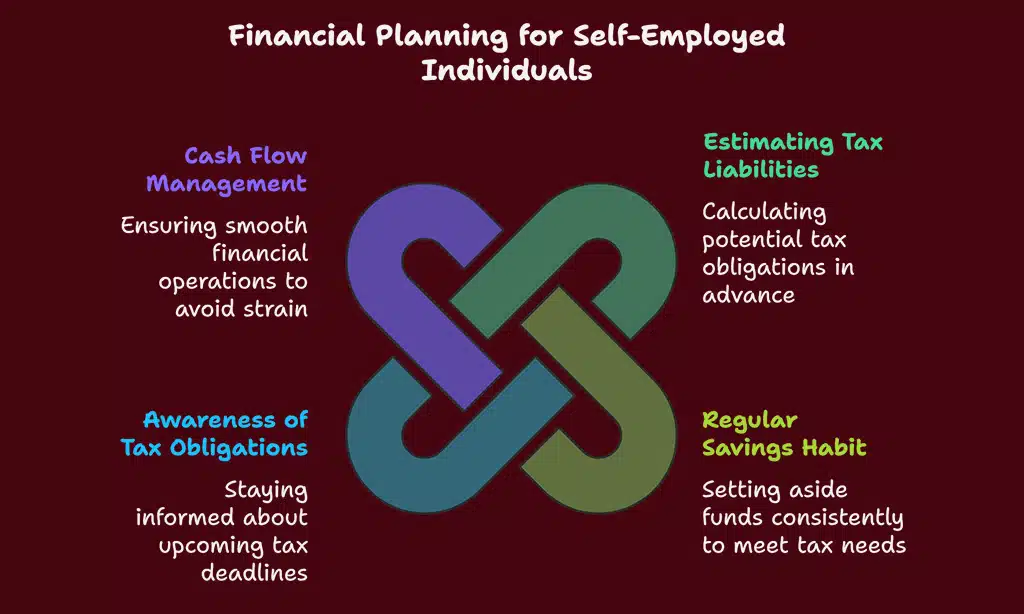
A common mistake self-employed professionals make is failing to set aside enough money for their tax payments. Unlike employees, who have taxes deducted automatically, self-employed individuals must proactively plan for their tax bills. This means estimating potential tax liabilities in advance and maintaining a disciplined savings habit to avoid financial strain when tax deadlines approach. By setting aside funds regularly and staying aware of upcoming tax obligations, self-employed individuals can prevent last-minute cash flow issues and ensure they meet their tax commitments without stress.
Best Practices for Tax Savings:
- Set aside 25-30% of profits for taxes.
- Open a dedicated savings account for tax payments.
- Use automated transfers to ensure consistent savings.
- Consider HMRC’s Budget Payment Plan to spread tax costs.
Proper financial planning will help avoid last-minute panic and ensure smooth tax payments.
9. Take Advantage of Pension Contributions
Contributing to a pension not only helps secure your financial future but also offers valuable tax relief. The UK government provides incentives for self-employed professionals to invest in pensions, making it an attractive option for long-term financial stability. Pension contributions reduce taxable income, lowering overall tax liabilities while allowing funds to grow in a tax-efficient manner. Additionally, contributing to a pension ensures that self-employed individuals have adequate financial resources for retirement, helping them achieve greater financial security in later years.
Benefits of Pension Contributions:
| Benefit | Description |
| Tax Relief | Get tax relief on contributions up to £60,000 per year |
| Reduced Taxable Income | Pension contributions lower your taxable earnings |
| Long-Term Savings | Secure financial stability for retirement |
Consider a Self-Invested Personal Pension (SIPP) for more control over investments.
10. Hire an Accountant or Use Accounting Software
Tax laws and regulations can be complex, making it beneficial to seek professional assistance. Hiring an accountant or using accounting software can simplify tax filing and improve accuracy. Accountants can help identify eligible deductions, ensure compliance with the latest tax regulations, and offer strategic financial advice. Meanwhile, accounting software automates calculations, tracks expenses, and provides real-time financial insights, making tax management more efficient and error-free. By leveraging professional expertise or technological tools, self-employed professionals can minimize tax burdens and focus on growing their businesses.
Options to Consider:
| Solution | Benefits |
| Accountant | Expert advice, error reduction, time-saving |
| QuickBooks | Automated tax calculations, easy invoicing |
| Xero | Multi-currency support, real-time financial reports |
| FreeAgent | HMRC-approved tax filing, expense tracking |
Choosing the right approach will help streamline tax management and avoid costly mistakes.
10. Consider Incorporating Your Business
For some self-employed professionals, switching from a sole trader to a Limited Company can provide tax benefits, enhance business credibility, and protect personal assets. Operating as a limited company allows business owners to take advantage of lower corporate tax rates, separate personal and business liabilities, and access additional funding opportunities. Moreover, incorporation can offer better financial planning options, including the ability to pay a combination of salary and dividends to reduce overall tax liability.
Sole Trader vs. Limited Company:
| Factor | Sole Trader | Limited Company |
| Tax Rate | 20%-45% (Income Tax) | 19% (Corporation Tax) |
| Liability Protection | Unlimited personal liability | Limited personal liability |
| Salary & Dividends | Profits taxed as income | Salary + dividends for tax efficiency |
If your profits exceed £50,000 annually, incorporating may be a financially smarter option.
11. Leverage HMRC Payment Plans if Needed
If you’re struggling to pay your tax bill, HMRC offers Time to Pay arrangements, allowing you to spread payments over several months.
Key Features of HMRC Payment Plans:
- Flexible repayment terms based on income.
- Prevents penalties for late payments.
- Must apply before the tax deadline.
Contact HMRC as soon as possible if you anticipate difficulties meeting your tax obligations.
12. File Tax Returns Early to Avoid Penalties
Filing early avoids last-minute stress and penalties, giving you ample time to correct errors, gather necessary documents, and seek professional advice if needed. Additionally, early filing allows you to better plan your finances, ensuring you have sufficient funds set aside for tax payments without facing unexpected burdens. Avoiding the rush also reduces the risk of technical issues or submission errors on the HMRC portal, leading to a smoother and stress-free process.
| Filing Method | Deadline |
| Paper Return | 31 October |
| Online Return | 31 January |
Takeaways
Managing taxes as a self-employed professional in the UK requires careful planning and awareness of obligations. By applying these 12 tax tips for self-employed professionals in UK, you can reduce tax burdens, maximize savings, and stay compliant with HMRC regulations.
Take proactive steps today to ensure financial stability and long-term success in your self-employment journey.






















