

Running a small business in Oman comes with many financial responsibilities, including taxes. However, understanding the right tax deductions can significantly reduce your taxable income and improve cash flow.
By taking advantage of tax deductions every small business in Oman must know, you can legally minimize your tax burden while maintaining compliance with Omani regulations.
Tax regulations in Oman have evolved, making it essential for business owners to stay updated on available deductions. Effective tax planning not only helps in cost-saving but also allows businesses to allocate resources toward expansion and operational growth.
In this comprehensive guide, we’ll explore 10 essential tax deductions every small business in Oman must know, helping you save money and reinvest in business growth. Whether you’re a startup or an established enterprise, these deductions can make a difference in your financial strategy.
Understanding Tax Deductions in Oman
Tax deductions refer to business expenses that can be subtracted from your total income before calculating the taxable amount. The more deductions a business claims, the lower its taxable income, resulting in reduced tax liability. Properly utilizing deductions ensures businesses have better financial flexibility and improves their ability to scale.
Who Qualifies for Tax Deductions?
In Oman, small businesses operating legally and maintaining proper financial records are eligible for various deductions. The eligibility criteria generally depend on:
- Business registration status (LLC, sole proprietorship, etc.)
- Compliance with tax regulations
- Proper documentation of expenses
- Nature of expenses incurred by the business
By ensuring you qualify, you can maximize the benefits from the tax deductions every small business in Oman must know and avoid unnecessary tax liabilities.
10 Essential Tax Deductions for Small Businesses in Oman
Maximizing tax deductions is crucial for small businesses in Oman looking to optimize financial efficiency and reduce taxable income. By understanding the deductions available, business owners can take advantage of cost-saving opportunities and reinvest in their growth.
Below are the key tax deductions every small business in Oman must know to ensure compliance and financial sustainability.
1. Business Operational Expenses
Every business incurs daily operational costs that qualify as deductions, allowing them to manage expenses efficiently while optimizing their tax liabilities. These costs are essential for sustaining day-to-day business functions, ensuring smooth operations, and keeping the company compliant with financial regulations.
By strategically tracking and deducting these expenses, businesses can enhance profitability and allocate resources more effectively toward growth and development.
Examples of Deductible Business Expenses:
| Expense Type | Examples | Deductible Amount |
| Office Rent | Physical office space, co-working spaces | Fully deductible |
| Utilities | Electricity, water, internet bills | Fully deductible |
| Office Supplies | Stationery, furniture, software | Fully deductible |
Example: If your office rent is OMR 500 per month, that’s OMR 6,000 per year deducted from your taxable income.
2. Employee Salaries and Benefits

Wages, bonuses, and other employee-related costs are deductible. Oman has a workforce-driven economy, where businesses rely heavily on skilled and dedicated employees to drive growth. Offering competitive, tax-deductible salaries and benefits not only helps businesses retain top talent but also enhances productivity and employee satisfaction. By leveraging these deductions, businesses can reinvest in their workforce, create a positive work culture, and strengthen long-term financial sustainability.
Key deductible expenses:
| Deductible Salary Component | Examples |
| Monthly Salaries | Full-time and part-time employee wages |
| End-of-service benefits | Legally required severance pay |
| Employee insurance | Health, life, and work-related insurance |
Tip: Keeping payroll records and contracts ensures hassle-free tax filing.
3. Depreciation of Business Assets
Omani tax laws allow deductions for depreciation of tangible assets, recognizing that business equipment and property lose value over time. By depreciating assets, companies can recover costs gradually, reducing taxable income while maintaining accurate financial records. Depreciation is essential for businesses that invest in long-term assets like machinery, office equipment, and vehicles, as it helps align expenses with revenue generation over multiple years. Implementing the correct depreciation method ensures compliance with tax regulations and optimizes financial planning.
| Asset Type | Depreciation Period |
| Machinery & Equipment | 5-10 years |
| Office Furniture | 3-5 years |
| Vehicles | 4-6 years |
Example: If a company buys a machine worth OMR 10,000 with a 5-year depreciation cycle, OMR 2,000 per year can be deducted.
4. Marketing and Advertising Costs
Promoting your business through marketing activities is fully deductible. A strong marketing presence leads to higher brand recognition, customer acquisition, and long-term business growth. By investing in digital and traditional advertising strategies, businesses can reach wider audiences, increase brand loyalty, and drive higher revenues. Whether through SEO, social media marketing, or promotional campaigns, leveraging these strategies while benefiting from tax deductions can significantly boost a company’s market position.
| Marketing Channel | Examples |
| Digital Marketing | SEO, PPC ads, social media ads |
| Traditional Advertising | Billboards, newspaper ads |
| Promotional Events | Product launch events |
5. Professional and Consultancy Fees
Legal, accounting, and professional consultancy expenses qualify as deductions. Businesses often require specialized advisory services for legal and financial management to ensure compliance with Omani regulations and streamline financial operations. Consulting with professionals helps companies navigate tax complexities, avoid penalties, and make informed strategic decisions. Whether it’s legal contract drafting, financial auditing, or tax optimization, these services play a crucial role in maintaining a business’s financial health and sustainability.
| Service Type | Examples |
| Legal Consultations | Contract drafting, compliance advisory |
| Accounting Services | Tax filing, bookkeeping |
| Business Advisory | Market research, growth strategies |
6. Business Travel and Transportation
Traveling for business purposes? You can claim deductions for expenses incurred while conducting business outside of the office, such as attending client meetings, industry conferences, or training programs. These expenses must be directly related to business operations and adequately documented with receipts and logs. Proper tax documentation ensures compliance and maximizes deductions, helping businesses optimize their financial planning.
| Deductible Travel Expenses | Examples |
| Airfare | Domestic & international business trips |
| Hotel Accommodations | Stay for business purposes |
| Fuel & Car Rental | Business-related travel expenses |
Note: Keep receipts and logs to support your claims.
7. Office Rent and Co-Working Space Costs
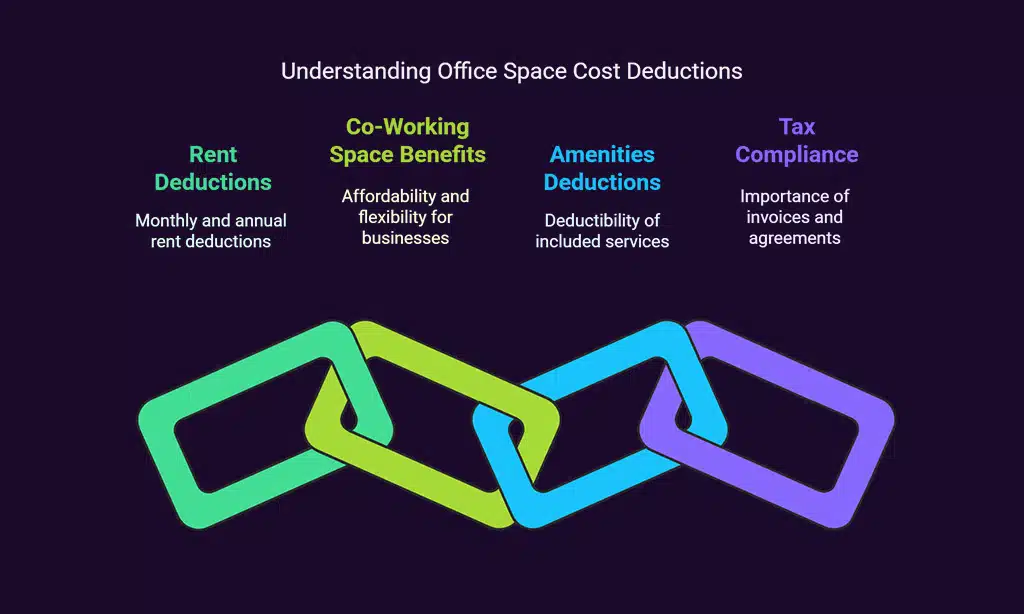
Businesses renting offices or co-working spaces can deduct these expenses, making it easier for small businesses to manage operational costs. Many startups and freelancers opt for co-working spaces due to their affordability and flexibility.
These spaces often include amenities like internet, meeting rooms, and office equipment, which can also be partially deductible if categorized under operational expenses. Keeping detailed invoices and rental agreements helps ensure compliance with tax regulations and simplifies deductions.
Example: If you pay OMR 700 per month for an office, that’s OMR 8,400 per year deducted from taxable income. Additionally, if the rental includes services such as utilities and internet, those costs may also qualify for deductions, further reducing taxable income.
8. Loan Interest and Banking Fees
Interest paid on business loans is deductible. Loan deductions help companies manage financing efficiently.
| Loan Type | Eligible Deduction |
| Business Loan | Interest payments deductible |
| Credit Card Interest | Deductible if used for business |
| Overdraft Charges | Bank overdraft fees are deductible |
9. Training and Professional Development
Investing in employee training benefits your business and reduces taxes. Ongoing training programs help employees stay updated with industry trends, enhance skill sets, and improve overall productivity.
A well-trained workforce contributes to business growth by increasing efficiency, reducing errors, and fostering innovation. Additionally, tax incentives for training investments make professional development a cost-effective strategy for small businesses in Oman.
| Training Expense Type | Examples |
| Workshops | Leadership, technical skills |
| Online Courses | Certification courses |
| Seminars | Industry conferences |
10. Insurance Premiums for Business
Business insurance policies that qualify for deductions include various types that protect businesses from financial risks and legal liabilities. These insurance policies not only safeguard the company from unforeseen circumstances but also contribute to financial stability by reducing taxable income. Investing in the right insurance coverage ensures compliance with regulatory requirements and enhances long-term business security.
| Insurance Type | Coverage |
| Property Insurance | Covers business premises |
| Liability Insurance | Protection against legal claims |
| Employee Health Insurance | Employee medical coverage |
Wrap Up
Understanding the tax deductions every small business in Oman must know can save you thousands in taxes annually. By leveraging these deductions, maintaining proper records, and seeking professional advice, you can ensure your business remains financially efficient and compliant.
Take advantage of these tax-saving strategies today and watch your business grow with improved financial stability!
























